


Table of Contents
Core Principles of Winning Chess Strategy
 In chess, having the first move as White is a big advantage. It lets you take charge from the very start. How you play these first moves sets the stage for the entire game. A strong opening helps you control the board, develop your pieces quickly, and keep your king safe. This is especially important for beginners learning the game.
We all know chess has three main parts: the opening, the middlegame, and the endgame. The opening phase is where we build our game. It helps us get ready for the fight ahead. Ignoring it can lead to trouble later on.
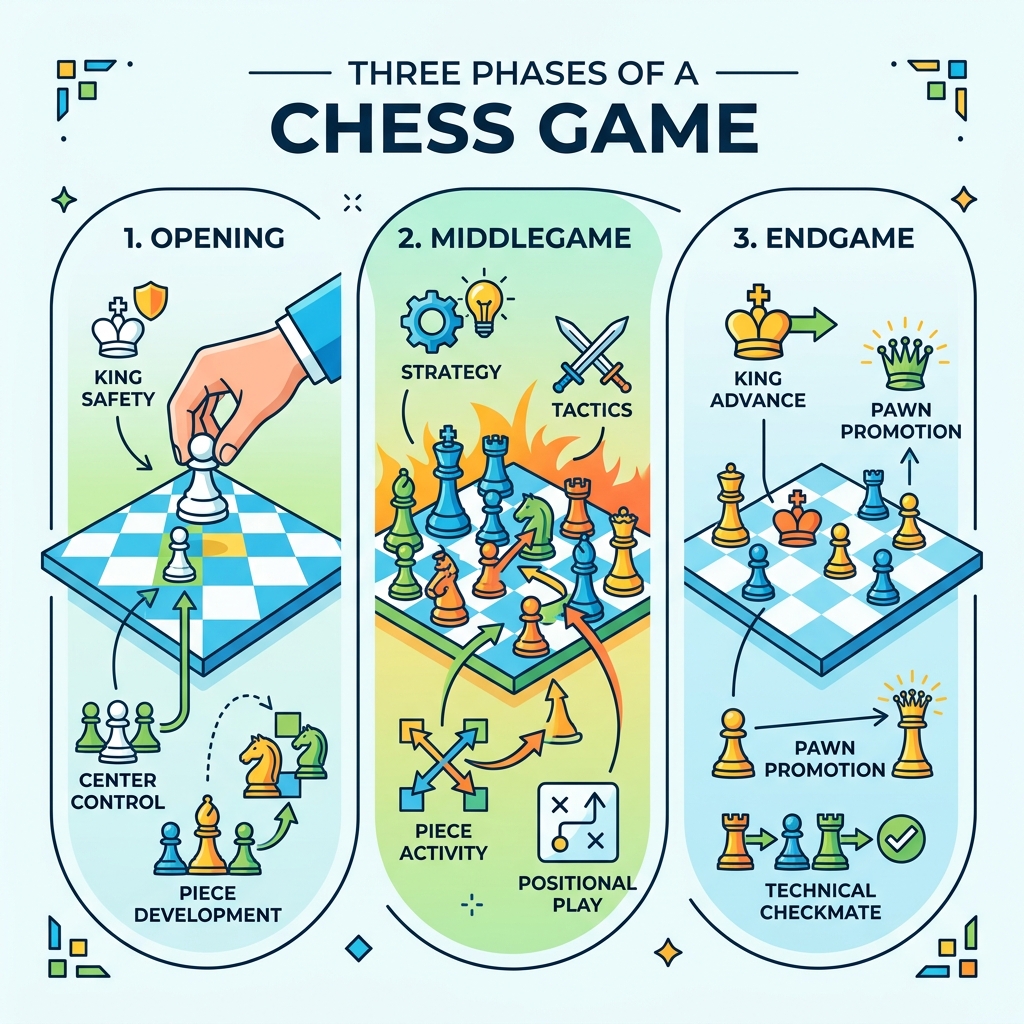
In this guide, we will show you how to use White’s first-move power. We will cover the basic rules every beginner should follow. We will also introduce you to some of the best White openings. These openings are simple to learn but very effective for new players. For a deeper understanding of overall Beginner white chess strategy, we encourage you to explore further resources. Our goal is to help you build a solid foundation. This will allow you to win more games and enjoy chess even more.
As White, your primary objective in the opening is to establish a strong, safe position that provides a springboard for the middlegame. This involves adhering to fundamental principles that have stood the test of time, guiding even grandmasters in their initial moves.

These core principles include controlling the center, developing your pieces efficiently, ensuring king safety, and striving for a space advantage. By consistently applying these ideas, beginners can navigate the opening phase with confidence, regardless of Black’s responses.
Controlling the Center as a Primary Chess Strategy
The center of the chessboard (the e4, d4, e5, and d5 squares) is the most crucial area. Control over these squares allows your pieces to move freely to either side of the board and restricts your opponent’s pieces. As White, your first move, whether 1.e4 or 1.d4, immediately stakes a claim in this vital territory.
The goal isn’t just to occupy the center with pawns but also to influence it with your pieces. For instance, a knight on f3 not only develops a piece but also controls d4 and e5. A bishop on c4 eyes f7, a common weak spot in Black’s early game. Understanding how your pawn structure and piece placement contribute to central control is paramount. Central outposts, squares protected by your pawns and occupied by your pieces (often knights), become powerful assets, allowing your pieces to exert pressure deep into the opponent’s territory.
Piece Coordination and Development
Rapid and harmonious development of your minor pieces (knights and bishops) is another cornerstone of a good opening. The general rule of thumb is to develop knights before bishops, as knights often have clear squares (f3, c3 for White) and influence the center immediately. Bishops, on the other hand, might need a pawn move or two to open up their diagonal.
Castling early is essential for king safety and connecting your rooks. Once your king is safely tucked away, your rooks can then be brought into the game, typically on open or half-open files, where they exert maximum influence. A common mistake beginners make is moving the queen out too early. While the queen is powerful, premature queen moves can expose her to attack, forcing you to waste valuable time retreating her and hindering your development. Harmonizing your pieces means ensuring they work together, supporting each other and contributing to a unified plan.
Top White Openings for Beginners
Choosing the right opening as a beginner can feel overwhelming given the vast array of options. However, certain openings are particularly well-suited for new players due to their clear plans, emphasis on fundamental principles, and reduced theoretical burden. We will focus on the Italian Game, the London System, and the Scotch Game/Ponziani Opening, as they offer a blend of tactical opportunities, solid structures, and surprise value.
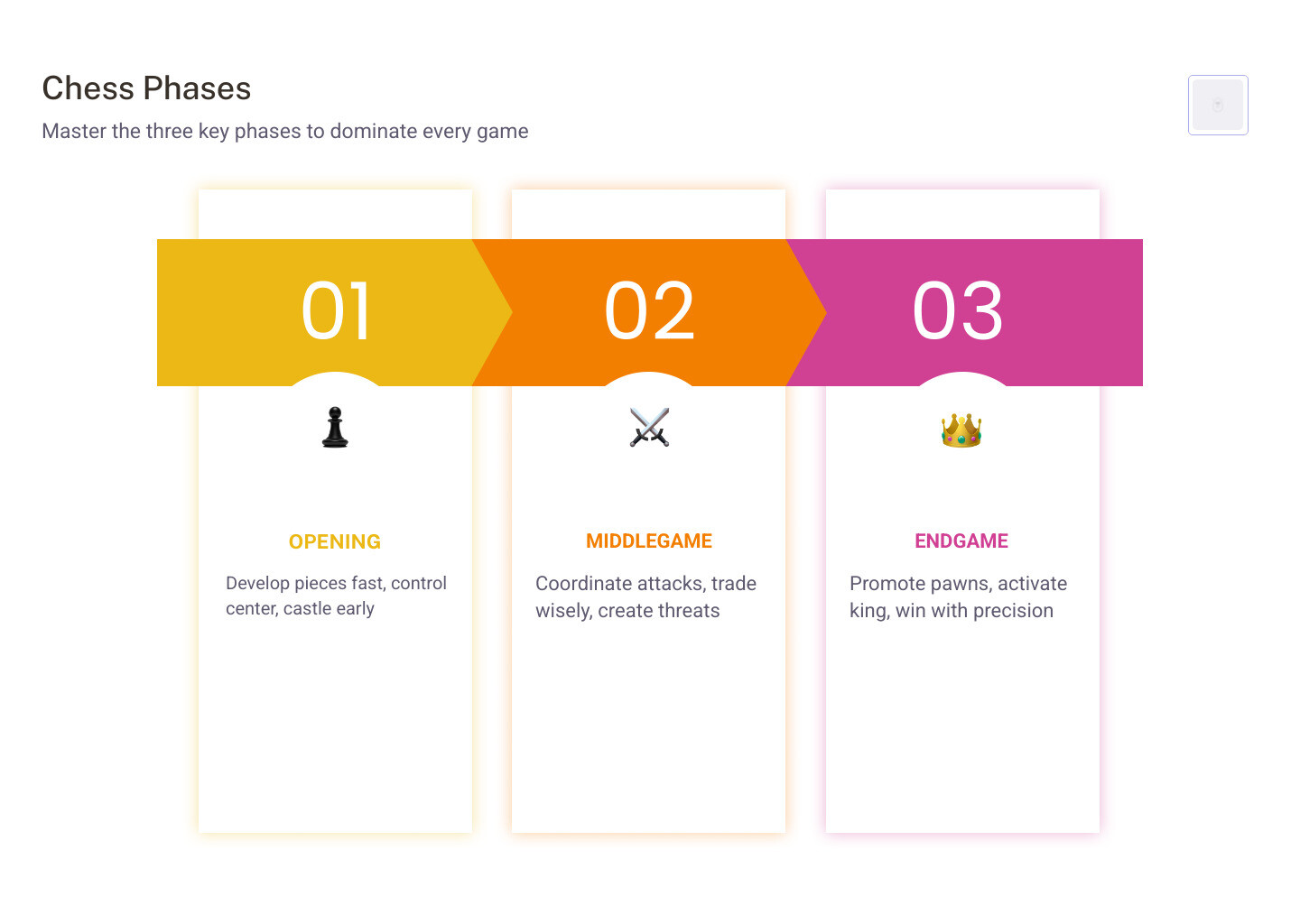
These openings are not only easy to grasp but also provide excellent learning opportunities, helping you understand core chess concepts rather than just memorizing moves.
The Italian Game: A Classic Chess Strategy
The Italian Game, known as Giuoco Piano (“Quiet Game”), is arguably the best white chess opening for beginners. It starts with the moves 1.e4 e5 2.Nf3 Nc6 3.Bc4. This sequence embodies classical chess principles: rapid development, central control, and early king safety.
- 1.e4: Controls the center and opens lines for the queen and king’s bishop. This is the most popular opening move in chess.
- 2.Nf3: Develops a knight, controls the d4 and e5 squares, and prepares for kingside castling.
- 3.Bc4: Develops the king’s bishop to a very active square, eyeing Black’s weak f7 pawn and putting pressure on the kingside. White can often castle on the next move.
The Italian Game leads to open positions, which are excellent for beginners to learn foundational tactics like pins, forks, and discovered attacks. Its straightforward development allows you to focus on understanding the ideas behind the moves rather than memorizing complex variations. Many beginners find it an ideal learning environment due to its flexibility and the clear path to a swift middlegame.
The London System: A Solid Setup
For players who prefer a more solid, system-based approach, the London System is an outstanding choice. It typically begins with 1.d4, followed by 2.Nf3 and 3.Bf4. What makes the London System a great option for beginners is its consistent plan, regardless of Black’s response.
- 1.d4: Controls the center and opens lines for the queen and queen’s bishop.
- 2.Nf3: Develops a knight and supports the d4 pawn.
- 3.Bf4: Develops the light-squared bishop early, often before the e-pawn moves, and aims to control the crucial e5 square.
The London System reduces the burden of opening theory significantly because White can often employ a similar setup against various Black defenses. This allows beginners to focus on understanding the strategic ideas, such as controlling the e5 outpost, ensuring king safety, and building a robust pawn structure. It’s a reliable opening that helps beginners build a “solid opening house” and provides consistent plans that lead to comfortable middlegame positions.
The Scotch Game and Ponziani Opening
While the Italian Game and London System are excellent starting points, the Scotch Game and Ponziani Opening offer different flavors for beginners looking for more dynamic play or a psychological edge.
The Scotch Game (1.e4 e5 2.Nf3 Nc6 3.d4) is recommended for its simple theory and direct central play. It immediately opens the center, leading to sharp, tactical positions. This can be beneficial for beginners who want to improve their tactical vision and learn how to play in open positions. Its straightforward nature makes it hard for less experienced opponents to counter effectively, offering a clear path to an active game.
The Ponziani Opening (1.e4 e5 2.Nf3 Nc6 3.c3) is less common but offers unique advantages for beginners. It prepares a central break with d4 on the next move, aiming to establish a strong pawn center. Its surprise value can be a significant psychological advantage in casual games. Opponents unfamiliar with the Ponziani might struggle to find optimal responses, allowing beginners to gain an early edge through tactical sharpness and knight maneuvers. It’s an opening that can lead to fun, tactical games, often overlooked by opponents.
As White, you’ll encounter several popular Black defenses. Understanding their basic ideas and knowing how to respond effectively is crucial for maintaining your opening advantage.

Responding to 1…e5 (Open Game)
When Black responds with 1…e5, they are also fighting for central control and opening lines for their pieces. This leads to the “Open Game” territory, where the Italian Game, Ruy Lopez, and Scotch Game are excellent choices for White.
- Italian Game (1.e4 e5 2.Nf3 Nc6 3.Bc4): As discussed, this is a classical approach focusing on rapid development and pressure on f7.
- Ruy Lopez (1.e4 e5 2.Nf3 Nc6 3.Bb5): A more strategic and complex opening than the Italian Game, but also highly recommended for beginners by experienced players. It puts immediate pressure on Black’s c6 knight, which defends the e5 pawn. While it has more theory, its deep strategic ideas are invaluable for long-term improvement.
Responding to the Sicilian Defense (1…c5)
The Sicilian Defense (1.e4 c5) is Black’s most popular response to 1.e4, aiming to create an asymmetrical pawn structure and fight for the d4 square. For beginners, simple and direct responses are best:
- Open Sicilian (e.g., 2.Nf3 d6 3.d4 cxd4 4.Nxd4): This leads to complex and tactical games, which can be challenging but also great for tactical growth. White gets a strong central knight and open lines.
- Alapin Sicilian (1.e4 c5 2.c3): This is a simpler, more positional approach. White aims to build a strong pawn center with d4, often leading to less sharp positions than the Open Sicilian. It’s an excellent choice for beginners who want to avoid the extensive theory of the main lines.
Responding to the French Defense (1…e6)
The French Defense (1.e4 e6) is a solid, semi-closed opening where Black aims to build a strong pawn chain and counterattack in the center.
- Exchange Variation (1.e4 e6 2.d4 d5 3.exd5 exd5): This is often recommended for beginners as it simplifies the pawn structure and leads to more open positions. White can focus on developing pieces and gaining a space advantage without getting bogged down in complex tactical lines. It’s a reliable and simple choice that allows for clear development.
Responding to the Caro-Kann Defense (1…c6)
The Caro-Kann Defense (1.e4 c6) is another solid, semi-closed opening, similar to the French but often considered more flexible for Black.
- Exchange Variation (1.e4 c6 2.d4 d5 3.exd5 cxd5): Similar to the French Exchange, this simplifies the pawn structure and leads to more symmetrical positions. It’s a straightforward option for beginners, allowing them to focus on general principles of development and central control.
- Advance Variation (1.e4 c6 2.d4 d5 3.e5): White gains a space advantage in the center, but Black often counterattacks with …c5. This can lead to more dynamic play and is good for learning how to handle pawn chains.
In all these responses, the key is to stick to your opening principles: control the center, develop your pieces, and castle your king to safety.
Avoiding Critical Opening Mistakes
Even with the best intentions, beginners often fall prey to common pitfalls in the opening. Recognizing and avoiding these mistakes is just as important as knowing which moves to play.
- Moving the Same Piece Twice: Unless absolutely necessary (e.g., to escape a direct threat or win material), avoid moving the same piece multiple times in the opening. Each move should contribute to development or central control. Wasting moves allows your opponent to gain a lead in development.
- Ignoring the Center: Neglecting central control can lead to your pieces being cramped and your opponent dominating the board. Always strive to place pawns and pieces that influence the d4, e4, d5, and e5 squares.
- Delayed Castling: King safety is paramount. Delaying castling leaves your king vulnerable in the center, especially as the game transitions into the middlegame. Aim to castle kingside early, typically within the first 8-10 moves.
- Early Queen Sorties: While tempting to bring out your most powerful piece, an early queen move often exposes her to attacks from minor pieces. This forces the queen to retreat, losing valuable development time for White and allowing Black to catch up.
- Rote Memorization Without Understanding: Beginners often try to memorize long opening lines without grasping the underlying ideas. When your opponent deviates from the memorized line, you’ll be lost. Focus on understanding why each move is played and the strategic goals of the opening. This adaptability is far more valuable than pure memorization.
- Overextending Pawns: Pushing pawns too far too early can create weaknesses in your pawn structure that your opponent can exploit. Pawns cannot move backward, so every pawn move should be carefully considered.
By being mindful of these common mistakes, you can ensure a smoother and more effective opening phase, setting yourself up for success in the subsequent stages of the game.
Frequently Asked Questions about Chess Strategy
Should beginners start with 1.e4 or 1.d4?
Both 1.e4 and 1.d4 are excellent choices for White and are the top two moves played by grandmasters. The decision often comes down to personal playing style and preference.
- 1.e4 openings (like the Italian Game, Ruy Lopez, Scotch Game) generally lead to more open, tactical, and sharper games. They are often recommended for beginners because they emphasize rapid development, central control, and clear tactical opportunities. This can be great for improving tactical vision and learning how to play in dynamic positions.
- 1.d4 openings (like the London System, Queen’s Gambit) tend to lead to slower, more positional, and closed games. They often require less memorization of specific lines and focus more on strategic understanding, pawn structures, and long-term plans. The London System, in particular, is praised for its consistent setup and reduced theoretical burden.
We recommend trying both to see which style resonates more with you. Many players find that starting with 1.e4 helps develop tactical skills, while 1.d4 builds a strong foundation in positional play. By April 2026, both moves continue to be foundational for developing players.
How much opening theory do I need to memorize?
For beginners, the emphasis should be on understanding opening ideas and principles rather than rote memorization of long move sequences. You don’t need to memorize dozens of lines. Instead, focus on:
- Basic Principles: Control the center, develop pieces, castle early, don’t move the same piece twice, don’t bring the queen out too early.
- Key Plans: Understand the typical goals of your chosen opening (e.g., in the Italian Game, pressure on f7; in the London System, control of e5).
- First 5-7 Moves: Learn the main sequence for your chosen openings and understand why each move is played.
- Pattern Recognition: As you play and review games, you’ll naturally start recognizing common patterns and tactical motifs that arise from your openings.
Focusing on understanding allows you to adapt when your opponent deviates from a “book” line. Resources like videos, online courses, and books that explain the ideas behind openings are far more valuable than those that just list moves. Spaced repetition can be helpful for solidifying the core lines, but always with an emphasis on comprehension.
How do I activate my rooks without getting them trapped?
Rooks are powerful pieces, but they often come into play later in the opening. Activating them effectively without getting them trapped involves a few key steps:
- Castle Early: Castling serves two purposes: king safety and connecting your rooks. Once castled, your rooks are linked and can support each other.
- Place Rooks on Open or Half-Open Files: Rooks are most effective on files where there are no pawns (open files) or only your opponent’s pawns (half-open files). They can then exert pressure along these files, attacking enemy pieces or pawns, or supporting your own advances.
- Avoid Blocking Your Rooks: Ensure your minor pieces and queen are developed in such a way that they don’t block your rooks’ access to open files.
- Back-Rank Safety: Before bringing your rooks forward, make sure your back rank is secure, often by creating an “escape square” for your king (e.g., with h3 or g3). This prevents back-rank checkmates.
- Centralize Heavy Pieces: In some cases, rooks can be brought to the central files (d and e) to support pawn breaks or fight for central control, especially as the middlegame approaches.
By following these guidelines, beginners can ensure their rooks become active participants in the game rather than passive observers.
Conclusion
Embarking on your chess journey as White offers a unique opportunity to dictate the game’s direction from the very first move. By internalizing core opening principles—controlling the center, developing pieces efficiently, and ensuring king safety—you lay a robust foundation for success. The Italian Game, London System, and Scotch Game/Ponziani Opening provide excellent, beginner-friendly pathways to apply these principles, each offering distinct advantages whether you prefer tactical clashes or solid, strategic play.
The goal isn’t to memorize countless variations, but to grasp the why behind each move. Consistency in practice, analyzing your games, and gradually building a personalized opening repertoire will be your greatest allies. As you continue to learn and grow, you’ll find that a solid opening sets the stage for a more enjoyable and victorious chess experience. So, choose your weapon, understand its essence, and confidently step onto the 64 squares.