
How Long Does Garage Floor Coating Need to Cure Before Normal Use?
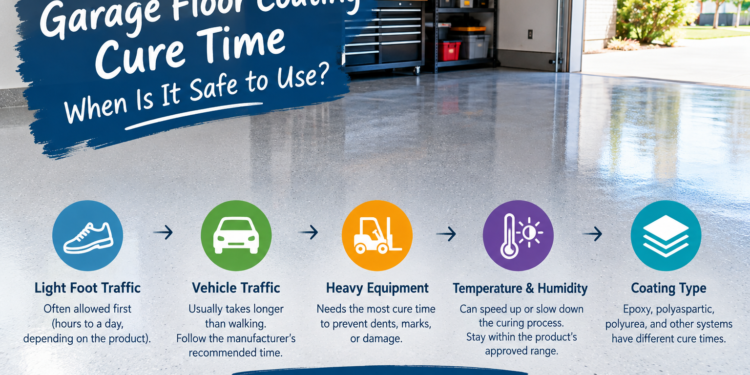
Fresh garage coatings may look ready within hours, yet appearance does not mean the material has reached full working strength. Curing time depends on the coating chemistry, temperature, humidity, concrete condition, and whether the floor will handle footsteps, parked vehicles, or heavier equipment. Understanding those stages helps property owners avoid putting a new surface into service before it can handle normal wear.
Table of Contents
- 1 Dry to the Touch Is Different From Fully Cured
- 2 How Soon Can People Walk Across the Floor?
- 3 Vehicle Traffic Requires More Cure Time Than Foot Traffic
- 4 Temperature Can Speed Up or Slow Down the Cure
- 5 Coating Type Makes a Major Difference in Return-to-Service Time
- 6 Why Should Heavy Equipment Stay Off the Floor Longer?
- 7 Planning the Cure Window Keeps the Garage Usable Long Term
Dry to the Touch Is Different From Fully Cured
Touch-dry coating has hardened enough that light contact may not leave a mark, but chemical reactions can still be taking place below the surface. Early hardness can give a false sense that an epoxy garage floor is ready for tires, toolboxes, shelving, and other concentrated loads.
Full curing develops more of the coating’s intended hardness, adhesion, chemical resistance, and abrasion resistance. Manufacturers set different cure schedules, so the installer’s stated return-to-service time should take priority over judging the floor by feel.
How Soon Can People Walk Across the Floor?
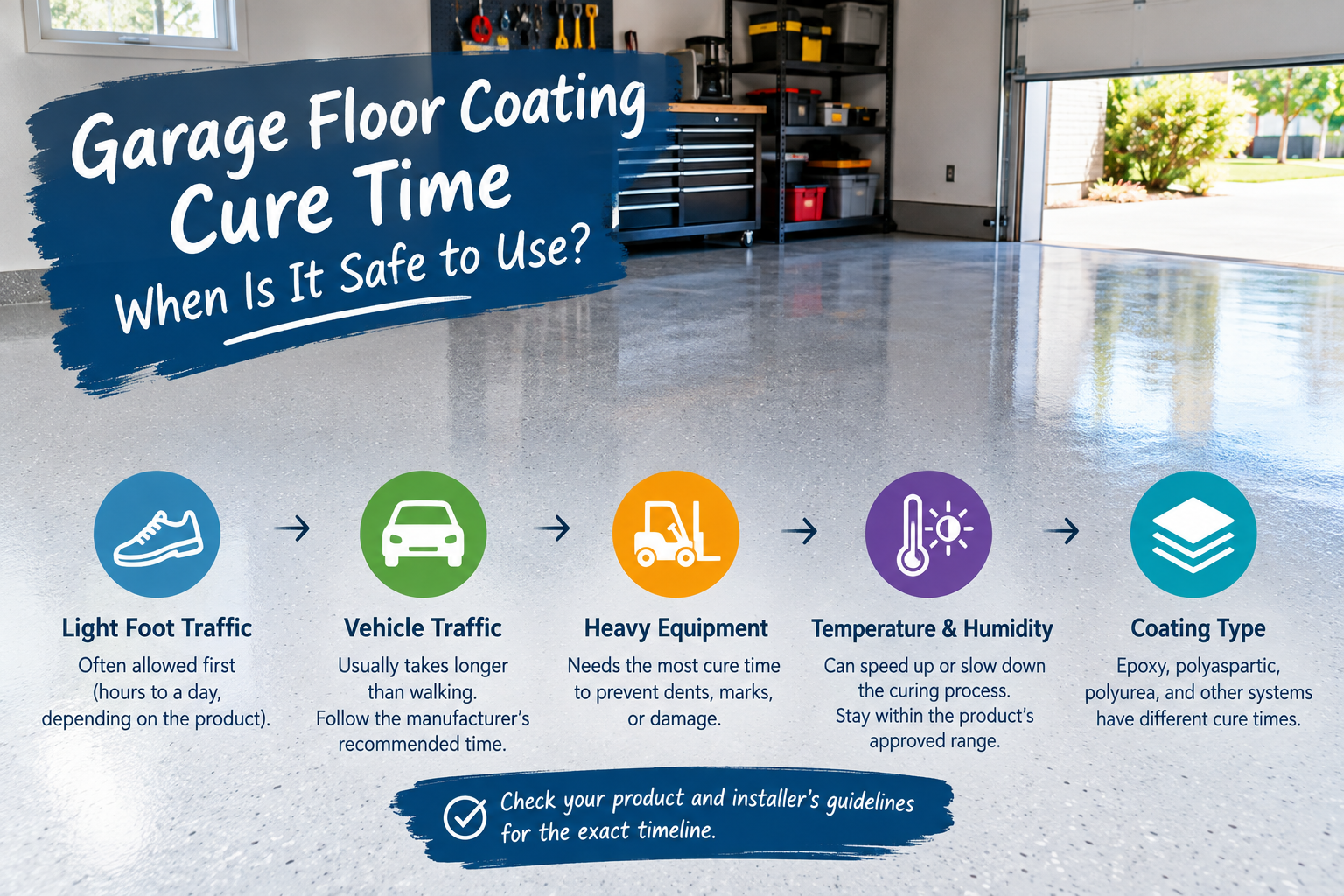
Light foot traffic is commonly permitted before vehicle traffic because a person places much less stress on the coating than a parked car. Certain fast-curing systems may tolerate careful walking within several hours, while traditional epoxy flooring can require a longer period before regular pedestrian use.
Shoes can still damage a young coating if grit, stones, or sharp debris become trapped underneath them. Keeping the floor clean and limiting unnecessary trips across it during early curing gives the surface time to build strength without receiving avoidable scratches or impressions.
Vehicle Traffic Requires More Cure Time Than Foot Traffic
Car tires create concentrated loads in four small contact areas, which makes premature parking much harder on a coating than walking. Warm tires can also place additional stress on a surface that has hardened on top but has not finished curing throughout its full thickness.
Parking should wait until the coating manufacturer and installer consider the system ready for vehicle service. Anyone comparing an epoxy floor company near me should ask for separate timelines for walking, replacing stored items, and bringing vehicles back inside rather than accepting one general cure time.
Temperature Can Speed Up or Slow Down the Cure
Warm conditions generally help many resin-based coatings cure more quickly, provided temperatures remain within the product’s approved installation range. Cold concrete can slow the chemical reaction enough that a floor needs substantially more time before it reaches the same strength.
Humidity affects certain coating systems as well, and the temperature of the slab can matter more than the room’s air temperature. Experienced epoxy flooring companies check environmental conditions before and during installation because the calendar alone cannot predict curing accurately.
Coating Type Makes a Major Difference in Return-to-Service Time
Traditional epoxy systems are valued for their bond, thickness, and durability, but they often require more curing time than rapid-return coating technologies. Polyaspartic, polyurea, urethane, and hybrid systems can follow different schedules based on their chemistry and intended use.
Product selection should therefore consider how long the garage can remain unavailable. Commercial garages and operating facilities may place a higher value on shorter downtime, while other spaces can accommodate a longer cure period in exchange for characteristics better suited to their work environment.
Why Should Heavy Equipment Stay Off the Floor Longer?
Tool chests, lifts, machinery, storage racks, and loaded carts can place high pressure on small wheels or feet. Concentrated loads may dent, mark, or disrupt garage floor coating that appears hard but has not yet developed its intended mechanical properties.
Moving equipment also creates another source of stress because casters and wheels can drag or twist against the young surface. Waiting for the specified heavy-service cure time can prevent permanent marks that would otherwise appear before the floor sees normal daily use.
Planning the Cure Window Keeps the Garage Usable Long Term
Scheduling matters before installation because vehicles, equipment, stored materials, and work operations need another place during the cure period. Property owners should know when each stage becomes available so employees or household members do not accidentally return the floor to service too soon.
Pros LLC provides epoxy flooring, concrete surface preparation, garage floor coatings, and heavy-duty flooring systems for commercial, industrial, and other demanding spaces. Its team can account for coating type, site temperature, traffic requirements, concrete condition, and operational downtime when planning an installation, helping clients understand when their finished floor can safely return to pedestrian, vehicle, and equipment use.