
A Guide to Choosing a Boat Dock for a Vacation Home
Weekend trips to a lake house should involve more time on the water than dealing with dock repairs. Since vacation properties often sit empty for weeks or months, their docks need to withstand changing weather and water conditions without constant attention. Selecting the right structure means considering maintenance, boat access, and how the property will be used when family or guests arrive.
Table of Contents
A Vacation Home Dock Needs to Handle Long Periods Without Use
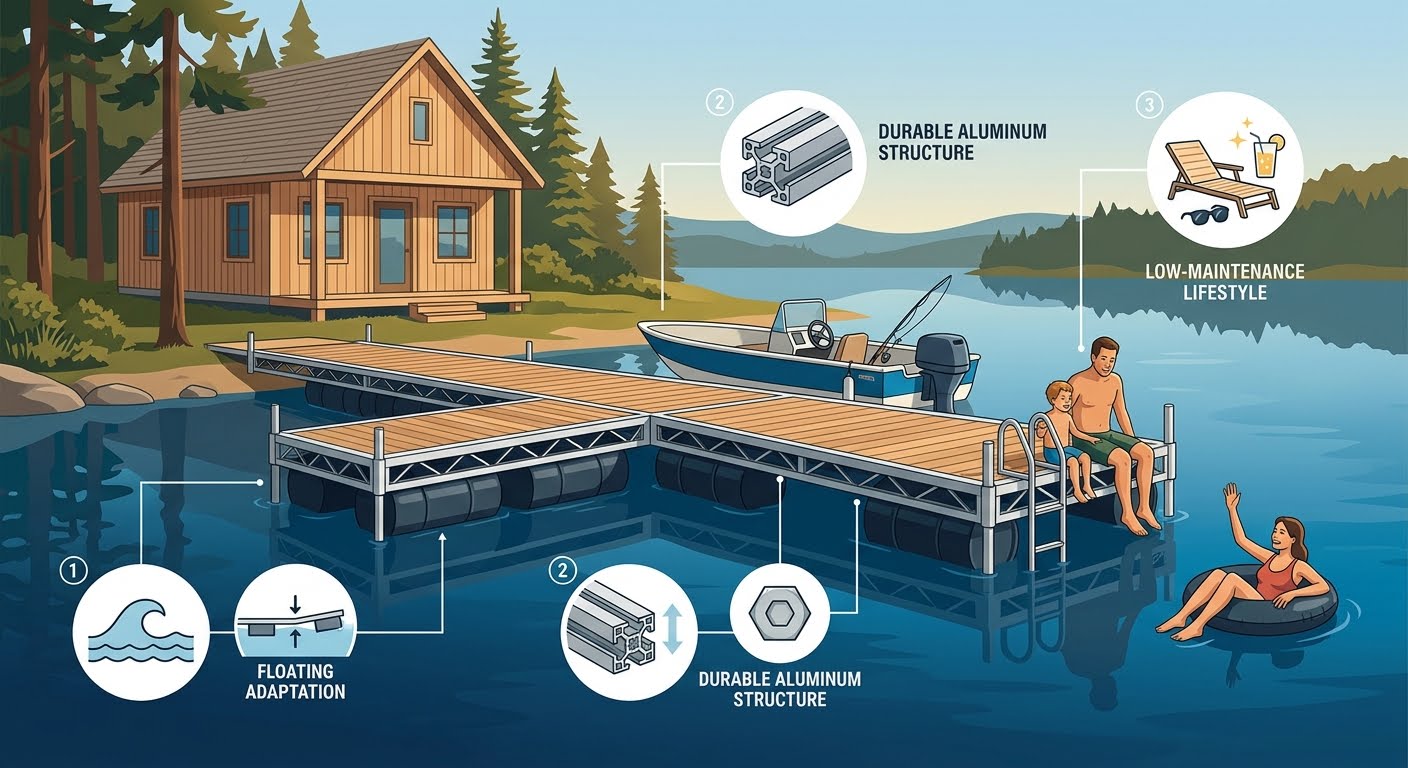
Unlike docks at primary residences, vacation home docks may go weeks without anyone checking their condition. Strong winds, changing water levels, and floating debris can cause damage that goes unnoticed until the next visit. Durable materials and properly installed anchoring equipment help reduce the risk of problems developing during these periods. Aluminum boat docks offer corrosion-resistant frames that do not require the regular staining or sealing associated with wooden structures. However, owners still need periodic inspections of flotation units, connections, and anchoring hardware. Properties that remain vacant for extended periods may benefit from scheduled maintenance checks, particularly after storms or significant changes in lake levels.
Should a Vacation Home Have a Floating or Fixed Dock?
Water conditions often determine which type of dock makes more sense. Fixed docks provide a stable walking surface when water elevations remain relatively consistent, but seasonal drawdowns can create large gaps between the deck and the boat. Floating docks follow the water’s surface, helping maintain a more comfortable boarding height throughout the year.
An aluminum floating dock can be particularly useful at vacation homes located on reservoirs with changing water levels. Its flotation system supports the platform, while anchors control unwanted movement. However, the structure still needs enough water beneath it during low-water periods, and shoreline access must accommodate changing gangway angles.
Experienced floating dock builders evaluate these conditions before recommending a design. Owners who visit only occasionally should also ask how the anchoring arrangement performs during high water and whether any seasonal adjustments or inspections are necessary.
Plan Around Family Visits and Different Boating Activities
Vacation homes often accommodate more people than an ordinary household during weekends and holidays. A dock used for swimming, fishing, and boarding boats needs enough room for these activities without creating crowded walkways. Slip dimensions should account for the vessel’s full length and width, including motors, fenders, and boarding equipment. Families with children may also benefit from convenient ladders, suitable handholds, and slip-resistant decking. Buyers comparing aluminum boat docks for sale should consider how many people will regularly use the structure and whether the layout separates swimming areas from boat traffic. A smaller, well-organized dock may provide better everyday use than a large platform with poorly positioned accessories.
How Much Maintenance Will the Dock Need Between Visits?
Maintenance requirements deserve particular attention when owners live several hours away from their vacation property. Wooden structures may need periodic refinishing and replacement of damaged boards, especially where moisture collects around joints. Aluminum docks avoid many problems associated with wood decay, although their hardware and supporting components still require attention.
Owners should establish a practical inspection schedule that includes checking anchoring connections, flotation attachments, decking, and visible structural damage. Local property managers or dock maintenance contractors can help monitor conditions between visits. Photographs taken after inspections also provide a record of changes that may develop over time.
People researching aluminum docks for sale should ask about replacement-part availability and warranty coverage. A dock with accessible hardware and serviceable components can make repairs easier when something needs attention. These details matter when owners have limited time to arrange maintenance during short vacations.
Find a Dock Layout That Suits the Property’s Long-Term Use
Vacation home owners may eventually add another boat, accommodate more guests, or use the property for longer stays. Dock dimensions, access points, and available recreational space should reflect realistic future plans without creating unnecessary construction costs. Local restrictions may also limit later expansions, making early planning worthwhile.
Flotation Systems manufactures custom aluminum floating dock systems with configurations suited to different waterfront layouts and boating activities. Vacation property owners can consider its available designs when comparing boat slip arrangements, anchoring methods, and access requirements. A dock that fits the shoreline and requires manageable upkeep can make weekend visits easier while reducing the amount of maintenance owners need to handle between trips.