
Tucson’s Evolving Housing Landscape: Opportunities for Homebuyers and Investors
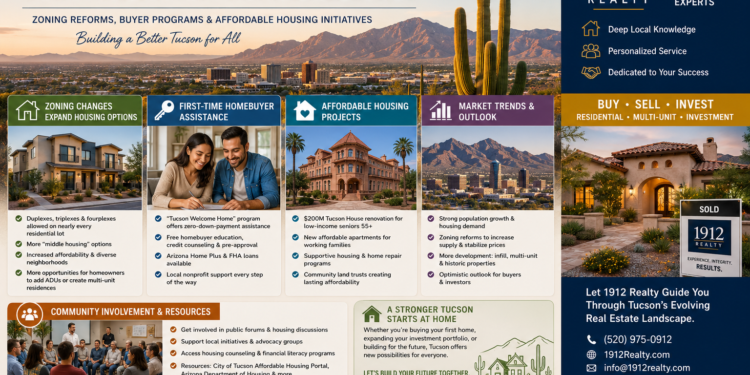
Table of Contents
Zoning Changes and Their Impact on Housing
In January 2026, Tucson implemented a significant zoning reform that allowed duplexes, triplexes, and fourplexes on nearly every residential lot. This change aims to increase housing diversity and affordability across the city. By permitting “middle housing” types, Tucson seeks to address the housing shortage and provide more options for residents. This policy shift is expected to attract developers and investors, leading to a more dynamic housing market.
For those looking to navigate these new opportunities, Tucson AZ real estate experts 1912 Realty can provide invaluable guidance. With a deep understanding of the local market and a commitment to client success, 1912 Realty offers comprehensive services to buyers, sellers, and investors in the Tucson area. Their expertise spans various property types, including the newly permitted multi-unit residences, ensuring clients make informed decisions in this evolving landscape.
Beyond its impact on developers, the zoning reform also holds benefits for long-term Tucson residents. Many homeowners, especially those with larger lots or underutilized yard space, now have the option to add accessory dwelling units (ADUs) or convert single-family homes into multi-unit dwellings. Not only can this supplement the city’s rental supply, but it also offers new income opportunities for homeowners and multigenerational living arrangements for families seeking affordable, flexible options. Neighborhoods throughout Tucson are likely to see a subtle transformation, with increased walkability and vibrancy fostered by a broader mix of housing.
First-Time Homebuyer Assistance Programs
Recognizing the challenges faced by first-time homebuyers, local credit unions have launched the “Tucson Welcome Home” program. This initiative offers zero-down-payment assistance, making homeownership more accessible to individuals and families transitioning from renting. By eliminating the barrier of a substantial down payment, the program aims to increase homeownership rates and promote financial stability among Tucson residents.
Applicants for the “Tucson Welcome Home” program receive personalized support, including free homebuyer education courses, credit counseling, and pre-approval assistance. These resources empower buyers to make informed decisions and prepare for the financial responsibilities of home ownership. The program also partners with local realtors and lenders to ensure that participants are matched with homes and mortgage products that best suit their unique circumstances.
Additionally, Arizona’s Home Plus program and federal FHA loans remain available, offering down payment and closing cost assistance for eligible buyers. Many local nonprofits and housing advocacy groups provide ongoing workshops and individual consultations, supporting residents throughout the entire homebuying journey. By taking advantage of these opportunities, Tucson’s aspiring homeowners can move confidently from renting to owning, often with less cash up front than they might expect.
Affordable Housing Projects in Tucson
To address the growing demand for affordable housing, Tucson has embarked on several significant projects. Notably, the historic Tucson House is undergoing a $200 million renovation to convert it into affordable housing for low-income seniors aged 55 and older. This project is part of the city’s broader strategy to preserve and expand affordable housing options, ensuring that all residents have access to safe and affordable homes.
The Tucson House project represents just one piece of a greater regional effort. In recent years, the City of Tucson has partnered with federal, state, and nonprofit agencies to fund the construction and preservation of hundreds of affordable units throughout the metro area. Efforts include energy-efficient apartments geared toward working families, supportive housing for people emerging from homelessness, and rehabilitation grants for homeowners in need of critical repairs. Several community land trusts have also formed, managing permanently affordable homes insulated from the fluctuations of the open market and providing security for future generations of Tucsonans.
Current Market Trends and Future Outlook
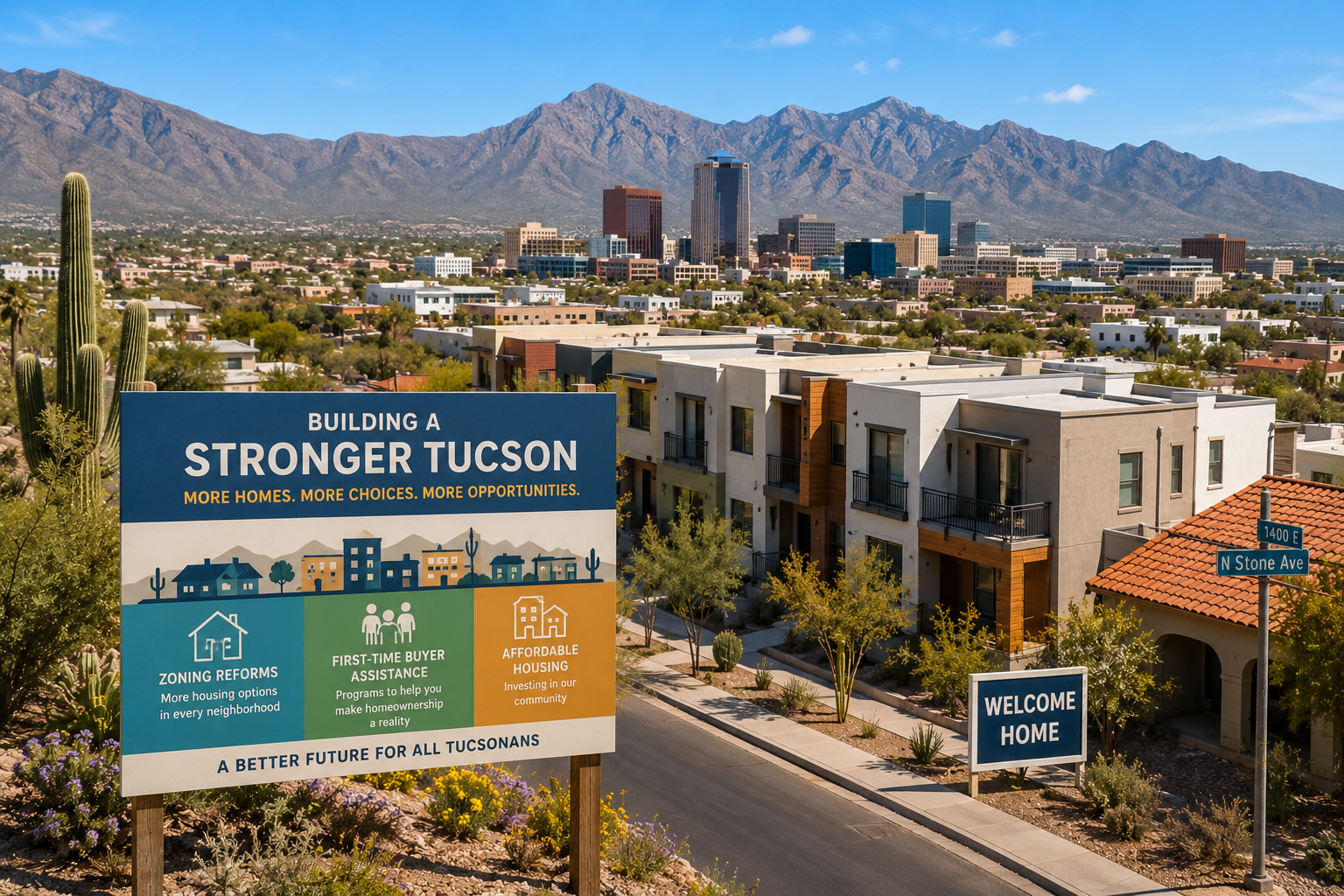
The combination of zoning reforms, assistance programs, and affordable housing projects is expected to significantly influence Tucson’s real estate market. These initiatives aim to increase the housing supply, stabilize prices, and make homeownership more attainable. Prospective buyers should stay informed about these developments and consider how they might impact their homeownership journey.
In 2024 and 2025, Tucson experienced strong population growth coupled with a sharp increase in housing demand, leading to rapid price appreciation and constrained inventory. Analysts predict that with the latest policy changes, price growth will moderate as new units come online. Local builders, responding to streamlined permitting and flexible zoning, are eager to deliver more varied housing stock, from small-scale infill developments to modernized historic properties. The overall market outlook is one of cautious optimism: while national economic factors such as interest rates and supply chain issues may remain in flux, Tucson’s local efforts are creating pathways for buyers previously left out of the market.
Community Involvement and Resources
Community involvement plays a crucial role in shaping Tucson’s housing landscape. Residents are encouraged to participate in public forums, provide feedback on housing policies, and support local initiatives. Additionally, resources such as housing counseling services and financial literacy programs are available to help individuals navigate the homeownership process.
Several advocacy organizations operate in Tucson, including the Tucson Housing Justice Collective and the Arizona Housing Coalition, both of which offer volunteer opportunities and educational events. By staying engaged, residents not only influence policy outcomes but also help build a sense of solidarity and resilience as the city changes. Additionally, online resources, such as the City of Tucson’s affordable housing portal and the Arizona Department of Housing website, provide up-to-date information on program eligibility, available units, and community meetings. Whether you are seeking to buy your first home or help your neighbors maintain theirs, there are numerous opportunities to make a tangible difference in Tucson’s housing future.
Conclusion
Tucson’s proactive approach to addressing housing challenges through zoning reforms, assistance programs, and affordable housing projects reflects a commitment to fostering a diverse and inclusive community. For those considering homeownership in Tucson, staying informed about these developments and utilizing available resources can pave the way to achieving their homeownership goals.
As Tucson continues to grow, embracing community input and leveraging innovative policy solutions will be crucial for maintaining affordability and quality of life. Whether you are a potential homebuyer, a long-time resident, or someone interested in investing in Tucson’s vibrant future, the city’s evolving housing landscape offers new possibilities and a chance to be part of building a more equitable place for all.