
Revolutionizing Renewable Energy with Modular Hydropower Construction
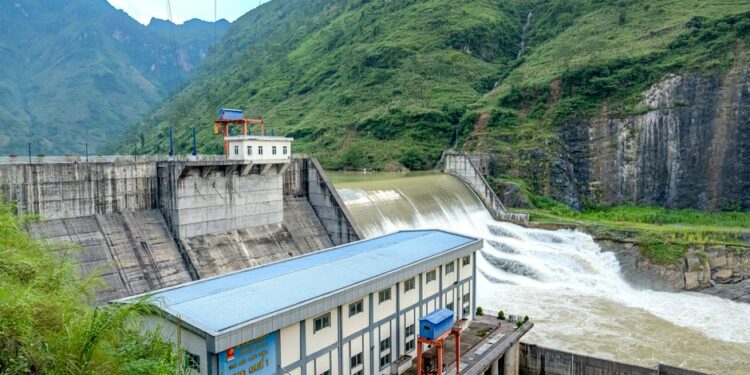
As of May 2026, the global energy landscape demands innovative solutions. We face aging infrastructure and urgent decarbonization goals. Traditional dam construction often presents significant challenges in cost, time, and environmental impact. However, a transformative approach is emerging: modular dam construction.
This guide will explore how modular hydropower is revolutionizing renewable energy. We will examine its key advantages, from rapid assembly to reduced costs and environmental footprints. We’ll delve into the innovative technologies and materials used, the types of projects where modular dams excel, and their vital role in integrating sustainable power sources into our grids. We aim to provide a comprehensive understanding of this cutting-edge construction method.
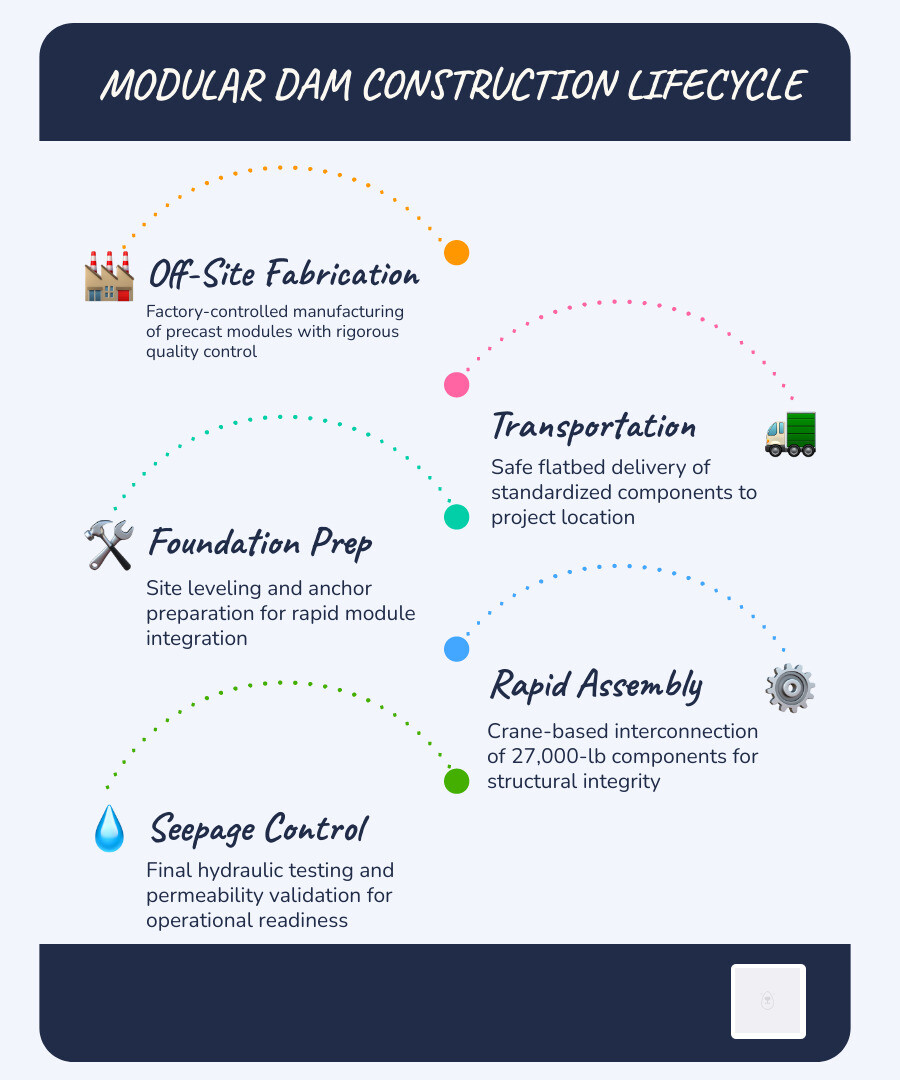
Table of Contents
- 1 The Rise of Hydropower Innovation in Modern Infrastructure
- 2 Engineering the Modular Dam: Materials and Assembly
- 2.1 Feature Traditional Cast-in-Place Dams Modular Precast Systems Construction Method Concrete poured and cured on-site, extensive formwork. Components fabricated off-site, assembled on-site. Construction Time Long, susceptible to weather delays, complex logistics. Significantly reduced, faster assembly, less weather-dependent. Cost High capital costs, potential for overruns, labor-intensive. Reduced costs (up to 33%), minimized labor, predictable budgeting. Quality Control Variable, depends on on-site conditions and labor. High, factory-controlled environment ensures consistency. Environmental Impact Significant on-site disturbance, large carbon footprint. Reduced on-site disturbance, lower carbon footprint from transport. Materials Concrete, aggregates, rebar. Precast concrete blocks or prefabricated steel buttresses. Assembly Slow, sequential pouring and curing. Rapid, interconnected assembly using heavy machinery. Risk Factors High exposure to weather, labor issues, material supply. Reduced exposure, faster project completion, less site-specific risk. Flexibility/Scalability Limited, custom design for each site. High, standardized components adaptable to various site conditions. Hydropower Innovation through Precast Concrete
- 2.2 Hydropower Innovation in Steel Buttress Systems
- 3 Addressing the Global Energy Storage Gap with Pumped Hydro
- 4 Economic Advantages and Environmental Stewardship
- 5 Frequently Asked Questions about Modular Dam Construction
- 6 Conclusion
The Rise of Hydropower Innovation in Modern Infrastructure
The foundational civil construction aspects of new hydropower developments typically represent a substantial portion of the total capital cost, often ranging from 40% to an astonishing 90%. This significant financial outlay is frequently compounded by considerable risks associated with project schedules and budgets. Factors such as unpredictable weather, river flood events, protracted contracting processes, and long lead times for specialized equipment can all contribute to costly delays and overruns. These challenges have historically hindered the rapid expansion and modernization of hydropower infrastructure, despite its immense potential as a renewable energy source.
However, a paradigm shift is underway with the advent of modular construction techniques. By moving many traditional on-site construction tasks to controlled, off-site manufacturing environments, we can dramatically mitigate these risks. This approach allows for the fabrication of large, standardized components in a factory setting, where quality control is stringent and environmental factors are less impactful. Once manufactured, these components are transported to the project site for rapid assembly. This separation of manufacturing from installation provides crucial scheduling flexibility and significantly enhances project control.
This innovative approach is exemplified by advancements like the FDE Hydro modular hydropower innovation, which focuses on manufacturing large concrete components in a factory for efficient on-site assembly. The benefits of this method are profound: it not only reduces delays and costs but also minimizes the overall risk profile of the civil construction phase. The proven success of precast concrete in diverse sectors—from commercial and residential buildings to bridges, parking garages, hospitals, and prisons—underscores its reliability and efficiency. Indeed, several U.S. hydropower facilities have already integrated precast elements into powerhouse construction, demonstrating the practical applicability of this technology within the industry. By embracing standardized modular precast components, we can minimize the need for custom, site-specific fabrication, streamlining processes, increasing design standardization, and ultimately making hydropower projects more viable and sustainable. This strategic shift addresses the core issues of time and money that have historically plagued large-scale infrastructure projects.

Engineering the Modular Dam: Materials and Assembly
Modular dam construction represents a significant leap forward in civil engineering, employing advanced materials and streamlined assembly processes that stand in stark contrast to traditional methods. At its core, modular design leverages either robust precast concrete blocks or innovative steel buttress systems, each offering unique advantages in specific applications. The general principle involves extensive foundation preparation, which typically includes precise grading, leveling, and the strategic placement of concrete pedestals equipped with anchors to support the substantial loads transferred by the dam’s structure. Effective seepage control is also paramount; this is often achieved by encasing the dam’s heel in reinforced concrete and lining the reservoir face and base with durable plastic liners and integrated drainage systems. Furthermore, the configuration of emergency spillways and outlet works is meticulously tailored to local climatology, hydrology, and the structural properties of the host rock, ensuring optimal performance and safety.
To illustrate the differences, consider the following comparison:
Feature Traditional Cast-in-Place Dams Modular Precast Systems Construction Method Concrete poured and cured on-site, extensive formwork. Components fabricated off-site, assembled on-site. Construction Time Long, susceptible to weather delays, complex logistics. Significantly reduced, faster assembly, less weather-dependent. Cost High capital costs, potential for overruns, labor-intensive. Reduced costs (up to 33%), minimized labor, predictable budgeting. Quality Control Variable, depends on on-site conditions and labor. High, factory-controlled environment ensures consistency. Environmental Impact Significant on-site disturbance, large carbon footprint. Reduced on-site disturbance, lower carbon footprint from transport. Materials Concrete, aggregates, rebar. Precast concrete blocks or prefabricated steel buttresses. Assembly Slow, sequential pouring and curing. Rapid, interconnected assembly using heavy machinery. Risk Factors High exposure to weather, labor issues, material supply. Reduced exposure, faster project completion, less site-specific risk. Flexibility/Scalability Limited, custom design for each site. High, standardized components adaptable to various site conditions. Hydropower Innovation through Precast Concrete
One of the most compelling examples of modular dam innovation is the “French Dam” technology, which utilizes interconnected precast concrete blocks. A notable prototype, for instance, comprised six massive 27,000-pound concrete blocks, each measuring 8 feet by 8 feet by 8 feet. The remarkable aspect of this system was its assembly speed: the entire prototype dam was installed and fully assembled in less than 3.5 hours. This rapid deployment capability is a testament to the efficiency of modular design.
These prototype modules were engineered for durability, constructed from 6000 psi concrete with robust 8-inch thick reinforced walls. Weighing approximately 27,000 pounds each, these components were designed for handling and shipping using conventional heavy construction equipment, ensuring logistical feasibility. The modules are interconnected using strong 1-inch diameter bolts, creating a cohesive and stable structure. To ensure hydraulic integrity and prevent water leakage, the joints between modules are meticulously sealed with preformed rubber and paste-type hydrophilic waterstops, which expand upon contact with water to create a watertight barrier. Extensive prototype testing has consistently demonstrated the hydraulic integrity of these precast modules, validating their effectiveness in real-world conditions.
The development of this technology has been significantly bolstered by governmental and institutional support. The “French Dam” technology, for example, received substantial funding from the U.S. Department of Energy, including a $1.7 million award in January 2016, and further backing from the Massachusetts Clean Energy Center. This support highlights the recognition of modular precast concrete as a critical advancement for the future of hydropower. The system’s design incorporates standardized modular precast components that can be applied to various structures, including overflow spillways, non-flow gravity sections, powerhouses, and turbine structures. The interconnection mechanisms, involving bolt linkages, keyway configurations, and robust support systems like rock anchors or drilling pile support systems, allow these individual components to form a monolithic, highly resilient structure.
Hydropower Innovation in Steel Buttress Systems
Complementing the advancements in precast concrete, the Southwest Research Institute (SwRI) has introduced another groundbreaking modular solution: the m-Presa™ system, a novel modular steel buttress dam design. This system leverages the strength and flexibility of steel to create efficient water impoundments. The core of the m-Presa system lies in its prefabricated structural members, which typically measure more than 3 meters in height and range from 3 to 12 meters in length. These components are ingeniously designed to be transported to the construction site on standard flatbed or lowboy trailers, significantly simplifying logistics and reducing transportation costs.
On-site, these structural elements are assembled with remarkable speed using common heavy construction equipment. The process involves erecting a robust buttress framework, which is then clad with cylindrically curved steel plates, forming the water-retaining face of the dam. The modularity allows for the construction of buttress dams ranging from 10 to 40 feet in height. For instance, a 40-foot-tall dam would utilize a combination of 40-, 30-, 20-, and 10-foot modules, stacked and connected to form the buttresses that efficiently transfer the water load to the foundation. Lateral stiffness, crucial for structural stability, is achieved through a combination of these face plates and strategically placed cross braces.
A key advantage of the m-Presa system is its adaptability. It can be custom-designed for specific locations, taking into account unique site-specific challenges such as varying wind loads and seismic conditions. This bespoke engineering ensures that each modular dam is optimized for its environment, providing maximum safety and performance. Primarily, the m-Presa system is developed for grid-scale energy storage applications, specifically for closed-loop pumped storage hydropower (PSH), offering a rapid and cost-effective solution for creating the necessary water impoundments.
Addressing the Global Energy Storage Gap with Pumped Hydro
The integration of intermittent renewable energy sources like solar and wind into the national grid presents a significant challenge: how to ensure grid stability when energy generation fluctuates with weather conditions. This is where large-scale energy storage becomes indispensable, and pumped storage hydropower (PSH) has historically been the workhorse of this sector. As of May 2026, PSH accounts for approximately 95% of all utility-scale energy storage in the U.S., a testament to its reliability and efficiency. Modern PSH plants boast impressive round-trip efficiencies, often approaching 80%, meaning a large percentage of the energy used to pump water uphill can be recovered when it flows back down through turbines.
Despite its proven capabilities, the deployment of new PSH facilities has been sluggish; only one moderate-sized 40MW PSH plant has been constructed in the U.S. in the past two decades. This stagnation is largely due to the high capital costs and lengthy construction timelines associated with traditional dam building. However, the rise of modular dam construction, particularly systems like the m-Presa, is poised to revolutionize this landscape.
Modular PSH systems are critical for load balancing, allowing us to store surplus electricity generated during off-peak hours (e.g., abundant daytime solar production) and release it during periods of high demand. This capability is far more sustainable than relying on gas peaking plants, which contribute to carbon emissions, and offers a longer lifespan compared to battery energy storage systems. The m-Presa system specifically addresses the three main impediments to rapidly deploying PSH: cost, time, and environmental impacts. Its design allows for the creation of water impoundments—capable of storing hundreds to thousands of megawatt-hours (MWh) of energy—on diverse, relatively flat terrains, including distinctive caprock mesas, steep-sided slopes, and gently sloped valley floors. By utilizing closed-loop PSH systems, which are separate from natural waterways, modular dams can significantly reduce or even avoid the environmental impacts typically associated with impounding natural rivers, offering a more ecologically sensitive approach to energy storage.

Economic Advantages and Environmental Stewardship
The economic and environmental benefits of modular dam construction are transforming the landscape of hydropower development. One of the most striking economic advantages is the significant reduction in construction costs and schedules. Systems like the m-Presa can slash dam construction costs by one-third and reduce construction schedules by half compared to traditional methods. This translates into a potential reduction in construction costs to an impressive $1,500 per kW-installed capacity, making PSH highly competitive with other long-term energy storage solutions. A PSH unit utilizing this modular approach can be constructed in less than half the time typically required for conventional PSH units that rely on earthen embankment or cast-in-place concrete dams. Similarly, modular steel buttress dams generally promise a one-third reduction in cost and a 50% decrease in construction time over their concrete and earth-filled counterparts.
These cost and time efficiencies are not merely theoretical; they are supported by significant investment and research. For instance, the “French Dam” technology received a substantial $1.7 million in funding from the U.S. Department of Energy in January 2016, underscoring its potential to deliver on these promises. The inherent nature of modular precast concrete systems, which involve moving traditional on-site construction tasks to an off-site, controlled precasting location, inherently reduces delays and costs associated with unpredictable weather, site-specific challenges, and labor-intensive on-site work.
Beyond the immediate economic gains, modular dam construction offers profound environmental stewardship benefits. The ability to utilize closed-loop systems, which are distinct from natural rivers and streams, means that these dams can be designed to minimize or even avoid the ecological disruptions associated with impounding natural waterways. This approach helps maintain ecological continuity in rivers, protecting fish migration and aquatic habitats. Furthermore, the reduced on-site construction time and footprint inherently lead to less site disturbance, preserving local ecosystems. The precision and efficiency of factory fabrication also allow for better material utilization and reduced waste, contributing to a lower overall environmental footprint. These advancements are crucial for developing sustainable water infrastructure and ensuring that hydropower continues to play a vital role in our clean energy future without compromising environmental integrity. The focus on low-impact dam retrofits and new construction aligns perfectly with global sustainable development goals.
Frequently Asked Questions about Modular Dam Construction
What are the primary advantages of modular dam construction compared to traditional methods?
Modular dam construction offers a compelling suite of advantages that address many of the long-standing challenges in civil infrastructure projects. Firstly, construction speed is dramatically enhanced. As demonstrated by the prototype “French Dam,” which was assembled in under 3.5 hours, modular systems can significantly cut construction schedules by half. This rapid deployment capability is a game-changer, reducing project timelines from years to months. Secondly, substantial cost savings are realized, often reducing overall project costs by one-third. This is achieved through efficient off-site fabrication, which minimizes labor costs, reduces material waste, and allows for economies of scale in manufacturing.
Furthermore, modular construction significantly reduces weather risk. By fabricating components in a controlled factory environment, projects are less susceptible to delays caused by adverse weather conditions. This also allows for more predictable project scheduling and budgeting. The emphasis on off-site fabrication also leads to enhanced safety by moving hazardous work away from the active construction site. Scalability is another key benefit, as standardized modules can be adapted to various dam sizes and configurations, making the technology versatile for different project needs. Lastly, modular methods contribute to a lower environmental footprint through reduced on-site disturbance, better resource management, and often, the use of more sustainable materials and processes.
How does modular technology address the challenges of pumped storage hydropower?
Pumped storage hydropower (PSH) is a critical component of grid stability, particularly with the increasing integration of intermittent renewable energy sources. However, traditional PSH development has been hampered by high capital expenditures, often reaching $5,000 per kW of installed capacity, and lengthy construction schedules that can span a decade. Modular technology directly tackles these hurdles.
The m-Presa system, for instance, has demonstrated the potential for significant capital cost reduction, bringing costs down to an estimated $1,500 per kW-installed capacity. This makes PSH far more competitive with other long-term energy storage modes. Coupled with halved construction schedules, modular PSH projects can be brought online much faster, accelerating the deployment of essential energy storage infrastructure. This rapid deployment, combined with lower costs, leads to more competitive energy storage pricing, making PSH an economically attractive option for grid operators. Critically, modular designs facilitate the use of closed-loop PSH systems, which minimize or eliminate the need to impound natural waterways, ensuring minimal impact on natural waterways and preserving ecological integrity. This combination of efficiency, cost-effectiveness, and environmental sensitivity ensures grid-scale reliability for a future powered by renewables.
What types of projects are best suited for modular dam systems?
Modular dam construction is exceptionally versatile and well-suited for a variety of projects, offering tailored solutions where traditional methods fall short.
- Small-to-mid-scale hydro projects: These projects often face economic viability challenges with conventional construction, but modular systems can make them cost-effective and faster to deploy.
- Pumped storage facilities: Modular dams are ideal for creating the reservoirs needed for closed-loop PSH systems, enabling rapid and efficient energy storage solutions.
- Dam retrofits and rehabilitation: With aging dam infrastructure being a global concern, modular components offer a quick, less disruptive, and cost-effective way to upgrade or repair existing structures, extending their lifespan and improving safety.
- Remote area infrastructure: The ability to fabricate components off-site and transport them for assembly makes modular dams perfect for remote locations where access to materials and skilled labor for traditional construction is limited.
- Emergency water control: In situations requiring rapid response, such as flood control or temporary water diversion, inflatable modular dams can be quickly deployed and, when deflated, allow for natural river flow.
- Aging dam rehabilitation: Modular techniques provide a viable solution for modernizing and reinforcing older dams that are nearing the end of their design life, improving their resilience against extreme weather events.
These applications highlight how modular dam construction is not just an alternative but often a superior solution for contemporary water management and renewable energy needs.
Conclusion
As of May 2026, modular dam construction stands at the forefront of infrastructure innovation, offering a powerful solution to the intertwined challenges of aging infrastructure, rising energy demands, and the urgent need for decarbonization. This cutting-edge approach, characterized by its efficiency, cost-effectiveness, and reduced environmental footprint, is poised to have a profound future market impact. By significantly cutting construction costs and schedules, modular dams are making large-scale energy storage, particularly pumped hydropower, more accessible and economically viable than ever before.
This technological leap enables the deployment of scalable renewable energy solutions, crucial for integrating intermittent sources like solar and wind into stable, reliable grids. It represents a vital step in infrastructure modernization, allowing us to efficiently build new facilities and rehabilitate existing ones to meet contemporary demands. Modular dam construction contributes directly to global energy security by providing robust, flexible, and sustainable energy storage and generation capabilities. The outlook for this technology is bright, aligning perfectly with sustainable development goals and paving the way for a more resilient and environmentally responsible energy future.