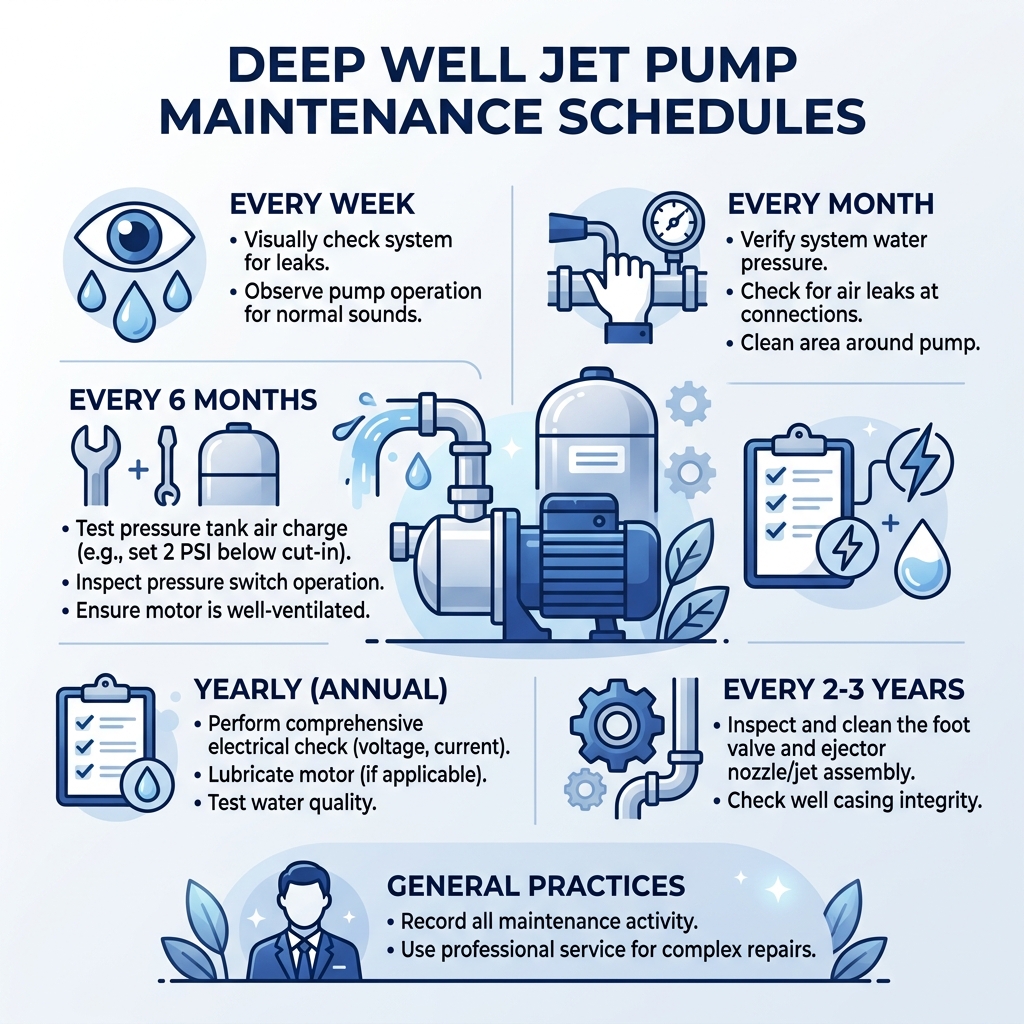

Reliable Plumbing and HVAC Services for Your Home
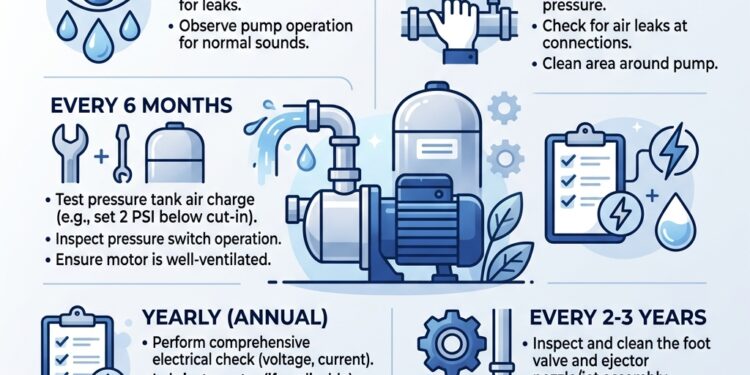
Table of Contents
- 1 Essential Plumbing and HVAC Systems for Modern Residences
- 2 Mechanics of Deep Well Jet Pump and Tank Systems
- 2.1 Feature Shallow Well Jet Pump Deep Well Jet Pump Typical Depth Up to 25 feet Approximately 25 to 200 feet Ejector Location Above ground, integrated with the pump Down in the well, submerged below the water level Pipe System Single pipe (suction line) Two pipes (suction line and drive/pressure line) Priming Requires priming, easier due to above-ground ejector Requires priming, can be more involved due to downhole ejector Efficiency Generally more efficient than deep well jet pumps Less efficient due to water recirculation Serviceability Easier to service as all components are accessible Pump is above ground, but ejector service requires well access Convertibility Not typically convertible to deep well Many models are convertible to shallow well by changing ejector Depth Capabilities and Performance Specs
- 2.2 The Role of the Ejector Kit and Pressure Tank
- 3 Installation Standards and Electrical Requirements
- 4 Maintenance and Troubleshooting for System Longevity
- 5 Frequently Asked Questions about Well Systems
- 6 Conclusion
Essential Plumbing and HVAC Systems for Modern Residences
Maintaining a comfortable and functional home in April 2026 demands a robust infrastructure, where plumbing and HVAC systems work in harmony. These essential services are not just about convenience; they are about ensuring the health, safety, and longevity of your property. From delivering clean water to regulating indoor temperatures, their seamless operation is paramount. We understand that system longevity, preventative maintenance, and energy efficiency are top priorities for homeowners. When considering critical components like deep well pumps, securing reliable service is key. For comprehensive and trustworthy solutions, many homeowners turn to experts like those offering Daigle deep well pumps and related services.

The Role of Plumbing and HVAC in Water Distribution
At the heart of any modern residence is its water supply. Plumbing systems are responsible for delivering potable water to every faucet, shower, and appliance, while also efficiently removing wastewater. When a home relies on a private well, the well pump system is the initial and most critical link in this chain. Beyond simple delivery, plumbing systems also manage water pressure, ensuring a consistent flow throughout the house. HVAC systems, while primarily focused on thermal regulation, often integrate with plumbing for water heating, radiant floor systems, or even humidification, highlighting the crucial synchronization required between these two utilities.
Seasonal Inspections for Plumbing and HVAC Reliability
Proactive maintenance is the cornerstone of system reliability. Seasonal inspections are not merely a suggestion but a necessity to prevent costly breakdowns and extend the lifespan of your equipment. During these inspections, system diagnostics can identify potential issues before they escalate. For plumbing, this includes leak detection, checking pipe integrity, and assessing water heater performance. For HVAC, it involves filter replacement, coil cleaning, and verifying refrigerant levels. Regular plumbing and HVAC performance auditing, alongside testing emergency shut-off valves, ensures that your home is prepared for any eventuality, maintaining optimal comfort and efficiency year-round.
Mechanics of Deep Well Jet Pump and Tank Systems
When your home relies on a well that extends beyond the reach of a standard shallow well pump, a deep well jet pump system becomes indispensable. Unlike submersible pumps that push water from within the well, jet pumps are mounted above ground and operate by creating a suction force. This is achieved through a clever application of the venturi effect, where a portion of the pumped water is recirculated down into the well through a smaller pipe to a specialized ejector assembly. This high-velocity water stream creates a low-pressure zone, effectively drawing more water from the well into the main suction line. The impeller within the pump’s motor is central to this entire process, initiating the water flow and maintaining the necessary pressure.
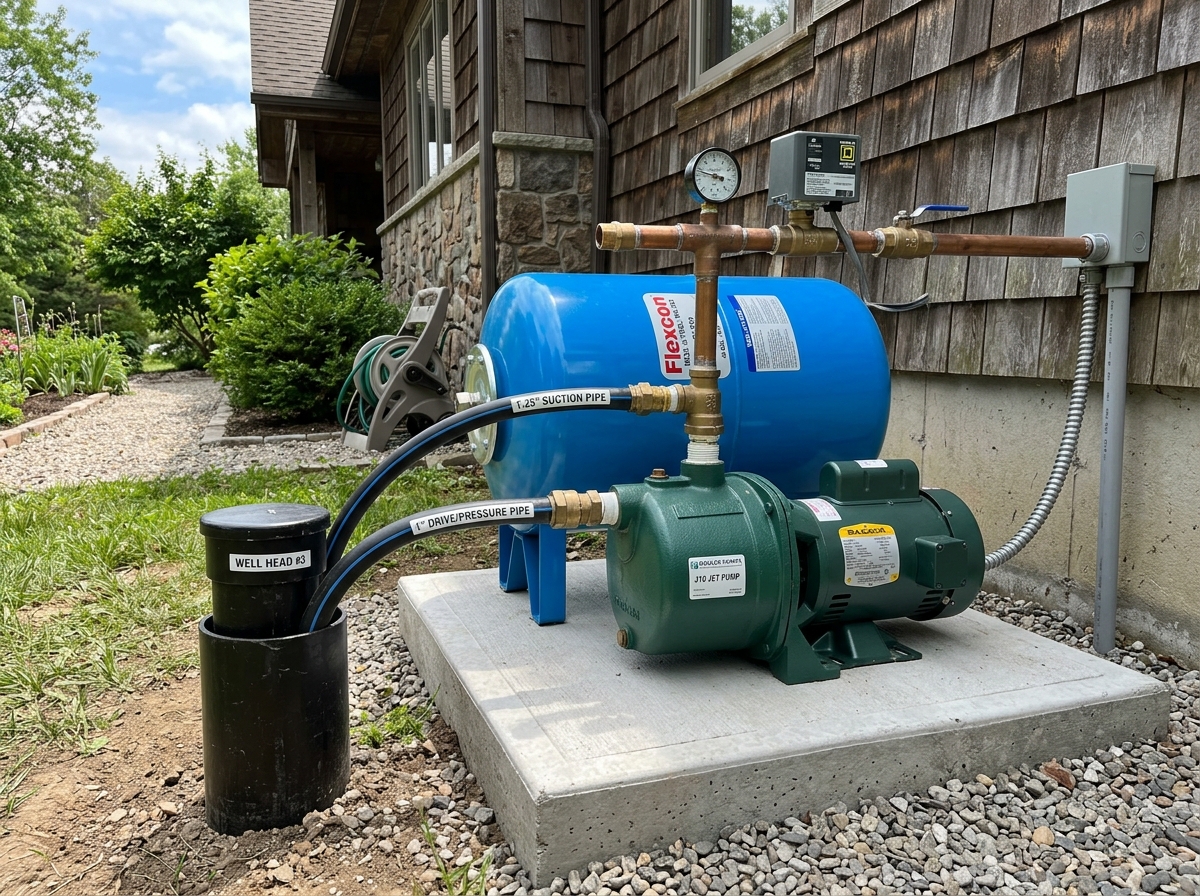
Here’s a quick comparison of shallow and deep well jet pumps:
Feature Shallow Well Jet Pump Deep Well Jet Pump Typical Depth Up to 25 feet Approximately 25 to 200 feet Ejector Location Above ground, integrated with the pump Down in the well, submerged below the water level Pipe System Single pipe (suction line) Two pipes (suction line and drive/pressure line) Priming Requires priming, easier due to above-ground ejector Requires priming, can be more involved due to downhole ejector Efficiency Generally more efficient than deep well jet pumps Less efficient due to water recirculation Serviceability Easier to service as all components are accessible Pump is above ground, but ejector service requires well access Convertibility Not typically convertible to deep well Many models are convertible to shallow well by changing ejector Depth Capabilities and Performance Specs
The primary distinction between shallow and deep well jet pumps lies in their depth capabilities. While shallow well jet pumps are limited to drawing water from a maximum depth of around 25 feet, deep well jet pumps can effectively lift water from approximately 25 feet up to 200 feet. This significant difference is due to the downhole ejector kit, which overcomes the atmospheric pressure limitations that restrict shallow well pumps.
When selecting a pump, performance specifications are crucial. These include Gallons Per Minute (GPM), which indicates the flow rate, and Pounds per Square Inch (PSI), which measures water pressure. For instance, a 1 HP vertical deep well jet pump might offer a maximum capacity of 12 GPM, delivering 11 GPM at a 50-foot lift and 40 PSI. Horsepower (HP) ratings, typically ranging from 1/2 HP to 2 HP for residential applications, directly correlate with the pump’s ability to move water against gravity and friction. It’s also important to consider altitude adjustments, as higher elevations can reduce the effective maximum pumping depth. For example, the Pentair Flotec FP4432-01 1 HP Vertical Deep Well Jet Pump boasts a max lift of 260′ for 4″ or larger wells, and 180′ for 2″ wells, showcasing varied performance based on well diameter.
The Role of the Ejector Kit and Pressure Tank
The ejector kit is the defining component of a deep well jet pump system. Located down in the well, it consists of a nozzle and a venturi. Water from the pump is forced through the nozzle, creating a high-velocity jet that then passes through the venturi, drawing additional well water into the suction line. This ingenious mechanism allows the pump to “pull” water from depths far greater than a simple suction pump could manage. However, this method comes with a trade-off: deep well jet pumps recirculate a significant amount of water. For every 1 gallon of usable water supplied to your pressure system, the pump might recirculate 3 to 4 gallons back down the well. This recirculation impacts energy efficiency, making them generally less efficient than submersible pumps for very deep applications.
Integral to any well water system is the pressure tank. This often-overlooked component plays a vital role in maintaining consistent water pressure and extending the life of your pump. The pressure tank stores water under pressure, acting as a buffer between the well pump and your home’s water fixtures. When you open a faucet, water is drawn from the tank first. Only when the pressure drops to a pre-set “cut-in” point (e.g., 30 PSI) does the pump activate to refill the tank. Once the pressure reaches the “cut-out” point (e.g., 50 PSI), the pump shuts off. A common pressure switch setting is 40/60 PSI. This cycling mechanism prevents the pump from short-cycling (turning on and off too frequently), which can lead to premature motor wear. The tank’s drawdown volume, or the amount of water it can deliver before the pump restarts, is a critical factor in sizing and efficiency. Proper pressure tank sizing is essential for preventing common issues like pump short-cycling and waterlogged tanks.
Installation Standards and Electrical Requirements
The successful and safe installation of a deep well jet pump system requires adherence to specific standards and a thorough understanding of electrical requirements. Because these systems involve both water and electricity, professional installation is often recommended to ensure compliance with local codes and optimal performance.
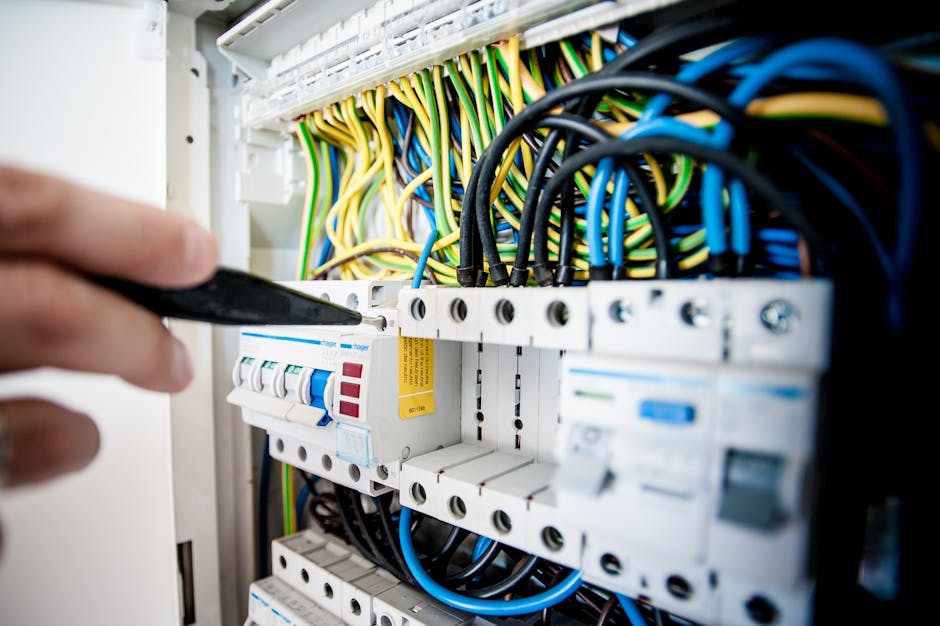
Deep well jet pump motors are commonly dual-voltage, meaning they can operate on either 115V or 230V AC. While many pumps are factory-set to 230V for higher efficiency and lower amperage draw, they can often be converted to 115V if needed, following manufacturer instructions. The voltage choice directly impacts the required electrical circuit. For a 230V setup, a dedicated 15-amp breaker is typically sufficient, whereas a 115V configuration often requires a 20-amp circuit. It’s crucial to ensure that the wiring is correctly sized and protected by the appropriate breaker to prevent electrical hazards and pump damage. Most modern pumps also feature thermal overload protection, an essential safety mechanism that automatically shuts off the motor if it overheats, safeguarding against burnout.
Priming Procedures and System Startup
One of the most critical steps in installing and starting a jet pump is the priming procedure. Unlike submersible pumps that are already submerged in water, jet pumps are mounted above ground and rely on a column of water to create the necessary suction. If there’s air in the pump or suction line, it won’t be able to draw water.
To prime a jet pump:
- Turn off all power to the pump at the circuit breaker.
- Remove the priming plug, usually located on the top of the pump housing or wet end.
- Slowly fill the pump casing and the suction line with clean water until it overflows from the priming hole. This process, often called “water-to-water suction,” displaces all the air.
- Replace the priming plug securely.
- Restore power to the pump.
- The pump should start, and you should hear water flowing. If water doesn’t flow after 4-5 minutes, turn off the power and re-prime.
A properly installed check valve in the suction line, just above the foot valve (which prevents water from draining back into the well), is essential. This valve holds the prime in the system, preventing water from flowing back down the well when the pump is off, which would require re-priming every time the pump starts.
Convertible Jet Pump Versatility
Many deep well jet pumps are designed with impressive versatility, often referred to as “convertible” models. This means a single pump unit can be configured for either shallow well or deep well applications. The key to this adaptability lies in the ejector kit. For shallow well use, the ejector assembly is typically installed directly at the pump’s inlet. For deep well operation, the same pump unit is paired with a remote ejector kit that is lowered into the well.
This conversion process usually involves swapping out the nozzle and venturi tube components within the ejector kit to match the specific well depth and desired performance. A shallow well setup typically uses a single-pipe system, while a deep well configuration requires a two-pipe system: one for the pressure line sending water down to the ejector, and another for the suction line bringing water back up. This adaptable housing and component swapping make convertible jet pumps a flexible choice for properties where well depths might change or for those who want the option to reconfigure their system in the future. For example, the Pentair Flotec FP4210 1 HP Cast Iron Convertible Deep Well Jet Pump and the FP4207 3/4 HP Cast Iron Convertible Deep Well Jet Pump both exemplify this versatility, including the necessary ejector kits for deep well operation.
Maintenance and Troubleshooting for System Longevity
Ensuring the longevity and reliable performance of your deep well jet pump and tank system requires a commitment to regular maintenance and a basic understanding of troubleshooting common issues. Proactive care can save you from unexpected breakdowns and costly repairs.
Regular checks should include inspecting for leaks around the pump and pressure tank, listening for unusual noises, and verifying the pressure gauge shows optimal PSI readings within your system’s operating range. For the pump itself, components like seals and bearings benefit from periodic inspection. While many modern pumps are “maintenance-free” in terms of lubrication, checking for corrosion on cast iron components or damage to fiberglass-reinforced thermoplastic housings is crucial. Durable materials like cast iron offer excellent corrosion resistance, contributing to the system’s overall lifespan.
Common Troubleshooting Issues and Fixes
Even with the best maintenance, issues can arise. Knowing how to diagnose and address common problems can prevent prolonged water outages.
Here’s a list of common well pump diagnostic steps:
- Pump Short-Cycling: If your pump turns on and off too frequently, the most common culprit is a waterlogged pressure tank. This means the air charge in the tank is either too low or completely gone. Check the tank’s air pressure (when the pump is off and the system is drained) and recharge it to 2 PSI below the pump’s cut-in pressure. A leaking check valve or a small leak in the plumbing system can also cause short-cycling.
- Loss of Prime: If the pump runs but no water is delivered, it has likely lost its prime. This can be due to a faulty foot valve, a leak in the suction line, or the well water level dropping below the foot valve. Re-priming the pump is the first step; if it loses prime again quickly, investigate the foot valve and suction line for leaks.
- Low Water Pressure: This could indicate a partially clogged foot valve or ejector, a drop in the well’s static water level, or a worn impeller. Check for obstructions and ensure the well is producing enough water.
- Motor Hums but Doesn’t Start: This often points to an electrical issue, such as a faulty capacitor (if applicable), a wiring problem, or a seized impeller. Immediately turn off power to prevent motor burnout and consult a professional.
- Pump Runs Continuously: If the pump never shuts off, it could be a stuck pressure switch, a significant leak in the system, or the pump struggling to reach the cut-out pressure due to a problem in the well (e.g., low water level, clogged ejector). Check for leaks first, then inspect the pressure switch.
For more in-depth troubleshooting on pressure tank specific issues, resources like articles on common water pressure tank problems and what happens when a well pressure tank goes bad can be invaluable.
Comparing Jet Pumps to Submersible Alternatives
When considering deep well water systems, the choice often comes down to a deep well jet pump or a submersible pump. Each has distinct advantages and disadvantages.
Deep Well Jet Pumps:
- Advantages: All mechanical and electrical components (motor, pump housing) are located above ground, making them easier to service and repair without pulling the pump from the well. They are generally less expensive to purchase initially. Many are convertible, offering flexibility for varying well depths.
- Disadvantages: As noted, they are less energy-efficient due to the recirculation of 3-4 gallons of water for every 1 gallon delivered. They are also limited by depth (typically up to 200 feet). The friction loss in the long pipes to and from the ejector can reduce overall efficiency. They can be noisier than submersibles.
Submersible Pumps:
- Advantages: Submersible pumps are designed to be highly efficient, as they push water directly from the well without recirculation. They are ideal for very deep wells (often exceeding 200 feet) and deliver strong, continuous pressure. Because they are submerged, they operate quietly and are less prone to freezing. They also tend to have a longer lifespan, often lasting 8–15 years with clean water and proper sizing.
- Disadvantages: Installation and service are more complex and costly, as the entire unit must be pulled from the well. Initial purchase costs can be higher. If the motor or pump fails, the entire unit must be retrieved.
The choice between a jet pump and a submersible pump depends on well depth, budget, desired efficiency, and ease of maintenance. For wells up to 200 feet, a deep well jet pump remains a viable and often more accessible option for homeowners who prefer above-ground equipment.
Frequently Asked Questions about Well Systems
What is the main difference between a shallow and deep well jet pump?
The primary distinction lies in their operational depth and the configuration of their ejector system. Shallow well pumps are designed for depths up to 25 feet, using a single-pipe suction system where the ejector is integrated directly with the pump unit above ground. Deep well jet pumps, conversely, can pull water from depths up to approximately 200 feet. They achieve this by utilizing a two-pipe system (one for pressure, one for suction) and a remote ejector kit that is lowered into the well, below the water level. This downhole ejector creates the necessary lift for greater depths.
Why does my deep well jet pump cycle on and off too frequently?
Frequent cycling, often called short-cycling, is a common issue that typically points to a problem with your pressure tank. The most frequent cause is a waterlogged pressure tank, meaning the air charge within the tank has been lost or is too low. Without the proper air cushion, the tank cannot effectively store water under pressure, causing the pump to turn on every time a small amount of water is used. To fix this, the tank needs to be drained and recharged with air to a pressure that is typically 2 PSI below the pump’s “cut-in” pressure (e.g., 28 PSI for a 30/50 PSI switch). Other potential causes include a leaky check valve, a small leak in your plumbing system, or a faulty pressure switch. For detailed guidance, resources on learning to properly size a well pressure tank and troubleshooting well pump short cycling causes and solutions can be very helpful.
How much water does a deep well jet pump recirculate?
Deep well jet pumps are inherently less efficient than submersible pumps because of their operating principle. To create the necessary suction from deeper wells, they must recirculate a portion of the pumped water back down the well to the ejector kit. For every 1 gallon of usable water delivered to your home’s pressure system, a deep well jet pump typically recirculates approximately 3 to 4 gallons of water back down the well. This recirculation means the pump expends energy moving water that doesn’t immediately become usable, contributing to higher energy consumption compared to a submersible pump for the same water delivery volume.
Conclusion
Understanding the intricate workings of your deep well jet pump and tank system is fundamental to ensuring a reliable and efficient water supply for your home. From the essential mechanics of the ejector kit and pressure tank to the critical steps of installation and maintenance, every component plays a vital role in your home’s infrastructure. In April 2026, as technology advances, the focus remains on system integration, energy efficiency, and long-term reliability.
Whether you’re installing a new system, performing routine maintenance, or troubleshooting an issue, informed decisions and, often, professional oversight are invaluable. By comprehending the differences between pump types, the importance of proper sizing, and the necessity of regular care, homeowners can significantly extend the lifespan of their well water systems and enjoy consistent, clean water for years to come. Investing in sustainable home management practices for your well system not only secures your water supply but also contributes to the overall value and comfort of your residence.