

Professional Mechanical Solutions and Ventilation Repairs
Table of Contents
Why High Humidity Challenges Cooling Systems
When the air in Surfside Beach, South Carolina, feels thick and heavy, it’s not just the temperature making you uncomfortable; it’s the humidity. High humidity presents a unique challenge for air conditioning systems, making them work significantly harder to achieve and maintain comfortable indoor conditions. The primary reason for this struggle lies in something called latent heat.
Our AC units have two main jobs: removing sensible heat (which lowers the air temperature) and removing latent heat (which extracts moisture from the air). In a dry environment, the AC primarily focuses on sensible cooling. However, in a humid climate like ours, a substantial portion of your AC’s capacity is dedicated to dehumidification. This is because water vapor in the air holds a lot of energy – latent heat – that must be removed before the temperature can drop effectively. When your AC pulls warm, moist air over its cold evaporator coils, the moisture condenses into liquid water, and this phase change releases latent heat. Only after this moisture is removed can the system efficiently cool the air.
Coastal South Carolina’s pervasive moisture means your AC is constantly battling a high moisture removal load. This increased workload forces the system to run longer and consume more energy, yet it may still struggle to lower the indoor temperature to your desired setting. The condensation rates on the evaporator coils are higher, which can sometimes lead to issues like frozen coils if airflow is restricted. Moreover, the constant presence of moisture can accelerate wear and tear on components, impacting heat transfer efficiency over time. Understanding this dual role of your AC – cooling and dehumidifying – is crucial to diagnosing why it might not be performing optimally in the humid heat. For comprehensive solutions and professional guidance on maintaining your system’s efficiency, especially in challenging coastal conditions, trust ServiceWorks HVAC repairs to ensure your home remains a cool and dry sanctuary.
Essential Ventilation Repairs for Humidity Control

Beyond the AC unit itself, your home’s ventilation system and ductwork play a critical role in managing indoor humidity, particularly in humid climates. In many homes, especially older ones, ducts run through unconditioned spaces like attics or crawlspaces. When these ducts are not properly sealed and insulated, they can become a significant source of moisture and heat intrusion.
Duct leakage allows hot, humid air from your attic to be drawn into the return air ducts, or conditioned air to escape into these unconditioned areas. This means your AC is effectively trying to cool and dehumidify your attic or crawlspace, rather than just your living space. This problem is exacerbated by high attic heat, which can easily exceed 130°F in the summer, creating a massive thermal and moisture load that overwhelms your AC system.
Proper airflow balance is also essential. If your ductwork is poorly designed or has blockages, it can lead to uneven cooling and create areas where humidity can build up. Static pressure within the duct system can also be affected, leading to reduced airflow and inefficient operation. In coastal regions, the constant exposure to coastal salt air can lead to corrosion of metal components in ductwork over time, creating small leaks or degrading insulation, further compromising your system’s integrity. Implementing effective vapor barriers in crawlspaces and attics can also significantly reduce the amount of moisture entering your home’s envelope, lessening the load on your AC and ductwork.
Identifying the Need for Ventilation Repairs
Recognizing the signs of compromised ventilation or ductwork is key to addressing humidity issues effectively. Here are some indicators that your home might benefit from professional ventilation repairs:
- Musty Odors: A persistent musty smell, especially in certain rooms or when the AC first kicks on, often signals mold or mildew growth due to excessive moisture. This can frequently originate from damp crawlspaces or attics where duct leaks are allowing humid air to enter.
- Uneven Cooling: If some rooms feel significantly warmer or more humid than others, even with the AC running, it could point to ductwork issues. Leaks can cause conditioned air to bypass certain areas, while unsealed return ducts can pull in hot, humid air from specific zones.
- Humidity Spikes: When your indoor humidity levels (which you can monitor with a simple hygrometer) frequently rise above the comfortable 50% threshold, despite your AC running, it’s a strong sign that your system is struggling with moisture removal, often due to external humid air infiltration via duct leaks.
- Visible Condensation: Condensation on windows, cold pipes, or even walls inside your home indicates high indoor humidity. This is particularly problematic in coastal environments where the difference between indoor and outdoor temperatures can be significant.
- Airflow Restrictions: Weak airflow from vents, or a noticeable whistling sound from ducts, can indicate blockages or leaks. Restricted airflow prevents your AC from properly circulating and dehumidifying air throughout your home.
Addressing these issues with professional ventilation repairs can significantly improve your home’s comfort and the efficiency of your AC system.
How Ventilation Repairs Improve Indoor Air Quality
Beyond just temperature control, effective ventilation and ductwork repairs offer substantial benefits for your home’s indoor air quality (IAQ), which is particularly important in humid coastal environments.
One of the most critical improvements is mold prevention. Mold thrives in damp, humid conditions. By sealing leaky ducts and ensuring proper airflow, we can significantly reduce the moisture levels that allow mold spores to germinate and spread. This not only protects your home’s structure but also safeguards your family’s health.
Dust reduction is another key advantage. Leaky ducts can draw in dust, insulation fibers, and other airborne particles from attics and crawlspaces, distributing them throughout your home. Sealing these leaks prevents this infiltration, leading to cleaner air and less dust accumulation on surfaces. This is especially beneficial for managing Surfside Beach allergens, as high humidity can exacerbate dust mite populations and mold growth, both common triggers for allergies and asthma.
Proper ventilation repairs contribute to overall humidity stabilization. When your AC system and ductwork are working in concert to manage moisture, your home maintains a more consistent and healthy humidity level. This stabilization has direct benefits for respiratory health, as lower humidity reduces the presence of irritants like mold spores, dust mites, and certain bacteria and viruses that thrive in moist air. By investing in the integrity of your ventilation system, you’re not just improving cooling efficiency; you’re creating a healthier, more comfortable living environment.
Troubleshooting AC Performance in Humid Heat
Before calling a professional, there are several checks you can perform to troubleshoot why your AC might not be cooling properly in humid heat. These DIY steps can often resolve common issues and help you understand your system better.
First, let’s look at your thermostat settings. A common mistake is setting the fan to ‘On’ instead of ‘Auto’. When the fan is set to ‘On’, it continuously circulates air, even when the cooling cycle is off. This can re-evaporate moisture from the coil back into your home, increasing indoor humidity. Setting it to ‘Auto’ ensures the fan only runs when the AC is actively cooling, allowing the evaporator coil to drain accumulated moisture effectively.
Thermostat Fan Setting Impact on Cooling & Dehumidification ‘Auto’ Fan runs only during cooling cycles. Allows moisture to drain from coils, improving dehumidification. Recommended for humid climates. ‘On’ Fan runs continuously. Can re-evaporate moisture from coils back into the home, increasing indoor humidity. Less effective dehumidification. Next, check your air filter maintenance. A dirty air filter is the most frequent reason an air conditioner stops cooling and can cause a host of problems in humid conditions. A clogged filter restricts airflow, forcing your AC to work harder and reducing its ability to transfer heat and remove moisture. This can lead to evaporator icing, where the coil freezes over, preventing any cooling or dehumidification. We recommend changing your air filter every 1-3 months, or every 30-60 days in homes with pets or high dust levels during peak summer.
You can also perform a simple test for proper cooling: measure the temperature difference between supply and return vents. A properly functioning AC should drop the temperature by at least 16 degrees between the air entering the return vent and the air blowing out of a supply vent. Ideally, you should see an 18 to 20-degree temperature drop. If your AC is running for more than 15-30 minutes and the difference is less than 16 degrees, your system isn’t cooling efficiently.
Inspect your outdoor condenser coil clearance. The outdoor unit needs ample space (at least two feet on all sides) to dissipate heat effectively. Clear away any leaves, grass clippings, shrubs, or debris that might be obstructing airflow around the unit. A dirty condenser coil itself can also hinder heat transfer; gently rinsing it with a garden hose (after turning off power to the unit) can sometimes help.
Finally, check for drain line blockages. In humid environments, your AC system removes a significant amount of water. This condensate collects in a pan and drains away through a PVC pipe. If this drain line becomes clogged with algae, mold, or debris, water can back up, potentially tripping a safety switch that shuts down the unit or causing water damage. Look for standing water near your indoor unit or a lack of dripping from the outdoor condensate drain.
When to Seek Professional Mechanical Solutions
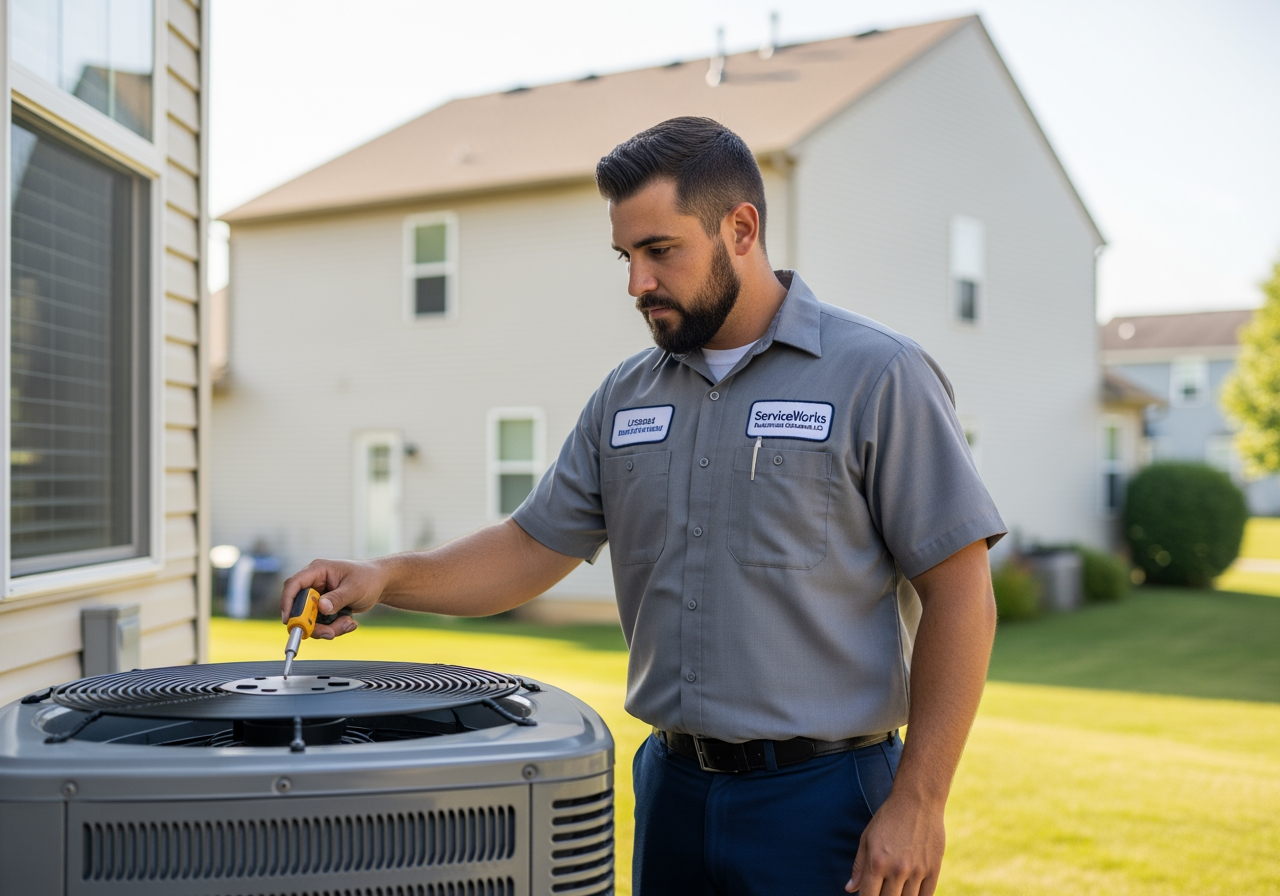
While many AC issues can be resolved with basic troubleshooting, some problems require the expertise, specialized tools, and safety protocols of a licensed HVAC technician. Knowing when to call a professional can prevent further damage to your system and ensure your home’s comfort.
One of the most critical issues requiring professional attention is refrigerant leaks. If your AC is blowing warm air and you suspect low refrigerant, it’s almost always due to a leak, as refrigerant doesn’t get “used up” like fuel. Handling refrigerant requires specialized certification, and simply recharging the system without fixing the leak is a temporary solution that wastes money and harms the environment. A professional will accurately diagnose the leak, repair it, and then recharge the system to the correct levels.
If you’ve tried thawing frozen coils (by turning off the AC and running the fan for several hours) and the issue recurs, or if the coils freeze quickly after restarting, it indicates a more complex problem like a severe airflow restriction, a malfunctioning component, or critically low refrigerant levels. These situations demand a professional diagnosis to prevent compressor damage.
The sizing of your AC system is paramount for both effective cooling and dehumidification, especially in humid climates. An oversized unit will cool your home too quickly and “short cycle,” meaning it won’t run long enough to adequately remove moisture, leaving your home feeling clammy. An undersized unit, conversely, will run constantly and still struggle to keep up. A professional can perform a Manual J load calculation, which precisely determines the ideal size of AC unit for your home based on factors like square footage, insulation, window types, and local climate. This ensures your system can efficiently handle both sensible and latent heat loads.
In coastal areas like Surfside Beach, coastal corrosion is a significant concern. Salt air can accelerate the degradation of outdoor condenser coils and other metal components, leading to leaks, reduced efficiency, and premature system failure. Regular professional maintenance includes inspecting for and addressing signs of corrosion, which can extend your unit’s lifespan.
Finally, issues like capacitor failure or compressor diagnostics are complex electrical and mechanical problems that should only be handled by trained technicians. The capacitor helps start and run the AC’s motors, and a failing one can prevent the unit from starting or cause it to run inefficiently. The compressor is the “heart” of your AC system, circulating refrigerant, and its failure often necessitates an expensive repair or system replacement. These components involve high-voltage electricity and intricate mechanics, making DIY repairs dangerous and ill-advised. When you encounter these more serious issues, calling a professional is not just recommended, it’s essential for safety and effective resolution.
Frequently Asked Questions about Coastal Cooling
Living in a humid coastal environment like Surfside Beach presents unique challenges for maintaining indoor comfort. Here are some frequently asked questions we encounter regarding AC performance in these conditions.
Why does my house feel sticky even when the AC is running?
This is a very common complaint in humid climates, and it primarily relates to indoor humidity and latent heat load. Your AC’s job isn’t just to cool the air (sensible cooling) but also to remove moisture (latent cooling). If your house feels sticky, it means your AC isn’t effectively performing its dehumidification function.
One major culprit can be an oversized AC unit. While it might seem counterintuitive, a unit that’s too powerful for your home will cool the air very quickly. This causes it to “short cycle,” meaning it turns off before it has had enough time to run through a full cycle of dehumidification. The air gets cool, but the moisture remains.
Leaky ductwork can also contribute, pulling in humid air from unconditioned spaces (like attics or crawlspaces) and distributing it throughout your home. Additionally, if your indoor humidity levels are consistently above the recommended 30-50% humidity range, your body’s natural cooling mechanism (sweating) becomes less effective, making you feel warmer and stickier even at a lower temperature. We advise checking your thermostat fan setting to ensure it’s on ‘Auto’ and not ‘On’, as discussed earlier, to maximize dehumidification.
How often should I check my ventilation system in Surfside Beach?
Given the unique environmental factors of coastal living, we recommend a more rigorous approach to coastal maintenance. For your AC unit and overall HVAC system, including ductwork and ventilation, an annual professional inspection and tune-up are the minimum. However, in Surfside Beach, due to the high humidity, salt air, and potential for rapid algae growth in drain lines, we suggest checking your air filters every 30-60 days, especially during the May 2026 peak season.
For your entire ventilation system, including visual checks for duct leaks or damage, we recommend a thorough assessment at least once a year by a qualified professional. This can help identify issues like corrosion from salt air, compromised insulation, or blockages before they lead to significant problems. Prompt filter changes are crucial not just for AC efficiency but also for preventing dust and allergens from circulating, which can be exacerbated by coastal humidity. Proactive maintenance helps combat the accelerated wear and tear that coastal environments inflict on HVAC systems.
What is the ideal indoor humidity level for coastal homes?
For optimal comfort, health, and protection of your home, the ideal indoor humidity level should be maintained between 30-50%. This range is considered the “comfort zone” for most people and is crucial for several reasons in a coastal home.
Maintaining humidity within this range is vital for mold prevention. High humidity (above 60%) creates an ideal breeding ground for mold and mildew, which can cause structural damage, unpleasant odors, and respiratory issues. Similarly, it helps control dust mite control, as these common allergens thrive in moist environments.
Beyond health, proper humidity levels contribute to structural protection. Excessive moisture can lead to warping of wood floors, swelling of doors and windows, and degradation of furnishings. By keeping humidity in check, you extend the lifespan of your home’s interior. While your AC is designed to dehumidify, in extreme coastal humidity, it might need assistance from a whole-home dehumidifier to consistently stay within this ideal range. Monitoring your indoor humidity with a hygrometer is a simple way to ensure your system is performing effectively.
Conclusion
Navigating the humid heat of Surfside Beach, South Carolina, requires a well-understood and properly functioning air conditioning system. We’ve explored why high humidity uniquely challenges your AC, turning a simple cooling task into a complex battle against latent heat. From the critical role of your evaporator coils to the often-overlooked impact of leaky ductwork and ventilation, every component plays a part in your home’s coastal comfort.
By understanding the common issues—like dirty air filters, improper thermostat settings, and obstructed outdoor units—you can perform initial troubleshooting steps. However, for more complex problems such as refrigerant leaks, system sizing, or component failures exacerbated by coastal corrosion, professional expertise is indispensable. Prioritizing regular maintenance is not just about fixing problems; it’s about prevention, ensuring system longevity, and guaranteeing reliable cooling performance throughout the humid seasons. Don’t let the sticky heat compromise your comfort. With proactive care and professional support, your home can remain a cool, dry, and healthy haven, even in the most challenging conditions.