
Foundation Crack Repair for Leaking Tie-Rod Holes
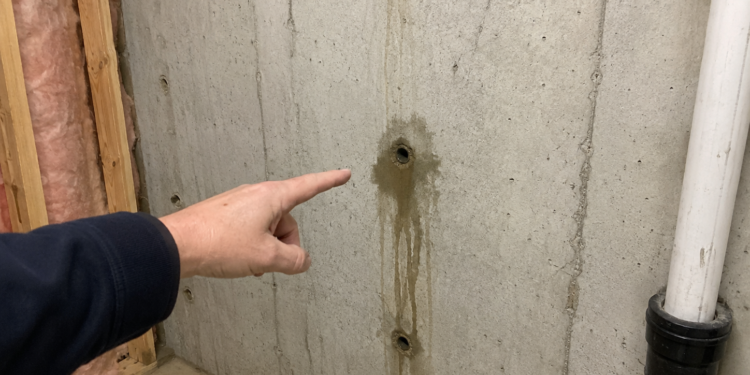
Tiny round leaks in a poured concrete wall can release more water than their size suggests. Tie-rod holes often remain hidden behind paint, insulation, or finished basement walls until rain or groundwater pressure forces moisture through them. Proper foundation crack repair seals the full opening inside the wall instead of covering only the damp spot visible indoors.
Table of Contents
- 1 Why Tie-Rod Holes Become Leak Paths Years Later
- 2 What Separates a Tie-Rod Leak From a Wall Crack?
- 3 Removing Weak Material Before the Hole Is Sealed
- 4 Polyurethane Injection Reaches Hidden Voids
- 5 Hydraulic Cement Creates a Dense Surface Plug
- 6 Why Exterior Water Control Still Matters
- 7 Rust Around the Hole Can Signal a Deeper Concern
- 8 Finished Basements Require Careful Leak Tracing
Why Tie-Rod Holes Become Leak Paths Years Later
Builders use metal tie rods to hold concrete forms at the correct distance while a foundation wall is poured. After the concrete hardens and the forms come off, workers remove or break back the rods, leaving small openings that require sealing on both sides of the wall.
Aging patch material can shrink, crack, or separate from the surrounding concrete. Water then follows the narrow space around the remaining metal or moves through gaps left by an incomplete original repair.
Seasonal soil moisture adds pressure against below-grade walls and pushes groundwater toward any available opening. Property owners searching for foundation repair near me may mistake the round stain for a pipe leak, even though the source lies inside a former form-tie location.
What Separates a Tie-Rod Leak From a Wall Crack?
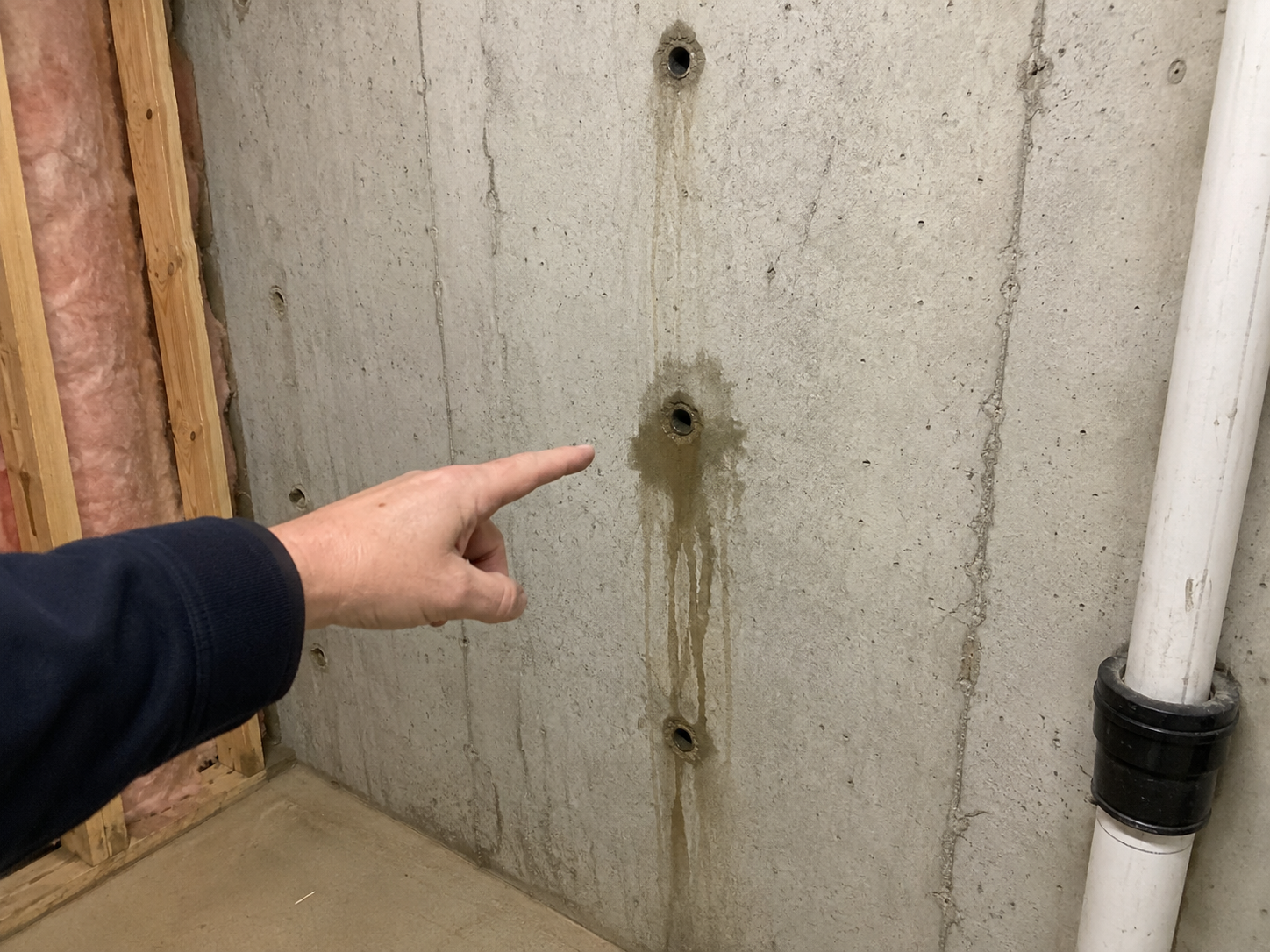
Shape provides the first useful clue. Tie-rod leaks often appear as small circular damp spots arranged in straight horizontal or vertical lines because the original forms used regularly spaced connections.
Wall cracks usually create longer stains, mineral trails, or wet lines that follow a visible split in the concrete. Rust discoloration around a round opening may also suggest that a piece of metal remains embedded inside the wall.
Accurate identification matters because surface caulk may not reach the path carrying water. A foundation specialist near me should inspect nearby cracks, joints, pipe penetrations, and drainage conditions before confirming that the tie-rod hole is the only source.
Removing Weak Material Before the Hole Is Sealed
Loose mortar, old patching compound, paint, and deteriorated concrete prevent new repair materials from bonding properly. Technicians usually open the area enough to expose sound concrete around the full edge of the hole.
Careful preparation may reveal a deeper void than the small surface mark suggests. Remaining metal sometimes needs to be cut back so rust expansion does not push against the finished patch later.
Cleaning removes dust and debris that could create channels around the seal. Contractors may use wire brushes, small grinders, compressed air, or vacuum equipment, depending on the depth and condition of the opening.
Polyurethane Injection Reaches Hidden Voids
Polyurethane resin works well where water is actively entering through the tie-rod hole. Contact with moisture causes certain formulas to expand, allowing the material to travel around embedded metal and into irregular spaces inside the concrete.
Flexible cured foam can tolerate slight movement without breaking away from the wall. Injection pressure must still remain controlled because excessive force may push resin into unwanted areas or leave sections of the opening unfilled.
Homeowners comparing foundation crack repair near me should ask whether the contractor plans to inject the full depth of the leak path. A small bead placed across the face may stop visible dripping briefly while water continues collecting behind it.
Hydraulic Cement Creates a Dense Surface Plug
Hydraulic cement sets quickly and expands slightly as it hardens. That behavior helps the material grip prepared concrete and form a dense plug over larger or more accessible tie-rod openings.
Proper placement requires enough depth for the patch to resist water pressure. Installers commonly shape the opening so the interior portion is wider than the surface, which helps prevent the cured material from being pushed outward.
Rigid cement performs best where the surrounding wall remains stable. Continued movement, corrosion, or high water pressure may call for injection resin or a combined repair rather than cement alone.
Why Exterior Water Control Still Matters
Interior sealing stops water at the opening, but it does not reduce the moisture pressing against the foundation. Poor grading, clogged gutters, short downspouts, and saturated soil can keep loading the wall during every heavy storm.
Exterior improvements may include extending downspouts, correcting low areas, cleaning drains, or repairing failed waterproofing. Reducing water near the building helps protect both the tie-rod repair and nearby joints that have not started leaking yet.
Foundation repair contractors should also check whether several holes show dampness along the same wall. Multiple leaks can indicate a broader drainage problem rather than a series of unrelated patch failures.
Rust Around the Hole Can Signal a Deeper Concern
Embedded steel expands as it corrodes, placing pressure on the concrete surrounding it. Small chips, rust-colored streaks, or circular cracking may develop where that force reaches the wall surface.
Severe corrosion sometimes requires more than waterproofing. Technicians may need to remove loose concrete, treat or cut back exposed metal, rebuild the area, and verify that nearby wall sections remain sound.
Structural review becomes more important when cracking extends beyond the tie-rod location or the wall shows bowing, displacement, or horizontal separation. Sealing water without addressing movement could hide a problem that continues to grow.
Finished Basements Require Careful Leak Tracing
Drywall and insulation can carry moisture away from the original opening. A wet baseboard or floor stain may therefore appear several feet from the leaking tie-rod hole.
Selective removal helps expose the concrete without tearing out more finished material than necessary. Moisture readings, stain patterns, and inspection openings can narrow the search before repairs begin.
Kennedy and Sons evaluates tie-rod holes, foundation cracks, drainage pressure, wall condition, and hidden moisture before recommending a repair method. Their team can seal the active leak, address weakened material, and identify outside water conditions that may threaten the same wall again.