

Finding the Perfect Rental Home Experience

Table of Contents
- 1 Navigating the Market for Modern Rental Homes
- 1.1 Choosing Between Apartments, Townhomes, and Single-Family Houses
- 1.2 Property Type Pet-Friendly Availability (Toledo, OH) Typical Pet Considerations Studio Apartments 21 Best for small pets; limited space; noise concerns for neighbors. 1-Bedroom Apartments 763 Suitable for small to medium pets; communal amenities often available. 2-Bedroom Apartments 884 Good for medium pets or multiple smaller ones; more living space. 3-Bedroom Apartments 143 Ample space for larger pets or multiple pets; often found in family-oriented communities. Townhomes 166 More space than apartments, often with small private yards; fewer shared walls. Houses 65 Maximum space and privacy, usually with a yard; higher cost and maintenance. Condos 38 Similar to apartments but often individually owned; policies can vary greatly by owner. Top Digital Resources for Finding Rental Homes
- 2 Financial Considerations: Deposits, Fees, and Rent
- 3 Evaluating Pet-Friendly Amenities and Community Features
- 4 Legal and Lease Considerations for Tenants
- 5 Frequently Asked Questions about Pet-Friendly Living
- 6 Conclusion

As of June 2026, the number of renters with pets continues to rise significantly. Statistics show that nearly 60% of renters had at least one pet in 2023. This growing trend means that demand for suitable pet-friendly housing is at an all-time high.

We understand the unique challenges this presents. From decoding complex pet policies to discovering properties with the right amenities, the journey requires careful navigation.
This extensive guide aims to simplify that process. We will walk you through everything you need to know. We’ll cover how to best search for rentals, understand typical fees and policies, and identify truly pet-inclusive communities. Our goal is to equip you with the knowledge to find the perfect rental home experience for both you and your furry companion.
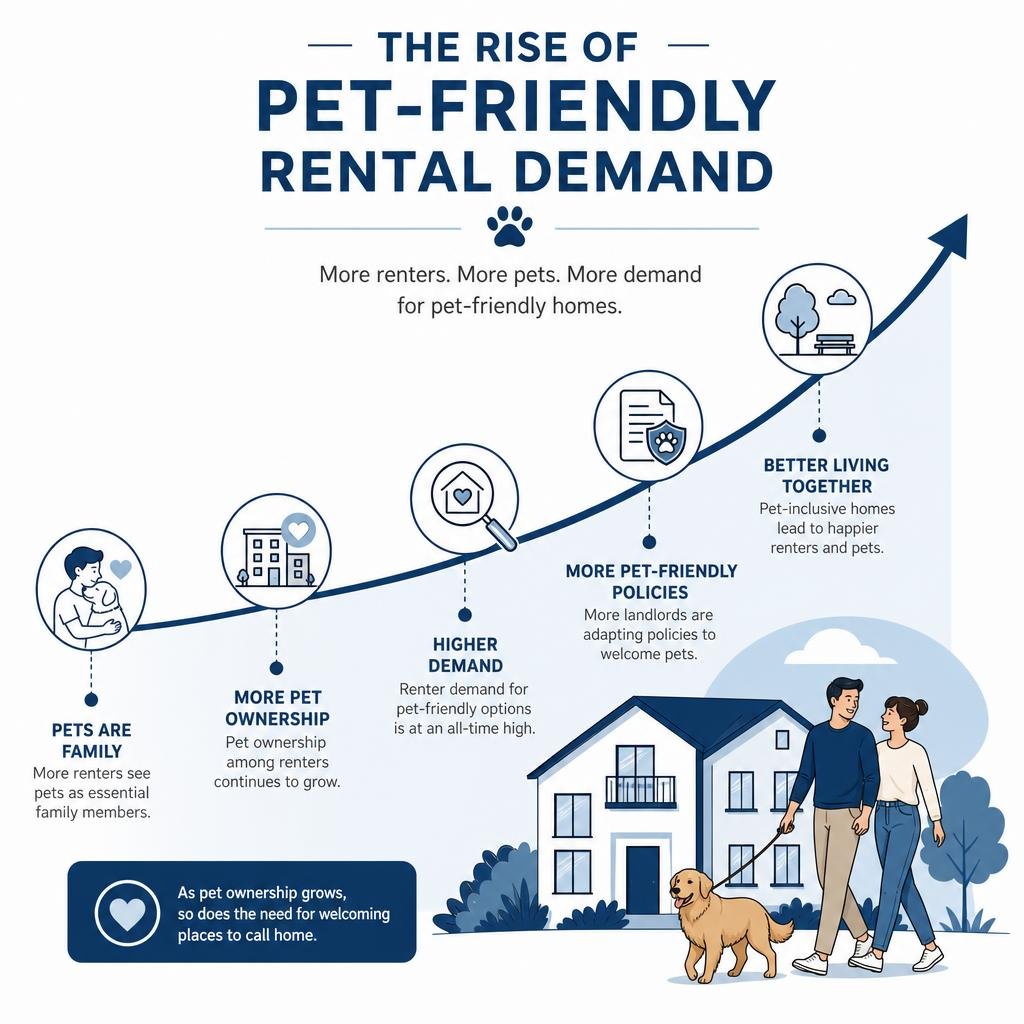
The rental market in June 2026 is dynamic, with a growing emphasis on accommodating pets. As pet ownership among renters continues its upward trajectory, property managers and landlords are increasingly recognizing the value of offering pet-friendly options. When we embark on the journey of finding a new home, it’s crucial to understand the various property types available and how to effectively use digital tools to narrow down our search.

The first step often involves leveraging online platforms that allow us to filter by specific criteria, including pet policies. This saves valuable time and ensures we’re only looking at properties that align with our needs. For instance, if you’re searching in a large state, exploring resources like Pet-Friendly Apartments for Rent in Texas can provide a broad overview of what’s available, allowing you to then drill down into specific cities or neighborhoods.
Choosing Between Apartments, Townhomes, and Single-Family Houses
When looking for a rental home with pets, the type of property we choose significantly impacts our living experience. Each option—apartments, townhomes, and single-family houses—comes with its own set of advantages and considerations, particularly concerning space and yard access.
- Apartments: Often the most common pet-friendly option, apartments typically offer a range of amenities within the complex, such as communal dog parks or pet washing stations. They are generally more affordable and require less maintenance from the tenant. However, space can be a constraint, especially for larger breeds, and noise considerations for neighbors are important. In cities like Toledo, OH, we see a substantial number of apartment listings, with 763 one-bedroom, 884 two-bedroom, and 143 three-bedroom pet-friendly apartments available, alongside 21 studio options. This variety often means easier access to urban conveniences.
- Townhomes: Offering a middle ground, townhomes often provide more square footage than apartments and frequently include small private yards, which can be a huge plus for pets needing outdoor access. They typically share one or two walls with neighbors, meaning fewer noise concerns than a multi-story apartment building. In Toledo, there are 166 pet-friendly townhomes, making them a viable option for those seeking a bit more space and privacy.
- Single-Family Houses: These rentals provide the most space, privacy, and often feature larger, fully fenced yards, ideal for active pets. They also come with fewer shared walls, reducing concerns about pet noise disturbing neighbors. However, single-family homes tend to be more expensive and may not offer the same on-site pet amenities as a dedicated apartment complex. For those in Toledo, 65 pet-friendly houses are available, alongside 38 pet-friendly condos, offering diverse choices for renters prioritizing maximum space and independence.
To illustrate the diverse availability, consider the sheer volume of options in major metropolitan areas. For example, in a bustling city like Houston, TX, you can find over 50,000 pet-friendly rentals, ranging from compact apartments to spacious homes. This extensive selection, as showcased by listings like Houston, TX Pet Friendly Apartments – 51274 Rentals, highlights the importance of filtering to find the perfect fit.
Here’s a comparison of typical pet-friendly rental property types based on availability in a sample market like Toledo, OH:
In today’s rental market, digital platforms are indispensable tools for finding pet-friendly housing. Websites like Zillow, Apartments.com, and Trulia have revolutionized the search process by offering robust filtering options that cater specifically to pet owners. We’ve observed that twice as many renters filter their apartment searches for pet-friendly options than any other amenity, underscoring the importance of these features.
These platforms allow us to specify not only that we need a pet-friendly place but often also the type of pet (dog, cat), size, and even the number of pets. For example, if you’re looking for a rental in a major city, a site like Pet Friendly Apartments For Rent in Dallas, TX – Trulia allows you to filter specifically for cats, large dogs, and small dogs, making the search incredibly efficient.
Beyond general rental sites, some local animal shelters or humane societies maintain lists of pet-friendly housing in their areas, as seen with resources provided by the official Burlington, NC website for Alamance County. While these lists might not be as extensive as commercial sites, they can offer unique local insights and connections. When using any of these resources, always double-check the listings directly with the property management to confirm current pet policies, as online information can sometimes be outdated.
Financial Considerations: Deposits, Fees, and Rent
Understanding the financial implications of renting with a pet is paramount to avoiding surprises and effectively managing our budget. Beyond the standard rent and security deposit, pet owners often face additional costs, including pet deposits, non-refundable pet fees, and monthly pet rent.
These expenses can vary significantly from one property to another and can add a considerable amount to both our upfront and ongoing housing costs. Carefully reviewing these figures before committing to a lease is a crucial step in our search for the perfect pet-friendly home.
Understanding Pet Deposits vs. Pet Fees
It’s essential to distinguish between a pet deposit and a pet fee, as they serve different purposes and have different implications for our finances.
- Pet Deposit: This is typically a refundable amount, similar to a security deposit, that is held by the landlord to cover any potential damages caused by our pet. If our pet causes no damage beyond normal wear and tear, this deposit should be returned to us at the end of the lease term. The amount can range from a few hundred dollars to a full month’s rent, depending on the property and local regulations.
- Pet Fee: Unlike a deposit, a pet fee is a non-refundable charge. It’s often a one-time payment intended to cover the administrative costs associated with having a pet on the property, or for general wear and tear that might not be easily attributable to a specific pet. This fee is not returned, regardless of the condition our pet leaves the unit in. For instance, properties like Cyan Mallard Creek | Pet-Friendly Apartments in University City Charlotte, NC explicitly state their pet policy, including a $400 one-time fee for the first pet and an additional $100 for a second, clearly defining these non-refundable charges upfront.
When comparing properties, we should always ask for a clear breakdown of these charges to understand our total financial commitment.
Calculating Monthly Pet Rent
In addition to deposits and fees, many pet-friendly rentals also impose a monthly pet rent. This is a recurring charge added to our regular rent payment, essentially acting as a premium for the privilege of living with our pet. Pet rent can range from $15 to $100 or more per pet, per month, and it’s important to factor this into our overall housing budget.
The rationale behind pet rent varies. Some landlords view it as compensation for the increased maintenance or potential wear and tear associated with pets, while others see it as a way to offset the costs of providing pet-friendly amenities. For example, the Cyan Mallard Creek property, which also charges a one-time fee, includes a $25 monthly pet rent per pet. This illustrates how both upfront and ongoing costs are often part of the pet-friendly rental package.
When we consider a luxury apartment, such as those found at Pet-friendly Luxury Apartments Near Southpark Shopping District – Landon, it’s reasonable to anticipate that pet rent might be part of their pricing structure, given the elevated level of service and amenities they provide. Always ask for the specific pet rent amount and whether it applies per pet or per household. Factoring these costs into our budget from the outset ensures we find a home that is financially sustainable for both us and our beloved companions.
Evaluating Pet-Friendly Amenities and Community Features
Beyond the basic allowance of pets, a truly pet-friendly rental community goes the extra mile by offering amenities and features designed to enhance the quality of life for both pets and their owners. When we’re evaluating potential homes, we look for properties that demonstrate a genuine commitment to pet wellness and convenience, integrating pet needs into the overall community design. This includes thoughtful outdoor spaces, dedicated pet services, and a general atmosphere that embraces our furry family members. Exploring communities that prioritize these elements, like the Sundera pet-friendly rentals available, can make a significant difference in our daily lives.
On-Site Amenities for Dogs and Cats
Modern pet-friendly apartments often boast a range of on-site amenities that make pet ownership much easier and more enjoyable. For dogs, dedicated spaces are particularly valuable:
- Dog Parks/Runs: These fenced areas provide a safe, off-leash environment for dogs to exercise and socialize. Many are equipped with agility equipment and shaded seating for owners. Some properties, like Creekside, offer a dedicated bark park for residents’ pets.
- Pet Washing Stations: Also known as “dog spas” or “grooming rooms,” these facilities offer elevated tubs, warm water, and sometimes even dryers, making it convenient to clean our pets after a muddy walk without messing up our apartment. Creekside | Apartments for Rent Near Bass Pro Shops Broken Arrow is an excellent example, featuring both a bark park and a dog wash station, showcasing a comprehensive approach to pet care.
- Waste Disposal Stations: Strategically placed stations with bags and disposal bins encourage responsible pet ownership and help keep the community clean.
For cats, while fewer dedicated on-site amenities are common, properties often consider their needs through features like window perches in units or quiet, safe indoor spaces. The overall cleanliness and maintenance of common areas are also important for both dog and cat owners.
Neighborhood Features and Walkability
The immediate neighborhood surrounding our rental home plays a crucial role in our pet’s well-being. We seek out areas that offer easy access to outdoor activities and essential services.
- Local Parks and Green Spaces: Proximity to parks, trails, or open fields allows for regular walks, runs, and playtime. A property like Millbrook – Brookfield Properties in Raleigh, NC, exemplifies this, being adjacent to Shelley Lake and offering direct access to The Greenway trails. This kind of natural access is invaluable for a pet’s physical and mental health.
- Veterinary Clinics and Pet Supply Stores: Having these essential services nearby ensures quick access to healthcare and supplies, reducing stress during emergencies or routine visits.
- Pet-Friendly Businesses: Neighborhoods with cafes, restaurants, or shops that welcome pets (especially on patios) contribute to a more inclusive and enjoyable lifestyle for pet owners.
- Walkability: A safe and walkable neighborhood with sidewalks and well-maintained public areas makes daily exercise routines much easier and more pleasant for both us and our pets.
When evaluating a community, we consider not just what’s inside the property gates, but also the broader environment that will become our daily backdrop.
Legal and Lease Considerations for Tenants
Navigating the legal landscape of pet-friendly rentals is a critical step in securing a home for us and our furry companions. Before signing any agreement, we must thoroughly understand the lease terms, particularly those pertaining to pets. This involves scrutinizing pet addendums, understanding liability clauses, and being aware of any breed or weight restrictions.
Our goal is to ensure that the lease agreement clearly outlines our responsibilities as pet owners and the landlord’s obligations, protecting both parties and preventing future misunderstandings.
Essential Lease Clauses for Pet-Friendly Rental Homes
When reviewing a lease for a pet-friendly apartment, several clauses warrant our close attention:
- Pet Addendum: This is often a separate document or a specific section within the main lease that details all pet-related rules. It should specify the number, type, and size of pets allowed, along with any specific requirements like vaccination records or licensing.
- Liability Clauses: These clauses typically state that the pet owner is responsible for any damage or injury caused by their pet. This is where renter’s insurance becomes crucial, as it can protect us from significant financial burdens if our pet causes harm to property or another individual. We should ensure our policy includes pet liability coverage.
- Pet Behavior Expectations: The lease may outline expectations for pet behavior, such as leash requirements in common areas, waste disposal rules, and noise regulations. Understanding and adhering to these rules is key to maintaining a harmonious living environment.
- Termination Clauses: Some leases may include clauses that allow the landlord to request the removal of a pet or even terminate the lease if pet policies are repeatedly violated.
Properties that are highly dedicated to pet-friendly living, like Dane Park Grapevine #1 Luxury Pet-Friendly Apartment Complex, often have comprehensive pet addendums that detail their extensive pet amenities and the responsibilities that come with them, ensuring clarity for all residents.
One of the most challenging aspects of finding a pet-friendly rental can be encountering breed or weight restrictions. Many landlords and property management companies implement these policies due to insurance requirements, perceived liability risks, or past negative experiences.
- Breed Restrictions: Certain dog breeds are commonly blacklisted by rental properties, including but not limited to Pit Bulls, Rottweilers, German Shepherds, and Doberman Pinschers. If we own a restricted breed, finding a rental can require extra effort. We may need to seek out properties that explicitly state “no breed restrictions” or be prepared to provide additional documentation.
- Weight Limits: Properties often impose weight limits, such as “pets under 25 lbs” or “dogs under 50 lbs.” This can be particularly frustrating for owners of larger dogs, even if their pets are well-behaved.
To navigate these restrictions, we should always inquire about a property’s specific pet policy early in the search process. Some properties, like Pet-Friendly Apartments in San Angelo | River Ranch, provide detailed pet policies on their websites, which can save us time by clarifying what is and isn’t allowed before we even tour. If a property has restrictions, but we believe our pet could be an exception (e.g., a well-trained service animal, or a dog with a Canine Good Citizen certificate), we can sometimes negotiate with landlords by providing a “pet resume” or offering additional assurances.
Frequently Asked Questions about Pet-Friendly Living
As we navigate the journey of finding a pet-friendly rental, several common questions often arise. Addressing these proactively can streamline our search and help us feel more confident in our choices.
How can I verify if a property is truly pet-friendly?
It’s one thing for a listing to say “pet-friendly” and another for a property to genuinely welcome pets. To truly verify, we recommend several steps:
- Direct Communication: Always speak directly with the leasing office or landlord. Ask specific questions about their pet policy, including any breed, size, or number restrictions, and details about fees and pet rent. Don’t rely solely on online listings.
- Property Tours: During a tour, observe the property for signs of pet-friendliness. Are there pet waste stations? Do you see other residents walking dogs? Is there a designated pet relief area or dog park? These visual cues can confirm the property’s commitment.
- Read Reviews: Check online reviews from current or past tenants. They often provide candid insights into how pet policies are enforced and the overall pet-friendly atmosphere.
- Ask for the Pet Addendum: Request to see a sample pet addendum or the full pet policy document before applying. This provides concrete details.
For properties like Apartments in Sherman, TX | River Ranch, contacting the leasing team directly is the best way to get the most accurate and up-to-date information on their pet policies.
What documents should I prepare for my pet’s rental application?
Just as we prepare our own documents for a rental application, having a “pet resume” ready can significantly strengthen our application and demonstrate responsible pet ownership. Key documents to prepare include:
- Vaccination Records: Up-to-date records from our veterinarian showing all necessary vaccinations (e.g., rabies, distemper).
- Veterinary Contact Information: Providing our vet’s contact details allows landlords to verify our pet’s health history.
- Spay/Neuter Certificate: Proof that our pet has been spayed or neutered, often a requirement for pet-friendly policies.
- Licensing Information: If our city requires pet licensing, provide proof of current registration.
- Obedience Training Certificates: Documentation of any obedience classes or certifications (like Canine Good Citizen) can reassure landlords about our pet’s behavior.
- Previous Landlord References: A positive reference from a former landlord about our pet’s behavior and our responsibility as an owner is invaluable.
- Photo of Your Pet: A friendly photo can help personalize the application.
Having these documents ready for properties such as Wendover Greensboro, NC Apartments for Rent | Wendover At Meadowood can make a strong positive impression and expedite the approval process.
Are there ways to negotiate pet policies with landlords?
While some policies are firm, there are instances where negotiation might be possible, especially if we have a well-behaved pet or are facing specific restrictions.
- Present a Pet Resume: This comprehensive document, detailing our pet’s age, breed (if applicable), training, vet history, and temperament, can showcase our pet as a responsible and well-cared-for companion.
- Offer a “Meet and Greet”: Suggesting that our pet meet the landlord or property manager in person can demonstrate their good temperament and alleviate concerns.
- Offer a Higher Pet Deposit: In some cases, landlords might be open to waiving a restriction or making an exception if we offer a slightly higher (refundable) pet deposit as an extra assurance against potential damages.
- Renter’s Insurance with Pet Liability: Highlighting that we carry renter’s insurance that includes pet liability coverage can mitigate a landlord’s concerns about potential damage or injury.
- Seek Medical Exemptions: If our pet is an assistance animal (service animal or emotional support animal), they are not considered “pets” under the Fair Housing Act and are generally exempt from pet policies, fees, and restrictions. Proper documentation from a healthcare professional is required.
While negotiation isn’t always guaranteed to succeed, approaching it respectfully and with thorough documentation can increase our chances of finding a suitable home, even in communities like Dayton Park Apartments | Dayton, TX Apartments for Rent| Home where policies might initially seem strict.
Conclusion
Finding the perfect rental home experience for both ourselves and our cherished pets can feel like a significant undertaking, but with the right approach and resources, it is entirely achievable. As of June 2026, the rental market is increasingly recognizing the importance of accommodating pet owners, leading to a wider array of pet-friendly options and amenities than ever before.
We’ve explored the nuances of navigating different property types, from apartments to houses, and highlighted the essential digital tools that streamline our search. Understanding the financial landscape—distinguishing between pet deposits, non-refundable fees, and monthly pet rent—is crucial for budgeting effectively. Furthermore, we’ve emphasized the value of on-site pet amenities and pet-friendly neighborhood features that contribute to a higher quality of life for our companions.
Finally, navigating the legal aspects of lease agreements, including pet addendums and breed restrictions, and knowing how to prepare our pet’s documentation, empowers us to be responsible and informed tenants. By applying these insights, we can confidently embark on our search, ensuring that our next home is a welcoming and comfortable haven for every member of our family, furry or otherwise.