





Table of Contents
Core Pillars of International Shipping and Logistics
 Moving across continents is a significant undertaking, filled with exciting possibilities and unique challenges. For many, the idea of relocating from the USA to Poland holds immense appeal, whether for new opportunities, cultural immersion, or connecting with heritage. However, the journey of moving your entire life, from household goods to vehicles, across the Atlantic demands meticulous planning and a clear understanding of international logistics. Without proper preparation, this complex process can lead to unexpected costs and delays.
This comprehensive guide aims to simplify international removals from the USA to Poland. We will walk you through the essential steps, regulations, and best practices to ensure a smooth transition for your belongings. We understand that every detail matters when you are planning such a major life change.
Throughout this guide, we will cover key aspects such as:
- Eligibility and Documentation: Understanding the requirements for duty-free relocation and the necessary paperwork.
- Shipping Methods and Costs: Exploring popular options like FCL and LCL, along with factors influencing pricing.
- Vehicle Importation: Navigating Polish and EU standards for bringing your car.
- Customs Compliance: Adhering to rules like the 12-month no-sale period.
Our goal is to equip you with the knowledge needed to make informed decisions and minimize stress during your move. When considering the detailed logistics involved in Handling USA Poland removals, having a clear roadmap is invaluable.

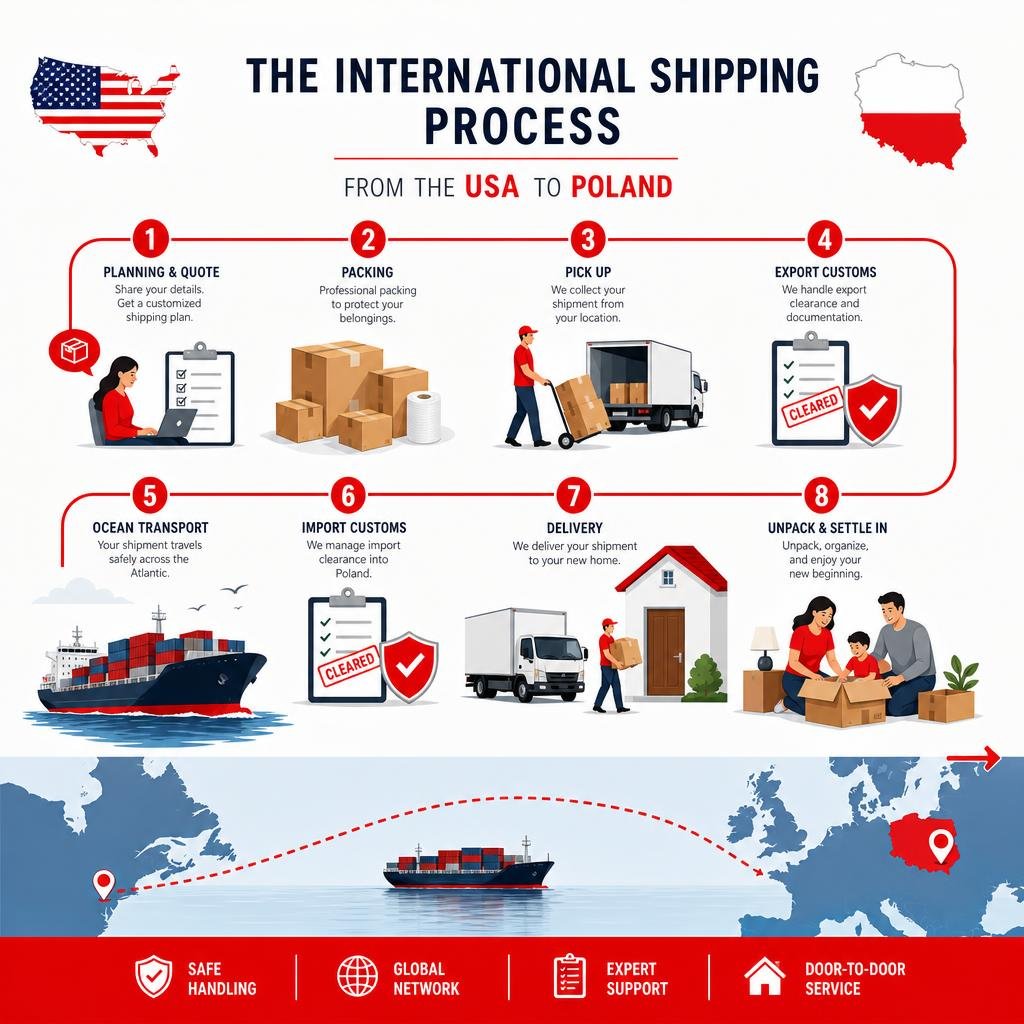
International shipping, particularly for a transatlantic move from the USA to Poland, relies heavily on established global logistics frameworks. At its heart, this involves ocean freight, which is the most common and cost-effective method for transporting large volumes of goods. Our services leverage extensive maritime routes connecting major US ports to key destinations in Poland, primarily Gdańsk and Gdynia. This infrastructure forms the backbone of any successful international removal, ensuring that your possessions traverse oceans efficiently and securely. Understanding these core pillars is the first step in demystifying the complex journey your belongings will undertake.
Selecting FCL vs LCL in International Shipping and Logistics
When planning your international removal to Poland, one of the most critical decisions involves choosing the right container shipping method: Full Container Load (FCL) or Less than Container Load (LCL). This choice directly impacts both the cost and efficiency of your move, depending on the volume of your cargo.
FCL shipping involves reserving an entire shipping container exclusively for your belongings. This is typically the preferred option if you are moving a substantial household – for example, a full 3-4 bedroom house, which would comfortably fill a 40-foot container (approximately 2,200 cubic feet). The primary advantages of FCL are faster transit times, reduced handling of your goods, and greater security, as your items are not consolidated with other shipments.
LCL shipping, conversely, is ideal for smaller moves, such as the contents of a one-bedroom apartment or just a few essential items. With LCL, your cargo shares container space with other shipments bound for the same destination. This method is more economical for smaller volumes, as you only pay for the space your goods occupy. While LCL might involve slightly longer transit times due to the consolidation process, it offers a flexible and cost-effective solution for those who don’t require an entire container. A 20-foot container, for instance, holds roughly 1,100 cubic feet, suitable for a car plus a small apartment’s contents, and would likely be an FCL option for that combination, but LCL can accommodate even smaller volumes.
To help you visualize the differences and make an informed decision, here’s a comparison:

The choice between FCL and LCL depends on the total volume of your household goods, your budget, and your timeline. We can help assess your needs to recommend the most suitable and economical option for your international removal.
Transit Timelines and Port Destinations in Poland
Understanding the transit times and key port destinations is crucial for planning your move from the USA to Poland. The journey across the Atlantic typically involves ocean freight, with shipments departing from major US East Coast ports.
The estimated transit time for shipments from US East Coast ports to Polish ports, such as Gdańsk or Gdynia, is approximately 25 days. However, this is just the ocean transit component. The entire door-to-door moving process, from the initial packing and pickup in the USA to final delivery and unpacking in your new Polish home, generally takes between 6 to 8 weeks. This comprehensive timeline accounts for various logistical stages, including container loading, customs clearance at both ends, and inland transportation.
Gdańsk and Gdynia are Poland’s primary maritime gateways, strategically located on the Baltic Sea. These ports are equipped to handle large volumes of international cargo and serve as efficient entry points for goods destined for various locations across Poland, including major cities like Warsaw, Krakow, and Wrocław. Our logistics planning always considers the most efficient routes and port operations to minimize delays and ensure timely delivery of your belongings.
Customs clearance is a pivotal, and often complex, stage of any international removal. For those moving from the USA to Poland, understanding Poland’s ‘mienie przesiedleńcze’ (relocation goods) program is paramount. This program allows eligible individuals to import their personal household goods and vehicles duty-free, exempting them from the standard 23% VAT and customs duties that would otherwise apply. Navigating this process correctly can save you thousands of euros.
To qualify for duty-free import under this program, individuals must meet specific criteria, including having lived in the USA for at least 12 consecutive months immediately prior to their move. The goods themselves must also have been owned and used for at least six months prior to shipment and be intended for continued personal use in Poland. This exemption is a significant benefit, but it comes with strict rules that must be meticulously followed.
Documenting Residency and Polish Address Requirements
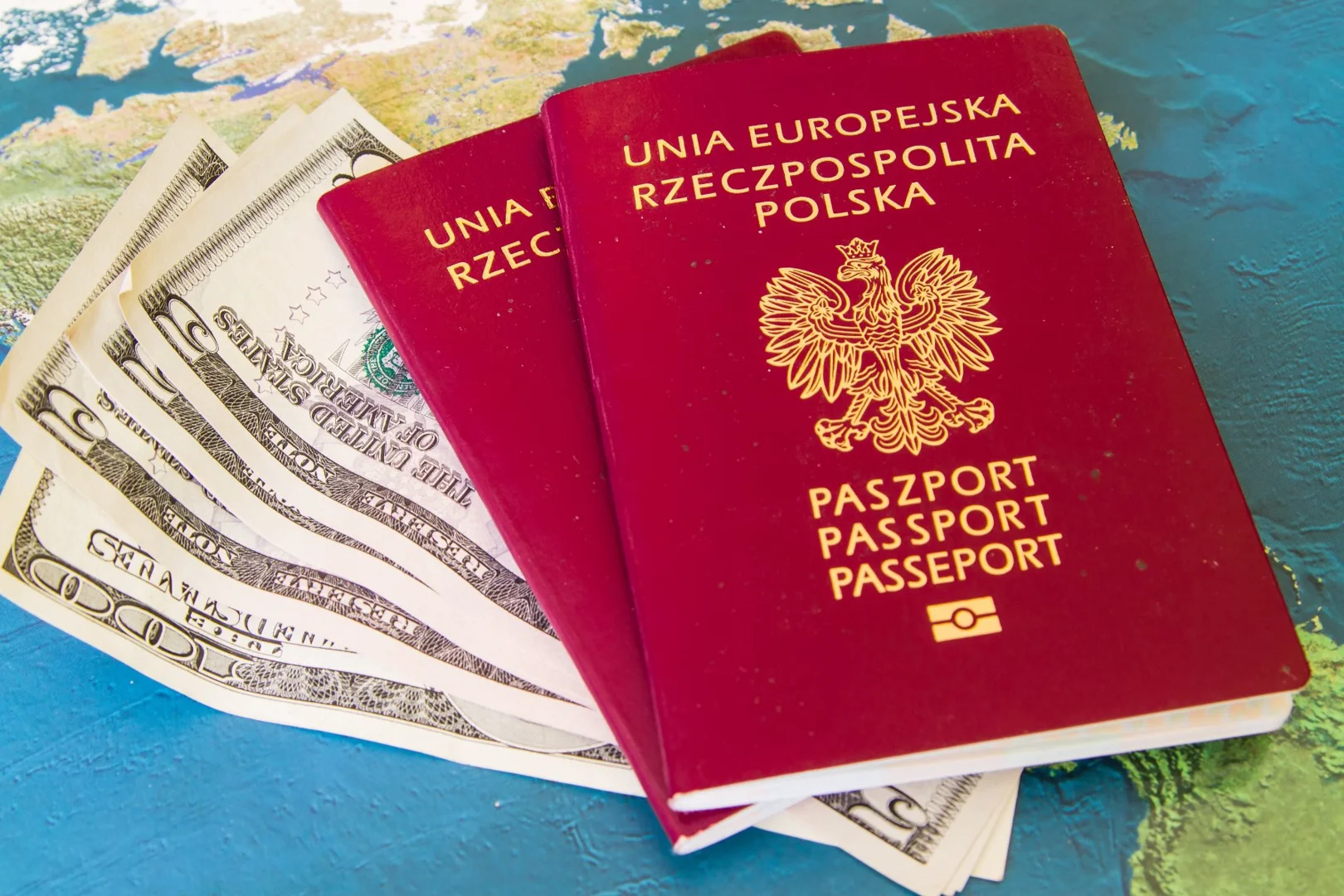
Proving your residency status, both in the USA and your new home in Poland, is a cornerstone of smooth customs clearance under the ‘mienie przesiedleńcze’ program. For your US residency, Polish customs requires robust documentation to confirm you have lived in the USA for at least 12 consecutive months. This isn’t a single document requirement; rather, it often necessitates a “constellation” of at least three official documents. Acceptable proofs include:
- Tax statements or returns: Demonstrating your tax residency over the required period.
- Utility bills: Such as electricity, gas, or water bills, consistently showing your name and US address.
- Bank statements: Indicating regular financial activity tied to your US residence.
- Rent receipts or mortgage statements: Proving continuous housing in the USA.
- Insurance receipts: For home or car insurance, showing your US address.
- Employer statements: A letter from your employer confirming your employment and residency dates.
All these documents must be in your name and clearly cover the continuous 12-month period.
Upon arrival in Poland, you will also need to provide proof of your new Polish residency. This typically includes:
- PESEL number: Poland’s national identification number, essential for official transactions.
- Address registration (Meldunek): A formal confirmation of your residential address in Poland.
- Notarized rental agreement or house title: Legal documents confirming your living arrangements.
Ensuring all these documents are accurate, complete, and presented in the required format is critical to avoid delays and successfully navigate Polish customs.
The 12-Month Rule and Compliance in International Shipping and Logistics
A crucial aspect of Poland’s ‘mienie przesiedleńcze’ program is the stringent 12-month no-sale rule. This regulation stipulates that any household goods or vehicles imported duty-free into Poland cannot be sold, hired out, or given away for a period of 12 months following their customs clearance. This rule is designed to prevent abuse of the duty-free privilege and ensure that the items are genuinely for personal relocation rather than commercial purposes.
Violating this 12-month no-sale rule carries significant consequences. If you sell or transfer ownership of your imported goods within this period, you will be liable to pay the full customs duties and the 23% VAT that were initially exempted. Furthermore, you may also face additional fines and penalties imposed by Polish customs authorities. Compliance is not merely a formality; it’s a legal obligation with financial ramifications.
To maintain duty-free status, it is essential to plan your relocation carefully, ensuring that all items you intend to import meet the program’s conditions and that you are prepared to adhere to the post-importation rules. This includes keeping thorough records and being aware of the exact date your goods cleared customs. Our experts guide clients through these critical compliance requirements, helping them understand the nuances of Polish import regulations to avoid any unforeseen liabilities.
Vehicle Shipping and EU Standard Modifications
Shipping a vehicle from the USA to Poland involves more than just transport; it requires adherence to strict European Union (EU) standards and Polish regulations. If you plan to import your car duty-free under the ‘mienie przesiedleńcze’ program, it must have been registered and insured in your name in the USA for at least 6 consecutive months prior to shipment. Beyond this, a key aspect of vehicle importation is ensuring your car meets the necessary technical adjustments for Polish and broader EU roads.
Technical Adjustments for Polish Roads
Vehicles manufactured for the US market often have specifications that differ from EU standards. To ensure your imported vehicle is compliant and can be registered in Poland, several technical modifications are typically required:
- Turn Signals: US vehicles often have red rear turn signals, whereas EU regulations mandate amber-colored rear turn signals. This usually requires an electrical modification.
- Exterior Lighting: Adjustments may be needed for headlights (e.g., beam pattern for driving on the right side of the road), side markers, and fog lights to comply with EU standards.
- Speedometer Modification: US speedometers display speed in miles per hour (mph). For Polish registration, the speedometer must display kilometers per hour (km/h) as the primary unit. This can involve replacing the speedometer cluster or installing a conversion overlay.
- Exhaust System: While less common, some vehicles might require modifications to their exhaust system to meet EU emissions standards.
- Technical Inspection (Przegląd Techniczny): Once modifications are complete, your vehicle will undergo a mandatory technical inspection in Poland. This inspection verifies that the car is roadworthy and meets all Polish and EU safety and environmental regulations before it can be registered.
These modifications are essential for legal registration and safe operation on Polish roads. We recommend consulting with a certified mechanic in Poland specializing in US vehicle conversions to ensure all necessary adjustments are made correctly.
Combined Container Shipping: Vehicles and Household Goods
For many individuals and families relocating to Poland, the most efficient and cost-effective solution is to ship both their household goods and a vehicle in the same container. This method streamlines the logistics process, simplifies customs clearance under a single Bill of Lading, and often reduces overall shipping costs compared to separate shipments.
The feasibility of combined shipping largely depends on the volume of your household goods and the size of your vehicle. Here are some general volume guidelines:
- 20-foot container: This size typically holds approximately 1,100 cubic feet. It is generally suitable for shipping one standard-sized car along with the contents of a small apartment (e.g., a one-bedroom or studio apartment).
- 40-foot container: Offering around 2,200 cubic feet of space, a 40-foot container can comfortably accommodate one car and the household goods from a 3-4 bedroom house. This option provides ample space for a more extensive collection of furniture and personal belongings.
When opting for combined shipping, careful planning and professional packing are crucial. The vehicle must be securely braced and strapped within the container to prevent movement during transit. Household goods are then packed around the vehicle, maximizing space utilization while ensuring proper protection. Our teams are experienced in loading containers for ocean voyages, which is an art form itself, ensuring specialized moisture protection and securement for all your items, especially given the dynamic conditions at sea. This integrated approach offers a comprehensive solution for your international removal needs.
Strategic Planning for Relocation to Poland
A successful international relocation to Poland hinges on meticulous strategic planning. Beyond the logistics of physically moving your belongings, it involves understanding the broader context of your new life and ensuring every detail, from packing standards to door-to-door logistics, is expertly managed. Effective planning minimizes stress, avoids unforeseen expenses, and sets the stage for a smooth transition into your new Polish environment. When considering the detailed logistics involved in Handling USA Poland removals, having a clear roadmap is invaluable.
Prohibited and Restricted Items Checklist
When planning your international removal to Poland, be aware of items that are either prohibited or restricted for import. Non-compliance can lead to significant delays, confiscation of goods, and even fines. Poland, as an EU member, adheres to strict customs regulations.
Prohibited Items (cannot be imported under any circumstances):
- Illegal drugs and narcotics
- Firearms, ammunition, and explosives (unless with special permits and licenses, which are highly restrictive for personal import)
- Pornographic materials
- Counterfeit goods
- Endangered species (flora and fauna) and products derived from them (e.g., ivory)
- Certain agricultural products and foodstuffs that pose a risk of disease or pest infestation
Restricted Items (can be imported with specific conditions, limits, or permits):
- Alcohol and Tobacco: While generally subject to duties, limited quantities may be brought in for personal use. For relocation goods, alcohol and tobacco are typically not considered duty-free relocation items and will be subject to customs duties and VAT. For personal baggage (not relocation goods), the limits are generally 2 liters of alcohol (over 22% vol), 4 liters of wine, 16 liters of beer, 200 cigarettes, 50 cigars, or 250g of loose tobacco.
- Pharmaceuticals and Medications: Prescription medications must be accompanied by a doctor’s prescription and be in quantities consistent with personal use. Certain controlled substances are highly restricted.
- Antiques and Art: Items pre-dating 1945 may require special documentation, photos, and appraisals to avoid issues related to national heritage protection.
- Professional Tools and Commercial Vehicles: These are generally not eligible for duty-free import under the ‘mienie przesiedleńcze’ program and will be subject to duties and VAT. The program is specifically for personal household effects.
- Plants and Plant Products: Require phytosanitary certificates to prevent the introduction of pests or diseases.
- Pets: Require health certificates, vaccinations (including rabies), and may be subject to quarantine periods.
It is crucial to declare all items accurately on your inventory list. Any discrepancies or undeclared restricted items can lead to severe penalties. Our customs support team can provide detailed guidance on specific items to ensure full compliance with Polish regulations.
Timeline of the Door-to-Door Shipping Process
The entire door-to-door moving process from the USA to Poland is a multi-stage journey that typically spans 6 to 8 weeks. Understanding this timeline helps manage expectations and allows for better planning of your arrival and settlement in Poland.
- Initial Consultation & Quote (Week 1): This phase involves assessing your specific needs, estimating cargo volume, and providing a detailed quote.
- Packing & Pickup (Week 1-2): Professional movers will pack your household goods, and your vehicle (if applicable) will be prepared for shipment. Pickup from your US residence or a designated warehouse is arranged.
- Transit to Port & Export Customs (Week 2-3): Your belongings are transported to a US East Coast port, where they undergo US export customs clearance.
- Ocean Freight (Week 3-6): The container embarks on its transatlantic journey. As noted, direct transit from the US East Coast to Polish ports like Gdańsk or Gdynia is approximately 25 days. However, this period can fluctuate due to weather, port congestion, or transloading in European hubs like Hamburg.
- Arrival & Import Customs in Poland (Week 6-7): Upon arrival at a Polish port, your shipment enters the Polish customs process. This is where your ‘mienie przesiedleńcze’ documentation is crucial for duty-free clearance. This stage can take several days, depending on the completeness of your paperwork and customs workload.
- Inland Transportation & Delivery (Week 7-8): Once cleared, your goods are transported from the port to your new residence in Poland. This is followed by delivery, unloading, and potentially unpacking services.
- Vehicle Registration (Post-Delivery): If you’ve shipped a vehicle, the final step after delivery is to complete the technical inspection and registration process with Polish authorities, typically within 30 days of import.
Throughout this timeline, effective communication and proactive management are key. We provide regular updates and coordinate all phases to ensure a seamless transition for your international removal.
Frequently Asked Questions about Relocating to Poland
Moving internationally generates numerous questions, especially concerning documentation and regulations. Here, we address some of the most frequently asked questions about relocating to Poland from the USA.
What documents prove 12 months of US residence for Polish customs?
To qualify for duty-free import under Poland’s ‘mienie przesiedleńcze’ program, you must provide proof of having resided in the USA for at least 12 consecutive months immediately preceding your move. Polish customs typically requires a “constellation” of at least three different official documents, all in your name and showing your US address, spanning the entire 12-month period. These can include:
- Tax returns or statements: Official documents filed with US tax authorities.
- Utility bills: Such as electricity, gas, water, or internet bills, showing continuous service.
- Bank statements: Monthly statements from a US financial institution.
- Rent receipts or mortgage statements: Proof of continuous housing payments.
- Insurance receipts: For property, health, or vehicle insurance.
- Employer statements: A formal letter from your employer confirming your period of employment and residency in the USA.
It’s crucial that these documents clearly demonstrate continuous residency for the specified duration.
Can I import my car duty-free under the mienie przesiedleńcze program?
Yes, you can import your car duty-free into Poland under the ‘mienie przesiedleńcze’ program, provided you meet specific criteria. The vehicle must have been registered and insured in your name in the USA for at least 6 consecutive months prior to its shipment to Poland. Additionally, the car must be for your personal use and not intended for resale within the 12-month no-sale period.
Essential documents required for duty-free vehicle import include:
- Original Certificate of Title: Proving ownership.
- Bill of Sale or Invoice: If the vehicle was recently purchased.
- Proof of 6 months’ Registration: Documentation showing the car was registered in your name in the USA for the required period.
- Proof of 6 months’ Insurance: Documentation showing continuous insurance coverage in your name.
- Your US Passport/ID: For identification purposes.
- Proof of 12 consecutive months of residence in the USA: As detailed in the previous FAQ.
- Polish tax identification number (PESEL): For customs and registration in Poland.
Even with duty-free status, your vehicle will still need to undergo technical modifications to meet EU standards and pass a Polish technical inspection before it can be registered.
What are the consequences of violating the 12-month no-sale rule?
Violating the 12-month no-sale rule for duty-free imported goods under the ‘mienie przesiedleńcze’ program can lead to significant financial and legal repercussions. If you sell, lease, or transfer ownership of any items that were imported duty-free before the 12-month period has elapsed, you will be obligated to pay the full customs duties and the 23% VAT (Value Added Tax) that were originally exempted. This payment will be calculated based on the assessed value of the goods at the time of import.
Beyond these duties and taxes, you may also face additional penalties and fines imposed by Polish customs authorities for non-compliance. These penalties can vary depending on the value of the goods and the specific circumstances of the violation. In some cases, repeated or deliberate violations could lead to more severe legal liabilities. To avoid these consequences, it is imperative to adhere strictly to the 12-month holding period and ensure all your imported items are genuinely for your personal, long-term use in Poland.
Conclusion
Relocating from the USA to Poland is an exciting venture, offering a blend of cultural richness and economic advantages, with consumer prices approximately 41.53% lower than in the US. However, a successful and stress-free move, especially when it involves international removals, hinges on meticulous planning and a thorough understanding of the logistical and regulatory landscape. From choosing the right shipping method like FCL or LCL, to navigating the intricacies of Polish customs and the ‘mienie przesiedleńcze’ program, every step requires careful attention.
We have explored the critical aspects, including the essential documentation for duty-free import, the specific requirements for vehicle shipping and EU modifications, and the importance of adhering to rules like the 12-month no-sale period. Understanding transit times, preparing for customs clearance, and knowing what items are prohibited or restricted are all vital components of your journey.
By equipping yourself with this knowledge and partnering with experienced international movers, you can transform a potentially overwhelming process into a streamlined transition. A well-executed plan ensures that your cherished belongings arrive safely and efficiently, allowing you to focus on settling into your new life in Poland. We are committed to providing secure transport and comprehensive support, making your international relocation as smooth and successful as possible.

