





Mastering the Niche: How Specialized Experts Are Redefining Their Industries

Table of Contents
- 1 The Core Distinction: How Specialized Services Differ from General Services
- 1.1 Attribute General Services Specialized Services Scope Broad, standardized offerings Narrow, highly focused, niche solutions Expertise General knowledge, widely applicable skills Deep, niche expertise, advanced certifications, specific training Customization One-size-fits-all, limited personalization Highly individualized, custom to unique client needs Target Audience Mass market, diverse client base Specific demographics, individuals with complex or unique requirements Cost Generally lower, volume-based Often higher, reflecting intensive resources, expertise, and customization The Expertise Gap
- 1.2 Customization and Client Focus
- 2 The Expanding Spectrum of Specialized Services
- 3 Access and Delivery: The Pathway to Specialized Support
- 4 Goals, Roles, and Outcomes of Specialized Services
- 5 The Future of Expertise: Trends and Trajectories
The Core Distinction: How Specialized Services Differ from General Services
 In a world that grows more complex each day, general solutions often fall short. We often face challenges that need extraordinary precision and deep expertise. This is where specialized services come in. They are transforming how industries operate by providing focused, in-depth solutions.
This guide will explore specialized services. We will examine what they are and who they assist. We will also see how they are delivered and by whom. For example, when it comes to vital property care, specialized roofing repairs and installations ensure safety and lasting quality.
Join us as we examine how these unique offerings differ from general services. We will also cover their benefits, challenges, and future trends.
Specialized services are defined by their depth, not their breadth. Unlike general services that offer a broad range of standardized solutions for a wide audience, specialized services provide customized, intensive support targeting a narrow set of challenges. This fundamental difference impacts everything from the provider’s qualifications to the client’s outcome.
To illustrate this, consider the key attributes that set these two service categories apart:
Attribute General Services Specialized Services Scope Broad, standardized offerings Narrow, highly focused, niche solutions Expertise General knowledge, widely applicable skills Deep, niche expertise, advanced certifications, specific training Customization One-size-fits-all, limited personalization Highly individualized, custom to unique client needs Target Audience Mass market, diverse client base Specific demographics, individuals with complex or unique requirements Cost Generally lower, volume-based Often higher, reflecting intensive resources, expertise, and customization The Expertise Gap
The most significant differentiator lies in the level of expertise. General services are typically delivered by professionals with a broad understanding of their field, following standardized procedures that cater to everyday needs and requirements. Think of a general practitioner doctor, a standard handyman, or a public transit system. Their value lies in accessibility and addressing widespread issues.
Specialized services, however, demand a profound depth of knowledge and skill in a particular area. Providers often hold advanced certifications, undergo rigorous niche training, and possess experience in their chosen domain. For instance, a forensic scientist has a different skill set than a general police officer, and a speech-language pathologist offers distinct expertise compared to a general educator. These professionals are often part of multi-disciplinary teams, pooling their unique skills to address complex challenges comprehensively. This depth of expertise allows them to tackle problems that generalists simply cannot.
Customization and Client Focus
General services often adopt a “one-size-fits-all” approach, offering mass-market solutions designed for efficiency and broad appeal. While effective for many, this model can overlook the unique circumstances and specific needs of individuals or organizations facing particular difficulties.
Specialized services, in contrast, are inherently client-focused and highly individualized. They prioritize understanding the unique context of each client, developing custom strategies and solutions that are precisely tailored to their situation. This often involves creating an Individualized Service Plan (ISP) or engaging in person-centered planning, where goals are collaboratively set and outcomes are carefully tracked. For example, specialized services for children with disabilities develop ISPs that are “coordinated, individualized, and flexible” to meet a child’s unique strengths, needs, time, priorities, culture, and values, ensuring that the support provided is as practical and relevant as possible. This level of customization ensures that resources are directed precisely where they are most needed, resulting in more impactful and sustainable outcomes.
The Expanding Spectrum of Specialized Services
The application of specialized services spans nearly every sector, demonstrating a universal need for focused expertise. These services are not confined to one area but are crucial in public, private, and commercial domains, providing critical support where general knowledge falls short.

Public and Social Sector Expertise
In the public and social sectors, specialized services are vital for maintaining safety, supporting vulnerable populations, and ensuring justice. Organizations like the Royal Canadian Mounted Police (RCMP) rely heavily on Specialized Policing Services to provide critical frontline operational support. This includes units dedicated to explosives disposal, marine operations, public order, and tactics and rescue. These specialized teams offer capabilities that far exceed the scope of general policing, often requiring unique training and specialized equipment.
Beyond direct law enforcement, specialized services in the public sector extend to areas like forensic science and criminal intelligence, which are indispensable for solving complex crimes and preventing future threats. In social support, initiatives such as Specialized Homes and Support Services focus on providing individualized care for children and youth with specific needs, promoting their well-being and connection to family, culture, and community. This often involves integrating services and, where possible, co-locating them to ensure comprehensive support.
Furthermore, specialized disability support programs, such as the Family Support for Children with Disabilities (FSCD) program in Alberta, offer targeted interventions for children with severe disabilities, addressing critical needs in areas like behavior, communication, and physical abilities. Similarly, specialized services for individuals with vision loss provide essential support for achieving advanced independence, covering everything from travel and mobility instruction to assistive technology and early intervention programs for children. These programs are designed to fill specific gaps that general services cannot address, ensuring that individuals receive the precise support they need to thrive.
Medical and Personal Care Niches
While general practitioners are vital for primary healthcare, many health challenges require a specialist’s focused attention. This is particularly evident in fields like mental health, where complex conditions necessitate custom therapeutic approaches and expert intervention. The Quebec mental health system, for instance, categorizes services into front-line, second-line, and third-line, with specialized services reserved for more complex cases requiring specific expertise.
Beyond traditional medical fields, specialized services also thrive in personal care, especially in areas where aesthetic and functional outcomes are paramount. For example, providers of Georgia Plastic specialized services offer procedures that demand a unique and advanced skill set, such as reconstructive surgery, cosmetic improvements, and other highly specialized interventions. These services require not only extensive medical training but also an artistic eye and a deep understanding of patient-specific goals, distinguishing them sharply from general medical care.
Commercial and Residential Trade Mastery
In the commercial and residential sectors, the increasing complexity of infrastructure and property management necessitates experts who can handle specific, high-stakes tasks. For critical structural components, such as a building’s roof, relying on professionals for specific Roofing repairs and installations ensures safety, longevity, and compliance with intricate building codes. These specialized roofing contractors possess expertise in various materials, techniques, and structural considerations that general construction workers may not.
Similarly, the hospitality industry is seeing a rise in niche providers, such as those offering Pet-friendly specialized services to cater to a specific clientele. These services extend beyond simply allowing pets; they may include specialized pet amenities, designated pet-walking areas, or even pet-sitting services, demonstrating a customized approach to a particular market segment. This focus on specific needs allows businesses to carve out unique market positions and deliver exceptional value to their target customers.
Access and Delivery: The Pathway to Specialized Support
Accessing specialized services involves a structured process that ensures the right expertise is matched with the specific need. This pathway typically encompasses assessment, planning, and coordination, with funding models that vary significantly across different sectors.

Eligibility and Assessment
The journey to specialized support often begins with a rigorous determination of eligibility. Unlike general services, which are often universally accessible, specialized services are typically reserved for individuals or organizations that meet specific criteria, ensuring resources are directed to those with the most profound needs.
Standard eligibility criteria often include:
- Formal Diagnosis: A medical or professional diagnosis of a specific condition (e.g., severe disability, mental health disorder, vision impairment).
- Severity of Need: Documentation demonstrating that the individual’s condition significantly limits their ability to function in daily life or poses a substantial risk.
- Functional Limitations: Evidence of critical service needs in multiple areas, such as behavior, communication, physical abilities, or self-help skills.
- Lack of Alternative Solutions: Confirmation that general services or other existing programs cannot adequately meet the individual’s unique requirements.
- Professional Referral: A recommendation from a primary care provider, educator, or other relevant professional.
This process often involves comprehensive needs assessments conducted by qualified professionals. For individuals with developmental disabilities, regional centers in California, for example, provide diagnosis and assessment of eligibility, helping to plan, access, coordinate, and monitor services and supports. This ensures that services are customized to the individual’s specific challenges and goals.
The Process: From Request to Delivery
Once eligibility is established, the process of accessing and delivering specialized services typically follows a carefully coordinated path:
- Initial Consultation: An initial meeting to understand the client’s needs, goals, and expectations.
- Documentation Gathering: Collection of relevant reports, assessments, and medical records to inform the service plan.
- Multi-disciplinary Team (MDT) Review: In many cases, a team of experts from various disciplines (e.g., physical therapists, psychologists, social workers) reviews the client’s case to develop a holistic understanding and recommend appropriate interventions.
- Collaborative Plan Development: A key step where the client, their family (if applicable), and the service providers work together to create an Individualized Service Plan (ISP). This plan outlines specific priorities, goals, strategies, and methods for tracking progress.
- Service Coordination: A dedicated case manager or support coordinator often oversees the implementation of the ISP, ensuring seamless integration of various services and regular communication among all parties.
- Blended Delivery Models: Modern specialized services are increasingly utilizing blended delivery models, which combine in-person sessions with virtual support (e.g., phone consultations, online therapy platforms) to enhance accessibility and flexibility. For instance, specialized services for individuals with vision loss might offer a mix of in-person training and virtual sessions.
Funding and Cost Structures
The funding and cost structures for specialized services can be complex and vary significantly depending on the sector and region.
- Public Funding: Many specialized social and healthcare services are supported by government programs. For example, the Family Support for Children with Disabilities (FSCD) program provides funding for specialized services for eligible children. Similarly, regional centers for developmental disabilities often receive public funding to provide a wide array of services.
- Private Insurance: In some cases, private health insurance plans may cover a portion of specialized medical or therapeutic services, though coverage limits and specific criteria often apply.
- Direct Client Payment: For certain specialized services, particularly in the private sector (e.g., some cosmetic procedures, niche consulting), clients may pay directly for the expertise and custom solutions.
- Parental Fee Programs: In specific contexts, such as residential services for minors with developmental disabilities, a Parental Fee Program may require parents to contribute to the cost of services, as seen in California’s regional center system. It is essential to understand the distinctions between services funded by regional centers and “generic resources” funded by other agencies. For more details on accessing and funding services for developmental disabilities, exploring resources like the Regional Center Services and Descriptions can be highly informative.
Understanding these funding mechanisms is crucial for individuals and organizations seeking specialized support, as it directly impacts accessibility and financial planning.
Goals, Roles, and Outcomes of Specialized Services
The ultimate purpose of specialized services is to achieve targeted, high-impact outcomes that are unattainable through general means. This is accomplished through the coordinated efforts of a dedicated team of professionals focused on a client’s unique goals.

Defining Success: Goals and Expected Outcomes
The goals of specialized services are inherently custom to the client’s specific needs, but common themes emerge across different sectors. These services aim for transformative results, often focusing on:
- Increased Independence: Empowering individuals to perform daily tasks, steer their environment, or manage their conditions with greater autonomy. For example, specialized services for vision loss aim for advanced independence goals, such as learning to be fully independent at home or navigating the world with skill and confidence.
- Improved Safety: Implementing strategies and interventions to mitigate risks, whether in a policing context (e.g., bomb disposal) or in personal care (e.g., safe medication management for individuals with cognitive impairments).
- Skill Development: Fostering the acquisition of new skills or the improvement of existing ones, from communication and social skills for children with disabilities to advanced technical skills for professionals.
- Augmenting Caregiver Competency: Providing training and support to family members or direct care staff, enabling them to meet better the needs of the individuals they support. This is a core aspect of many specialist services, ensuring a consistent and informed care environment.
- Long-term Goal Achievement: Focusing on sustainable progress and helping clients achieve significant life milestones that might otherwise be out of reach.
- Crisis Mitigation: Providing rapid, expert intervention in high-stakes situations to de-escalate crises and ensure stability.
- Improved Quality of Life: Enhancing the overall well-being, participation, and satisfaction of the individuals served.
The Team Behind the Service
Specialized services are rarely a solo endeavor. They typically involve a dedicated team of highly qualified professionals, each bringing unique expertise to the table. This multi-disciplinary approach ensures that all facets of a complex need are addressed.
Typical roles within specialized service teams include:
- Physical Therapists: For motor skill development and mobility.
- Occupational Therapists: For adaptive functioning and daily living skills.
- Speech-Language Pathologists: For communication and swallowing disorders.
- Psychologists and Behavioral Specialists: For mental health support, behavioral interventions, and cognitive development.
- Certified Technicians: For specialized equipment operation, maintenance, or technical solutions (e.g., assistive technology specialists, forensic technicians).
- Case Managers and Support Coordinators: To oversee the entire service plan, coordinate between various providers, and act as a central point of contact for the client and their family.
These professionals work collaboratively, often under the guidance of a lead agency, to implement the individualized service plan. Their roles are not just about direct service provision but also about promoting, supporting, and augmenting the competency of staff and caregivers to meet a person’s needs. For a deeper understanding of the diverse roles and responsibilities involved in specialist services, resources like the Minnesota Department of Human Services’ guide on Specialist Services offer valuable insights into the professional standards and qualifications required.
The Future of Expertise: Trends and Trajectories
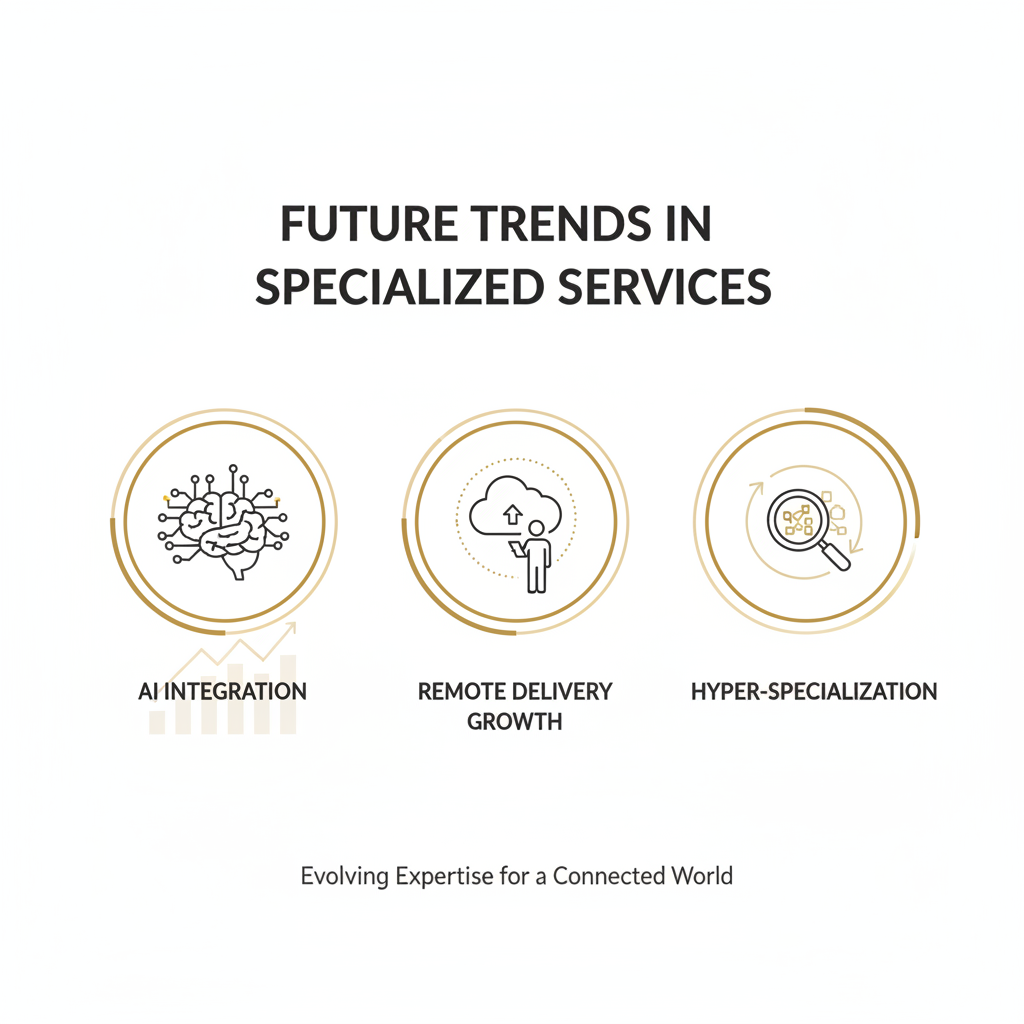
The field of specialized services is continuously evolving, driven by technological advancements, new research, and changing societal expectations. The future points toward even greater integration, personalization, and accessibility.
Key Challenges and Opportunities
While the benefits of specialized services are clear, their delivery also comes with inherent challenges. Understanding these factors allows us to steer the landscape more effectively and anticipate future developments.
Benefits:
- Higher Quality and Better Outcomes: Custom interventions by experts lead to more effective and lasting results.
- Improved Safety and Security: Critical support in high-risk areas, from law enforcement to healthcare.
- Increased Independence and Quality of Life: Empowering individuals to overcome significant barriers.
- Innovation and Advancement: Specialists are often at the forefront of developing new techniques and technologies.
- Targeted Resource Allocation: Ensuring that intensive support reaches those who need it most.
Challenges:
- Higher Costs: The specialized expertise, intensive resources, and individualized nature often translate to higher expenses.
- Accessibility Issues: Geographic disparities, lengthy waiting lists, or stringent eligibility criteria can limit access for some individuals.
- Coordination Complexity: Managing multiple specialists and integrating various services requires robust coordination mechanisms.
- Workforce Shortages: A limited pool of highly specialized professionals can impact the availability of services.
- Funding Constraints: Reliance on specific government programs or insurance coverage can create financial barriers.
Future Directions in Specialized Services
Looking ahead, several key trends are shaping the trajectory of specialized services:
- Technology Integration: The adoption of artificial intelligence, machine learning, and advanced data analytics will revolutionize how needs are assessed, services are planned, and outcomes are measured. This will lead to even more precise and predictive interventions.
- Remote Support and Virtual Sessions: The accelerated shift towards telehealth and remote service delivery, spurred by recent global events, is likely to become a permanent feature. This enhances accessibility, particularly for individuals in remote areas or those with mobility challenges, enabling virtual consultations, therapy sessions, and ongoing support.
- Data-Driven Planning and Personalized Pathways: Leveraging data to inform service design and delivery will become even more sophisticated. This allows for hyper-personalized pathways, where interventions are continuously adapted based on real-time progress and individual responses.
- Hyper-Specialization: As knowledge expands, we can expect to see even narrower and deeper specializations emerge within existing fields, addressing increasingly specific and complex needs. This means a continuous refinement of expertise to meet evolving challenges.
- Integrated Care Models: There will be a greater emphasis on seamlessly integrating specialized services across different sectors (e.g., health, social, education, legal) to provide holistic support. This aims to break down silos and ensure a more coordinated and client-centered experience.
- Focus on Preventive Specialized Care: Moving beyond reactive interventions, there’s a growing recognition of the value of specialized services in early detection and prevention, particularly in areas like mental health and developmental support. Early intervention can significantly alter long-term outcomes, reducing the need for more intensive support later on.
In conclusion, specialized services are not just an alternative to general offerings; they are an essential component of a responsive and effective society. By providing deep expertise, customized solutions, and targeted outcomes, these services continually redefine industries and improve lives. As we look to the future, the evolution of specialized services promises even greater innovation, accessibility, and impact.

