
Community-Focused Heating and Air Conditioning Services
Table of Contents
Defining a Comprehensive Maintenance Plan for Heating and Cooling

To understand the bigger picture of home comfort, explore our [HVAC System Guide (Up Link)], or for immediate assistance, check our [Service Options (Down Link)].
This comprehensive guide will detail the specific services and tasks that comprise a typical HVAC maintenance plan. We will cover how often maintenance should occur, the significant benefits it offers, and essential considerations when selecting a service provider. Our aim is to equip you with the knowledge to make smart choices for your home’s heating and cooling.

A comprehensive HVAC maintenance plan is essentially a proactive service agreement between a homeowner and a licensed HVAC provider. Rather than waiting for a system breakdown to occur, which often happens at the most inconvenient times (like during a heatwave or a cold snap), these plans emphasize preventative care. The core idea is to identify and address minor issues before they escalate into major, costly repairs. This approach ensures your system’s reliability, extends its operational lifespan, and maintains optimal performance throughout the year.
For homeowners in southern Indiana, where we experience distinct seasonal changes, a well-structured maintenance plan is not just a luxury; it’s a necessity. It helps prepare your system for the intense demands of both summer cooling and winter heating, ensuring consistent comfort regardless of the weather outside. Many plans also offer benefits like priority scheduling, meaning that if an issue does arise, you’ll receive faster service. The best plans are often tiered, offering different levels of coverage to suit various needs and budgets, all designed to enhance your system’s efficiency and longevity. For those in southern Indiana looking for a reliable partner in home comfort, exploring comprehensive Allegiance heating cooling maintenance options can be a smart step towards securing peace of mind.
Essential Components of Heating and Cooling Systems
Understanding what goes into maintaining an HVAC system begins with recognizing its critical components. A typical maintenance plan focuses on a thorough inspection and tune-up of these parts to ensure they function harmoniously and efficiently.
- Thermostat Calibration: The thermostat is the brain of your HVAC system. Accurate calibration ensures it reads the temperature correctly and signals the system to turn on or off at the appropriate times. An uncalibrated thermostat can lead to inefficient operation and inconsistent indoor temperatures.
- Electrical Connections: Loose or corroded electrical connections can pose safety hazards and lead to system malfunctions or even complete shutdowns. Technicians meticulously inspect and tighten all wiring to ensure safe and reliable operation.
- Moving Parts and Lubrication: Many components within your HVAC system, such as blower motors and fan bearings, contain moving parts that require proper lubrication. Without it, friction increases, leading to excessive wear, higher energy consumption, and eventual component failure. Lubricating these parts reduces stress and extends their life.
- Safety Controls: Modern HVAC systems are equipped with numerous safety mechanisms designed to prevent dangerous situations, such as gas leaks in furnaces or overheating. Technicians test these controls to ensure they are functioning correctly, protecting your home and family.
- Airflow Measurement: Proper airflow is crucial for both heating and cooling efficiency and indoor air quality. Technicians measure airflow to identify any obstructions or issues within the ductwork or blower system that might be hindering performance.
- Greenville Service Standards: Adhering to high service standards means that all these checks are performed with precision and attention to detail, ensuring that every aspect of your heating and cooling system meets optimal operational parameters.
Seasonal Tune-Ups for Year-Round Heating and Cooling
The frequency of HVAC maintenance is typically dictated by the changing seasons, with most experts recommending at least two tune-ups per year. This bi-annual approach ensures your system is perfectly prepared for the peak demands of both the cooling and heating seasons.
- Spring AC Service: As the warmer months approach in the Louisville area, a spring tune-up for your air conditioning unit becomes essential. This service typically involves:
- Cleaning Coils: Both the indoor evaporator coil and outdoor condenser coil are cleaned to remove dirt and debris that can impede heat transfer, significantly improving efficiency.
- Refrigerant Level Check: Technicians verify that refrigerant levels are optimal. Low refrigerant can indicate a leak and forces the system to work harder, reducing efficiency and potentially damaging the compressor.
- Condensate Drain Clearing: The condensate drain line can become clogged with algae and debris, leading to water leaks, mold growth, and potential system shutdowns. Cleaning this line prevents these issues.
- Electrical Component Inspection: Checks include contactors, capacitors, and wiring for wear or damage.
- Fall Furnace Inspection: Before the onset of colder temperatures, a fall furnace inspection is crucial for safety and efficiency. This service typically includes:
- Heat Exchanger Inspection: A critical safety check to detect cracks or corrosion that could lead to dangerous carbon monoxide leaks.
- Gas Pressure Check: Ensuring the correct gas pressure for optimal combustion and efficiency.
- Burner Cleaning: Cleaning the burners to ensure efficient and complete combustion.
- Flue System Inspection: Checking the flue pipe for proper venting of combustion gases.
- Ignition System Test: Verifying that the ignition system (pilot light or electronic igniter) is working correctly.
- Heat Pump Specifics: For homes with heat pumps, which operate year-round for both heating and cooling, bi-annual maintenance is even more critical. Technicians will specifically check the reversing valve, which switches the system between heating and cooling modes, and inspect the defrost cycle to ensure it functions properly in colder temperatures. The goal is to maximize efficiency and prevent breakdowns, preparing your system for whatever Louisville area weather patterns bring.
Technical Procedures and Benefits of Regular Upkeep
Professional HVAC maintenance goes far beyond simple cleaning; it involves a series of technical procedures designed to optimize your system’s performance, extend its lifespan, and ensure safe operation.
Here’s a comparison of typical maintenance tasks during cooling and heating seasons:
Cooling Season Maintenance Tasks Heating Season Maintenance Tasks Inspect & clean outdoor condenser coils Inspect & clean furnace burners Check refrigerant levels & pressures Inspect heat exchanger for cracks Clean indoor evaporator coil Test gas pressure & connections Clear condensate drain line Test ignition system & safety controls Measure temperature drop across coil Measure temperature rise across furnace Check outdoor fan motor & blades Inspect flue system for proper venting Test compressor start & run amps Check carbon monoxide levels Inspect electrical connections Inspect electrical connections Lubricate moving parts Lubricate moving parts Check thermostat calibration Check thermostat calibration Inspect air filter Inspect air filter Evaluate blower motor & assembly Evaluate blower motor & assembly Inspect ductwork Inspect ductwork These technical procedures yield substantial benefits for homeowners:
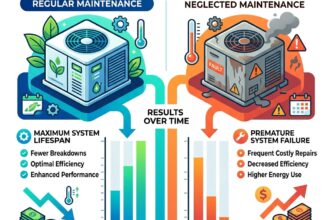
- Energy Efficiency: Regular cleaning of coils, proper refrigerant balance, and optimized airflow mean your system doesn’t have to work as hard to achieve desired temperatures. Research suggests that a dirty or poorly maintained system can increase energy use by 15% or more. Conversely, a well-maintained HVAC system can operate 15% more efficiently than a neglected one, translating into significant annual savings on utility bills. Regular maintenance can cut utility bills by up to 35%.
- Extended Equipment Lifespan: Heating and cooling systems are designed to last 10 to 15 years, but only if they’re properly maintained. Neglected systems might fail in just 8-10 years, while a maintained system can last 15-20 years. By keeping components clean, lubricated, and calibrated, we reduce wear and tear, preventing premature failure of expensive parts like compressors or heat exchangers.
- Breakdown Prevention: Tune-ups can prevent up to 95% of system breakdowns, helping you avoid unexpected and expensive emergency repairs that can cost hundreds or even thousands of dollars. Technicians can identify “wear and tear” issues early, replacing a small, inexpensive part like a $20 capacitor before it causes a major component failure, such as a $2,000 motor failure. Neglected systems are 40% more likely to experience a major component failure within the first 10 years.
- Improved Indoor Air Quality: Clean filters, coils, and ductwork mean fewer allergens, dust, and pollutants circulating in your home, leading to healthier indoor air.
- Comfort Consistency: A well-tuned system provides more consistent heating and cooling throughout your home, eliminating hot and cold spots.
- Reduced Wear: Each maintenance visit helps alleviate the stress on your system’s components, ensuring they operate within their intended parameters and reducing the likelihood of premature failure. Without proper maintenance, HVAC systems lose about 5% of their efficiency each year.
Protecting Manufacturer Warranties and Home Investments
One of the most critical,, benefits of an HVAC maintenance plan is its role in protecting your manufacturer’s warranty. Most modern HVAC manufacturers now require documented professional maintenance to honor their 10-year parts warranties. This means that if a major component fails within the warranty period, and you cannot provide proof of regular professional service, the manufacturer may deny your claim, leaving you responsible for the full cost of the repair or replacement. This can be a substantial financial burden, considering that components like compressors or heat exchangers can be very expensive.
Beyond warranty protection, a maintenance plan safeguards your overall home investment. Your HVAC system is one of the most expensive appliances in your home, and ensuring its longevity and efficiency directly contributes to your property’s value and appeal, particularly in areas like southern Indiana. Regular service helps identify minor “wear and tear” issues before they escalate into costly emergency repairs. For instance, a technician might spot a failing motor bearing or a small refrigerant leak during a routine check. Addressing these small problems proactively prevents them from leading to a complete system breakdown, which would be far more expensive and inconvenient.
When choosing a provider for your maintenance plan, it’s crucial to select licensed and insured technicians. This ensures that the work performed meets industry standards and that you are protected in case of any unforeseen issues. A reputable company will provide detailed documentation of each service visit, which serves as your proof of maintenance for warranty purposes. This commitment to long-term reliability and professional service not only protects your system but also enhances the overall value and comfort of your home.
Homeowner Responsibilities vs. Professional Expertise
While a professional HVAC maintenance plan covers the intricate technical aspects of your system, there are several simple yet crucial tasks homeowners can perform to complement these services and ensure optimal performance between visits. Understanding this division of labor is key to effective HVAC care.
- Homeowner DIY Maintenance:
- Filter Changes: This is arguably the most important DIY task. We recommend changing your HVAC air filter every 1-3 months, depending on factors like pets, allergies, and household activity. A clean filter ensures good airflow, improves indoor air quality, and prevents your system from overworking.
- Debris Removal: Keep the outdoor unit (condenser or heat pump) clear of leaves, grass clippings, and other debris. Maintain at least 2 feet of clearance around the unit to ensure proper airflow and heat dissipation.
- Vent Clearance: Ensure all indoor supply and return air vents are unobstructed by furniture, rugs, or curtains. Blocked vents restrict airflow, reducing efficiency and creating hot or cold spots.
- Thermostat Checks: Regularly check your thermostat batteries and ensure it’s programmed correctly for your comfort preferences and energy savings.
- Professional Expertise: While DIY tasks are vital, many aspects of HVAC maintenance require specialized tools, training, and knowledge. These are best left to certified professionals:
- Refrigerant Handling: Only EPA-certified technicians are legally allowed to handle refrigerants, which are potent greenhouse gases. Checking and adjusting refrigerant levels requires specialized equipment and expertise.
- Electrical Work: Inspecting and tightening electrical connections, testing capacitors, and diagnosing electrical faults can be dangerous for untrained individuals.
- Internal Component Cleaning and Inspection: Tasks like deep cleaning evaporator and condenser coils, inspecting heat exchangers for cracks, and performing combustion analysis on furnaces require professional-grade tools and a keen eye for detail.
- Lubrication of Moving Parts: While you might be able to identify some moving parts, knowing which ones require lubrication, what type of lubricant to use, and how much is best left to a professional.
When choosing an HVAC maintenance plan provider, look for companies that employ NATE-certified technicians. NATE (North American Technician Excellence) certification signifies that a technician has met the highest industry standards for technical proficiency. Additionally, ensure the provider is licensed and insured, offers transparent service agreements, and demonstrates a customer-centric approach. In a community like Greenville, IN, prioritizing local businesses with a strong reputation for honest service and commitment to community values can lead to a lasting and trustworthy partnership for your home comfort needs.
Frequently Asked Questions about HVAC Maintenance
We often encounter common questions from homeowners regarding their HVAC maintenance plans. Here, we address some of the most frequent inquiries to provide clarity and empower you to make informed decisions for your home’s heating and cooling.
How often should professional maintenance be performed?
The industry standard and most widely recommended frequency for professional HVAC maintenance is twice a year. This typically involves one visit in the spring to prepare your cooling system (air conditioner or heat pump) for the warmer months, and another visit in the fall to get your heating system (furnace or heat pump) ready for winter. This bi-annual approach ensures that your system is optimized for peak performance during the seasons when it works the hardest.
However, factors such as the age of your system, its usage patterns, and specific manufacturer requirements can sometimes influence this frequency. For older systems or those under heavy use, more frequent checks might be beneficial. It’s always best to consult with your HVAC professional to determine the ideal schedule for your specific equipment and household needs.
Can regular maintenance help reduce monthly utility bills?
Absolutely. Regular HVAC maintenance plays a significant role in optimizing your system’s efficiency, which directly translates into lower monthly utility bills. Over time, systems accumulate dust, dirt, and debris on coils, filters, and moving parts. This buildup forces the system to work harder to achieve the desired temperature, consuming more energy in the process.
During a maintenance visit, technicians perform tasks like coil cleaning, filter replacement, lubrication of moving parts, and thermostat calibration. These actions improve airflow, reduce friction, and ensure all components are working in harmony. A system operating at peak performance consumes less energy, as it doesn’t have to compensate for inefficiencies. Research suggests that a well-maintained system can operate significantly more efficiently, leading to substantial savings on your heating and cooling costs over the year.
Why is professional service required for manufacturer warranties?
Professional service is often a mandatory condition for maintaining your HVAC system’s manufacturer warranty, particularly for major components that come with a 10-year warranty. Manufacturers stipulate this requirement to ensure that their equipment is properly cared for throughout its operational life.
When a professional technician performs maintenance, they follow a detailed checklist that adheres to industry standards and often manufacturer-specific guidelines. They document these visits, providing proof that the system has received the necessary preventative care. This documentation is crucial because if a major component fails within the warranty period, the manufacturer will typically request proof of regular maintenance. Without this documented evidence, they may argue that the failure was due to neglect rather than a defect, potentially voiding your warranty and leaving you responsible for the repair costs. Professional service validates that your system has been maintained correctly, protecting your investment and ensuring warranty claim eligibility.
Conclusion
Investing in an HVAC maintenance plan is a proactive step towards ensuring reliable comfort and significant savings for your home in Greenville, IN, and throughout southern Indiana and the Louisville area. By understanding what an HVAC maintenance plan includes, homeowners gain peace of mind, knowing their system is receiving the expert care needed for year-round reliability. From extending your system’s lifespan and boosting its energy efficiency to preventing costly breakdowns and protecting your manufacturer’s warranty, the benefits are clear and compelling.
We believe in honest service and a commitment to our community. Choosing a comprehensive maintenance plan means partnering with professionals dedicated to keeping your home comfortable and your HVAC system running optimally for years to come. Don’t wait for a breakdown to consider preventative care; embrace the proactive approach and enjoy the unwavering comfort and efficiency your home deserves.