
How Interest Rates Shape Your GIC Returns
Table of Contents
- 1 Understanding GICs and Their Appeal
- 2 The Direct Link Between Interest Rates and GIC Returns
- 3 Impact of Rising Interest Rates on GICs
- 4 Effects of Declining Interest Rates
- 5 Strategies to Navigate Interest Rate Fluctuations
- 6 Comparing GICs with Other Fixed-Income Investments
- 7 Tax Considerations
- 8 Final Thoughts
Understanding GICs and Their Appeal
In the Canadian investment landscape, GICs hold a special place for those who prioritize safety and predictability over high returns. With a guaranteed investment certificate, investors can deposit a sum of money with a trusted financial institution and know exactly how much they’ll earn at the end of the term. This assurance of both capital and interest makes GICs particularly attractive for conservative savers, retirees, and individuals with specific financial goals.
The primary appeal of GICs lies in their guarantee element, which offers protection against market volatility and economic uncertainty. Whether you choose a short-term or long-term GIC, your principal investment is protected, and your returns are fixed. This predictability stands in stark contrast to more volatile assets, such as stocks.
However, the performance and attractiveness of GICs are deeply intertwined with the overall interest rate environment. Changes in central bank policy or economic conditions can quickly shift the yield landscape, altering how much you earn on your GIC investment.
The stability and simplicity of GICs do come with trade-offs, including lower yields compared to riskier investments and less flexibility if you need to access your funds before maturity.
The Direct Link Between Interest Rates and GIC Returns
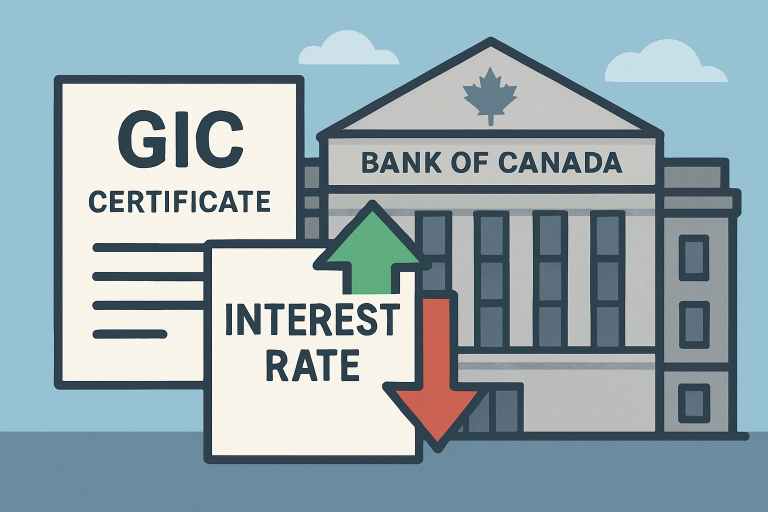
Central to understanding how GICs function is the direct relationship between interest rates and the yields of GICs. The Bank of Canada sets a benchmark interest rate that influences lending and deposit rates nationwide. When the central bank raises rates to combat inflation or cool economic growth, financial institutions are prompted to increase the interest they offer on new GICs to stay competitive and attract deposits. This essential link means that GIC rates can quickly adjust to shifts in monetary policy or major economic events.
For example, when the Bank of Canada signals tighter monetary policy, one-year GIC rates often rise, sometimes surpassing 2% or higher. This is reflective of recent market conditions in late 2025, where average GIC rates responded directly to changes in the central rate.
Impact of Rising Interest Rates on GICs
When interest rates are on the rise, newly issued GICs benefit directly from higher yields. Investors entering the market can take advantage of more favorable rates and potentially earn higher returns on their deposits. However, those who locked into a GIC at a lower rate before the increase may find themselves wishing they had waited. In such environments, carefully timing GIC purchases or employing multiple short-term GICs can help mitigate the risk of missing out on future rate hikes.
It’s also important to recognize that rapid rate increases can encourage banks to offer bonuses or special GICs with premium rates to attract new investment, making it a good time for new buyers to shop around.
Effects of Declining Interest Rates
When interest rates fall, the reverse occurs: newly issued GICs offer lower returns, and the income generated from these investments can shrink considerably. For retirees and income-focused investors, this drop can have practical implications for annual cash flow. During periods of monetary easing, as seen when central banks cut rates to stimulate the economy, short-term GIC yields also retreat, making it harder for savers to generate meaningful returns from new GICs.
Declining interest rates may prompt investors to seek alternative solutions, such as laddering or diversifying into other fixed-income products, to maintain a steady income level.
To address these challenges, several strategies can help maximize GIC returns regardless of the rate environment:
- Laddering: Involves purchasing multiple GICs with varying maturities, allowing you to regularly reinvest maturing funds at potentially higher rates and maintain liquidity.
- Staggered Investments: Rather than committing a lump sum all at once, spread investments over time. This helps average out the effects of interest rate changes and reduces timing risk.
- Staying Informed: Keeping an eye on economic news, inflation data, and Bank of Canada announcements ensures you’re better positioned to anticipate shifts in GIC rates.
Combining these tactics offers flexibility and responsiveness, enabling investors to capitalize on whatever interest rate environment they encounter.
Comparing GICs with Other Fixed-Income Investments
While GICs offer ironclad security, their yields tend to lag behind those of other fixed-income investments, such as government or corporate bonds, especially when interest rates are low. Unlike GICs, bonds can increase in market value as interest rates decline, offering the potential for capital gains above and beyond regular interest payments. However, with that opportunity comes added risk—bond prices can also fall when interest rates rise, impacting your principal if the bond is sold before maturity.
Savvy investors can use both GICs and bonds to balance safety, flexibility, and risk within their portfolios, choosing allocations that reflect their unique financial needs and time horizons.
Tax Considerations
Interest earned from GICs in non-registered accounts is taxed fully at your marginal tax rate, making it less tax-efficient compared to capital gains, where only 50% of the gain is taxable. For this reason, some investors choose to hold GICs within tax-advantaged accounts, such as RRSPs or TFSAs, where taxes are deferred or eliminated. Evaluating tax implications alongside return potential is key to creating a smart, tax-efficient investment plan for your GIC holdings.
Final Thoughts
The returns you earn from GICs are not set in stone—they ebb and flow in direct response to the Bank of Canada’s interest rate policies and the broader economy. By understanding the mechanisms at play and employing thoughtful investment strategies, Canadians can protect their savings, adapt to market shifts, and optimize the role of GICs within their portfolios for years to come.