
Future Trends in Automotive Buying Decisions
As the automotive industry pivots to meet the ever-evolving preferences of today’s car buyers, both manufacturers and dealerships must stay ahead of the curve or risk losing relevance. The modern consumer has become increasingly sophisticated, seeking vehicles that don’t just perform but also resonate with their own identities, lifestyles, and values. This shift toward vehicles as personal statements is particularly acute in an age where digitalization and connectivity guide virtually every purchase decision. It’s no wonder that sustainable design, high-tech features, and vehicle adaptability have surged to the top of purchase drivers. For buyers seeking to make informed choices as they navigate this dynamic landscape, exploring West Hills pre-owned vehicles is a practical and rewarding first step. Pre-owned inventories often showcase the latest features and models at accessible prices, illustrating the value-driven mentality shaping today’s auto market.
Emerging trends—such as the meteoric rise of electric vehicles, an intensified focus on value, and the shift toward digitally enhanced shopping—are all shaped by technological innovation, shifting societal priorities, and global economic realities. Buyers today want transparency and a seamless experience, both online and in person, reflecting the new expectation for frictionless transactions. This heightened demand for clarity and ease, paired with an insistence on vehicles that align with ethical and environmental values, suggests automotive purchasing has forever changed. Recognizing and responding to these shifts is crucial for industry players looking to stay relevant as consumers increasingly pursue a highly personalized vehicle shopping journey.
Table of Contents
Personalization: A Growing Priority
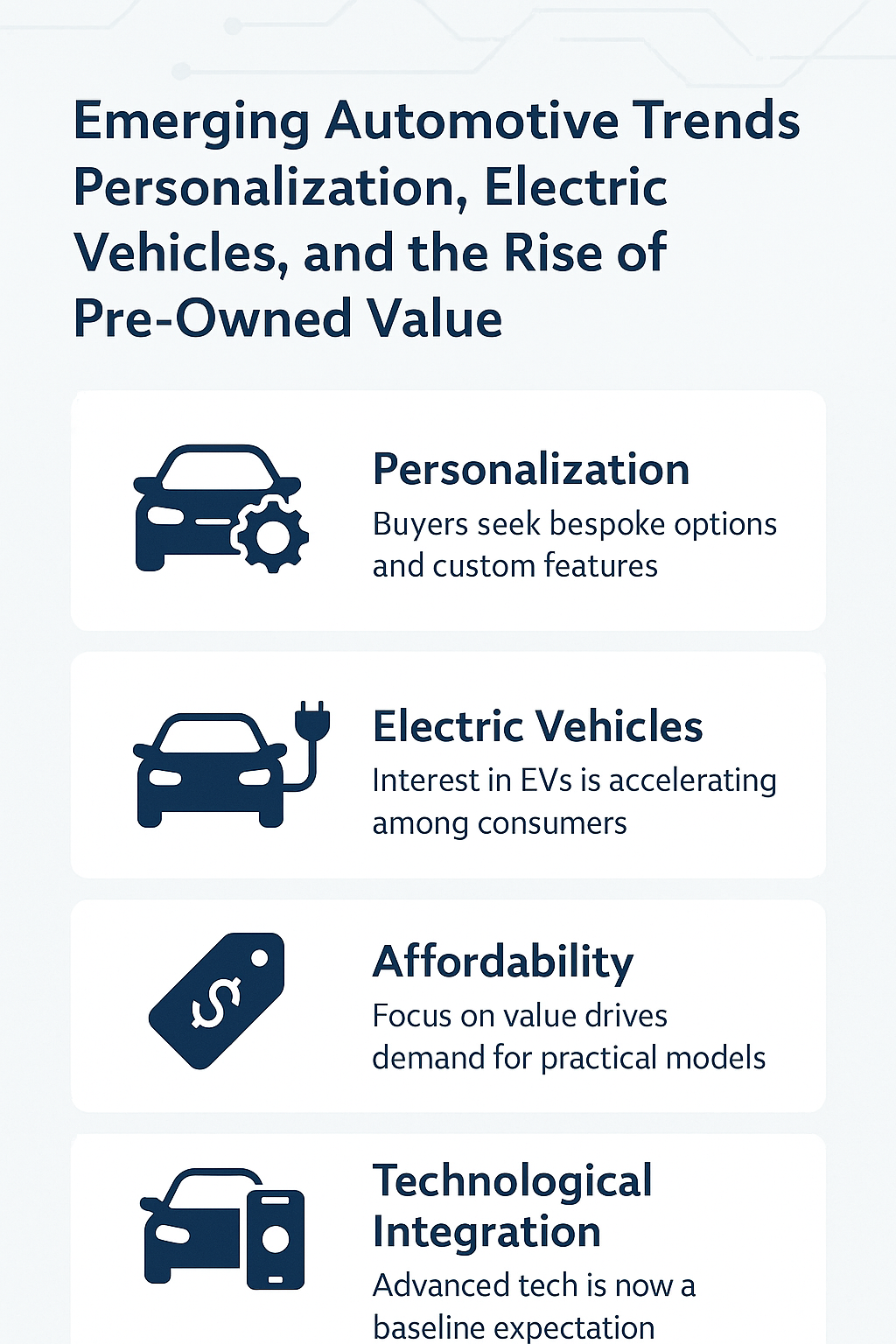
Vehicle personalization has evolved into one of the defining elements of the new automotive buying experience. No longer limited to superficial choices like color or wheel design, buyers now expect an array of bespoke options, from state-of-the-art safety technology to advanced infotainment systems, adaptive cruise control, and even eco-friendly manufacturing processes. More than 40% of U.S. and European car shoppers, according to a recent Blue Yonder survey, indicated that customization was critical to their purchase decision. Today’s buyers want their car to be an extension of themselves—whether that means vegan leather interiors, solar roofs, or advanced mood lighting. Automakers are responding by offering broader options and direct-to-consumer design interfaces. Those unable to deliver a genuinely personalized buying process are likely to fall behind, as consumers increasingly view their automobiles as lifestyle statements and demand vehicles that accommodate their unique needs.
Electric Vehicles: Accelerating Adoption
The surge in interest in electric vehicles (EVs) represents one of the most profound shifts in recent automotive history. Sales records show that regions such as California have witnessed EVs accounting for almost a quarter of new-car transactions, spurred by advances in battery technology and the widespread availability of charging stations. Heightened public awareness of climate issues, together with substantial financial incentives at the state and federal levels, has drawn many to reconsider traditional gasoline-powered models. Industry leaders forecast that this momentum will continue to build as technology reduces charging times and extends range, removing previous barriers to EV ownership. Automakers are committing billions toward new EV platforms, solidifying the notion that the future of transportation is electric. Even those initially hesitant are increasingly persuaded by the cost savings associated with lower maintenance and charging costs.
Affordability: A Renewed Focus
Sharp increases in new car prices and insurance premiums have elevated affordability to center stage in automotive purchasing. With average new-vehicle prices eclipsing $47,000, a growing number of consumers are recalibrating their expectations. Instead of reaching for luxury models, many are prioritizing practicality and value, seeking reliable options in the $20,000 to $30,000 price bracket. This shift is encouraging manufacturers to reintroduce compact and fuel-efficient models reminiscent of the early 2010s, updated with modern technology and safety enhancements. Financial innovation is also influencing these trends, as certified pre-owned programs, competitive leasing arrangements, and creative financing schemes make high-quality vehicles accessible to a broader audience. As wallets tighten, the importance of cars with low maintenance and operation costs has rarely been clearer. For value-seeking buyers, the used car market—especially certified pre-owned vehicles—offers an appealing blend of affordability and innovation.
Technological Integration: The New Standard
Advanced technology is now a baseline expectation rather than a luxury. Buyers look for seamless smartphone connectivity, intuitive infotainment displays, and digital driver aids as standard fare—even in entry-level models. Innovations like over-the-air software updates allow cars to improve over time, much like smartphones. In-car Wi-Fi and AI-driven navigation not only enhance driver convenience but also safety. What’s more, digital platforms have revolutionized the buying process. Nearly every customer does some form of online research before ever setting foot in a dealership, and a rapidly increasing number expect to complete most of the car-buying process digitally. Virtual showrooms, interactive configurators, and AI-powered assistants help consumers explore and compare options in detail before purchase. Dealers who invest in cutting-edge online tools are poised to earn greater trust and loyalty from a tech-savvy customer base.
Brand Loyalty: A Declining Trend
Brand loyalty is no longer a primary driver of purchase as it once was. Consumers today are increasingly open to switching brands if it means better features, superior value, or greater sustainability. The 2025 Deloitte Global Automotive Consumer Study showed that most shoppers anticipate trying a new brand for their next vehicle, and they judge manufacturers more on innovation, customer service, and digital engagement than on historical reputation. This trend opens doors for new entrants and startups willing to disrupt, while signaling to legacy automakers that sustained innovation and consumer-centric approaches are essential for retention. Shoppers value brands that offer not just a good initial experience, but also reliable support and transparency well after the sale is finalized. Distinguishing a brand in a crowded field now requires a deeper, ongoing relationship with the customer.
Environmental Considerations: A Driving Force
Sustainability has become an essential criterion for choosing a new car. Modern consumers increasingly demand vehicles constructed using recycled and renewable materials, with a focus on fuel efficiency and reduced emissions. Brands are investing heavily in eco-friendly manufacturing—highlighting their use of solar or wind power in production facilities and reducing reliance on plastics and other nonrenewable resources. The marketplace now rewards companies that are transparent about their environmental impact and proactive in addressing concerns such as carbon neutrality. These values powerfully shape the choices drivers make at the dealership. Demand for hybrids, plug-in hybrids, and full electric vehicles has reshaped what manufacturers bring to market and how dealerships stock their lots. As the push for green technology continues, automakers are integrating these principles even at the earliest stages of vehicle design.
Conclusion
The automotive landscape is undergoing a remarkable transformation, driven by rapid technological advancements and shifting consumer expectations. Today’s buyers are no longer focused solely on performance or brand prestige; instead, they prioritize personalization, intuitive digital experiences, cutting-edge innovation, and strong commitments to environmental responsibility—all within an increasingly value-conscious framework. In this dynamic environment, both established manufacturers and emerging automakers must innovate relentlessly to capture the attention of the next generation of buyers. The way forward lies in offering flexible, future-ready options—whether through expanded customization features, seamless tech integration, eco-friendly materials and powertrains, or more accessible pricing models—that can meet and exceed the rapidly evolving expectations of modern car shoppers. By embracing versatility, transparency, and sustainability, automakers can build deeper trust and long-term loyalty in an industry that shows no signs of slowing down.