
Elevating Curb Appeal: Professional Landscape Design and Masonry
Table of Contents
The Role of Landscape Design and Masonry in Outdoor Living
A truly exceptional outdoor space begins with thoughtful landscape design and robust masonry. These two elements work in concert to create not only beauty but also lasting functionality and structural integrity. Hardscaping, which encompasses all the non-living elements of your landscape such as patios, walkways, and retaining walls, forms the backbone of your outdoor environment. It defines spaces, directs traffic flow, and provides essential support, particularly when dealing with issues like soil erosion or complex drainage systems.
Effective site planning is paramount. It involves understanding the natural contours of your land, sunlight patterns, and how water moves across your property. Our expertise in masonry allows us to craft solutions that seamlessly integrate with your home’s architectural harmony, ensuring that every stone, paver, or brick contributes to a cohesive and appealing aesthetic.
Integrating Landscape Design and Masonry for Functional Spaces
Beyond mere aesthetics, well-executed landscape design and masonry create highly functional outdoor rooms. Patios become inviting extensions for dining and relaxation, while carefully laid walkways guide visitors through your garden. Outdoor kitchens, built with durable stone and brick, offer culinary convenience al fresco. Even simple stone steps can transform a sloped yard into an accessible and elegant terraced space. These elements define spatial boundaries, create intimate gathering areas, and enhance the overall flow of your outdoor living experience.
Consider, for instance, how a beautifully constructed stone patio can set the stage for your outdoor furniture, or how a winding paver pathway can lead guests to a hidden garden nook. The integration of masonry elements is particularly crucial for features like outdoor fireplaces or custom-designed fire pits. These structures demand not only aesthetic appeal but also a deep understanding of heat resistance and structural stability. When we design and build these elements, we focus on creating spaces that are both beautiful and built to last, providing a solid foundation for all your outdoor activities. From elegant stone walls to intricate paver designs, our Landscape masonry firepits and other features are designed to enhance both the beauty and utility of your outdoor areas.
Choosing Materials for Landscape Design and Masonry Projects
The selection of materials is a critical decision in any landscape design and masonry project, impacting both the aesthetic outcome and the long-term durability of your outdoor space. Each material offers unique characteristics in terms of appearance, resilience, and maintenance requirements.
- Natural Stone: Options like granite, bluestone, or fieldstone offer timeless elegance and exceptional durability. They are highly resistant to weathering and can withstand heavy use, making them ideal for high-traffic areas or permanent structures. While typically a higher upfront investment, natural stone often increases property value and requires minimal maintenance beyond occasional cleaning.
- Concrete Pavers: Available in a vast array of colors, shapes, and textures, concrete pavers provide versatility and a more budget-friendly alternative to natural stone. They are durable, easy to repair (individual pavers can be replaced), and offer excellent traction. Modern manufacturing techniques allow for pavers that mimic the look of natural stone, brick, or even wood.
- Brickwork: Classic and charming, brick is a traditional choice for patios, walkways, and garden walls. It offers a warm, inviting aesthetic and is known for its longevity. Brick is relatively low maintenance but may require occasional repointing over decades.
- Veneer Stone: For a cost-effective way to achieve the look of natural stone without the weight or expense, veneer stone (either natural or manufactured) can be applied over structural surfaces. It’s a popular choice for vertical applications like retaining walls or the facades of outdoor kitchens.
When making material choices, consider your local climate, the intended use of the space, and your aesthetic preferences. For example, in regions with harsh winters, materials with high freeze-thaw resistance are crucial.
Enhancing the Backyard with Custom Fire Features
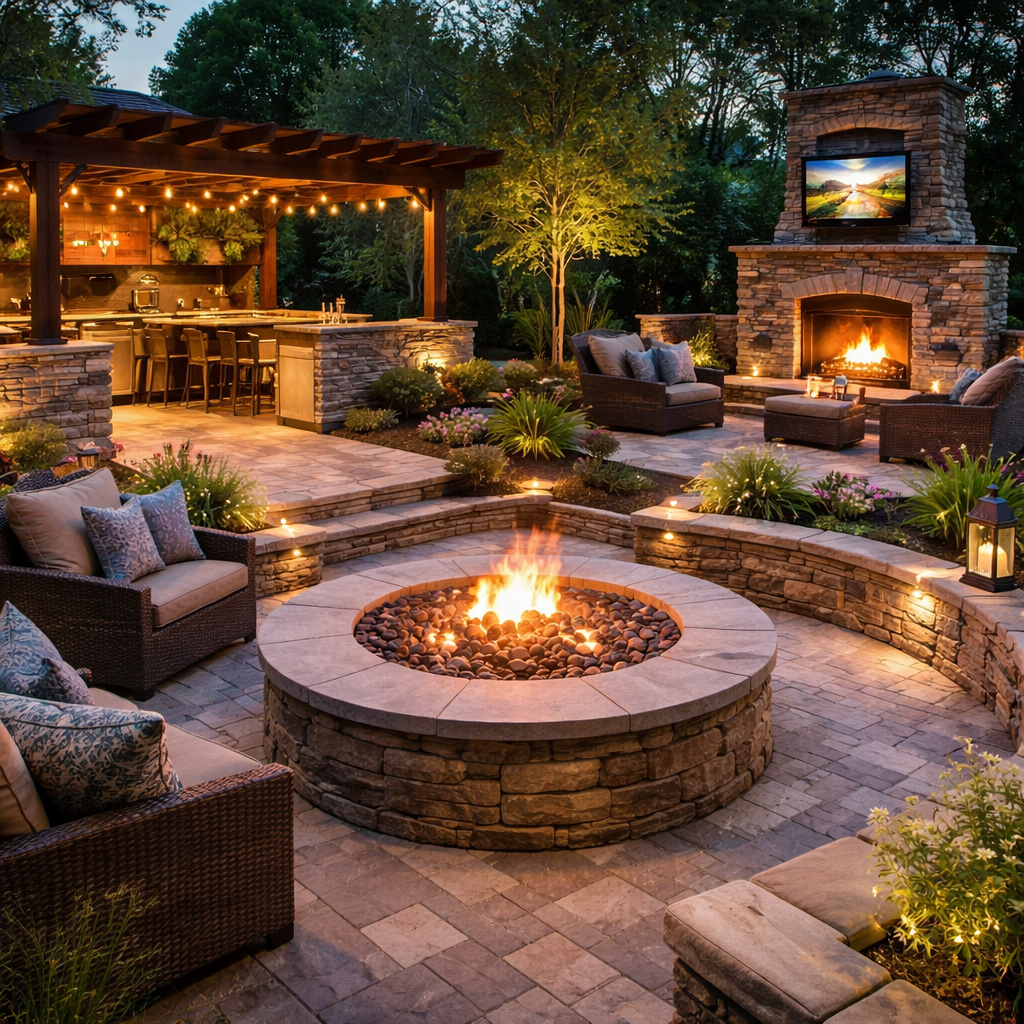
Few elements transform a backyard quite like a custom fire feature. It instantly becomes a focal point, drawing people together and creating a natural social hub. A well-designed fire pit or outdoor fireplace extends the usability of your outdoor space into cooler evenings and seasons, allowing for year-round enjoyment. Beyond warmth, the flickering flames provide ambient lighting, creating a cozy and inviting atmosphere for relaxation and conversation.
Whether you envision a rustic wood-burning pit for marshmallow roasting or a sleek, modern gas fire table for sophisticated entertaining, custom builds offer unparalleled flexibility in design and integration. For those who prefer a more hands-on approach, fire pit kits provide a fantastic opportunity for DIY installation, allowing you to personalize your space with a custom touch. Imagine a modern smokeless fire pit integrated into a paver patio, offering both warmth and a clean aesthetic.
Types of Backyard Fire Pits and Fuel Options
The world of backyard fire pits offers diverse options, each with its own advantages in terms of ambiance, convenience, and maintenance. Understanding these types and their fuel sources is crucial for making an informed decision.
- Wood-Burning Fire Pits: These are the quintessential campfire experience, offering the nostalgic crackle, smoky aroma, and robust heat that many homeowners cherish. They range from simple metal bowls to elaborate built-in stone structures.
- Cost: Generally the lowest initial cost for the pit itself. Fuel (firewood) can be purchased or gathered, adding to the ongoing cost.
- Convenience: Requires lighting a fire, managing logs, and cleaning ash. Can be affected by wind.
- Maintenance: Regular ash removal is necessary. Pits should be covered to prevent rust and debris accumulation.
- Smokeless Fire Pits: A modern innovation within wood-burning options, these pits, like the popular Solo Stove Bonfire or Breeo Y Series, are designed with double walls and strategic airflow vents. This design creates a “secondary burn” that re-ignites smoke particles, significantly reducing visible smoke. They burn hotter and more efficiently. As noted in product reviews, smokeless fire pits are often easier to set up and ignite, and they excel at creating a hot bed of embers for cooking.
- Cost: Higher initial investment than traditional wood-burning pits.
- Convenience: Much less smoke, easier lighting, more efficient burn. Still requires wood and ash cleanup.
- Maintenance: Similar to traditional wood-burning, but often with removable ash pans for easier cleaning.
- Gas Fire Pits (Propane & Natural Gas): These offer the ultimate in convenience and a clean burn, making them a popular choice for many.
- Propane Fire Pits: These units typically use a standard 20-pound propane tank, often concealed within the unit’s base or a nearby storage box. They are portable and require no external hookups beyond the tank.
- Cost: Moderate initial cost. Propane tanks need refilling, an ongoing expense.
- Convenience: Instant on/off with the turn of a knob, adjustable flame, no smoke, no ash cleanup. Easily portable.
- Maintenance: Minimal; primarily ensuring the tank is full and the burner is clear.
- Natural Gas Fire Pits: These connect directly to your home’s natural gas line, providing an endless supply of fuel. They are permanent fixtures.
- Cost: Higher initial installation cost due to gas line hookup by a professional. Fuel cost is generally lower than propane.
- Convenience: Unlimited fuel, instant on/off, adjustable flame, no smoke, no ash.
- Maintenance: Minimal, similar to propane but without tank refills.
- BTU Ratings: For gas fire pits, British Thermal Units (BTUs) indicate the heat output. A higher BTU rating means more heat. Many models, such as the Hampton Bay Crossridge 30.00 in. W 50000 BTU Propane Fire Pit Table, offer around 50,000 BTUs, which is a common and effective heat output level for most residential uses. Home Depot alone offers 243 fire pits with 50,000 BTUs, demonstrating its popularity.
- Fire Pit Tables: These combine the warmth and ambiance of a fire pit with the functionality of an outdoor table. They often have a central burner with a surrounding ledge for drinks and snacks. Many models, like the Hampton Bay Crossridge, can double as a full table when the fire isn’t in use by covering the burner area.
- Fire Bowls: Traditional and often portable, fire bowls are simple, open vessels for wood or gas fires. They come in various materials, including steel, copper, and cast iron.
- Fire Columns: Primarily for ambiance and decorative lighting, fire columns are tall, narrow gas-fueled units that provide a vertical flame. They are less about heat and more about visual appeal, often used to line walkways or accent seating areas.
- Chimineas: These are freestanding, vertical outdoor fireplaces, typically made of clay or cast iron, with a bulbous body and a vertical smoke stack. They are excellent for directing smoke upwards and providing warmth.
When considering a fire pit, factors like size, desired heat output, and portability will guide your choice. For instance, a portable fire pit like the Breeo Y Series To-Go Bundle is ideal for smaller spaces or for taking on camping trips, while larger, built-in units are perfect for permanent gathering areas.
Safety, Maintenance, and Local Codes
Ensuring safety is paramount when operating any backyard fire feature. Neglecting precautions can lead to serious hazards and potential legal issues.
- Clearance Zones: Always maintain adequate distance from structures, fences, and flammable materials. The general recommendation is at least 10 feet, with an ideal of 25 feet, from buildings, trees, and other combustibles. Low-hanging tree branches should also be avoided.
- Non-Combustible Surfaces: Fire pits should always be placed on a non-combustible surface, such as concrete pavers, natural stone, or gravel. Never place a fire pit directly on a wooden deck or grass without a protective barrier, as prolonged heat can cause damage or ignite materials.
- Spark Screens: For wood-burning fire pits, a spark screen is an essential accessory. It helps contain embers and prevents them from escaping and potentially starting unintended fires.
- Ash Removal: For wood-burning pits, allow ashes to cool completely (this can take up to 24 hours) before scooping them into a metal container with a lid. Never dispose of warm ashes in plastic or paper containers.
- Essential Fire Pit Safety Accessories:Fire Extinguisher or Water Source: Always keep a fire extinguisher, a bucket of sand, or a garden hose readily accessible to quickly douse any stray sparks or extinguish the fire.
- Poker/Tongs: Useful for safely adjusting logs or lava rocks.
- Heat-Resistant Gloves: Protect your hands when tending the fire or handling hot accessories.
- Fire Pit Cover: Protects your fire pit from weather elements when not in use, extending its lifespan and keeping it clean.
- Firewood Rack: Keeps firewood neatly stacked and dry, away from the fire pit.
- Local Ordinances and Legal Restrictions: Before installing or using any fire pit, it is crucial to check with your local fire department, municipality, or homeowners’ association (HOA) for specific regulations. These can vary widely by location and may include restrictions on open burning, required distances from property lines, permissible fuel types, or even bans during certain weather conditions (e.g., drought). The US EPA provides guidance on backyard recreational fires, emphasizing responsible burning practices to reduce air pollution. Some areas may prohibit fire pits on decks or require specific permits. Always prioritize compliance to ensure a safe and legal installation.
Estimating Costs for Professional Masonry Installations
The cost of a backyard fire pit can vary dramatically based on its type, materials, size, and whether it’s a DIY project or a professional masonry installation. While basic, portable metal fire bowls can be found for under $100, custom-built stone or concrete fire features can easily run into the thousands.
Internet data and average market costs for fire pits typically range from $20 for a simple bowl to over $5,000 for high-end fire pit tables. For instance, Home Depot lists fire pits ranging from $20 to $5,000. DIY kits, like the Lowe’s Oldcastle 43.5-Inches Ashland Concrete Fire Pit Kit, which boasts a 4.7-star rating from nearly a thousand reviews, offer a middle-ground solution, allowing homeowners to build a sturdy stone fire pit themselves, often for a few hundred dollars.
However, when considering professional masonry installations, the pricing structure shifts significantly. These projects involve not just the cost of the unit but also labor rates for skilled masons, the premium for high-quality, often custom-cut materials (like granite or specific types of pavers), and the complexity of the design. A professionally installed, custom stone fire pit that seamlessly integrates with your existing patio or landscape can range from $1,000 to $5,000, and even higher for elaborate designs that include built-in seating, gas line installation, or extensive hardscaping.
Project scale plays a major role. A simple, small, wood-burning stone ring will cost considerably less than a large, natural gas-fueled fire table with intricate stonework and remote-control ignition. Homeowners should anticipate a wide pricing range, with high-end custom masonry installations often exceeding three times the national average for basic kits. This investment, however, often translates into superior durability, unique aesthetic appeal, and a significant boost to property value, making it a worthwhile consideration for those seeking a truly bespoke outdoor living space.
Complementary Features for a Complete Outdoor Experience
A fire pit is a wonderful addition on its own, but its impact is magnified when paired with complementary outdoor products and thoughtful landscape design. Creating a cohesive outdoor living area enhances both functionality and aesthetic appeal.
- Seating: Comfortable and durable seating is essential for any fire pit area. Options range from portable Adirondack chairs and outdoor loveseats to built-in stone seating walls that offer a permanent, integrated solution. Cushioned patio conversation sets provide plush comfort, while benches can accommodate more guests. Consider the layout and traffic flow to ensure everyone has a prime spot around the fire.
- Outdoor Heaters: For those chilly evenings when the fire pit alone isn’t quite enough, supplemental outdoor heaters can extend your comfort. Propane patio heaters or electric radiant heaters can provide additional warmth, ensuring your outdoor space remains inviting even when temperatures drop.
- Privacy Plantings: To create a more intimate and secluded fire pit area, strategic plantings can work wonders. Tall shrubs, evergreen trees, or bamboo can form a natural screen, blocking unwanted views and reducing wind.
- Water Features: The soothing sound of flowing water can beautifully complement the crackle of a fire. A nearby water feature, such as a small pond, a trickling fountain, or even a DIY water wall, adds an element of tranquility and sensory richness to your outdoor oasis.
- Pergolas and Awnings: For shade during the day and a sense of enclosure at night, a pergola or a retractable awning can define the fire pit area. These structures can also be used to hang outdoor lighting, further enhancing the ambiance.
- Decorative Gravel and Landscape Lighting: Surrounding your fire pit with decorative gravel or crushed stone provides a clean, non-combustible surface and adds visual interest. Integrated landscape lighting, such as path lights, spotlights on plantings, or string lights overhead, illuminates the space, ensures safety, and highlights the beauty of your masonry and plantings.
- Fire Pit Accessories: Beyond the core unit, consider accessories like fire glass or lava rocks for gas pits (which help distribute flame evenly and add sparkle), robust fire pit covers to protect your investment, and practical tools like poker sets and heat-resistant gloves for safe fire management.
By thoughtfully combining these elements, you can transform a simple fire pit into a luxurious and fully functional outdoor living room, perfect for creating lasting memories with family and friends.
Gerrior Masonry & Landscape Construction is based in Woburn, MA, and services Middlesex and Essex County, Massachusetts. Please note that while we offer comprehensive masonry and landscape services, we provide commercial snow services only and do not offer residential snow removal for homes or driveways. All pricing mentioned in this guide is based on general internet data and average market costs; actual costs for professional services may vary significantly based on specific site requirements and material choices. When budgeting, homeowners should expect a wide range of costs, with high-end custom masonry installations often exceeding three times the national average for basic kits.