
A Guide to Safe and Compliant On-Site Chemical Waste Disposal
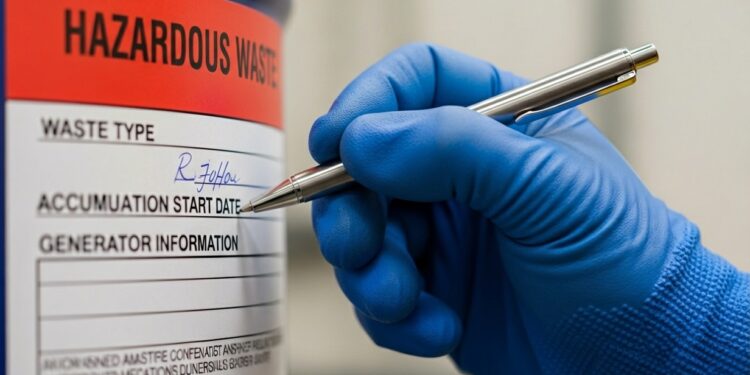
Table of Contents
- 1 The First Step: Hazardous Waste Determination and Classification
- 2 Mastering the Hazardous Waste Label: A Step-by-Step Guide
- 3 On-Site Storage and Segregation for Compliant Chemical Waste Disposal
- 4 Generator Status and Its Impact on Your Responsibilities
- 4.1 Generator Status Monthly Hazardous Waste Generation Monthly Acute Hazardous Waste Generation On-Site Accumulation Time Limit (Non-Acute) On-Site Accumulation Time Limit (Acute) Very Small Quantity Generator (VSQG) ≤ 100 kg (≈ 220 lbs) ≤ 1 kg (≈ 2.2 lbs) Indefinite (until 1000 kg accumulated) Indefinite (until 1 kg accumulated) Small Quantity Generator (SQG) > 100 kg to ≤ 1,000 kg ≤ 1 kg (≈ 2.2 lbs) 180 days (or 270 days if shipping > 200 miles) 180 days (or 270 days if shipping > 200 miles) Large Quantity Generator (LQG) > 1,000 kg (≈ 2,200 lbs) > 1 kg (≈ 2.2 lbs) 90 days 90 days Very Small Quantity Generator (VSQG)
- 4.2 Small Quantity Generator (SQG)
- 4.3 Large Quantity Generator (LQG)
- 5 Frequently Asked Questions about Chemical Waste Management
- 6 Conclusion
The First Step: Hazardous Waste Determination and Classification
Managing chemical waste on-site is a critical responsibility for any organization. It means more than just throwing away old materials. It is about keeping everyone safe, protecting our planet, and following all the rules. If hazardous waste is not handled properly, it can lead to large fines, harm the environment, and cause serious health problems.
This guide will show you how to handle chemical waste safely and legally. Readers will learn how to name and sort waste correctly. They will also learn how to label hazardous waste properly. Plus, the guide will cover the best ways to store and separate waste on-site. Knowing your generator status and its rules is also very important.
By following these steps, businesses can ensure their waste practices comply with all federal and state laws. This helps create a safer workplace and a healthier world. This article will give clear steps and ideas to make your waste process smoother and keep you compliant. This includes important details about proper chemical waste label compliance.
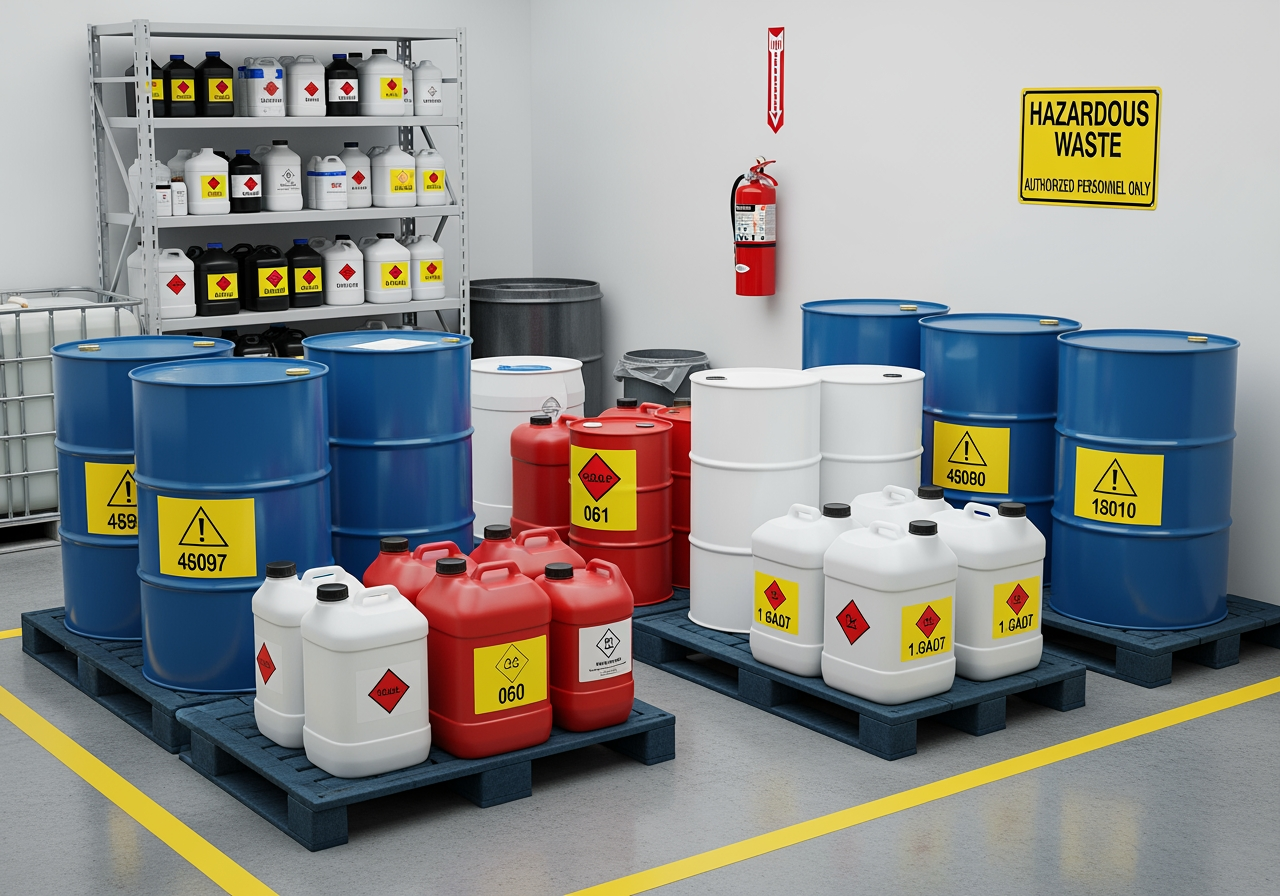
Ensuring the safe and compliant disposal of on-site chemical waste is a multifaceted endeavor that hinges on strict adherence to regulatory frameworks, proactive management practices, and a robust safety culture. From the initial generation of waste to its eventual off-site transport, every step requires meticulous attention to detail. The process involves more than just identifying hazardous materials; it encompasses a comprehensive strategy for their classification, labeling, storage, and segregation. This commitment not only safeguards personnel and the environment but also protects organizations from significant legal and financial repercussions. Understanding the nuances of regulatory compliance, implementing effective waste determination methods, and maintaining impeccable documentation are foundational to a successful chemical waste management program.
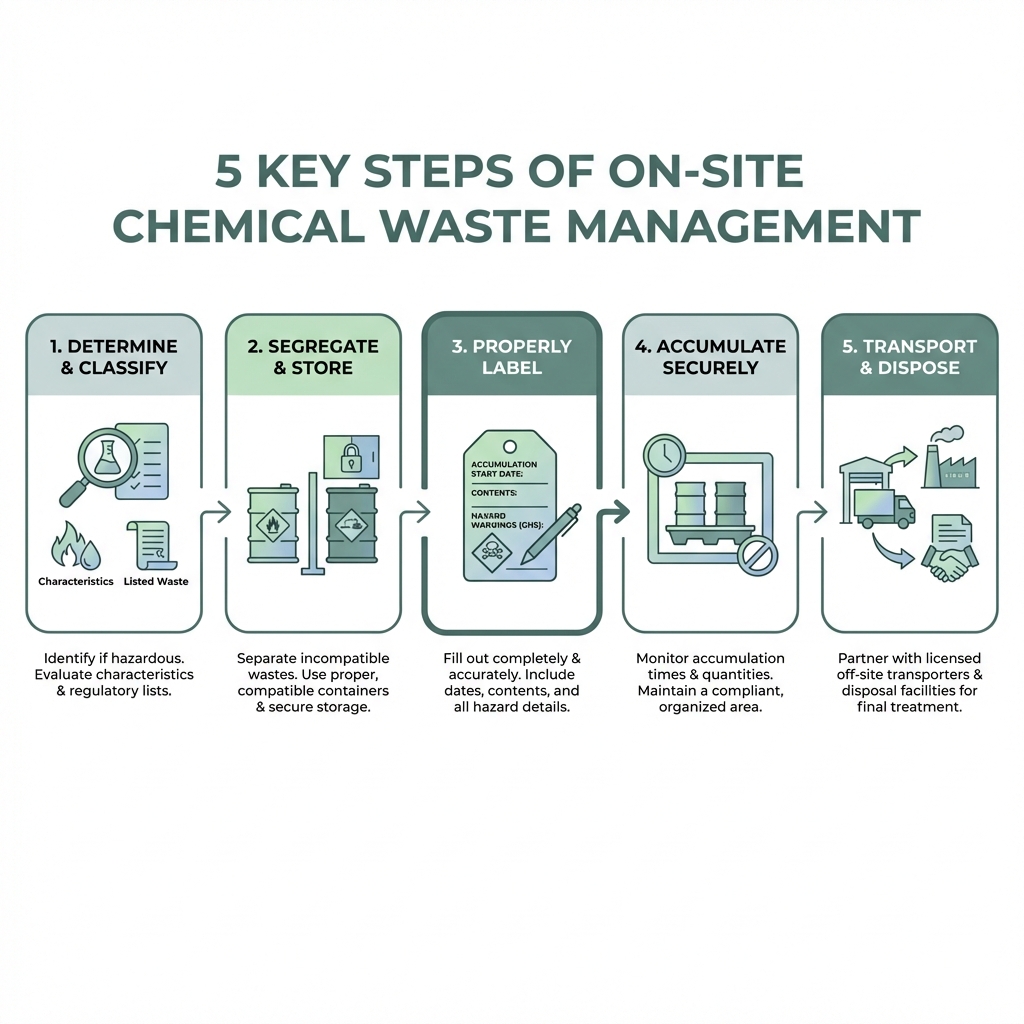
Before any waste can be labeled or stored, it must first be accurately identified and classified. This crucial initial step, known as hazardous waste determination, is mandated by the Resource Conservation and Recovery Act (RCRA) regulations. RCRA establishes the framework for hazardous waste management in the United States, requiring generators to determine whether their waste is hazardous and, if so, properly manage it.
Waste determination involves evaluating whether a waste exhibits any of the four hazardous characteristics or if it is a “listed waste.” The four characteristics are:
- Ignitable: Wastes that can easily catch fire and burn rapidly. Examples include many solvents, paints, and certain alcohols. These pose a fire hazard if not handled correctly.
- Corrosive: Wastes that can dissolve or corrode other materials, typically with a pH of 2 or less (acidic) or 12.5 or more (basic). Strong acids and bases used in laboratories or industrial processes fall into this category.
- Reactive: Wastes that are unstable under normal conditions and can react violently, explode, or produce toxic fumes when mixed with water or other substances. Examples include certain cyanides, sulfides, or explosives.
- Toxic: Wastes that are harmful or fatal when ingested or absorbed, or that leach toxic constituents into groundwater. This category is determined by the Toxicity Characteristic Leaching Procedure (TCLP), which simulates landfill conditions. Heavy metals, pesticides, and certain organic compounds are often toxic.

In addition to characteristic wastes, RCRA also identifies “listed wastes.” These are specific waste streams from industrial processes (F-list, K-list) or discarded commercial chemical products (P-list, U-list) that are known to be hazardous. Generators must consult the RCRA regulations (40 CFR Part 261) to determine if their waste matches any of these lists.
To make an accurate waste determination, generators rely on generator knowledge (understanding the raw materials, processes, and products that generate the waste) and Safety Data Sheets (SDS). SDS documents provide comprehensive information about a chemical’s properties, hazards, and safe handling procedures. When generator knowledge and SDS are insufficient, laboratory analysis of the waste may be required.
Understanding Your Role in Chemical Waste Disposal
Effective chemical waste disposal begins with a clear understanding of your role as a waste generator. This involves more than just identifying hazardous materials; it requires systematic waste profiling, meticulous chemical inventory management, comprehensive documentation, and ongoing training for all personnel involved.
Waste profiling is the process of thoroughly characterizing a waste stream to determine its hazardous properties and applicable waste codes. This profile serves as a blueprint for its entire management lifecycle, from labeling to transportation and disposal. It helps ensure that waste is handled, stored, and treated appropriately based on its specific hazards.
Maintaining an accurate chemical inventory is paramount. Knowing what chemicals are on-site, their quantities, and their locations is essential for both safety and compliance. A well-managed inventory can also help identify opportunities to reduce waste and prevent the accumulation of expired or unknown chemicals.
Documentation is the backbone of compliant waste management. Every step, from waste determination and profiling to labeling, accumulation dates, and disposal manifests, must be carefully recorded. These records serve as proof of compliance during inspections and are vital for tracking waste streams.
Finally, regular and thorough training is indispensable. All employees who handle hazardous waste, from generation through placement in accumulation areas, must receive proper training. This training should cover regulatory requirements, safe handling procedures, emergency response protocols, and, critically, how to complete a hazardous waste label correctly.
Mastering the Hazardous Waste Label: A Step-by-Step Guide
Once a waste has been properly characterized, the next critical step is to label its container correctly. Proper labeling is not merely a formality; it is a fundamental requirement for safety, compliance, and effective communication throughout the waste management chain. Both the U.S. Environmental Protection Agency (EPA) and the Department of Transportation (DOT) have specific regulations governing hazardous waste labeling, and adherence to both is essential.
Hazardous waste labels must be legible and durable. They must withstand the environmental conditions of the storage area and transport, remaining clearly readable without fading, smudging, or peeling. Labels should be at least 4 inches by 4 inches and easily visible. If multiple labels are necessary, place them next to each other, ideally with about 6 inches of space between them, and position the label describing the primary hazard above and to the left of any subsidiary hazard labels. For a deeper dive into the specifics of label requirements and best practices, exploring resources on chemical waste label compliance can provide valuable insights.
Essential Information for Every Label
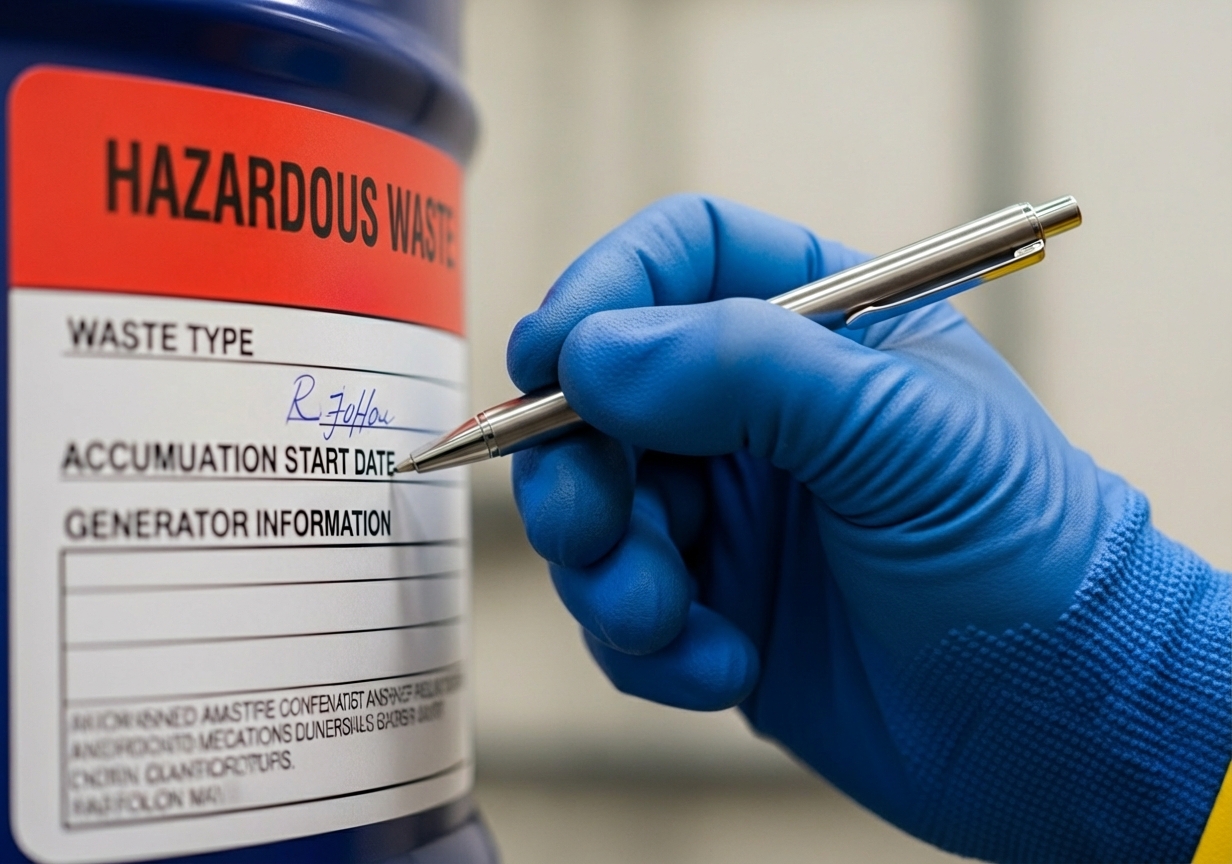
Every hazardous waste label must contain several key pieces of information to ensure proper identification and handling. The most prominent requirement from the EPA is the clear display of the words “HAZARDOUS WASTE“. This phrase immediately signals the contents’ nature to anyone who encounters the container.
Beyond this, the label must include:
- Generator Name: The full legal name of the entity that generated the waste.
- Generator Address: The physical location where the waste was generated.
- EPA ID Number: The unique identification number assigned by the EPA to the hazardous waste generator. This number is crucial for tracking waste from “cradle to grave.”
- Manifest Tracking Number: For waste being shipped off-site, this unique number from the Uniform Hazardous Waste Manifest is required. It allows regulatory agencies and waste handlers to track the waste’s journey.
These details ensure accountability and provide essential contact information in case of an incident or query. For containers with a capacity of 119 gallons or less, the EPA also requires a specific warning statement: “HAZARDOUS WASTE – Federal Law Prohibits Improper Disposal. If found, contact the nearest police or public safety authority or the U.S. Environmental Protection Agency.”
Accurately Documenting Waste Composition and Hazards
Beyond the basic identifying information, a hazardous waste label must provide a clear and accurate description of the waste’s contents and properties. This is vital for safe handling, emergency response, and proper treatment or disposal.
- Full Chemical Names: Always list the full, unabbreviated chemical names of all hazardous constituents. Abbreviations can lead to confusion and misidentification, potentially resulting in dangerous situations. For example, instead of “MeOH,” write “Methanol.”
- Percentages: For mixtures, indicate the percentage by volume or weight for each hazardous component. The sum of all listed percentages, including non-hazardous ingredients such as water, should ideally equal 100%. This provides a precise understanding of the waste’s makeup.
- Hazard Pictograms and GHS Symbols: In addition to written descriptions, DOT regulations require the use of diamond-shaped hazard labels (often called placards for larger containers) that visually communicate the waste’s primary hazard class. These are standardized symbols (e.g., a flame for ignitable, a skull and crossbones for toxic) that are universally recognized. The Global Harmonized System (GHS) also uses pictograms to convey specific health, physical, and environmental hazards, which can be incorporated or referenced as part of comprehensive hazard communication. If a waste exhibits multiple hazards, multiple DOT labels may be required. The U.S. Department of Transportation (DOT) also requires that you include a diamond hazard label for the primary (and most subsidiary) hazard classes of the hazardous material.
Accurate documentation of composition and hazards enables waste handlers and emergency responders to take appropriate precautions, use the correct personal protective equipment, and implement appropriate spill response measures.
The Critical Role of the Accumulation Start Date
One of the most frequently cited violations in hazardous waste management is failure to mark the accumulation start date on the container properly. This date is not merely a formality; it is a critical piece of information that dictates compliance deadlines and storage time limits.
The accumulation start date is the date on which the first drop of hazardous waste is placed into a container. It is not the date the container becomes full. This date sets the clock for how long a generator can accumulate on-site waste before it must be shipped off for treatment, storage, or disposal. These time limits vary depending on the generator’s status (VSQG, SQG, LQG), which will be discussed in a later section.
For consolidating waste from smaller containers into a larger one, the accumulation start date on the larger container must reflect the oldest accumulation date of any waste transferred into it. This ensures that no waste exceeds its regulatory accumulation time limit. Attaching a completed hazardous waste label, including the accumulation start date, to the container before you begin using it to accumulate and store waste is a best practice that helps prevent oversights.
Failure to mark the accumulation start date or exceeding the allowed accumulation time can lead to significant penalties and demonstrate a lack of control over hazardous waste management practices.
On-Site Storage and Segregation for Compliant Chemical Waste Disposal
Proper storage and segregation of hazardous waste on-site are as critical as accurate labeling. The goal is to prevent spills, leaks, fires, or dangerous chemical reactions, protecting personnel, property, and the environment.
Container compatibility is fundamental. Waste must be stored in containers compatible with its contents, meaning the container material will not react with, corrode, or otherwise compromise the waste. Containers should be in good condition, free from rust, dents, or structural weaknesses.
Secondary containment is often required, especially for liquid hazardous wastes. This involves placing the primary waste container within a larger, impermeable container (e.g., a spill pallet or basin) capable of holding 10% of the total volume of all containers or 100% of the largest container, whichever is greater. This acts as a safeguard against leaks or spills from the primary container.
The closed container rule is a cornerstone of hazardous waste management: all containers holding hazardous waste must be kept closed at all times, except when adding or removing waste. This prevents the release of vapors, spills, or contamination. Funnels should be removed when not actively in use.
Adequate headspace must be maintained in containers holding liquid wastes. A general rule of thumb is to leave approximately 10% of the container’s volume empty to allow for thermal expansion and prevent rupture or spillage.
Finally, weekly inspections of hazardous waste accumulation areas are required by many generators. These inspections ensure that containers are properly labeled, closed, and in good condition and free of leaks or spills.
Segregating Incompatible Waste Streams
One of the most critical aspects of safe on-site storage is the segregation of incompatible waste streams. Mixing certain chemicals can lead to violent reactions, fires, explosions, or the generation of toxic gases.
- Chemical segregation charts are invaluable tools that detail which chemical classes are incompatible and should never be stored together. These charts typically categorize chemicals by their hazard class (e.g., acids, bases, oxidizers, flammables).
- Preventing reactions is the primary objective. For example, strong acids should be stored separately from strong bases, and both should be kept away from reactive metals or cyanides. Oxidizers must be isolated from flammable materials.
- Specific storage requirements exist for different hazard classes:
- Flammables storage: Flammable liquids typically require storage in approved flammable cabinets or rooms, away from ignition sources.
- Corrosives storage: Corrosive acids and bases should be stored in separate, chemically resistant cabinets, often at or below waist height to minimize splash hazards.
- Oxidizers: These materials should be stored separately from organic materials, fuels, and other easily oxidizable substances.
Implementing robust segregation practices, often utilizing physical barriers or separate storage areas, is essential to mitigate the risks associated with storing diverse hazardous waste streams.
Generator Status and Its Impact on Your Responsibilities
The regulatory requirements for hazardous waste management vary significantly based on the amount of hazardous waste an entity generates each month. The EPA categorizes generators into three main statuses, each with distinct rules regarding accumulation limits, timeframes, and other operational procedures. Understanding your generator status is paramount to achieving and maintaining compliance.
Generator Status Monthly Hazardous Waste Generation Monthly Acute Hazardous Waste Generation On-Site Accumulation Time Limit (Non-Acute) On-Site Accumulation Time Limit (Acute) Very Small Quantity Generator (VSQG) ≤ 100 kg (≈ 220 lbs) ≤ 1 kg (≈ 2.2 lbs) Indefinite (until 1000 kg accumulated) Indefinite (until 1 kg accumulated) Small Quantity Generator (SQG) > 100 kg to ≤ 1,000 kg ≤ 1 kg (≈ 2.2 lbs) 180 days (or 270 days if shipping > 200 miles) 180 days (or 270 days if shipping > 200 miles) Large Quantity Generator (LQG) > 1,000 kg (≈ 2,200 lbs) > 1 kg (≈ 2.2 lbs) 90 days 90 days Very Small Quantity Generator (VSQG)
A Very Small Quantity Generator (VSQG) produces 100 kilograms (approximately 220 pounds) or less of hazardous waste per month, and 1 kilogram (approximately 2.2 pounds) or less of acute hazardous waste per month. VSQGs have the fewest regulatory requirements. They are allowed to accumulate hazardous waste on-site indefinitely, provided the total amount accumulated does not exceed 1,000 kg of non-acute hazardous waste or 1 kg of acute hazardous waste. While their labeling requirements are less stringent than those of larger generators, they still must identify their waste as “Hazardous Waste” and ensure safe handling to prevent releases.
Small Quantity Generator (SQG)
A Small Quantity Generator (SQG) produces more than 100 kg but less than 1,000 kg of hazardous waste per month, and 1 kg or less of acute hazardous waste per month. SQGs face more comprehensive regulations than VSQGs. They are permitted to accumulate hazardous waste on-site for up to 180 days (or 270 days if the waste must be transported more than 200 miles for treatment, storage, or disposal). SQGs must ensure their containers are clearly marked with the words “Hazardous Waste,” an indication of the contents’ hazards, and the accumulation start date. They also have requirements for emergency planning and personnel training.
Large Quantity Generator (LQG)
A Large Quantity Generator (LQG) produces 1,000 kg or more of hazardous waste per month, or more than 1 kg of acute hazardous waste per month. LQGs operate under the most rigorous set of hazardous waste regulations. They are allowed to accumulate hazardous waste on-site for up to 90 days. Their labeling requirements are similar to those of SQGs, requiring “Hazardous Waste,” hazard indications, and the accumulation start date. However, LQGs also have extensive requirements for contingency plans, personnel training, facility security, and detailed record-keeping. The shorter accumulation time limit for LQGs underscores the increased risk associated with larger volumes of hazardous waste.
Understanding and correctly applying the rules for your specific generator status is essential for maintaining compliance and preventing regulatory violations.
Frequently Asked Questions about Chemical Waste Management
Navigating the complexities of chemical waste management often brings forth common questions. Addressing these can clarify misconceptions and reinforce best practices for safety and compliance.
What is the difference between hazardous waste labeling and marking?
While often used interchangeably, “labeling” and “marking” have distinct meanings in hazardous waste regulations, particularly when considering both EPA and DOT requirements.
- Marking Requirements: These typically refer to the text-based information required on a container. For hazardous waste, this primarily includes the words “HAZARDOUS WASTE,” the generator’s name and address, the EPA ID number, and the accumulation start date. For containers 119 gallons or less, the EPA also mandates the “Federal Law Prohibits Improper Disposal” statement. Markings serve to identify the contents as hazardous waste, who generated it, and when the accumulation began.
- Label Requirements: These generally refer to visual hazard communication, often in the form of DOT pictograms (diamond-shaped hazard labels). These labels graphically indicate the material’s primary and subsidiary hazard classes (e.g., flammable, corrosive, toxic). They are crucial for emergency responders and transporters to assess risks quickly. While markings provide administrative details, labels offer immediate visual cues about the specific dangers posed by the waste. Markings identify the container and its responsible party, while labels communicate the hazard it presents.
How should unknown chemical waste be handled?
Encountering unknown chemical waste poses a significant safety risk and requires a cautious, systematic approach. The first rule is: do not open or mix unknown containers.
- Safety First: Treat all unknown waste as highly hazardous. Ensure appropriate personal protective equipment (PPE) is worn, and isolate the container in a secure, well-ventilated area.
- Label Immediately: Label the container with the words “Unknown Hazardous Waste” and include any available information, such as the location where it was found, the date, and any observable physical properties (e.g., liquid, solid, color, odor if detectable from a distance). As a best practice, select “Reactive” as the primary hazard until further analysis, as this prompts the highest level of caution.
- Preventing Unknowns: The best way to manage unknown waste is to prevent it from occurring. This involves meticulous inventory management, proper labeling of all chemicals upon receipt, and regular cleanouts of laboratories and storage areas.
- Waste Evaluation: Contact your environmental health and safety (EH&S) department or a qualified hazardous waste management professional. They will typically arrange for laboratory analysis to identify the contents. Be aware that testing unknown waste can be costly.
- Documentation: Keep detailed records of the unknown waste, including how it was found, initial observations, and all steps taken for its identification and eventual disposal.
What are the biggest mistakes in on-site chemical waste disposal?
Improper hazardous waste management can lead to severe consequences, including fines, environmental damage, and worker injury. Many violations stem from common, avoidable mistakes:
- Improper Labeling: This is a pervasive issue, encompassing missing labels, illegible labels, incomplete information (e.g., missing accumulation date or contents), or using incorrect hazard symbols.
- Incorrect Accumulation Date: Failing to mark the accumulation start date, marking it incorrectly, or not updating it when consolidating waste. This directly impacts compliance with storage time limits.
- Open Containers: Violating the “closed container rule” by leaving hazardous waste containers open when not actively adding or removing waste. This allows for vapor release, spills, and potential contamination.
- Poor Segregation: Storing incompatible hazardous wastes together, which can lead to dangerous reactions, fires, or explosions.
- Lack of Training: Personnel handling hazardous waste are not adequately trained in regulatory requirements, safe handling procedures, or emergency response procedures.
- Exceeding Accumulation Limits: Storing hazardous waste on-site beyond the maximum allowable time frame for the generator’s status.
- Incompatible Containers: Using containers that are not chemically compatible with the waste, leading to container degradation, leaks, or spills.
- No Secondary Containment: Failing to provide secondary containment for liquid hazardous wastes can result in uncontrolled spills.
- Improper Disposal of “Empty” Containers: Not correctly determining if a container is “empty” according to RCRA standards before disposing of it as non-hazardous waste.
- Inadequate Emergency Planning: Not having a current contingency plan or emergency procedures in place, or not training employees on them.
Conclusion
Mastering TN-site chemical waste disposal is a cornerstone of responsible business operations. It demands a commitment to proactive management, fostering a culture of continuous improvement, and embedding a strong safety culture throughout the organization. By diligently following regulatory guidelines, particularly those governing hazardous waste determination, accurate labeling, and safe storage, businesses can ensure regulatory compliance and protect their workforce, the community, and the environment.
From the critical initial step of waste classification to the meticulous details of documenting accumulation dates and segregating incompatible materials, every action contributes to a compliant and secure waste management program. Understanding your generator status and its specific requirements is not just about avoiding penalties; it’s about upholding a standard of environmental stewardship. By embracing these practices, organizations not only safeguard their operations but also contribute to a healthier, safer future.