

Valerie Varnuska: Understanding What Preserved Pompeii and Herculaneum and What Still Threatens Them
Valerie Varnuska of Westbury, NY has a long standing interest in the natural sciences and the forces that shape both the cosmos and the Earth. Valerie Varnuska follows developments in astronomy and enjoys learning about designated dark places that allow observers to map and admire the night sky. Her curiosity also extends to the deep past of the planet, including paleoecology, paleoanthropology, and paleontology. She studies geology to better understand the processes that formed mountains, rivers, and continental plates long before human history began. These interests naturally connect to archaeological discoveries that reveal how ancient societies lived and how natural events shaped their fate. The preserved Roman cities of Pompeii and Herculaneum offer an example of how geology, archaeology, and human history intersect, illustrating how a volcanic eruption both destroyed communities and preserved evidence that researchers continue to study today.
Understanding What Preserved Pompeii and Herculaneum and What Still Threatens Them
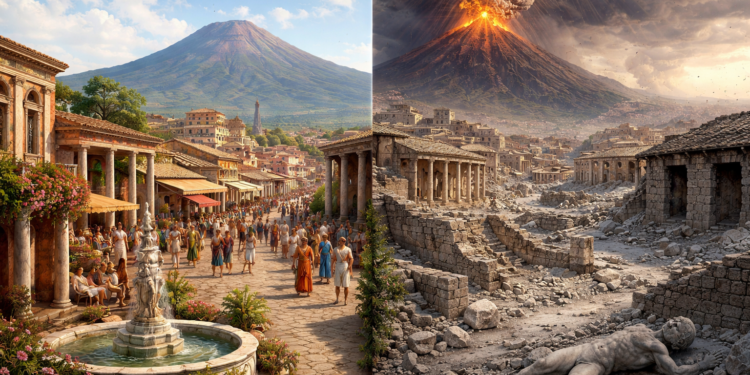
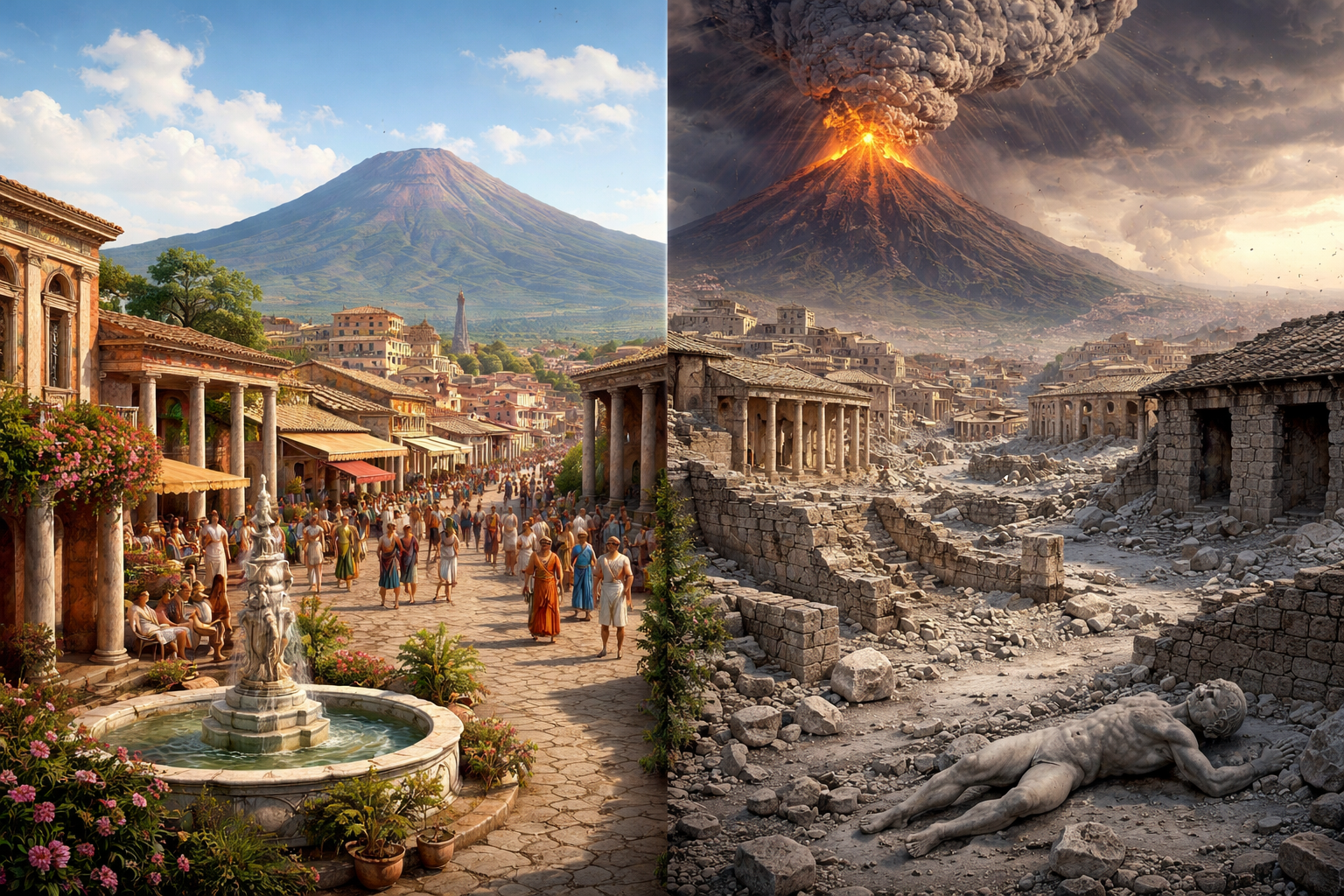
Pompeii and Herculaneum are Roman towns near Mount Vesuvius. When the volcano erupted in 79 CE, both were buried under ash, pumice, and other volcanic debris, interrupting daily life and sealing traces in place. UNESCO has listed the area as a World Heritage site, reflecting both the scale of what survives and the responsibility to manage it.
The way each town became buried shaped what endured. At Pompeii, burial included an early fall of pumice and lapilli, followed by later, hotter surges that moved through streets and buildings. Lapilli are small volcanic stones that can accumulate quickly on roofs and streets. These phases help explain why archaeologists can still find intact rooms, sudden collapse patterns, and voids that preserved body positions across a single, complex eruption sequence.
Because the burial effects varied, archaeologists and site teams pay close attention to what specific excavations reveal rather than assuming every home looked alike. At Pompeii, excavation teams still uncover decorated domestic spaces and objects left inside rooms, offering a window into routines and status. Even after centuries of study, recent finds still change how researchers describe daily life and loss.
Wall paintings and inscriptions provide detail about both domestic and public life. Frescoes preserve figures and decorative scenes in pigments that remain legible on plaster, which helps explain why Pompeii’s wall art remains a focal point for research and public display. Inscriptions scratched or painted on walls range from menus and everyday messages to jokes and election notices, giving a direct sense of voice and persuasion.
Archaeologists have also reconstructed food culture by analyzing preserved remains. Carbonized bread loaves and other preserved items displayed in museum contexts show how heat-altered food can survive long enough to be studied. In some cases, intense heat chars organic material in a way that slows decay and keeps items recognizable.
Human remains give direct evidence about the people who lived near Vesuvius. In Pompeii, archaeologists pour plaster or casting materials into the ash voids left when bodies decomposed, capturing postures and locations at death. This casting method is closely associated with Giuseppe Fiorelli and has been used since the 1860s, which makes the casts historical records as well as scientific evidence. At Herculaneum, researchers have reported an extremely rare case in which brain tissue vitrified into glass-like material under intense heat and rapid cooling.
While human remains and structures continue to yield insight, preservation teams must protect what earlier excavations exposed. UNESCO’s World Heritage system requires ongoing management, and visitor pressure can strain fragile areas if managers do not plan and maintain access. Long-term protection also depends on controlling changes around the property so modern development does not undermine what the designation is meant to safeguard.
As conservation work progresses, researchers document fragile evidence in ways that limit handling and travel. At Pompeii, older plaster or resin casts have been laser scanned so 3D copies can be loaned for exhibitions while originals remain protected. This approach supports public education and lowers wear on fragile surfaces. It also reflects a wider effort to share evidence without treating originals as endlessly movable objects.
Pompeii and Herculaneum now pose not just questions about the past, but challenges for how evidence is handled, studied, and protected in the decades ahead. As archaeologists expand excavation and conservation teams refine documentation methods, the responsibility to interpret and preserve what surfaces will remain as complex and as urgent as the discoveries themselves.
About Valerie Varnuska
Valerie Varnuska is a Westbury, NY resident with strong interests in astronomy, geology, and the natural world. She enjoys studying cloud formations during the day and learning about designated dark places for stargazing at night. Valerie Varnuska also explores subjects related to Earth science, including rocks, minerals, and ocean environments. In addition to her scientific interests, she enjoys learning about machinery and historic trains and has visited locomotive museums and rail sites to see classic engines in operation.