

Streamlining Property Management and Corporate Housing

Table of Contents
- 1 The Strategic Intersection of Property Management and Corporate Housing
- 2 Financial Advantages and Market Trends for 2025
- 3 Essential Amenities and Operational Success Factors
- 4 Navigating Challenges and Legal Considerations
- 5 Frequently Asked Questions about Property Management and Corporate Housing
- 6 Conclusion
The Strategic Intersection of Property Management and Corporate Housing

This specialized market is rapidly expanding. It provides essential temporary homes for a wide range of professionals and families. However, managing these properties successfully requires specific knowledge and strategies.
In this comprehensive guide, we will dive into property management and corporate housing. We will explore its significant financial advantages and current market trends. We will also highlight the essential amenities that attract corporate clients. Crucially, we will cover the operational success factors and legal considerations, including the importance of adhering to standards like ADA compliance property management. Our aim is to equip you with the insights needed to thrive in this dynamic sector.
The corporate housing sector thrives on meticulous property management. Unlike traditional long-term rentals, corporate housing demands a more hands-on, hospitality-focused approach. Property managers in this niche oversee everything from initial tenant placement to 24/7 concierge services and swift maintenance coordination. This comprehensive oversight ensures that properties not only meet but exceed the expectations of discerning corporate clients, who often require a seamless, home-like experience.
For property owners, partnering with a specialized corporate housing property management firm can be a game-changer. These firms possess expertise in the unique demands of mid-term stays, including specialized tenant screening processes tailored for corporate clients, flexible lease terms (often 30 days or more, with month-to-month options), and efficient property management software solutions. The latest Property Management Trends Report indicates that 69% of investors have utilized a property manager or management software, and 8 in 10 agree that property managers simplify operations and offer more than just rent collection. Investors also expect rapid communication, with 73% anticipating a same-day response, and nearly half expecting a reply within a few hours. This highlights the critical role of responsive and tech-savvy management in today’s rental market.
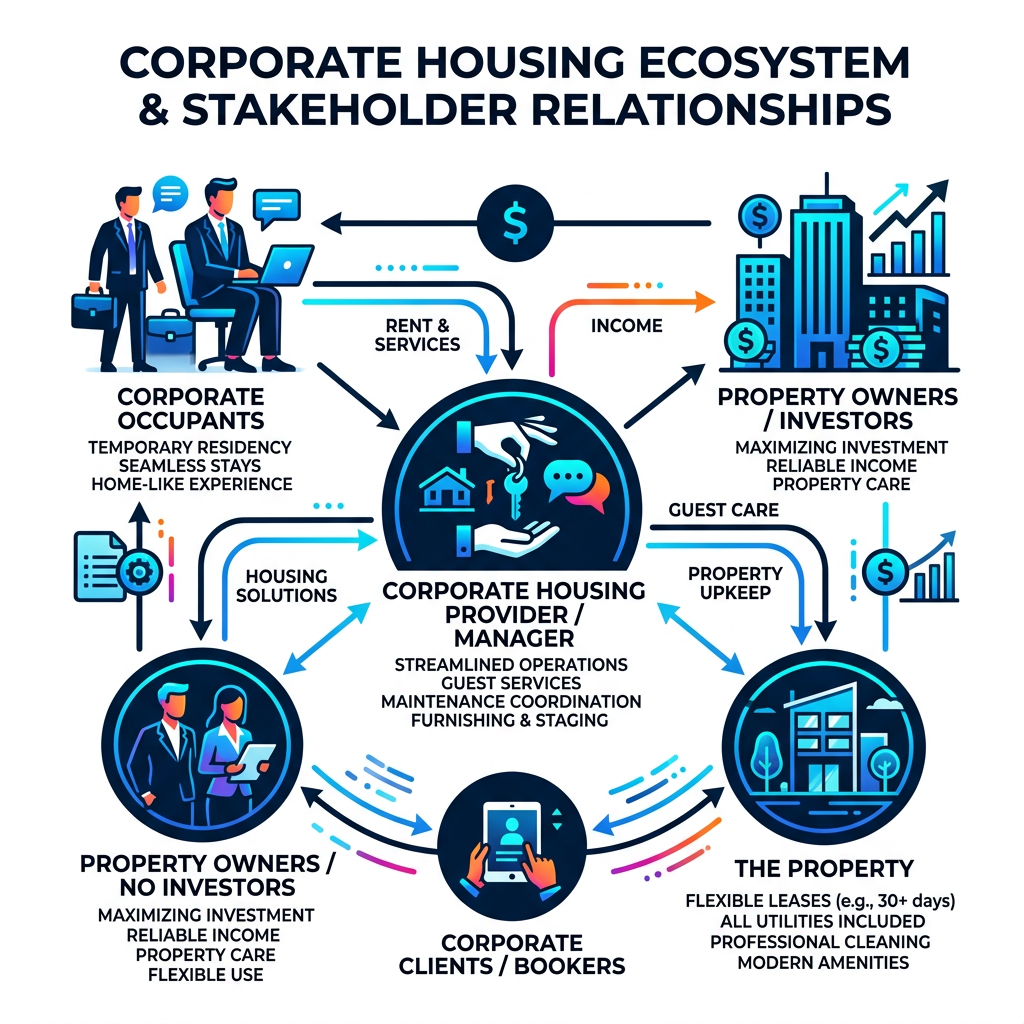
Key Property Management Responsibilities for Mid-Term Stays:
- Customized Tenant Screening: Beyond standard credit checks, this involves verifying corporate affiliations, understanding company billing requirements, and ensuring the tenant profile aligns with the property’s offerings.
- Flexible Lease Management: Drafting agreements that accommodate varying stay durations, often with 30-day minimums and month-to-month extensions, while protecting owner interests.
- Furnishing and Staging: Ensuring properties are fully furnished, aesthetically pleasing, and equipped with all necessary household items, from kitchenware to linens.
- Utility and Service Management: Setting up and managing all utilities, high-speed internet, and cable/streaming services, often included in a flat monthly rate.
- Proactive Maintenance and Cleaning: Implementing a robust schedule for routine maintenance, prompt repairs, and professional cleaning services before, during, and after each stay.
- Concierge-Level Support: Providing responsive assistance for guest inquiries, local recommendations, and emergency support to enhance the resident experience.
- Financial Reporting: Delivering clear and consistent financial statements detailing income, expenses, and occupancy rates to property owners.
Marketing strategies for corporate housing are distinct. Instead of general rental listings, efforts often focus on direct outreach to HR departments, relocation specialists, and corporate travel managers. Networking with businesses, government agencies (which often provide GSA per diem rates for employees), and even construction companies with long-term projects can secure consistent bookings. Real-world examples of successful providers like AvenueWest, Preferred Corporate Housing, CWS Corporate Housing, and Switchplace demonstrate the effectiveness of tailored services, offering everything from executive condos to single-family homes. Many of these providers operate in over 75,000 cities nationwide, showcasing the vast reach and potential of this market. This specialized approach ensures a steady stream of high-quality tenants and maximizes property utilization.
Financial Advantages and Market Trends for 2025
The financial appeal of corporate housing is a significant draw for property owners. Our research indicates that corporate housing can generate 2-4 times more income than traditional long-term rentals. This substantial increase stems from the value proposition corporate housing offers: fully furnished, amenity-rich living spaces that are often priced at 50-60% of benchmark hotel rates, yet provide significantly more space and a home-like environment. For instance, a three-bedroom house rented as corporate housing could potentially yield around $4,500 per month at a rate of $150 per night, demonstrating its profitability compared to an unfurnished long-term rental.
The market trends for 2025 suggest continued growth and evolution in the corporate housing sector. The demand for extended stays, particularly those 28 nights or longer, is on the rise, accounting for 21% of total nights booked on platforms like Airbnb. This shift reflects a broader consumer preference for longer, more comfortable stays, driven by factors such as remote work, temporary assignments, and relocation needs. While the average Airbnb occupancy rate in the US was 48% as of November 2022, corporate housing, with its targeted clientele and professional management, often achieves higher and more stable occupancy.
Inflationary pressures and rising costs of travel have further positioned corporate housing as an attractive alternative to hotels. Businesses and individuals are increasingly seeking cost-effective solutions that do not compromise on comfort or convenience. This environment presents a prime opportunity for property owners to maximize their net income through strategic pricing and portfolio scalability. Implementing seasonal pricing models, for example, allows owners to capitalize on peak demand periods while maintaining competitive rates during slower months.
Property managers play a crucial role in optimizing these financial benefits. Their expertise in marketing to corporate clients, managing bookings, and ensuring high tenant satisfaction contributes directly to reduced vacancy windows. Investors utilizing property managers have reported smaller vacancy periods, averaging 4 weeks compared to 4.6 weeks for those managing properties independently. This efficiency directly translates into higher annual revenues and improved return on investment.
Comparison of Housing Options
Feature Hotels Corporate Housing Long-Term Leases Duration Short-term (days to weeks) Mid-term (30+ days, often months) Long-term (6-12+ months) Furnishing Basic furniture, limited amenities Fully furnished, equipped kitchen, linens Unfurnished (tenant provides) Utilities/Fees Included, but often high nightly rate Included in flat monthly rate Tenant typically pays separately Cost Highest nightly rate 50-60% of hotel, flat monthly Lowest monthly rate, but long commitment Space Limited, single room Ample, multi-room apartments/homes Ample, multi-room apartments/homes Privacy Moderate, shared facilities High, private residence High, private residence Services Daily cleaning, room service Professional cleaning (optional weekly) Tenant responsible for cleaning Flexibility High, easy check-in/out High, month-to-month options Low, fixed lease terms Target User Tourists, short business trips Business travelers, relocators, projects Residents, families, permanent moves Income Potential High (per night) Very High (2-4x traditional rentals) Moderate, stable This table illustrates the distinct advantages corporate housing offers, particularly for property owners seeking higher income potential and flexibility without the full commitment of long-term tenancy.
Essential Amenities and Operational Success Factors
To truly succeed in the corporate housing market, properties must offer more than just a roof over one’s head; they need to provide a complete, comfortable, and convenient living experience. The key lies in understanding the specific needs of corporate tenants, who are often away from home for extended periods and require an environment that supports both work and relaxation.

At the core of appealing corporate housing are high-quality amenities. A fully equipped kitchen, complete with modern appliances, cookware, and dishware, is non-negotiable. This allows guests to prepare their own meals, offering a significant cost saving and a sense of normalcy compared to constant dining out. In-unit laundry facilities are equally vital, eliminating the need for off-site laundromats and adding immense convenience. High-speed internet and comprehensive utility inclusion (electricity, water, gas, cable/streaming services) in a single, flat monthly rate are also expected, ensuring a hassle-free experience for the occupant and simplified billing for the corporate client.
Beyond the basics, the quality of furnishings and household items significantly impacts guest satisfaction. Premium, comfortable furnishings, tasteful decor, high-quality linens, and a full complement of housewares create an inviting atmosphere. Dedicated home office setups, featuring a comfortable chair, desk, and good lighting, are increasingly important for professionals working remotely. Many corporate housing providers also offer pet-friendly communities, recognizing that many professionals travel with their companions, and integrate streaming capabilities directly into entertainment systems.
Operational success in corporate housing hinges on meticulous attention to detail and consistent service delivery. This includes professional cleaning services before each new guest, with options for weekly housekeeping during longer stays. Access to on-site or nearby fitness centers, business lounges, and urban proximity to essential services, dining, and entertainment further enhance the appeal. The goal is to provide a “home away from home” that is not only functional but also luxurious and stress-free. By focusing on these essential amenities and maintaining high operational standards, property managers can ensure their corporate housing offerings stand out in a competitive market, leading to higher occupancy rates and positive client feedback.
While corporate housing offers lucrative opportunities, it also comes with its own set of challenges and legal complexities that property managers must navigate carefully. Understanding these aspects is crucial for minimizing risks and ensuring smooth operations.
One of the primary legal considerations revolves around landlord-tenant laws, which can vary significantly by state and even local municipality. Property managers must be intimately familiar with regulations such as the federal Fair Housing Act, which prohibits discrimination, and local zoning regulations that might impact short-term or mid-term rentals. Ignorance of these laws is not a viable defense, and staying updated on evolving legislation is paramount.
Common Corporate Housing Challenges:
- Higher Turnover: Compared to long-term rentals, corporate housing typically has more frequent tenant changes, requiring efficient turnover processes.
- Intensive Maintenance and Cleaning: Properties need to be in pristine condition for every new arrival, demanding more frequent and thorough maintenance and cleaning schedules.
- Furniture Wear and Tear: Furnishings and appliances experience more use and potential damage, necessitating regular replacement and repair budgets.
- Seasonality Risks: Demand can fluctuate based on corporate project cycles, economic conditions, or local events, leading to potential vacancy periods.
- Inventory Management: Keeping track of all furnishings, kitchenware, and linens for each unit requires robust inventory systems.
- Utility Caps: Managing utility usage and implementing fair utility caps can be challenging, especially when included in a flat rate.
- Insurance Requirements: Specialized insurance policies may be needed to cover furnished properties and the unique risks associated with corporate tenants.
- Lease Violations: While corporate tenants are generally reliable, addressing any lease violations or property damage requires clear protocols.
- Eviction Complexities: Should a rare eviction be necessary, understanding the local legal process, which can be costly and time-consuming, is vital.
Effective property management in corporate housing requires proactive strategies to mitigate these challenges. This includes drafting comprehensive lease agreements that clearly outline terms, responsibilities, and penalties for violations. Establishing a robust maintenance schedule, conducting regular property inspections, and building a network of reliable contractors are essential for addressing issues promptly. Furthermore, maintaining adequate insurance coverage specific to furnished, short-term rentals is non-negotiable.
For property managers, navigating these legal and operational hurdles is a continuous process that demands vigilance and expertise. By staying informed, implementing best practices, and leveraging professional resources, we can ensure compliance, protect property investments, and deliver exceptional service to both owners and corporate clients.
Frequently Asked Questions about Property Management and Corporate Housing
Understanding the nuances of corporate housing is essential for both property owners and potential tenants. Here, we address some of the most common questions about this specialized rental market.
How does property management and corporate housing differ from traditional leasing?
The distinctions between corporate housing and traditional leasing are significant, primarily centering on duration, furnishing, and service level. Corporate housing is characterized by its mid-term duration, typically ranging from 30 days to several months, rather than the standard 6-12 month fixed terms of traditional leases. These properties are always fully furnished, including everything from furniture and appliances to kitchenware, linens, and decor, making them move-in ready. Crucially, utility inclusion (electricity, water, gas, high-speed internet, cable) is standard, often bundled into a single flat-rate pricing structure, simplifying expenses for the tenant and their company.
Furthermore, corporate housing often involves business-to-business contracts, where a company leases the property for its employees, rather than a direct individual tenant-landlord agreement. This model often includes 30-day month-to-month flexibility after an initial term, offering greater adaptability. Essentially, corporate housing operates on a serviced apartment model, providing a higher level of convenience and support that traditional unfurnished long-term rentals do not.
Who are the primary users of property management and corporate housing services?
The clientele for corporate housing is diverse, reflecting a wide array of temporary relocation and assignment needs. The primary users include:
- Business Travelers: Professionals on extended business trips, often for projects, training, or consultations, who require more space and amenities than a hotel.
- Relocating Employees: Individuals and families moving for new job opportunities, needing temporary housing while they search for a permanent residence.
- Medical Professionals: Traveling nurses, doctors, and other healthcare workers on short-term contracts at hospitals or clinics.
- Construction Crews: Workers on long-term infrastructure or building projects who need housing near job sites.
- Government Contractors: Personnel working on government projects, often requiring stays of several months to a year.
- Insurance-Displaced Families: Individuals and families whose homes are temporarily uninhabitable due to fire, flood, or other disasters, requiring interim housing.
- Digital Nomads: Remote workers who travel frequently and seek fully equipped, comfortable living spaces for a few months at a time.
- Interns: College students or recent graduates undertaking summer internships or co-op placements away from home.
- Military Personnel: Service members on temporary duty assignments or during relocation.
These users all seek the convenience, comfort, and cost-effectiveness that corporate housing provides over traditional hotel stays or the commitment of a long-term lease.
How can landlords determine if their property is suitable for corporate clients?
Deciding whether a property is a good fit for corporate housing involves a thorough assessment of its characteristics and market potential. Landlords should consider the following:
- Proximity to Business Hubs: Properties located near major corporate offices, hospitals, universities, government facilities, or industrial parks are highly desirable.
- Walkability Scores: Access to public transportation, grocery stores, restaurants, and other amenities enhances a property’s appeal to corporate tenants.
- Quality of Local Schools: For relocating families, proximity to reputable schools can be a key factor.
- Market Demand Research: Investigate the local demand for corporate housing. Are there major companies in the area that frequently relocate employees or bring in contractors? Are there upcoming large-scale projects?
- Competitive Analysis: Research existing corporate housing options in the area. What are their pricing, amenities, and occupancy rates? This helps in positioning your property competitively.
- Property Condition Assessment: Corporate clients expect well-maintained, modern, and clean properties. Assess if your property meets these high standards or if renovations are needed.
- Furniture Rental Testing: If unsure about the upfront investment in furnishings, consider renting high-quality furniture initially to test the market demand and viability before committing to purchases.
By carefully evaluating these factors, landlords can make an informed decision about whether to transition their property into the corporate housing market and what steps are needed to ensure its success.
Conclusion
The corporate housing market represents a dynamic and rewarding avenue for property owners and managers alike. By understanding its unique demands and benefits, we can unlock significant investment returns and foster exceptional guest satisfaction. From offering comprehensive amenities to navigating legal complexities, effective property management is the cornerstone of success in this sector.
As the market continues to evolve, driven by changing work patterns and a growing preference for flexible, home-like accommodations, the demand for well-managed corporate housing will only increase. Embracing operational efficiency, staying attuned to market trends, and delivering a superior experience are key to long-term stability and growth. For those ready to adapt and innovate, the future outlook for property management in corporate housing remains exceptionally bright.