

Modern Kitchen Remodeling Trends for 2026
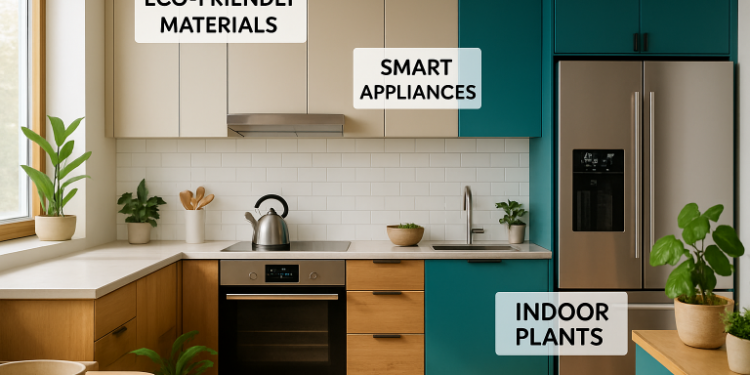
Kitchen design is progressing rapidly as we head toward 2026, with trends that balance form and function to complement today’s busy lifestyles. From sustainability and innovative technology to bold aesthetics and optimized storage, homeowners are redefining what kitchen spaces can do for them. If you’re considering kitchen remodeling in Chicago IL, these modern trends provide fresh inspiration that combines environmental responsibility, style, and practicality.
The drive for unique, efficient, and comfortable spaces is evident in every aspect of modern kitchens. Innovative materials, integrated technological solutions, and personalized layouts are at the forefront of today’s remodeling projects. By embracing current trends, you can transform your kitchen into a hub that is both a gathering place and a functional work area for years to come.
Table of Contents
Sustainable and Eco-Friendly Design
Remodeling choices increasingly prioritize sustainability, as eco-friendly materials and practices become central to kitchen design. Homeowners are increasingly favoring recycled glass countertops, bamboo flooring, and reclaimed wood cabinetry, reflecting a broader trend toward environmentally friendly improvements. According to Architectural Digest, green initiatives in kitchen design are more than a passing trend—they’re a key feature in the majority of upcoming remodeling projects.
Energy-efficient appliances that meet the highest standards—such as induction cooktops and ENERGY STAR-certified dishwashers—are now standard in new kitchens. These choices reduce utility costs and minimize long-term environmental impact, aligning with modern sensibilities. The focus is also expanding to nontoxic paints and finishes, recycled metals, and thoughtful options for water and waste management.
Smart Kitchens
Technology is taking a central role in how kitchens operate. Connected devices, voice-activated controls, and mobile app integration are reshaping day-to-day tasks. For example, you can remotely preheat your oven while en route home or access a refrigerator that notifies you when you’re low on essentials. These technologies don’t just deliver convenience—they also promote efficiency and safety.
Integrated charging stations, smart lighting, and projected recipe assistants are becoming routine features. Brilliant water faucets that conserve water, and appliances that monitor energy usage and adapt based on patterns, help optimize the kitchen’s environmental footprint. As noted by Wirecutter, a publication of The New York Times, these advances make the modern kitchen smarter, safer, and more adaptable than ever before.
Bold Color Choices and Mixed Materials
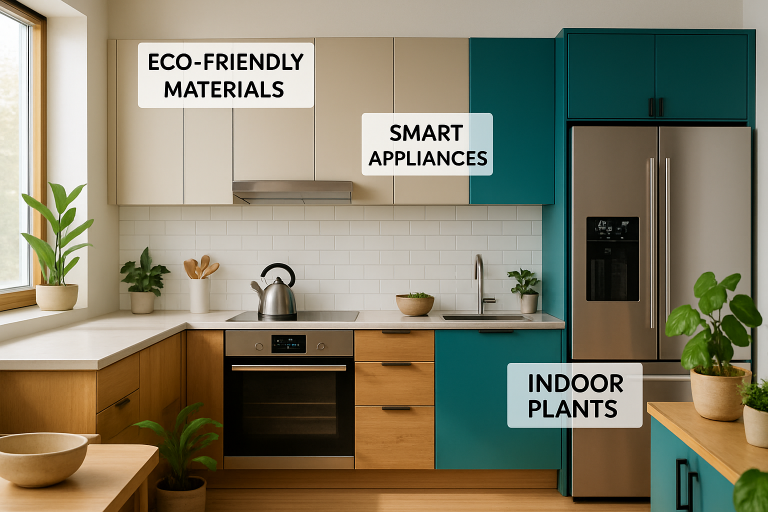
The era of bland, monochromatic kitchens is fading as daring color schemes and the artful combination of materials gain momentum. Cabinets in forest green, deep navy, and warm clay create striking focal points, especially when paired with contrasting countertops or backsplashes. Combining wood with metal, or matte cabinetry with high-gloss stone, adds depth and visual intrigue.
Homeowners are also using vibrant tiles, unexpected hardware, and rich, layered finishes to add their personal touch to kitchen spaces. This shift to more expressive design ensures the kitchen feels fresh and contemporary, shedding the sterile vibes of all-white interiors.
Incorporating Natural Elements
Many are choosing to bring the outdoors in, with biophilic design principles guiding decisions in materials, colors, and layout. Wood grain cabinets, stone worktops, and live-edge shelves tie the kitchen seamlessly to nature. Additionally, earth-toned paints—think muted greens, soft taupes, and terracotta—enhance the tranquil, organic atmosphere.
Beyond aesthetics, the introduction of ample daylight through large windows or skylights helps reduce artificial lighting needs and creates a pleasant gathering space at any time of day. Incorporating greenery, such as indoor herb gardens or potted plants, completes the inviting, earthy feel.
Personalized and Multifunctional Spaces
Kitchens now reflect the nuances of individual lifestyles, blending timeless design with functional adaptability. Customizable islands featuring built-in bookshelves, pet stations, or beverage fridges speak to users’ personal habits and needs. Flexible dining zones that morph from a casual breakfast bar to a formal dining area enable the kitchen to serve multiple purposes.
Personalized zones, such as coffee nooks, kids’ snack drawers, or small home office set-ups, are increasingly in demand. Survey data indicate that a large majority of renovators prefer spaces that can cater to changing requirements, ranging from entertaining guests to accommodating remote work.
Statement Lighting
No longer a secondary consideration, lighting has become a focal element in kitchen projects. Dramatic fixtures—from oversized pendants to sculptural chandeliers and geometric LED lights—transform functional lighting into a visual art form. These installations can set the tone for the entire room, ranging from cutting-edge minimalism to classic luxury.
The use of dimmer switches and layered lighting options ensures both functionality and ambiance. Soft, warm tones help soften contemporary interiors, making kitchens naturally inviting for both daily living and special occasions.
Hidden Storage Solutions
To keep open-plan kitchens clutter-free, hidden storage is key. Integrated appliances—such as dishwashers and refrigerators concealed by cabinetry—contribute to seamless sightlines. Pull-out pantries, blind-corner solutions, and custom drawer organizers are also gaining popularity, ensuring everything from utensils to pantry goods remains tucked out of view.
These strategies mean the kitchen can maintain its social function while keeping its utilitarian core out of sight, offering the perfect blend of beauty and practicality.
Conclusion
The modern kitchen trends projected for 2026 go far beyond a place to prepare meals. It serves as a hub of activity, expression, and innovation, focused on sustainable design, more innovative technology, bold personal touches, and flexible functionality. By embracing these trends, you can create a kitchen that’s perfectly attuned to both present-day needs and future advancements.