
Industrial Air Pollution Control: Understanding Pollutants, Regulations, and Compliance Strategies
Table of Contents
- 1 Understanding the Regulatory Landscape and Pollutant Types
- 2 Core Air Pollution Control Technologies: A Systems Approach
- 3 Key Design Considerations for Effective Industrial Environmental Compliance
- 4 Mitigating Combustible Dust Hazards for Safety and Compliance
- 5 The Role of Monitoring, Maintenance, and Aftermarket Support
- 6 Frequently Asked Questions about Industrial Dust Control
- 7 Conclusion
Understanding the Regulatory Landscape and Pollutant Types
Navigating the complex world of industrial operations means understanding the pervasive nature of airborne pollutants and the stringent regulations designed to control them. From fine particulate matter to invisible acid gases and volatile organic compounds, industrial processes generate a variety of emissions that pose significant health, safety, and environmental risks. Ignoring these can lead to severe financial penalties, operational downtime, and lasting damage to a company’s reputation.
Defining Key Industrial Pollutants
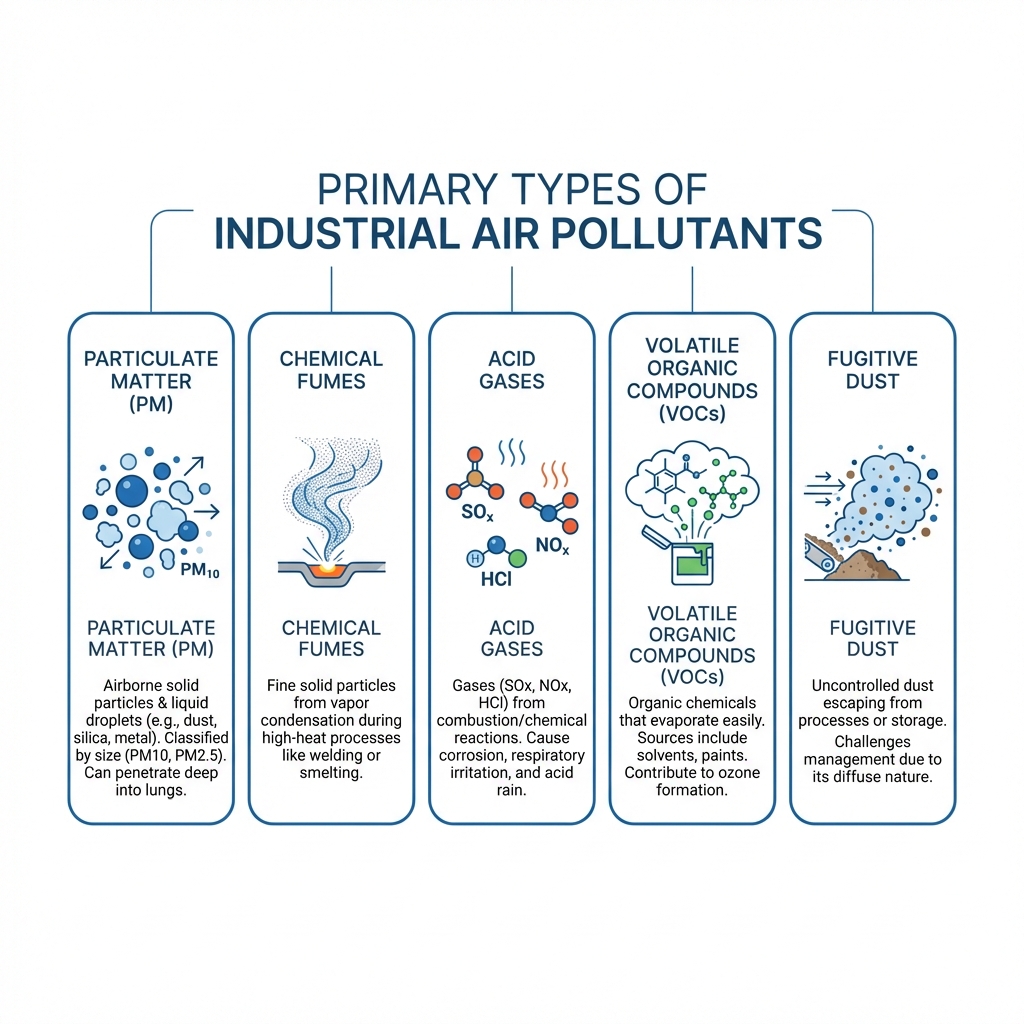
Industrial facilities contend with a spectrum of pollutants, each requiring specific control strategies.
- Particulate Matter (PM): This encompasses a wide range of airborne solid particles and liquid droplets, classified by size. PM10 refers to particles 10 micrometers or less in diameter, while PM2.5 are 2.5 micrometers or less. These fine particles, often invisible to the naked eye, include respirable dust, crystalline silica, and various metal dusts. They are particularly hazardous as they can penetrate deep into the lungs, causing respiratory diseases.
- Chemical Fumes: These are fine solid particles formed from the condensation of vapors, often produced during welding, smelting, or other high-temperature processes involving metals.
- Acid Gases: Gases like sulfur oxides (SOx), nitrogen oxides (NOx), and hydrogen chloride (HCl) are often byproducts of combustion or chemical reactions. They contribute to acid rain, corrosion, and severe respiratory irritation.
- Volatile Organic Compounds (VOCs): These organic chemicals can easily evaporate at room temperature. Common sources include solvents, paints, adhesives, and petroleum products. VOCs contribute to ground-level ozone formation and can have direct toxic effects.
- Fugitive Dust: Unlike emissions exiting a stack, fugitive dust escapes from industrial processes, storage piles, or roadways without passing through a control system. Its uncontrolled nature makes it particularly challenging to manage. The EPA provides comprehensive guidance on Fugitive Dust Control Measures and Best Practices, emphasizing its environmental impact.
Major Regulatory Bodies and Their Mandates
Compliance with environmental and occupational health regulations is not merely a legal obligation; it’s a commitment to employee well-being and sustainable operations. Several key bodies set the standards we must adhere to:
- Environmental Protection Agency (EPA): The EPA establishes national environmental standards, including those for air quality under the Clean Air Act. This includes setting limits on emissions of particulate matter, acid gases, and VOCs, and enforcing National Emission Standards for Hazardous Air Pollutants (NESHAPs) for specific industrial sources.
- Occupational Safety and Health Administration (OSHA): OSHA is responsible for ensuring safe and healthful working conditions. For industrial dust, this means setting Permissible Exposure Limits (PELs) for various airborne contaminants, including respirable dusts and chemical fumes. Facilities must implement engineering controls and work practices to keep worker exposures below these limits. Adhering to OSHA compliance resources and best practices is paramount for worker safety and long-term regulatory alignment.
- National Fire Protection Association (NFPA): The NFPA develops codes and standards to minimize the risk and effects of fire. Their standards, particularly NFPA 652 and NFPA 660, address the hazards of combustible dust. These guidelines mandate Dust Hazard Analyses (DHAs) and specify preventative and protective measures to mitigate explosion risks. Understanding and implementing NFPA 652 Standards is critical for any facility handling potentially Explosive Dust.
These regulatory bodies collectively drive the need for robust industrial dust collection and air pollution control systems. As statistics suggest, “Industrial dust collection systems are commonly used in manufacturing and processing operations… to ensure compliance with major regulatory bodies such as OSHA, NFPA, and EPA, and to protect workers.”
Core Air Pollution Control Technologies: A Systems Approach
Effective air pollution control often requires more than a single piece of equipment. It demands a holistic, systems-based approach that integrates various engineering controls to address the unique characteristics of an industrial airstream. Our goal is to design systems that efficiently remove particulate matter and absorb gases, whether through dry or wet collection methods.
Dry Particulate Control Systems (The First Stage)
For many industrial processes, the primary challenge is the removal of dry particulate matter. This includes dust generated from operations like mining, cement production, and Lithium processing. Dry particulate control systems are typically the first line of defense, designed to capture and separate solid particles from the air.
The most common and effective dry systems rely on fabric filtration. Air laden with dust is drawn through a filter medium, which traps the particles. Over time, a “dust cake” forms on the filter surface, which actually improves filtration efficiency for finer particles. Periodically, these filters are cleaned, often using a pulse-jet mechanism that sends a burst of compressed air through the filter to dislodge the dust cake into a collection hopper.
- Baghouse Dust Collectors: These systems use long, cylindrical fabric bags as filter media. They are highly effective for capturing a wide range of particle sizes and are suitable for applications with high dust loads and temperatures. We often recommend Baghouse dust collectors for robust, high-volume particulate removal.
- Cartridge Collectors: Similar to baghouses but using pleated Cartridge Filters, these offer a more compact footprint and are often chosen for finer dusts or where space is limited. Their pleated design provides a large surface area for filtration.
- Applications: These Dry Filter Systems are ideal for diverse applications such as Fly Ash handling, general Dust Collection Innovations for Mining and Mineral Processing, and metalworking operations.
Wet Scrubbing Systems for Gases and Challenging Dusts
When the industrial airstream contains acid gases, highly combustible dusts, or sticky, hygroscopic particulates, dry systems may not be sufficient or safe. In these scenarios, wet scrubbing systems provide a robust solution. These systems use a liquid, typically water or a chemical solution, to capture pollutants. As one source notes, “Wet scrubbers, which are also called air scrubbers, use water or another liquid to remove dust particles from the air. They’re a popular choice for operations involving potentially explosive or flammable materials…”
The mechanism involves bringing the contaminated gas stream into intimate contact with the scrubbing liquid. Pollutants are absorbed into the liquid, react chemically with it, or are physically impinged upon by liquid droplets.
- Venturi Scrubbers: These are highly effective for capturing fine particulate matter. The gas stream is accelerated through a constricted throat section, where it mixes with scrubbing liquid, atomizing it into fine droplets that collide with and capture particles. Understanding the Venturi Scrubbers Physics is key to their application.
- Packed Tower Scrubbers: These systems are excellent for gas absorption. The gas flows upward through a packed bed, while the scrubbing liquid flows downward, creating a large surface area for mass transfer. We can explain How Does a Packed Bed Scrubber Work? in more detail for specific applications.
- FRP Scrubbers: Constructed from Fiberglass Reinforced Plastic, FRP Scrubbers are chosen for their corrosion resistance when handling aggressive chemical fumes.
- Applications: Wet Scrubbers are commonly used in chemical manufacturing, foundries, and food processing, especially where high temperatures or moisture are present. For a deeper dive into the choice between these systems, explore our insights on Wet Scrubber selection and the broader comparison of Wet vs. Dry Systems.
Integrated Multi-Stage Systems for Complex Emissions
Many industrial processes generate complex airstreams containing both heavy particulate loads and gaseous pollutants. In these cases, a single technology is insufficient. We often implement integrated multi-stage systems, combining dry and wet technologies in series to achieve optimal performance and compliance.
For instance, a baghouse might first remove the bulk of particulate matter, protecting the downstream wet scrubber from excessive solids loading. The now cleaner, but still gaseous, airstream then enters a packed tower scrubber to absorb acid gases. This serial combination offers several benefits:
- Higher Efficiency: Each stage is optimized for a specific pollutant type, leading to superior overall removal rates.
- Reduced Maintenance: Pre-cleaning by a dry collector extends the life and reduces the maintenance burden on the wet scrubber.
- Lower Long-Term Operating Costs: By protecting downstream equipment and optimizing energy use, these systems can significantly reduce operational expenses.
These integrated solutions are crucial for industries like waste-to-energy plants, Biomass processing, and rare earth element extraction, where diverse pollutants must be carefully controlled. Understanding the nuances of Dry vs Wet Dust Collection is key to designing these sophisticated systems.

Key Design Considerations for Effective Industrial Environmental Compliance
Designing an effective industrial dust collection system is far from a one-size-fits-all endeavor. It demands a meticulous analysis of the specific industrial process, the characteristics of the pollutants, and the operational environment. Our engineers act like detectives, gathering crucial data to ensure the system is not only compliant but also efficient and cost-effective.
Analyzing Your Airstream: The First Step to Industrial Environmental Compliance
The foundation of any successful dust control system lies in a thorough understanding of the airstream it will process. This initial analysis is critical for selecting the right technology and sizing the equipment appropriately.
- Dust Hazard Analysis (DHA): Beyond basic dust, we must identify if the dust is combustible, toxic, or corrosive. A DHA is essential for combustible dusts to understand their explosion characteristics.
- Particle Size Distribution: This is perhaps the most critical factor. Different technologies excel at capturing different particle sizes. For example, cyclones are good for larger particles, while baghouses and scrubbers are needed for finer ones. Our guide on how particle size affects dust collector selection provides more detail and practical examples of how even small shifts in size distribution can change the recommended technology.
- Bulk Density and Abrasiveness: These factors influence material handling systems (hoppers, conveyors) and the choice of construction materials for the collector and ductwork. Abrasive dusts require more robust materials to prevent premature wear.
- Temperature and Moisture Content: High temperatures or moisture can impact filter media selection in dry systems or necessitate the use of wet scrubbers. Hygroscopic dusts, for instance, can blind dry filters.
- Chemical Composition: Corrosive gases or dusts require specialized materials of construction (e.g., FRP for scrubbers). The presence of sticky materials might also favor wet collection.
Collecting accurate process data—airflow (CFM), temperature, moisture, and chemical composition—is paramount. Without it, even the most advanced system can underperform. In practice, this often means combining plant historical data, spot measurements, and in some cases third-party testing to build a reliable design basis before any equipment is specified.
Sizing and System Design for Optimal Performance
Once the airstream characteristics are understood, the detailed design and sizing process begins. This involves a series of calculations and engineering decisions that directly impact the system’s efficiency, longevity, and operating costs.
- Air-to-Cloth Ratio (for dry collectors): This critical parameter dictates the volume of air processed per square foot of filter media. An optimized ratio ensures efficient filtration without overworking the filters, which can lead to premature wear and increased energy consumption.
- Can Velocity: The upward velocity of air in the dust collector housing, affecting dust re-entrainment.
- Ductwork Design: Proper duct design ensures uniform airflow, prevents dust settling in ducts, and minimizes pressure drop, which directly impacts fan energy consumption.
- Capture Velocity: The speed at which air must move into a capture hood to effectively draw in pollutants at the source.
- Fan Selection: The fan is the heart of the system, providing the necessary airflow and static pressure. Its selection must match the system’s requirements precisely for energy efficiency.
- Impact on Filter Life and Energy Consumption: Correct sizing and design directly extend filter life, reduce energy consumption, and minimize maintenance.
Good design also considers future changes: potential production increases, new product lines, or evolving regulatory limits. Allowing reasonable safety margins in fan capacity, filter area, and space for future equipment can minimize lifecycle costs. Many facilities turn to trusted partners for this level of planning and support, leveraging resources such as Sly industrial dust control compliance to align engineering decisions with current and anticipated regulatory requirements.
Mitigating Combustible Dust Hazards for Safety and Compliance
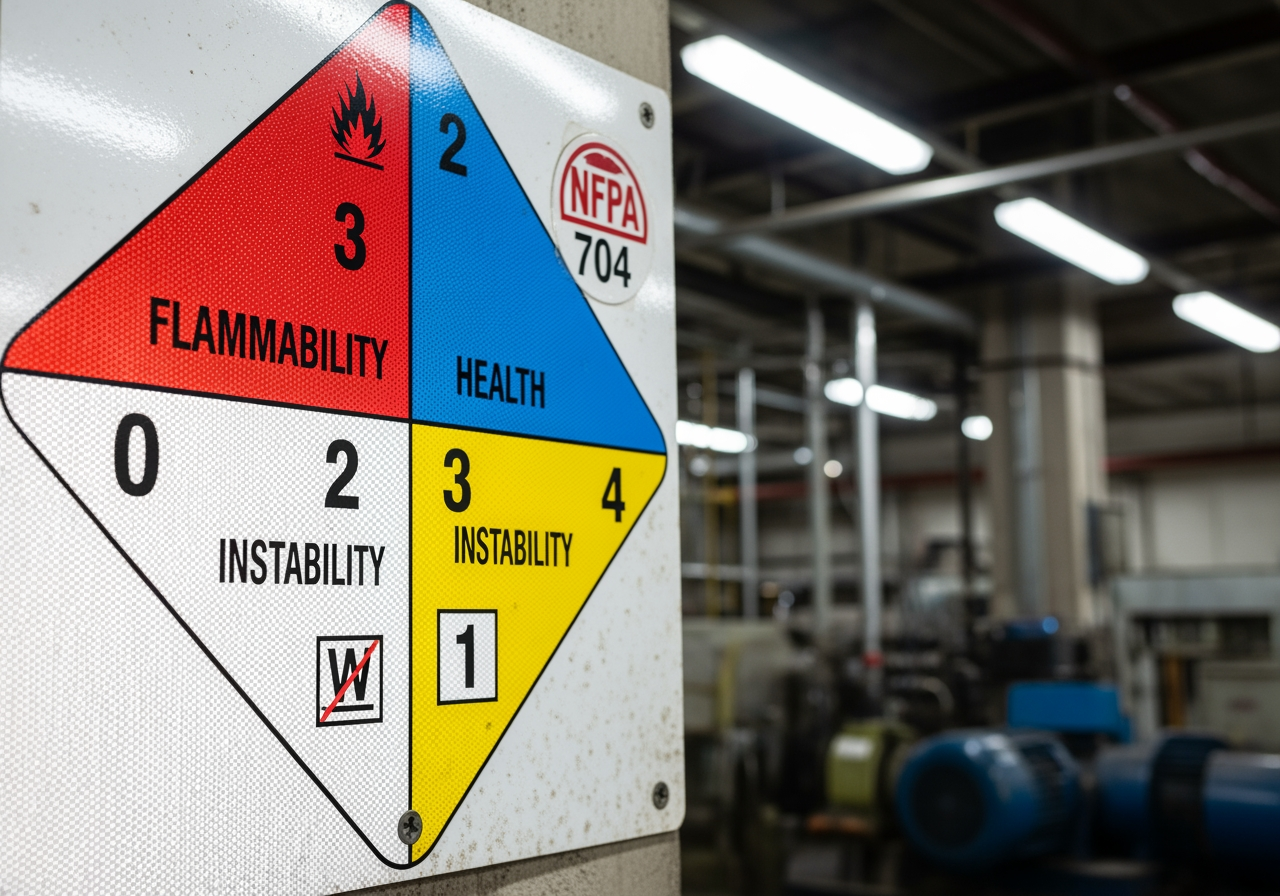
Combustible dust is a pervasive and often underestimated hazard in many industrial settings. When finely divided combustible materials are suspended in air in the right concentration and exposed to an ignition source, they can lead to devastating explosions. Understanding and mitigating these risks is not just about compliance; it’s about protecting lives and assets.
Identifying and Assessing Combustible Dust Risks
The first step in mitigation is identification. A wide array of seemingly innocuous materials can become combustible dusts:
- Common Combustible Dusts: These include wood dust (sawdust, wood flour), grain dust (flour, starch, sugar), plastics (resins, polymers), metals (aluminum, magnesium, titanium), and coal dust.
- Key Characteristics: For each dust, specific parameters determine its explosion potential:
- Kst Value: This indicates the deflagration index, or the maximum rate of pressure rise during an explosion. Higher Kst values mean faster, more violent explosions.
- Pmax: The maximum pressure developed during an explosion.
- Minimum Ignition Energy (MIE): The lowest amount of energy required to ignite a dust cloud.
- Importance of Laboratory Testing: These parameters cannot be guessed. We strongly recommend professional laboratory testing of your specific dusts to accurately assess their combustible properties. Our article on Combustible Dust Hazards offers a comprehensive overview.
The “Dust Explosion Pentagon” illustrates the five elements required for a dust explosion: fuel (combustible dust), oxidant (air), ignition source, dispersion of dust, and confinement. Removing any one of these elements can prevent an explosion.
Engineering Controls for Combustible Dust
Once identified, engineering controls are the most effective way to mitigate combustible dust hazards. These controls are designed to either prevent an explosion or minimize its impact. For more information on preventing such incidents, refer to our guide on Preventing Dust Explosions.
- Explosion Venting: This involves installing panels designed to rupture at a predetermined pressure, safely directing the explosion’s force away from the equipment and personnel.
- Flameless Venting: For indoor applications where venting an explosion directly to the atmosphere is not feasible, flameless vents contain the flame while releasing the pressure.
- Explosion Suppression Systems: These systems detect the incipient stages of an explosion and rapidly inject a chemical suppressant to extinguish the flame before it fully develops.
- Isolation Valves: These devices rapidly close off ductwork to prevent a deflagration from propagating from one piece of equipment to another.
- Grounding and Bonding: Essential for preventing static electricity buildup, a common ignition source for dust clouds.
- Using Wet Scrubbers for High-Risk Dusts: For certain highly combustible or pyrophoric dusts, wet scrubbers are often the preferred solution. By capturing dust in a liquid slurry, they effectively remove the “dispersion” and “oxidant” elements of the explosion pentagon, making the dust inert and safe. This is especially relevant for handling Explosive Dust.
Compliance with NFPA 652 (Standard on Fundamentals of Combustible Dust) and NFPA 660 (Standard on Combustible Dusts) is non-negotiable. These standards guide the implementation of these critical engineering controls.
The Role of Monitoring, Maintenance, and Aftermarket Support
Investing in a state-of-the-art dust collection system is only the first step. To ensure continuous environmental compliance, optimal performance, and maximum longevity, a robust program of monitoring, proactive maintenance, and reliable aftermarket support is essential. This comprehensive approach minimizes downtime, extends equipment life, and ensures that your system consistently meets regulatory requirements. For comprehensive insights into maintaining compliance, consider exploring resources on Sly industrial dust control compliance.
Establishing a Proactive Maintenance Program
A well-structured maintenance program is the backbone of any effective dust collection system. It shifts from reactive repairs to proactive prevention, catching small issues before they escalate into costly failures. Our dust collector maintenance guides emphasize the importance of regular checks.
Key maintenance tasks include:
- Differential Pressure Monitoring: Regularly tracking the pressure drop across filters indicates when filters are loading up and need cleaning or replacement. A sudden spike can signal a problem, while a steady increase is normal.
- Leak Detection (Dye Testing): Periodic testing for leaks in your baghouse system helps identify compromised filter media or seals, preventing uncontrolled emissions.
- Hopper Discharge Checks: Ensuring dust is regularly and completely discharged from the hopper prevents re-entrainment and potential fire hazards.
- Filter Inspection: Visual inspection of filters for tears, abrasion, or blinding helps predict replacement needs and optimize cleaning cycles.
- Fan and Motor Maintenance: Lubrication, belt tension checks, and vibration analysis ensure the heart of the system operates efficiently.
- Dust Collector Maintenance Checklist: Following a detailed checklist ensures no critical component is overlooked. A comprehensive dust collector maintenance checklist provides a valuable framework for facilities of all sizes.
Proactive maintenance not only extends the life of your equipment but also prevents costly breakdowns and ensures consistent compliance. Regular troubleshooting of common dust collector problems, backed by accurate records of previous inspections and repairs, is also vital.
Leveraging Monitoring Technology for Continuous Industrial Environmental Compliance
Modern dust collection systems often integrate advanced monitoring technologies that provide real-time data and predictive insights. These tools improve operational efficiency and ensure continuous compliance.
- Broken Bag Detectors: These sensors continuously monitor for particulate emissions downstream of the filters, immediately alerting operators to a filter breach.
- Particulate Emission Monitors: For highly regulated industries, continuous emission monitoring systems (CEMS) provide real-time data on stack emissions, ensuring compliance with strict limits.
- Smart Controls and Variable Frequency Drives (VFDs): These technologies optimize fan speed based on system demand, reducing energy consumption and extending component life.
- Predictive Analytics: By analyzing operational data, predictive analytics can forecast potential component failures, allowing for scheduled maintenance before a breakdown occurs.
Reliable aftermarket parts for dust collection systems are also crucial. Having access to high-quality replacement parts, often from the original equipment manufacturer (OEM), ensures that repairs maintain the system’s integrity and performance. Coordinating spare-parts inventories, standardizing filter types where practical, and training in-house staff on basic diagnostics all contribute to a resilient program that supports long-term industrial environmental compliance.
Frequently Asked Questions about Industrial Dust Control
We often encounter common questions from facilities seeking to optimize their dust control strategies. Here, we address some of the most frequent inquiries.
What is the difference between a dust collector and an industrial vacuum system?
While both deal with dust, their functions are distinct. A dust collector is an air quality control system designed to capture airborne dust at the source and filter large volumes of air for an entire process or facility. It continuously draws in dust-laden air, separates the particles, and exhausts clean air, maintaining a safe and clean breathing environment. An industrial vacuum system, conversely, is primarily a housekeeping tool used for cleaning accumulated dust from surfaces, floors, and equipment. It’s designed for intermittent use to collect debris and is not intended for continuous process ventilation or managing airborne dust clouds.
How do I know if my current dust collection system is underperforming?
Several indicators can signal an underperforming dust collection system:
- Visible Dust: The most obvious sign is visible dust escaping capture hoods, or dust settling on surfaces near the process areas, indicating inadequate capture or filtration.
- Short Filter Life: If you’re replacing filters more frequently than expected, it could point to improper sizing, an issue with the cleaning system, or incorrect filter media.
- High Differential Pressure: Consistently high differential pressure readings across the filters can indicate clogged filters or an inefficient cleaning mechanism.
- Increased Energy Consumption: An overworked fan due to clogged filters or poor system design will draw more power.
- Regulatory Non-Compliance: Failing stack tests or receiving notices of violation from regulatory bodies are clear signs of underperformance.
- Employee Complaints: Workers reporting respiratory issues or visible dust in the air are critical indicators.
As one resource highlights, “Signs of an Underperforming Dust Collection System: A properly designed and installed dust collection system will effectively catch, convey, and separate hazardous and nuisance dusts. However, when a dust collection system isn’t working properly your employees may be at risk.”
When should I choose a wet scrubber over a dry dust collector?
The choice between a wet scrubber and a dry dust collector depends heavily on the specific application and dust characteristics. A wet scrubber is often the preferred choice in the following scenarios:
- Combustible or Explosive Dusts: Wet scrubbers safely capture and inert highly combustible or pyrophoric dusts by mixing them with liquid, eliminating the risk of explosion.
- Sticky or Hygroscopic Materials: Dusts that are sticky or absorb moisture can quickly blind dry filters, rendering them ineffective. Wet scrubbers handle these materials without issue.
- High-Temperature and High-Moisture Gas Streams: Dry filters have temperature limits, and high moisture can damage them. Wet scrubbers are well-suited for hot, humid environments.
- Simultaneous Particulate and Gas Removal: If your airstream contains both particulate matter and soluble gaseous pollutants (like acid gases), a wet scrubber can remove both simultaneously.
- Odor Control: Some wet scrubbers can also be designed to neutralize or absorb odorous compounds.
For a deeper comparison, our article on Wet vs. Dry Systems offers detailed insights to help you make the right decision.
Conclusion
Achieving and maintaining environmental compliance is a continuous process that requires a deep understanding of pollutants, regulations, and control technologies. By adopting a systems-based approach, focusing on proper engineering design from the outset, and committing to a robust maintenance program, industrial facilities can protect their workers, meet regulatory obligations, and ensure efficient, long-term operations. Partnering with experienced air pollution control specialists is the most effective way to steer these complexities and implement a solution that provides confidence and lasting value.