

Innovative Strategies For Choosing Your Next Urban Home

Table of Contents
- 1 The Appeal Of Urban Living
- 2 Personalizing Location Choices: What Matters Most?
- 3 Types Of Residences Found In The Heart Of The City
- 4 Smart Home Technology And Modern Amenities
- 5 Market Data: Timing Your Purchase
- 6 Budgeting And Financing: Flexible Approaches To Urban Buying
- 7 Touring And Evaluating Properties
- 8 Planning For The Future: Resale Value And Community Trends
- 9 Conclusion: Your Urban Home, Your Lifestyle
The Appeal Of Urban Living
Cities have always attracted those seeking opportunity, vibrancy, and a lifestyle laced with choices. Urban residences, from contemporary condos to classic brownstones, provide this energy in abundance. The heartbeat of arts, culture, and cuisine is right outside your door, while access to innovative businesses and robust job markets draws professionals and entrepreneurs alike.
Diversity is at the heart of city living, with neighborhoods offering a tapestry of traditions, cuisines, and cultures. Urban areas often boast unmatched amenities—world-class healthcare, public transit, and entertainment options—making day-to-day living convenient and richly rewarding. For instance, if you’re interested in finding Midtown Manhattan homes for sale, you’ll be in the epicenter of professional and lifestyle perks.
Modern cities are increasingly prioritizing livability and sustainability. Urban planners are restructuring cities for better living, from new green spaces to investments that support climate resilience, as detailed in recent real estate trends. This future-focused mindset benefits those who envision themselves thriving long-term in an urban environment.
Personalizing Location Choices: What Matters Most?
Selecting an urban home is about more than price per square foot. Proximity to work, reputable schools, reliable transportation, and well-maintained parks often tip the balance for many buyers. The correct location should reflect your daily rhythm—consider how commute times will impact your day, or whether you’ll want a nearby dog park or local cafés within walking distance.
Assess the neighborhood’s character to ensure it aligns with your lifestyle. Is it a lively, artsy district that pulses late into the evening? Or a quiet, family-friendly area with tree-lined streets? Exploring at different times of day can shed light on the everyday experience and help you make a more informed choice.
Types Of Residences Found In The Heart Of The City
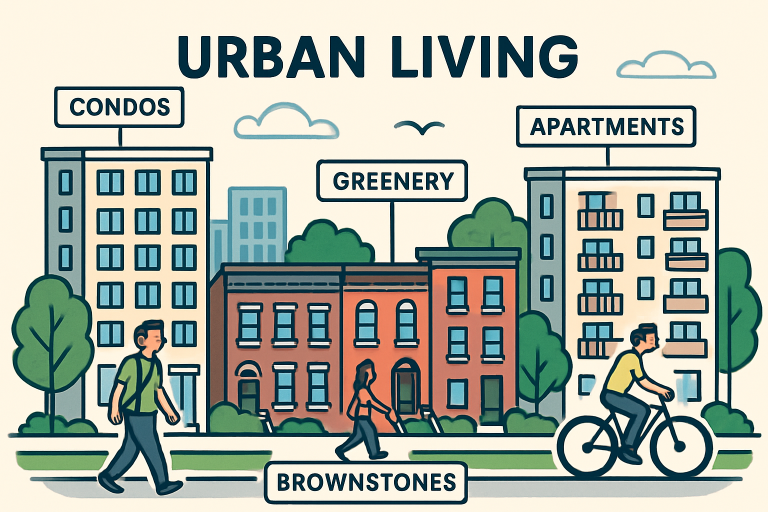
Urban real estate offers various options, each designed for specific preferences and stages of life. Condos typically suit those who appreciate amenities and low-maintenance living, while co-ops might require more involvement in the building’s management. Townhouses present more privacy and space, often paired with a historic ambiance, whereas apartments might offer flexibility for shorter stays.
Understanding the benefits and challenges unique to each housing style is critical. Condos often include fitness centers and rooftop gardens, but come with homeowners‘ associations and monthly fees. Co-ops require board approval and collective decision-making. Weighing these factors against your needs helps ensure your chosen residence genuinely fits your lifestyle.
Smart Home Technology And Modern Amenities
Innovative home tech has rapidly transformed urban living. Smart locks, lighting, and energy-efficient systems provide new levels of comfort and security. Features such as remote climate control, video intercoms, or package lockers enhance daily convenience, making city residences inviting and practical.
Recent smart home research noted that these amenities are increasingly influencing buying decisions. Forward-thinking buyers should weigh the benefits of buildings that have adopted tech-forward upgrades and eco-friendly features.
Market Data: Timing Your Purchase
Urban markets shift quickly in response to economic and policy changes. Reviewing up-to-date data, including inventory levels and average days on market, can provide valuable insights. For example, cities often experience a seasonal rhythm, with spring or fall emerging as prime house-hunting months due to increased listings and motivated sellers.
Timing your purchase is part science, part instinct. If mortgage rates dip or a sudden influx of new developments hits the market, it may pay to act swiftly. Monitoring reliable sources like WSJ Real Estate ensures you know trends and opportunities before committing.
Budgeting And Financing: Flexible Approaches To Urban Buying
Flexibility is key, whether you’re a first-time buyer eager to enter the market or a seasoned investor searching for a lucrative rental property. Down payment assistance programs, adjustable-rate mortgages, and FHA or VA loans can help make homeownership accessible even in high-demand neighborhoods.
Exploring how different mortgage rates and loan structures could affect your monthly payments and long-term equity is essential. Consulting with a financial advisor or lender can reveal creative strategies for maximizing purchasing power in urban markets.
Touring And Evaluating Properties
Hands-on tours remain a crucial step in the buying process. During walkthroughs, be vigilant for issues such as outdated wiring, poor ventilation, or signs of water intrusion in older buildings. In new developments, examine construction quality and ask about warranty coverage.
Red flags include persistent odors, evidence of mold, or a high turnover rate in rental units. Don’t hesitate to request recent inspection reports or a copy of the building’s financial statements before making any decisions.
Planning For The Future: Resale Value And Community Trends
Thinking ahead can be just as important as immediate needs. Investigate neighborhood plans for new transit lines, retail spaces, or public parks, which may positively impact property values over time. City council and planning board websites are often excellent places to research upcoming projects.
Assessing current trends and future improvements will help you purchase a home that retains and grows its value, ensuring a smart urban investment. As experts at The New York Times Real Estate Section have highlighted, a well-chosen property in a dynamic neighborhood can provide long-term satisfaction and financial security.
Conclusion: Your Urban Home, Your Lifestyle
Choosing a home in the city is about more than square footage—it’s about matching your unique lifestyle with the opportunities, amenities, and culture the urban core provides. By identifying your priorities, leveraging reliable data, and planning for both present enjoyment and future growth, you can confidently select a residence that will be your ideal urban retreat for years to come.
As you embark on your search, balance practicality with vision, and remember that the best urban home is one that meets your current needs and fosters your long-term aspirations.