

How to Know When It’s Time for a New Roof
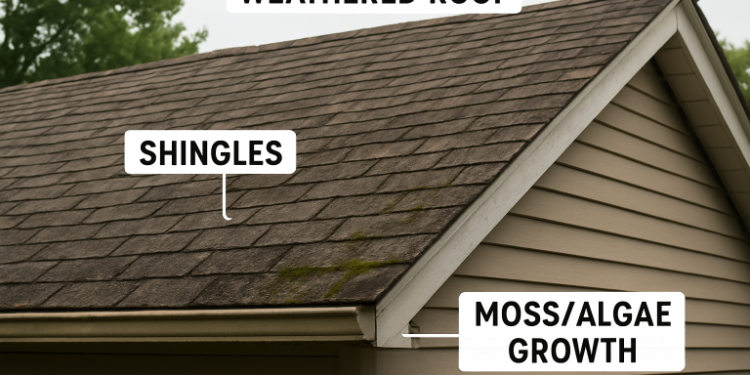
Your roof is your home’s first line of defense against rain, wind, snow, and harsh sunlight. Over time, even the best roofs will eventually need to be replaced. Recognizing the early warning signs of roof failure can help you avoid unexpected repairs, costly water damage, and energy inefficiency. Whether you’re dealing with visible leaks or noticing the age of your roof, it’s crucial to regularly assess its condition so you can take action before problems escalate. When you need to make a change, you can always trust our roofs replacement experts- for a new roof.
Replacing a roof is a significant investment, but it’s vital for protecting your home and ensuring your family’s comfort and safety. This guide will walk you through key warning signs to watch for, from the lifespan of roofing materials to subtle interior signals. Learn how to identify damage and when to enlist a professional so that you can make informed decisions about your home’s protection.
Table of Contents
Age of Your Roof
The lifespan of your roof largely depends on the materials used. Traditional asphalt shingles typically last between 20 and 30 years, while well-maintained wood shingles can endure up to 30 years. Premium materials, such as metal roofing, often exceed 40 years, while clay or concrete tiles can last half a century or more. Slate roofs are the most durable, with some surviving for over 100 years. If your roof is nearing or has passed its expected lifespan, even if there are no visible issues, it’s wise to consider replacement before leaks or failures occur.
Visible Damage
Routine visual inspection is one of the simplest ways to determine if you need a new roof. Look for cracked, curled, or missing shingles, as these are signals your roof is no longer providing complete protection. Also, check for granule loss. Shingle granules help deflect UV rays, and their loss means your roof is aging and vulnerable. Excessive granules in your gutters or downspouts are a sign to take action. Damaged flashing, which is the metal installed at roof joints, can also allow water penetration and should be examined closely. For more information on what to look for, visit Amica Insurance.
Interior Signs
Problems inside your home might also indicate a failing roof. Water stains on ceilings or walls, peeling paint, or bubbling plaster signal a leak that could originate from roofing issues. Mold or mildew growth in your attic or on wall surfaces may indicate chronic moisture entry. If you can see daylight shining through the roof boards when you’re in the attic, there are likely cracks or holes in the roof’s barrier. Any of these symptoms should prompt further investigation.
Moss and Algae Growth
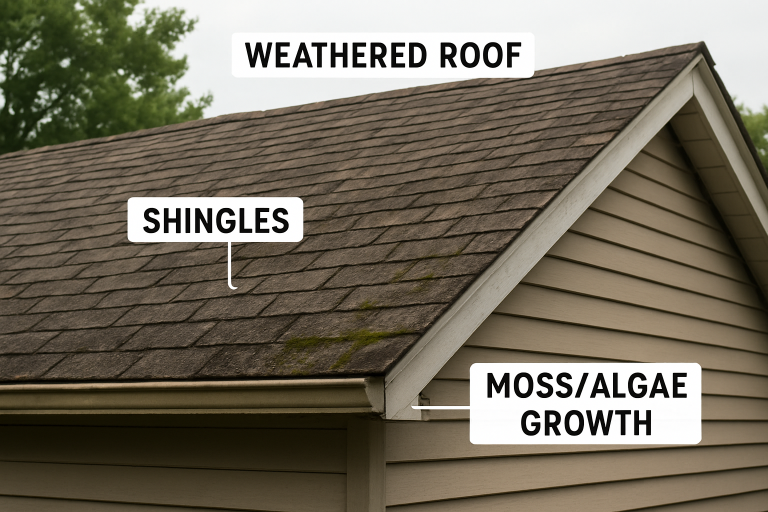
While moss and algae may seem harmless, their presence is a warning sign of underlying moisture retention and slow roof degradation. Left unchecked, moss traps water, which accelerates rot and decay, especially on organic-based shingles. Light growth can be removed, but if moss overtakes large sections of your roof or returns after cleaning, replacement may be necessary to prevent further deterioration. The experts at Mercury Insurance discuss moss problems in this article.
Sagging Roof Deck
A sagging roof deck is a serious structural issue that demands immediate attention. This often results from extended moisture infiltration, causing the wood deck beneath the shingles to weaken. Walk across your roof (or have a professional do so) and check for soft or spongy spots. A sag, dip, or unevenness is a significant indicator that your roof may need a complete overhaul before it collapses or causes heavier damage to your home’s frame.
Increased Energy Bills
If you find that your heating or cooling costs are suddenly higher than usual, your roof’s insulation ability may be compromised. Damaged or worn-out roofing allows heating and cooling to escape more easily, forcing your HVAC system to work harder, which in turn increases your energy usage and costs. Assessing your roof’s condition can be a smart step if you’re trying to troubleshoot your household’s energy inefficiency.
Professional Inspection
Roof problems aren’t always apparent from the ground. That’s why an annual or biannual inspection by a licensed roofer is recommended. Professionals can identify minor issues before they escalate into significant damage, saving you stress and money in the long run. Inspections also provide clarity on whether repairs are sufficient or if it’s time to invest in a complete roof replacement. Scheduling inspections after severe weather events—such as hailstorms or hurricanes—is crucial, as hidden damage can spell trouble down the line. More about home roof inspection standards can be found in resources like this Bob Vila guide.
Proactively maintaining your roof is crucial to preserving the longevity and safety of your home. Regular inspections help identify early warning signs of damage, such as missing shingles, leaks, or structural wear, before they escalate into costly repairs. Scheduling routine maintenance not only extends the life of your roofing materials but also safeguards your family and belongings from potential hazards caused by water intrusion or structural weakness. By addressing minor issues promptly and staying vigilant, homeowners can protect their investment, ensure consistent protection from the elements, and enjoy peace of mind knowing their roof remains strong, reliable, and secure for years to come.