

Clever Solutions for Making the Most of Self-Storage Units
Self-storage units offer an ideal way to manage your belongings during moves, transitions, or to create more space at home. Whether you’re a city dweller with limited closet space or a homeowner seeking to manage seasonal clutter, finding effective ways to maximize your storage is crucial. By approaching your storage strategy with a bit of planning and innovation, you can optimize your space, safeguard your possessions, and enjoy effortless access whenever you need it. If you’re seeking convenient self-storage options, Toronto Storage Units provides a valuable solution for a wide variety of storage needs in the city.
Not all storage units or users are the same. Still, there are universal steps that can transform even the smallest space into an organized, easily navigable extension of your home or office. These practical tips and organizational techniques will set you up for storage success, helping you avoid the all-too-common problem of forgotten, disordered boxes. A carefully planned self-storage unit keeps your belongings safe and your mind at ease.
Table of Contents
Plan and Create an Inventory
Successful storage begins before you even start moving boxes. Compiling a detailed inventory can help you keep track of everything placed into storage, so you never lose track of treasured items or accidentally purchase duplicates. Start by listing each item and categorizing it by room, noting its condition for insurance purposes. Digital tools such as shared spreadsheets or mobile inventory apps make updating and accessing this list easy as your storage needs change. Maintaining an organized inventory can also speed up your next move-in or retrieval process.
Utilize Uniform-Sized Boxes
Choosing uniform, sturdy boxes is a simple yet often overlooked tip for maximizing storage units. Steer clear of odd-shaped or mismatched boxes, which waste space and create unstable, dangerous stacks. Sturdy, stackable boxes not only maximize your square footage but also make labeling and searching much easier. For items that require extra durability—like books or fragile decor—opt for double-walled boxes. Choose a box size that fits your heaviest items at the bottom and weight increases, avoiding overstuffing boxes to prevent accidents during stacking or retrieval.
Label Everything Clearly
Every box you pack should be clearly labeled on all exposed sides. Use a consistent labeling system that details the contents of the box and, if relevant, the room to which the items belong. Color-coded stickers or labels, coordinated by item category or season, add an extra layer of clarity. This small step drastically reduces the time spent rifling through boxes and ensures nothing important gets overlooked at the back of your unit.
Maximize Vertical Space
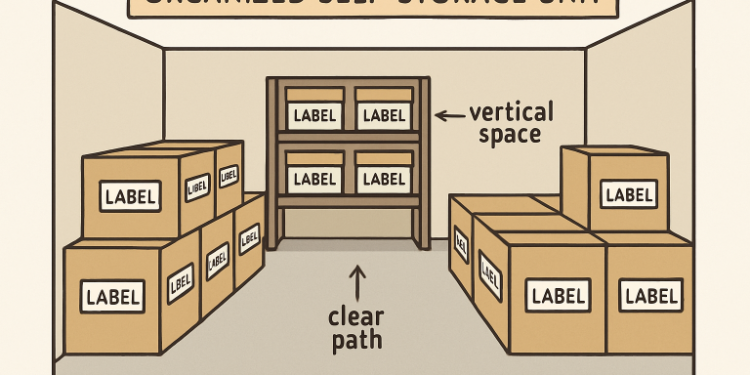
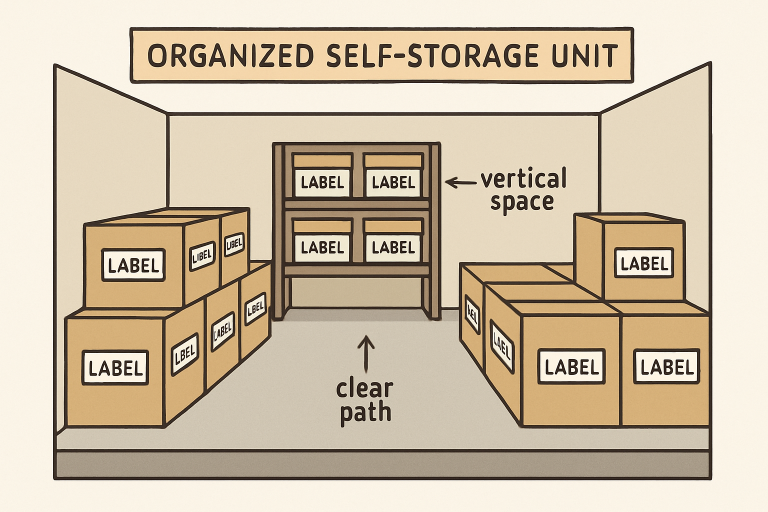
The full height of your unit is wasted if boxes and items are only placed at floor level. Stack heavier boxes at the base, then alternate lighter items or those stored in plastic containers on top. Sturdy, freestanding shelving transforms vertical space into accessible storage, preventing stacks from becoming dangerously high or unstable. Take inspiration from Forbes’ storage guide for optimal types of bins and shelves for small spaces.
Disassemble Furniture
Large furniture often eats up valuable square footage. Carefully disassemble items such as bed frames, desks, or bookshelves, and store the hardware in a labeled zip-top bag, securing it to the furniture with tape. This not only saves space but also makes it easier to transport and reassemble items later. Lean disassembled pieces vertically along one wall, ensuring they won’t tip or be damaged in the process. Wrap each piece with moving blankets or bubble wrap to prevent scratches.
Store Items Inside Other Items
Unlock hidden space by storing smaller belongings inside larger containers or furniture items with hollow interiors. Suitcases, dresser drawers, and bins can be filled with seasonal clothing, shoes, or holiday décor, maximizing every inch and keeping similar items together. This method is ideal for creating order within chaos, especially for frequently accessed units.
Create Space for Easy Access
Strategize your layout to include a clear pathway from the entrance to the back of your storage unit. Store the items you’ll need most often at the front, and leave longer-term or rarely accessed items toward the back. Stack boxes so that labels face outward, and leave a walkway wide enough to maneuver comfortably inside the unit. Not only does this reduce frustration during retrieval, but it also prevents accidental damage to your boxes and possessions.
Use Clear Storage Boxes for Important Items
Consider transferring important, frequently accessed items into clear plastic storage boxes. These containers make it easy to spot contents at a glance, saving you from unnecessary digging. They’re invaluable for documents, kids’ toys, seasonal clothing, or business materials you might need to retrieve in a hurry. Just make sure each box is still labeled for extra clarity.
Protect Fragile Items Properly
Safeguard breakable items such as glassware, ceramics, and electronics by wrapping them in bubble wrap, packing paper, or soft household linens before boxing them. Clearly label these boxes as ‘Fragile’ on all sides and store them on top of other stacks—not underneath heavier boxes. Double-up on security for valuable items and consider climate-controlled storage for items sensitive to temperature fluctuations.
Move with the Seasons
Keep your unit relevant by rotating seasonal items in and out throughout the year. Store winter clothing and holiday décor during the summer, and switch them out for camping gear or summer sports equipment as the weather changes. This approach helps prevent your unit from becoming a forgotten catch-all and ensures easy access to what you need, when you need it, throughout the year.
Smart storage isn’t just about packing as much as possible into a unit—it’s about creating an easy-to-navigate space that preserves your belongings and simplifies your life. By following these clever strategies, you can keep your storage unit organized, accessible, and tailored perfectly to your personal needs.