

Building for Success: The Value of Specialized Construction and Design
Table of Contents
- 1 Beyond the Blueprint
- 2 What is Specialized Construction and How Does it Differ?
- 3 Key Disciplines within Specialized Construction
- 4 The Strategic Advantages of Hiring a Specialist
- 5 Navigating the Future of Specialized Construction
- 6 Frequently Asked Questions about Specialized Construction
- 7 Conclusion: Building with Precision and Purpose
Beyond the Blueprint

Imagine a construction project that seems almost impossible – a towering skyscraper with a unique design, a high-tech research lab, or a tunnel carved through solid rock. These complex endeavors demand more than standard building practices. They call for precision, deep knowledge, and unique skills that go beyond the blueprint.
This is the field of specialized construction. It stands apart from general construction in its focus on specific, often intricate, challenges. While a general contractor manages a broad range of tasks, specialized firms bring unparalleled expertise to niche areas. They possess the unique equipment, custom methods, and regulatory know-how essential for high-stakes projects.
In this extensive guide, we will explore the critical differences between general and specialized construction. We will uncover the diverse services offered by specialists, the types of projects best suited for their skills, and the significant benefits they deliver. Join us as we examine the challenges, the role of technology, and the ultimate value of specialized expertise in successful project completion.
What is Specialized Construction and How Does it Differ?
At its core, specialized construction refers to building methods or materials that demand a high degree of technical expertise, often from a limited pool of contractors. Unlike general construction, which typically involves managing a broad range of trades and overseeing the overall building process, specialized construction focuses on a specific niche. This distinction is crucial, especially for projects with unique requirements or inherent complexities. For instance, a legal definition of specialized construction often emphasizes its reliance on highly technical expertise and its application to capital projects that represent a small percentage (e.g., 4% or less) of an entity’s total capital expenditures or budget. This implies that these are not everyday builds but rather critical, often intricate, undertakings.
The primary differentiator lies in the depth of knowledge and skill. General contractors are masters of coordination and broad project management. They excel at assembling teams, scheduling, and ensuring a project moves forward smoothly from start to finish. However, when a project demands a unique solution, an unusual material, or an advanced technique, a general contractor might subcontract to a specialist, or, ideally, the project owner would engage a specialized firm directly.
Consider the following comparison better to understand the divergence between general and specialized construction:
Attribute General Construction Specialized Construction
Scope of Work Broad, overseeing all aspects of a building project. Narrow, focused on specific tasks, systems, or structures.
Required Expertise: Project management, coordination, and general building code.Deep domain knowledge, highly technical skills, niche certifications
Project Types: Residential homes, standard commercial buildings, renovations, Tunnels, industrial plants, cleanrooms, complex infrastructure, and unique architectural features.
Contract Structure: Lump sum, cost-plus, design-bid-build. Design-build, performance-based, highly customized.
Risk Management: General construction risks (delays, budget overruns), Specific technical risks, safety for complex operations,andd regulatory compliance 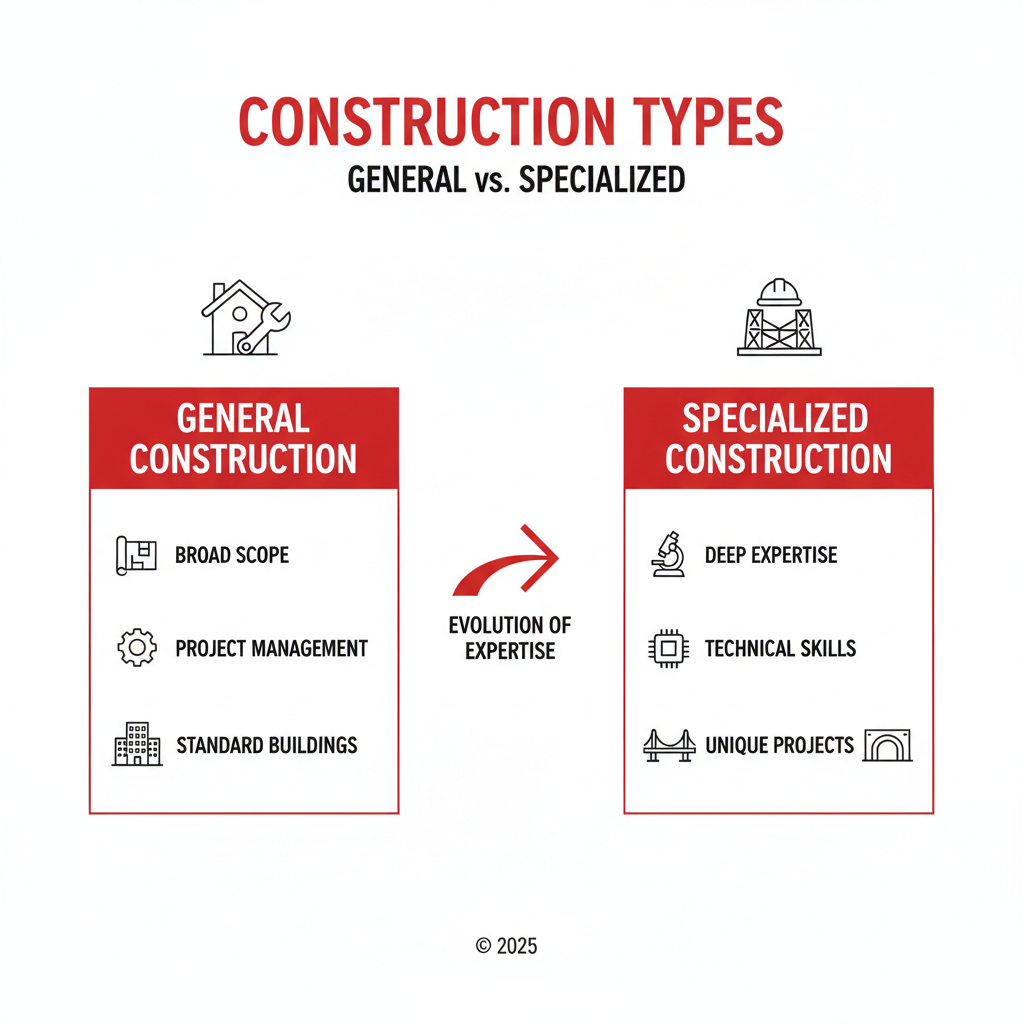
The Defining Characteristics of a Specialist
What truly sets a specialized construction firm apart? It’s more than just having a specific skill; it’s about a comprehensive approach to unique challenges:
- Deep Domain Knowledge: Specialists possess an encyclopedic understanding of their particular field, including materials, methods, engineering principles, and regulatory landscapes. This knowledge is often honed over decades of focused experience.
- Unique Equipment and Technology: Many specialized tasks require purpose-built machinery or advanced technological tools that are not typically found on a general construction site. From advanced tunneling equipment to precision laser-guided systems for complex installations, these tools are integral to their work.
- Custom Methodologies: Standard construction processes don’t always apply to specialized projects. Experts develop and refine custom methodologies to address unique site conditions, structural demands, or functional requirements.
- Problem-Solving Focus: Specialized projects often present unprecedented challenges. Specialists thrive on intricate problem-solving, leveraging their expertise to devise innovative and effective solutions where conventional approaches would fail.
- Higher Quality Standards: Due to the critical nature of their work, specialized contractors often adhere to exceptionally stringent quality control standards, ensuring the longevity, safety, and performance of the specialized components they construct.
When to Choose a Specialist Over a Generalist
The project’s inherent nature often drives the decision to engage a specialized contractor. While general contractors are indispensable for most building endeavors, there are clear scenarios where a specialist is not just preferred, but essential:
- Projects with Unique Materials or Systems: If your project involves unconventional materials (e.g., advanced composites, specialized alloys) or complex systems (e.g., cleanroom HVAC, high-security infrastructure), a specialist will have the necessary material science and system integration expertise.
- Complex Engineering Challenges: When a project pushes the boundaries of engineering – such as constructing a bridge with an unusual span, a structure in a seismic zone, or a foundation on unstable ground – specialized engineers and builders are critical.
- Strict Regulatory Environments: Industries such as pharmaceuticals, nuclear power, and specific government projects have exceptionally stringent regulatory and compliance requirements. Specialists in these fields are intimately familiar with these mandates, ensuring adherence and avoiding costly penalties.
- High-Risk Operations: Tasks involving hazardous materials, working at extreme heights or depths, or projects with significant environmental impact demand contractors with specialized safety protocols and experience in mitigating high-risk scenarios.
- Mission-Critical Facilities: For data centers, hospitals, power plants, or other facilities where downtime or failure is unacceptable, specialized contractors ensure the precision and reliability required for continuous operation.
Key Disciplines within Specialized Construction
The landscape of specialized construction is vast, encompassing a multitude of services custom to specific industries and unique project demands. These disciplines often require not only distinct skill sets but also specialized equipment, certifications, and a deep understanding of industry-specific regulations.

Commercial and Industrial Specializations
The commercial and industrial sectors are fertile ground for specialized construction, where efficiency, durability, and specific operational requirements drive project execution.
- Tenant Improvements (TIs): These projects involve customizing interior spaces for new tenants within existing commercial buildings. Specialists in TIs understand how to efficiently refresh old offices or create entirely new, functional spaces, often under tight deadlines and within operational buildings.
- Pre-Engineered Metal Buildings (PEMBs): A specialty for many firms, PEMBs offer a cost-effective and rapid solution for warehouses, manufacturing facilities, office additions, and garages. Specialized contractors excel at designing and erecting these structures, ensuring structural integrity and meeting specific client needs.
- Warehouse and Logistics Facilities: With the rise of e-commerce, the demand for sophisticated warehouses and distribution centers has grown. Specialists in this area focus on optimizing space, integrating automated systems, and building structures that support complex logistical operations.
- Manufacturing Facilities: These projects require precise planning and execution to accommodate heavy machinery, specialized ventilation, and utility infrastructure. Specialized firms design and build facilities that improve production efficiency and worker safety.
- Restaurant Construction: Building or renovating a restaurant involves unique considerations, from kitchen layouts and specialized ventilation to specific aesthetic and health code requirements. Companies offering comprehensive services, including architecture, design, and permitting, streamline this complex process for owners. For those seeking comprehensive restaurant specialized construction solutions, leading turnkey providers like Restaurant Headquarters offer an integrated approach that covers everything from ground-up builds to full fit-outs and remodels.
Infrastructure and Civil Projects
Infrastructure forms the backbone of our society, and its construction often falls squarely into the specialized category due to scale, complexity, and public safety implications.
- Roadway Construction and Asphalt Paving: Beyond laying asphalt, specialists in this field employ advanced techniques to ensure longevity and safety. Since 1998, many firms have provided reliable, high-quality asphalt paving and construction, often serving municipalities and commercial clients. These companies dedicate themselves to preserving roadways, utilizing methods like:
- Cold In-Place Asphalt Recycling: A sustainable rehabilitation technique where existing materials are recycled on-site without heat, reducing costs and environmental impact.
- Chip Sealing: A cost-effective maintenance method that extends pavement life and improves skid resistance, typically at a fraction of the cost of full overlays.
- Fog Sealing: Applied over chip seals to improve aggregate retention and provide additional water resistance.
- Mastic Surface Treatment: Used for improved pavement friction and durability, particularly in high-stress areas.
- Void Reducing Asphalt Membrane (VRAM): A specialized treatment that allows traffic access within minutes of placement, minimizing disruption.
- Pavement Planing: Controlled removal of existing pavement to restore surfaces to specified grades and cross-slopes.

- Tunneling: This is a highly specialized discipline that involves complex geological assessments, advanced excavation techniques, and robust structural support systems. Firms like Granite Construction are national leaders, having completed over $1 billion in tunnel projects in the last decade alone, showcasing their expertise in navigating subterranean challenges.
- Bridge Building and Temporary Structures: Constructing or repairing bridges often requires specialized temporary structures such as falsework, access trestles, and custom scaffolding. These temporary systems are critical for supporting construction activities and ensuring worker safety, with strict adherence to manuals like the Caltrans Temporary Structures Manual for design, review, and authorization.
- Water Management and Utilities: Projects involving water treatment plants, pipelines, and stormwater management utilities often require specialized construction due to the technical demands of fluid dynamics, material science, and environmental regulations.
Unique Residential and Niche Applications of specialized construction
While specialized construction is often associated with large-scale commercial or industrial projects, it also plays a crucial role in unique residential builds and highly specific niche markets.
- Custom Formwork: For architecturally complex concrete structures, custom formwork is essential. Firms like PERI specialize in designing and engineering tailor-made formwork systems to solve intricate construction challenges, integrating BIM for improved efficiency and collaboration.
- Historic Building Restoration: Preserving historical integrity while upgrading structures to modern safety and functionality standards requires highly specialized skills in traditional craftsmanship, material matching, and understanding historical construction techniques.
- Soundproof Studios and Specialized Labs: Creating environments with specific acoustic properties or stringent environmental controls (e.g., cleanrooms, bio-containment labs) demands specialized contractors with expertise in acoustics, filtration systems, and precise climate control.
- High-End Residential Projects: Luxury homes often feature unique architectural elements, advanced smart home systems, or custom installations that go beyond the scope of general residential builders. For instance, creating bespoke garage solutions, such as those provided by Las Vegas garage door specialized construction, can enhance the aesthetic and functionality of custom homes, catering to unique design visions and specialized needs.
The Strategic Advantages of Hiring a Specialist
Engaging a specialized construction firm is not merely a choice but often a strategic imperative for projects that demand precision, unique solutions, and stringent quality standards. The benefits extend far beyond the immediate construction phase, influencing project longevity, operational efficiency, and overall return on investment.
Best Expertise and Quality
The most compelling advantage of a specialist is their unparalleled expertise. These firms have often spent decades honing their craft, accumulating deep knowledge in their specific niche.
- Decades of Experience: With more than a century of expertise, some companies execute the most challenging and complex projects that push the boundaries of engineering and construction. This extensive experience translates into a profound understanding of potential pitfalls and proven solutions.
- Mastery of Specific Materials and Systems: Specialists possess an intimate knowledge of the materials and systems relevant to their field. They understand how different components interact, how they perform under various conditions, and the best practices for their installation and maintenance.
- Understanding of Complex Systems: Whether it’s the intricate mechanics of a tunneling operation or the precise environmental controls of a cleanroom, specialists grasp the holistic functionality of complex systems, ensuring seamless integration and optimal performance.
- Fewer Errors and Superior Final Product: This deep expertise inherently leads to fewer mistakes during construction. The precision and attention to detail result in a superior final product that meets or exceeds specifications, often with improved durability and functionality.
Improved Efficiency and Project Flow
While it might seem counterintuitive that a specialized approach could be more efficient, it often is, especially for complex projects.
- Design-Build Models: Many specialized firms operate on a design-build model, integrating design and construction under one roof. This streamlines communication, reduces conflicts between designers and builders, and accelerates project timelines.
- Streamlined Communication: Working with a single, highly competent team for a specialized component streamlines communication, enabling quicker decision-making and fewer misunderstandings.
- Faster Problem Resolution: When unexpected challenges arise, specialists can draw upon their extensive experience and technical knowledge to quickly diagnose issues and implement effective solutions, minimizing delays.
- Adherence to Timelines and Budgets: Their focused expertise enables more accurate project planning and execution, increasing the likelihood of on-time, budget-friendly delivery. This is often seen in companies that have rapidly grown their revenue by providing innovative, cost-effective processes.
- Reduced Rework: Getting it right the first time is a hallmark of specialized construction, significantly reducing the need for costly and time-consuming rework.
The Critical Role of Safety in Specialized Construction
Safety is paramount in all construction, but it takes on an even greater importance in specialized projects, which often involve higher risks and unique hazards.
- Advanced Safety Protocols: Specialized firms develop and implement rigorous safety protocols custom to their specific operations. This includes detailed hazard assessments, specialized personal protective equipment (PPE), and emergency response plans for unique scenarios.
- Cal/OSHA Compliance and Beyond: Adherence to regulatory bodies like Cal/OSHA is a minimum requirement. Specialists often go beyond compliance, adopting best practices that reflect an “Extreme Ownership” culture, where safety is not just a rule but the foundation of every decision.
- Hazard-Specific Training: Workers in specialized fields receive extensive training on the specific hazards associated with their tasks, such as working in confined spaces, at heights, with heavy machinery, or with hazardous materials.
- Reduced Liability: By carefully adhering to safety standards and employing highly trained personnel, specialized contractors significantly reduce the risk of accidents, injuries, and associated legal liabilities for all stakeholders. This commitment to safety, quality, and performance is often a core value for these companies.
The specialized construction sector is not static; it is constantly evolving, driven by technological advancements, rising sustainability demands, and innovative approaches to project delivery. Understanding these trends is key to successfully navigating future projects.
The Impact of Technology and Innovation
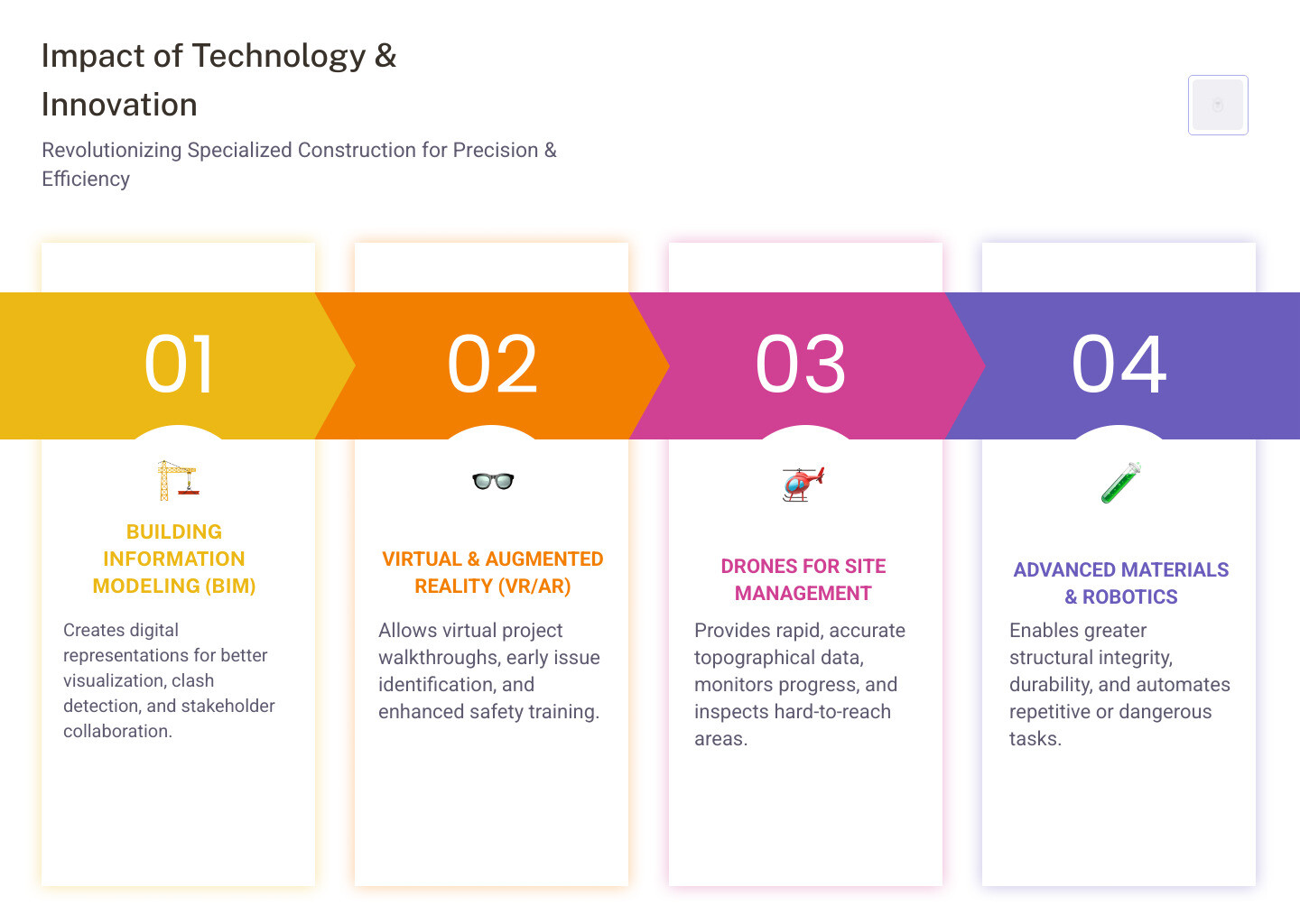
Technology is revolutionizing how specialized construction projects are conceived, managed, and executed, leading to greater precision, efficiency, and safety.
- Building Information Modeling (BIM): BIM is becoming indispensable for complex projects. It creates a digital representation of a facility, enabling better visualization, clash detection, and collaboration among all stakeholders from design to fabrication. Many firms now integrate BIM into their processes for improved project efficiency.
- Virtual and Augmented Reality (VR/AR): If you’re looking for an innovative way to streamline your next building project, consider VR or AR. VR/AR allows stakeholders to walk through a project virtually, identify potential issues before construction begins, and improve safety training. This technology offers a significant competitive edge and can attract new customers by providing immersive project experiences.
- Drones for Site Surveying and Monitoring: Drones provide rapid, accurate topographical data, monitor construction progress, and inspect hard-to-reach areas, improving safety and efficiency.
- Advanced Materials: The development of new materials, such as self-healing concrete, advanced composites, and smart materials, is enabling specialized construction to achieve greater structural integrity, durability, and performance.
- Robotics and Automation: Robotics are increasingly used for repetitive, dangerous, or highly precise tasks, from automated welding to bricklaying, enhancing safety and consistency.
The Process of Engaging a Specialized Firm
Engaging a specialized construction firm requires a structured approach to ensure the right partner is selected for your project’s unique demands.
- Initial Consultation and Needs Assessment: Begin with a detailed discussion of your project’s specific requirements, challenges, and objectives. Clearly articulate why your project requires specialized expertise.
- Scope Definition and Technical Requirements: Work with potential firms to define the precise scope of the specialized work. This involves detailing technical specifications, performance criteria, and any unique constraints.
- Vetting and Selection: Evaluate firms based on their proven track record, relevant experience, certifications, safety records, and technical capabilities. Request case studies and client testimonials that demonstrate their success with similar projects.
- Contract Negotiation: Specialized contracts often differ from general construction agreements. Ensure the contract clearly outlines the scope, deliverables, timelines, payment schedules, risk allocation, and performance guarantees specific to the specialized work.
- Project Execution and Management: Maintain open lines of communication throughout the project. Specialized firms often have dedicated project teams that work closely with clients to ensure seamless execution and timely problem resolution.
- Final Handover and Documentation: Upon completion, ensure comprehensive documentation is provided, including as-built drawings, operational manuals, maintenance schedules, and warranties for the specialized components.
Frequently Asked Questions about Specialized Construction
What types of projects absolutely require a specialized contractor?
Projects like cleanrooms, data centers, complex medical facilities (VAMCs), heavy industrial plants, and major infrastructure such as tunnels or long-span bridges require deep specialization due to their technical demands and low tolerance for error. These projects often involve unique engineering challenges, stringent regulatory compliance, and a need for precision that goes beyond the capabilities of a general contractor. For example, building a high-tech manufacturing facility with specific environmental controls demands a contractor with a deep understanding of HVAC systems, filtration, and process integration. Similarly, a historical restoration project needs specialists skilled in traditional craftsmanship and material preservation.
How does specialized construction affect project costs?
While a specialist’s hourly rate may be higher, their efficiency, accuracy, and ability to prevent costly mistakes often result in a lower total project cost and a higher return on investment, especially on complex projects. General contractors might face learning curves, require more oversight for specialized tasks, or even make errors that necessitate expensive rework. A specialist, by contrast, brings proven methodologies, purpose-built equipment, and a team that is intimately familiar with the nuances of the work. This expertise minimizes delays, reduces waste, and ensures the project is completed correctly the first time, ultimately saving money and time in the long run.
What is the single biggest benefit of using a specialized firm?
The primary benefit is risk mitigation. Specialists foresee problems that generalists might miss, ensuring the project is completed correctly, safely, and in compliance with all specific industry standards, saving time, money, and potential legal issues down the line. Their deep understanding of the particular challenges and regulatory landscape of their niche enables them to identify and proactively address potential risks before they escalate. This proactive approach not only protects the project’s budget and schedule but also safeguards the client from potential liabilities and operational failures. For high-stakes projects, this ability to minimize risk is invaluable.
Conclusion: Building with Precision and Purpose
In the intricate world of construction, not all projects are created equal. While general contractors remain the bedrock of the industry, the rise of complex, high-stakes endeavors has underscored the indispensable value of specialized construction. We’ve explored how these firms distinguish themselves through unparalleled expertise, unique methodologies, and a relentless focus on quality and safety.
From the precise demands of industrial facilities and critical infrastructure that connect our communities to the bespoke elements of unique residential projects, specialists bring a level of precision and purpose that generalists cannot match. Their strategic advantages—superior expertise, improved efficiency, and rigorous safety protocols—translate into projects that are not only completed successfully but also built to last, performing optimally for years to come.
As technology continues to advance and project complexities grow, the role of specialized construction will only become more pronounced. For any organization starting on a project that demands more than the ordinary, choosing a specialized firm is not an expense; it is an investment in success, ensuring that your vision is realized with the utmost precision and unwavering purpose.