
Why Expert Sports Flooring Installation Is As Crucial As the Material Itself
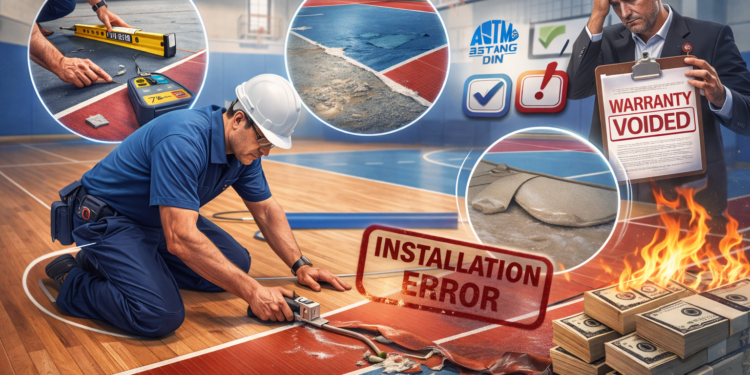
Facility managers spend significant time and capital selecting the perfect high-performance sports floor. They want the surface that will deliver the best athletic performance, but often overlook the single most critical factor determining its success—the installation. If you want to invest $100,000 in a specialized surface, are you willing to risk $100,000 on failure due to poor subfloor preparation or sloppy seam work? Of course, no!
A floor’s published performance ratings only hold up when the installation meets strict standards. If it doesn’t, even the best material on the market can’t do its job.
Table of Contents
- 1 How does improper installation compromise the safety features mandated by standards like ASTM or DIN?
- 2 What specific subfloor preparation steps do expert installers perform that general contractors often skip, leading to material failure?
- 3
- 4 How does cutting corners on installation potentially void the manufacturer’s warranty, even if the material itself is high quality?
- 5 What are the long-term cost implications of poor installation?
- 6 Why is expertise required for specialized systems like seamless polyurethane or suspended hardwood courts compared to standard commercial flooring?
- 7 Final thoughts
How does improper installation compromise the safety features mandated by standards like ASTM or DIN?
Sports floors must meet safety benchmarks, including the shock-absorption and energy-return ranges defined in ASTM and DIN standards. These measurements aren’t marketing fluff; they protect athletes from sports injuries.
However, errors in sports flooring installation can distort those safety features. When the slab isn’t flat, the underlayment can’t respond evenly. If the system is over-adhered or inconsistent in thickness, its shock absorption changes from one area to another.
A surface might pass lab tests but fail on-site because the system isn’t installed as engineered. That means compromised safety compliance, unpredictable ball response and a surface that feels “dead” or overly firm, where athletes need stability.
What specific subfloor preparation steps do expert installers perform that general contractors often skip, leading to material failure?
Every sports floor depends on its base. Experienced installers, like the sports flooring experts at Comflors, treat the subfloor of resilient or synthetic sport flooring systems as a structural component rather than an afterthought. They perform detailed moisture mitigation, check slab vapor emissions, test relative humidity and map flatness across the entire court. Additionally, they correct slopes, grind high spots and use precision leveling compounds where needed.
General contractors often skip or rush these steps, assuming the finish floor will “cover it.” It won’t. Moisture trapped beneath a synthetic surface can cause bubbling or adhesive failure. A slab that’s only slightly out of spec can lead to hollow spots in hardwood or improper bonding in poured polyurethane. These issues don’t show up immediately. They emerge once athletes begin using the floor.
How does cutting corners on installation potentially void the manufacturer’s warranty, even if the material itself is high quality?
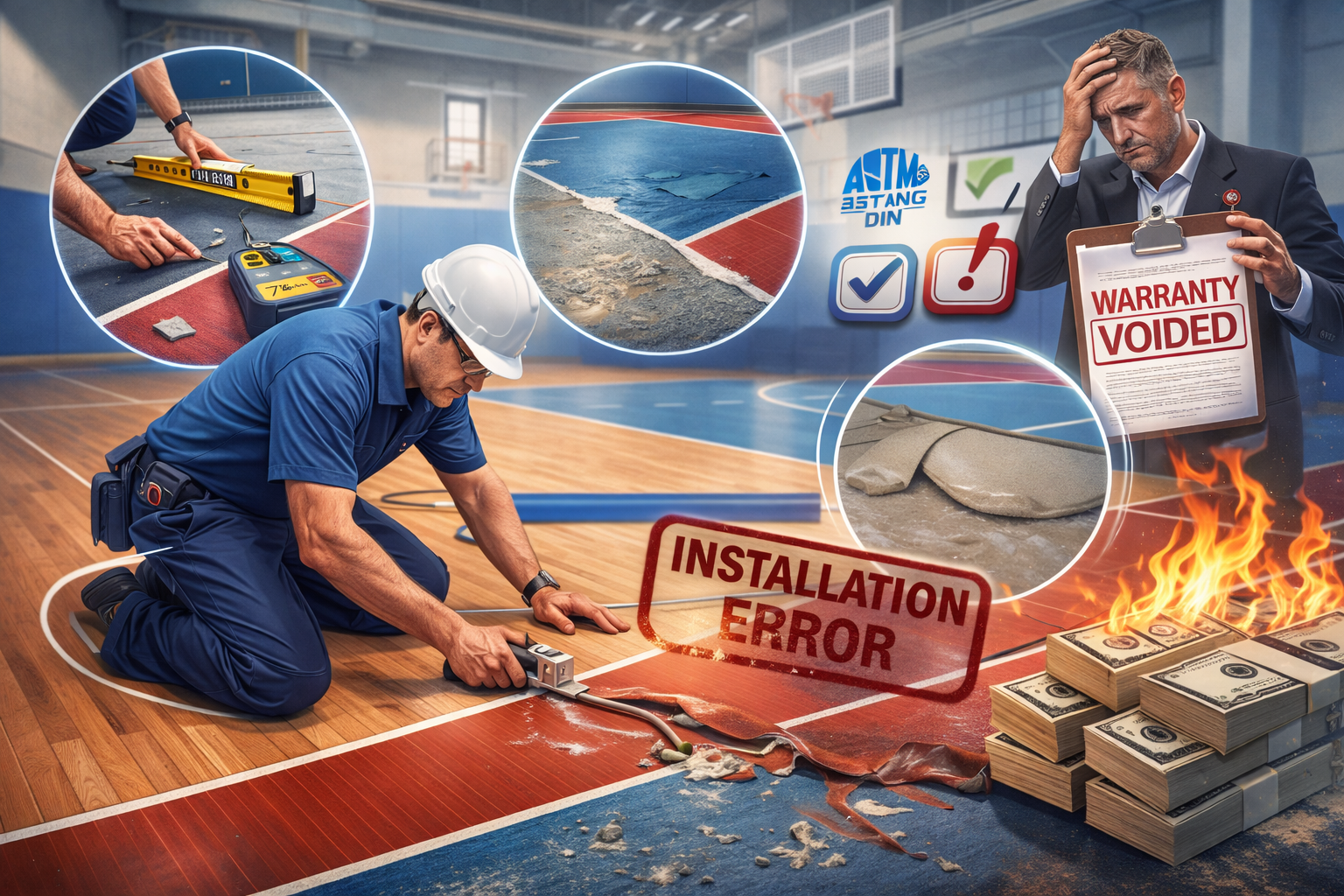
Manufacturers write their warranties on the assumption that the system will be installed by trained professionals following their procedures. They expect documented moisture readings, certified adhesives, correct acclimation time and proper finishing techniques to be followed to the letter. If installers skip these steps, warranty validation is at risk.
This isn’t theoretical. A flooring may be made from top-tier materials, but if the wrong trowel size is used or the slab isn’t tested for moisture, manufacturers can legally deny warranty claims. When a $100,000 court starts cupping, bubbling or separating, “installer error” becomes an expensive phrase.
What are the long-term cost implications of poor installation?
A flawed sports flooring installation doesn’t always fail right away. Instead, it becomes a slow drain on a facility’s budget. Premature wear, seam separation and surface irregularities lead to constant repairs and shorter replacement cycles.
Maintenance becomes harder because equipment snags on raised edges or finishes break down unevenly. Over the life of the facility, these issues can double or triple the total cost of ownership.
A properly installed system, by contrast, performs as designed for its expected lifespan. It delivers consistent traction, reliable shock absorption and predictable ball response without constant patching.
Why is expertise required for specialized systems like seamless polyurethane or suspended hardwood courts compared to standard commercial flooring?
A general flooring crew can’t install some sports floors. A seamless polyurethane surface requires precise mixing ratios, controlled curing conditions and expert trowel work. Suspended hardwood systems, on the other hand, rely on exact shock-pad placement, expansion planning and humidity management.
They aren’t the same as installing standard commercial flooring. These are engineered systems that must work as one unit, from slab to finish coat.
Only certified sports flooring specialists, like the sports flooring experts at Comflors, understand how each layer affects safety, performance and longevity. That expertise is what protects your investment.
Final thoughts
High-quality sports floor materials matter, but they don’t perform on their own. Expert sports flooring installation turns specifications into reality. It preserves safety compliance, protects athletes, extends the system’s life and safeguards your warranty validation.