

What is The Difference Between a Garden Tub vs Soaking Tub
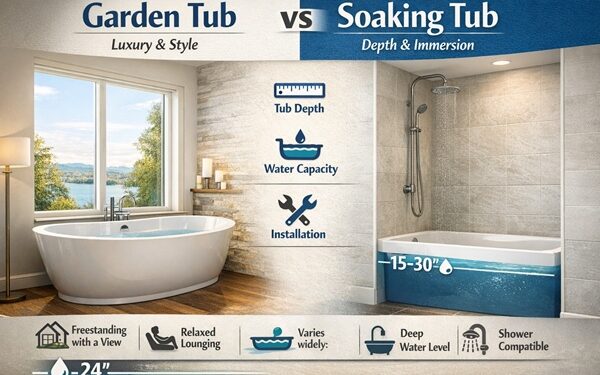
If you’ve been shopping for a new bathtub, you’ve probably noticed that the labels don’t always match what you’ll actually get once it’s installed and filled. This guide clears up the confusion by separating style and placement from true soaking performance, so you can tell when two “types” overlap and when they don’t. You’ll learn what to compare that actually affects comfort and cost, from tub depth and water capacity to installation requirements and whether a shower is realistic in your layout. With a simple space plus placement plus depth plus use-case framework, choosing between a garden tub vs soaking tub becomes a straightforward decision instead of a guessing game.

Table of Contents
- 1 Define the “garden tub vs soaking tub” terms (and why they overlap)
- 2 What is a garden tub?
- 3 What is a soaking tub?
- 4 Garden tub vs soaking tub size: dimensions, depth, and bathroom footprint
- 5 Installation requirements: freestanding vs drop-in vs alcove
- 6 Can you put a shower over a garden tub?
- 7 Comfort and bathing experience: recline vs upright immersion
- 8 Features and add-ons: jets, heaters, materials, and accessories
- 9 Costs: purchase, installation, and long-term operating expenses
- 10 Pros and cons: garden tub vs soaking tub
- 11 Garden tub vs soaking tub: which is better for your bathroom?
- 12 Pre-purchase checklist for a bathroom remodel (measurements + rough-in + constraints)
- 13 Build Better Tub Decisions
- 14 FAQs about garden tub vs soaking tub
- 14.1 What is the difference between a garden tub and a soaking tub?
- 14.2 What is the difference between a garden tub and a Jacuzzi tub?
- 14.3 What makes a tub a garden tub?
- 14.4 Can you use a regular bathtub in a garden?
- 14.5 Do garden tubs require special plumbing?
- 14.6 What are the disadvantages of a soaking tub?
- 14.7 Can a garden tub fit in a small bathroom?
Define the “garden tub vs soaking tub” terms (and why they overlap)
In most real-world bathroom remodel conversations, “garden tub” describes a style and placement concept, while “soaking tub” describes a performance spec, specifically, deeper immersion for a more therapeutic soak. That’s why many online comparisons create confusion: they treat garden tub vs soaking tub as opposites, when in practice the categories often overlap.
A garden tub is typically an oversized, comfort-forward tub that’s meant to be a focal point (often freestanding and frequently placed where you can “bathe with a view,” like near a window). A soaking tub can be freestanding, drop-in, or alcove. What makes it a soaking tub is the soaking depth and the ability to immerse more of your body, not the exterior style.
The clean way to think about the difference between garden tub and soaking tub is: garden tub = layout/aesthetic intent; soaking tub = immersion goal. Once you separate those, choosing the right tub becomes a practical decision about space, placement, depth, and how you actually bathe, which leads straight into whether a garden tub can “count” as a soaking tub in your remodel.
Is a garden tub considered a soaking tub?
Yes, a garden tub is often a type of soaking tub if it’s built to deliver meaningful immersion depth, not just a big footprint. Modernize puts it plainly: “A garden tub is a type of soaking tub… [typically] oval or curved-shaped to accommodate a reclined and relaxed body position,” while other soaking tubs may use more vertical sides for immersion in less space.
Use this quick “overlap test” when you’re stuck on labels:
- Depth test: Is the published soaking depth to overflow high enough for the immersion you want (mid-torso vs shoulders)? Keep in mind that two tubs can have the same “overall depth,” but the one with a higher overflow will give you a lower waterline.
- Posture test: Is it designed for reclined lounging (garden-tub feel) or upright immersion (common in space-saving soaking designs)? A reclined back can feel luxurious, but it can also reduce the effective waterline on your chest if your shoulders sit higher.
- Placement test: Is it meant to be a focal-point tub (often freestanding, sometimes near a window) or a practical bathing station that may need a shower and tight clearances? Your daily routine, kids’ baths, quick rinses, shaving legs, cleaning, matters here as much as “spa” vibes.
If it passes the depth test, it’s fair to say a garden tub can be a soaking tub, so the real decision in soaking tub vs garden tub is less about names and more about constraints and comfort, which the next section makes easy to scan.
Quick comparison: garden tub vs soaking tub differences at a glance
| Category | Garden tub | Soaking tub |
|---|---|---|
| Primary purpose | Luxury focal point + comfortable lounging | Deep immersion (performance) for therapeutic soaking |
| Typical shape | Often oval/curved with sloped back | Varies widely: oval, rectangular, square, triangular/corner |
| Typical tub depth | Often deeper than standard; commonly cited around ~24 in | Wide range: ~15–36+ in (model-dependent) |
| Water capacity (gallons) | Often higher than standard due to size | Can range widely; some models marketed up to ~250 gallons |
| Installation type | Commonly freestanding, sometimes drop-in | Freestanding, drop-in, or alcove |
| Shower compatibility | Often not designed for showers; possible but awkward | Frequently compatible (especially alcove tub formats) |
| Space needs | Larger footprint; requires clearance around a focal point | Flexible footprint; many compact options exist |
| Cost range (directional) | Replacement often cited ~$1,500–$6,800 | Cited range ~$3,610–$4,100 (varies by format/material) |
| Best for | Statement bath + view-focused relaxation | Deep soak in many layouts; practical remodel flexibility |
This table highlights why “garden tub vs soaking tub differences” aren’t a simple either/or. A garden tub can deliver soaking performance, but soaking tubs can also be designed to fit tight floorplans. That’s why it helps to define each type clearly before comparing sizes, plumbing, and installation requirements.
What is a garden tub?
A garden tub is an oversized bathtub associated with luxury master baths, often designed as a centerpiece rather than a utilitarian tub/shower combo. Many guides describe them as freestanding, oval-shaped tubs with slanted backs, built for reclined relaxation and commonly placed near a window.
Typical garden tubs also skew “spacious” in both exterior footprint and interior bathing posture, which is why they can feel more lounge-like than many compact soaking designs. As Giving Tree Home summarizes, “Garden tubs are suitable for those who want to enjoy the view while bathing,” reflecting how placement is part of the definition.
Because garden tubs are frequently chosen for impact and comfort geometry, the most helpful way to understand them is by the design cues you’ll see repeatedly, then by the real dimensions you should verify before you buy. Put differently, it’s not just “big tub,” it’s “big tub that changes how the bathroom is laid out.”
Garden tub design features (what you’ll typically see)
Garden tubs usually feature an oval or curved profile with at least one sloped back to support a reclined position. Many models emphasize a smooth rim and wide open bathing well, and if they’re installed as drop-in tubs, you may also see a wide deck that becomes part of the room’s “spa” look.
Aesthetically, they’re often treated like furniture: a statement piece with negative space around it, sometimes framed by a window or dramatic tile wall. In a primary suite, for example, homeowners may position a garden tub to face a landscaped yard or skyline view and add a floor-mounted tub filler to complete the “hotel bath” feel.
That focal-point approach affects everything from cleaning access to plumbing rough-in. It also changes lighting and privacy decisions (frosted window film, shades, or relocating the tub away from the glass), which is why dimensions and placement planning matter more than “standard size” assumptions.
Typical garden tub size and depth
Competitor benchmarks commonly cite garden tubs around 60 inches long, ~42 inches wide, and ~24 inches deep, though actual sizing varies significantly by manufacturer, shape, and installation type. Some sources also note garden tubs can offer full submersion in the 24–30 inch range compared with standard tubs around 14–20 inches, reinforcing why they’re associated with deeper, more luxurious bathing.
The key is to treat listed dimensions as directional, then confirm the interior basin size and soaking depth to overflow for the exact model. A 60-inch tub with thick walls and aggressive slopes can feel tighter than a shorter tub with straighter sides, especially for taller bathers.
Also consider surrounding clearance: even if the tub’s footprint fits, you may need comfortable walk-around space for cleaning, towel reach, and safe entry/exit. That brings us to the other side of the garden tub vs soaking tub comparison: tubs defined less by style and more by immersion performance.
What is a soaking tub?
A soaking tub is any bathtub designed for deeper immersion, prioritizing soaking depth and body coverage over being part of a tub/shower system or matching a single aesthetic. Unlike garden tubs, soaking tubs aren’t locked into one silhouette or installation: a soaking tub can be a freestanding tub, drop-in tub, or alcove tub as long as it delivers meaningful soak depth.
That versatility is why “soaking tub vs garden tub” is often the more practical shopping lens. You can chase the soaking experience without committing to a giant focal-point footprint, and you can often keep more of your existing bathroom layout intact.
The most important detail is not the marketing label, it’s how deep you can actually soak once the water hits the overflow. A tub that looks deep in photos can still soak shallow if the overflow is placed low, or if the interior geometry forces your body to sit high and out of the water.
How deep should a soaking tub be?
A practical target is “deep enough to immerse what you care about,” typically mid-torso for casual soaking and closer to shoulder level for a true spa-like soak, depending on your height and seating posture. Research summaries commonly describe soaking tubs spanning ~15–36+ inches in depth, with many popular models clustering around deeper-than-standard options (for example, 20-inch class models).
One reason buyers get disappointed is that published “depth” can mean different things. Overall tub depth (rim to bottom) is not the same as soaking depth (waterline to overflow). Two tubs can both claim “24 inches deep,” but the one with a lower overflow or a thicker rim may deliver noticeably less water depth.
When comparing models, look for the spec labeled soaking depth or water depth to overflow, and treat it as the number that predicts the experience. If a brand doesn’t publish it, ask for the spec sheet, because the overflow is where the bath experience is won or lost.
Soaking tub shapes that save space
Soaking tubs come in shapes designed to unlock immersion in tight bathrooms, something that’s often glossed over in basic “garden tub vs soaking tub size” articles. Beyond classic ovals, you’ll find rectangular and square options that maximize interior volume, plus triangular/corner designs that can fit where a long freestanding garden tub can’t.
These shapes can matter in real remodels. For example, a compact rectangular soaking tub with straighter sides can deliver a deeper waterline while preserving aisle space to the vanity, or it can fit between existing framing where moving walls isn’t an option.
If your layout is constrained by a toilet, vanity, or door swing, these shapes can deliver a deeper soak without turning the tub into the room’s entire floorplan. Next, it helps to compare the dimensions and footprint the way pros do, by separating exterior size from usable interior space and true soaking depth.
Garden tub vs soaking tub size: dimensions, depth, and bathroom footprint
When shoppers compare garden tub vs soaking tub, they often focus on length and miss the two measurements that control satisfaction: usable interior and soaking depth. A tub can be long but shallow (or long with aggressive slopes that reduce usable basin length), while a compact soaking tub can feel “bigger” in practice because its sides are more vertical.
For a bathroom remodel, start by mapping your available footprint. Measure the maximum tub rectangle you can fit while still maintaining clearance at the vanity, toilet, and door, and be honest about how the room is used day-to-day (kids, pets, mobility needs, cleaning).
Then compare models by interior specs, not just marketing categories. Soaking tubs can be corner-friendly and garden tubs can be surprisingly space-hungry once you account for circulation around a freestanding centerpiece. A tub that technically fits may still feel cramped if you’re constantly squeezing past it.
Tub depth vs soaking depth (the metric that matters)
Tub depth (rim-to-bottom) is easy to advertise, but soaking depth to overflow is what determines whether your shoulders stay warm. Overflow placement and interior wall angle can reduce usable water depth even in a “deep” tub, especially in designs that prioritize a reclining back.
To compare accurately, check three specs together: soaking depth, overflow height, and the interior back angle where your spine actually lands. That combination tells you whether you’ll get upright immersion (common in many soaking designs) or a lounge-style soak (common in garden tubs).
A practical tip: if you can, visit a showroom and sit in the display tub. Notice where your shoulders land relative to the rim and imagine the overflow line a few inches below it. That quick test often clarifies whether you want a reclined tub that feels like a chaise lounge, or a deeper upright tub that feels like a compact spa.
Water capacity (gallons), fill time, and hot-water supply
Water capacity is where the garden tub vs soaking tub differences become operational, not just aesthetic. Research summaries note some soaking-focused models marketed with capacities up to ~250 gallons, and garden tubs also tend to require more water than standard tubs due to their oversized basins.
Before committing to a high-capacity tub, sanity-check your hot water reality: water heater tank size (or tankless flow rate), recovery rate, and how long you’re willing to wait for fill and reheat. In many homes, a tub with a very large capacity can technically be filled, but not filled hot, especially if other fixtures are running or the heater is older.
Also consider fill time. A deep tub that takes a long time to fill can cool down before you even get in, and some homeowners end up using the tub less simply because it feels like a “project.” Matching tub volume to your plumbing and heater capacity is one of the most overlooked satisfaction factors.
Installation requirements: freestanding vs drop-in vs alcove
Installation style is a major driver of cost, feasibility, and how well the tub fits your daily routine. In the garden tub vs soaking tub decision, garden tubs are commonly associated with freestanding installs, while soaking tubs are available in freestanding, drop-in, and alcove formats, meaning soaking depth can be achieved with fewer remodeling surprises.
Think of installation as the constraint that turns a “dream tub” into a workable plan. Once you know whether you’re doing freestanding, drop-in, or alcove, you can predict plumbing rough-in changes, finish work, cleaning access, and whether a shower is realistic.
Freestanding tub installation (common for garden tubs)
Freestanding installs often require different plumbing rough-in planning than a typical alcove swap, particularly for the drain and supply placement. Depending on the model and filler type, you may need floor-mounted drain alignment and a freestanding tub filler positioned precisely for reach and splash control.
Freestanding tubs also demand more finish work because the floor and wall surfaces are fully visible around them. That can mean repairing or replacing flooring under the tub footprint, upgrading baseboards, and ensuring the wall finish looks intentional on all exposed sides.
Access for repairs must be planned rather than assumed. For example, if your filler is floor-mounted and the supply connections are below, you’ll want to understand how a plumber will service it later without damaging finished floors.
All of this is why garden-tub-style installations can push remodel complexity. For many homeowners, that leads directly into why drop-in installations remain popular for both categories.
Drop-in tub installation (common for both categories)
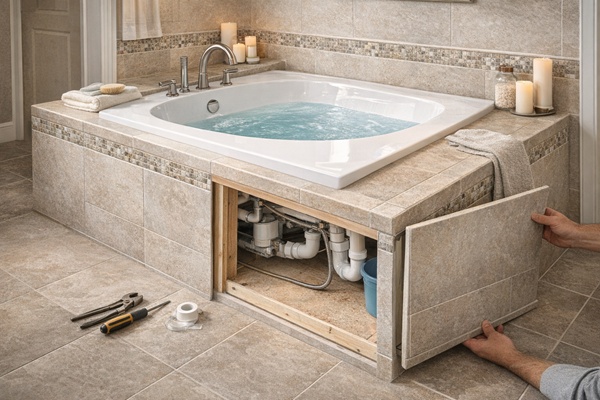
A drop-in tub sits in a framed deck, which means you’re also building (and waterproofing) the structure around it. That deck can make a large tub feel more integrated and can provide ledge space for accessories, but it adds framing, substrate, tile, and finish labor to the project.
Drop-in installs also require a plan for an access panel so plumbing can be serviced without tearing out tile later. In real remodels, this is where decisions like “Which side will be accessible?” matter, especially if the tub shares a wall with a closet, hallway, or vanity where a discreet panel can be placed.
If you want soaking performance without freestanding exposure, drop-in is often the middle ground. It can also be easier to pair with certain faucet styles (like deck-mount), as long as the deck is wide enough and properly waterproofed.
Alcove tub installation (common for soaking tubs in practical remodels)
An alcove tub fits between three walls, making it the most space-efficient option and the standard foundation for tub/shower combos. For remodels, alcove installs can be simpler when you’re matching existing rough-in locations and keeping the shower plumbing where it is.
Because soaking tubs are available in alcove designs, you can pursue deeper immersion without dedicating open floor space to a freestanding focal point. This is especially relevant in homes where one bathroom has to serve multiple functions, morning showers, kids’ baths, cleaning, and guest use.
Alcove tubs also pair naturally with standard surrounds and enclosures, which helps with spray containment and long-term waterproofing. That practical advantage becomes decisive for many homeowners once they ask the next common question: whether a shower can go over a garden tub.
Can you put a shower over a garden tub?
You can put a shower over a garden tub in some setups, but it’s often a compromise in comfort, waterproofing, and usability. The tub’s height and rim shape can make curtain/door solutions awkward, and spray containment can be tougher if the tub isn’t designed for a tight enclosure.
There are also layout and code realities. You may need a more robust waterproofing strategy, better ventilation planning, and a showerhead height that works with a taller tub wall, raising entry/exit concerns and making the shower feel less convenient for daily use.
Even if you can technically add a shower, ask whether you’ll like using it. If the tub wall is high, stepping in and out every day can feel like climbing into a basin. If you need a reliable tub/shower combo, an alcove soaking tub is usually the better path because it’s designed for three-wall wet-area integration, which leads into the comfort question: recline versus upright immersion.
Comfort and bathing experience: recline vs upright immersion
Comfort is where “garden tub vs soaking tub which is better” becomes personal. Do you want to recline and lounge, or do you want upright, deeper immersion that keeps more of your torso under warm water?
Garden tubs are often described as oval/curved with slanted backs, supporting a reclined posture that feels spa-like, especially in a view-oriented placement. Many homeowners love that “lean back and exhale” feeling, particularly for longer soaks.
Many soaking tubs use more vertical sides to maximize water depth and shoulder coverage in a smaller footprint. This can be ideal if your definition of relaxation is “get fully warm fast,” or if you prefer a posture that’s easier to get in and out of.
For taller bathers, pay attention to interior length at shoulder level and whether the back angle forces you to slide down. A tub can be deep, but if your hips slide forward, your shoulders may end up out of the water, making the soak feel less satisfying than the specs suggest.
Accessibility and safety considerations
Big tubs can be luxurious but less forgiving. Higher step-over heights increase slip risk, especially when paired with freestanding layouts where grab-bar placement is less straightforward and there’s no built-in wall on one side.
If accessibility is a priority, plan for textured flooring, properly anchored grab bars where they can actually be used, and a bathing posture that doesn’t require awkward lowering or twisting. Also consider a hand shower for rinsing and cleaning the tub, particularly for deeper models where leaning over the rim can be uncomfortable.
For some households, especially aging-in-place remodels, alternatives like walk-in tubs may be more appropriate than chasing maximum depth. If you’re staying with a traditional tub, features and materials can improve comfort and temperature stability without forcing a larger footprint.
Features and add-ons: jets, heaters, materials, and accessories
Both categories can be upgraded, but smart buyers prioritize add-ons that match their bathing style and tolerance for maintenance. If you soak frequently, ergonomic supports, heat-retaining materials, and well-placed controls often add more day-to-day value than flashy features that complicate cleaning.
Accessories like bath pillows, trays, and slip-resistant surfaces are simple wins. In a family bath, a handheld shower, a sturdy grab handle, and a ledge for toiletries can matter more than luxury options.
The bigger decisions are jets (maintenance and noise), heaters (whether they truly maintain temperature or just extend warmth), and material (weight and warmth). Those choices also feed back into installation requirements and long-term operating cost.
Can you add jets to a garden tub or soaking tub?
Yes, both garden tubs and soaking tubs can come as jetted tubs (water jets) or air tubs (air jets), depending on the model. The tradeoff is maintenance: jet systems can require more diligent cleaning, and some homeowners dislike the noise or the need to sanitize plumbing lines periodically.
In real life, this often comes down to how you’ll use the tub. If it’s a weekly ritual, jets may be worth it. If it’s occasional use, some owners find jets become “one more thing to maintain,” especially if bath oils or bubble products are used.
If your primary goal is relaxation, many buyers find that upgrading soaking depth and heat retention delivers more consistent satisfaction than adding jets. If you do choose jets, confirm access for servicing and understand the cleaning routine before you commit.
Materials and heat retention (2025–2026 buyer priorities)
Material affects durability, heat retention, weight, and feel, core factors in garden tub vs soaking tub pros and cons. Acrylic and fiberglass tend to be lighter and more budget-friendly, while heavier materials can retain heat better but may require more planning for floor load.
Recent buyer guides for 2025–2026 highlight renewed interest in durable, heat-retaining materials (for example, enameled cast iron) to improve warmth and long-term value. Many shoppers also prioritize surfaces that are easier to clean and resist dulling or scratching, since tubs are high-contact fixtures.
The heavier the tub and the more water it holds, the more important it becomes to plan weight and reinforcement. This is especially relevant for upstairs bathrooms or older homes where floor stiffness may already be marginal, topics that also show up in total cost.
Costs: purchase, installation, and long-term operating expenses
The real cost of a tub isn’t just the fixture, it’s installation complexity, plumbing moves, finish work, and what it costs to fill and keep warm over years of use. With garden tub vs soaking tub, freestanding placements and oversized footprints can increase labor and material costs even when the tub itself isn’t dramatically more expensive.
Long-term costs are often underestimated. High-capacity tubs can push you toward a water-heater upgrade, increase hot-water energy consumption, and raise water bills. If you take frequent baths, those operating costs become part of the decision, not an afterthought.
That’s why it’s smarter to treat price ranges as remodel signals rather than as a simple product comparison.
Garden tub vs soaking tub cost ranges (what drives the difference)
Competitor cost guidance often cites garden tub replacement around ~$1,500–$6,800 and soaking tub costs around ~$3,610–$4,100, but these ranges overlap and swing based on installation format and scope. A straightforward alcove soaking tub replacement can be cost-contained, while a freestanding garden tub with moved plumbing, new flooring, and finish carpentry can escalate quickly.
Key cost drivers include: tub material (and weight), plumbing rough-in changes, subfloor work, tile and waterproofing, and whether you’re rebuilding a wet area for a shower. Even choices like a wall-mount filler can add cost if the wall needs reinforcement, precise valve placement, and upgraded waterproofing.
Once you connect costs to water volume and heating demands, the “which is better” question often shifts from sticker price to operating reality, especially if your household is already close to the limits of your hot-water supply.
Water and energy use (do soaking tubs use more water than garden tubs?)
Sometimes, but not always. Water use depends on water capacity and how high you fill it, not whether it’s labeled “garden” or “soaking.” A compact soaking tub with vertical sides may use less water than an oversized garden tub, while a very deep soaking model (including some marketed near the high end of capacity) can use far more.
To estimate your gallons per bath, use the tub’s listed capacity as an upper bound and consider typical fill level (most people don’t fill to the rim). Also factor in bather displacement, water rises when you get in, so a “comfortable soak” can happen well below the stated maximum.
If sustainability matters, pairing fixtures across the bathroom with <a href=”https://www.epa.gov/watersense/bathroom-products” rel=”nofollow”>water-efficient bathroom fixtures</a> can help reduce overall household water demand. You can also look at practical habits: shorter soaks, slightly lower fill levels, and better heat retention to avoid adding more hot water mid-bath.
Pros and cons: garden tub vs soaking tub
The most useful pros/cons list is ordered by what homeowners regret later: hot-water limitations, space loss, cleaning access, and shower compatibility. When you evaluate garden tub vs soaking tub pros and cons, prioritize constraints first, then aesthetics, because the best-looking tub is a disappointment if it’s hard to use or can’t be filled hot enough.
Also remember the overlap: a garden tub can be a soaking tub if it’s deep enough. So you’re often choosing between a focal-point layout and a flexibility-first layout, not between “relaxing” and “not relaxing.”
Garden tub pros and cons
Pros: Garden tubs create a luxury focal point and are often engineered for lounging comfort, typically with curved profiles and sloped backs. Many are deep enough to support a strong soaking experience, and guides note potential comfort and therapy benefits from fuller submersion.
They can also elevate perceived value in a primary suite when the rest of the bathroom supports the look, good lighting, a well-placed tub filler, and enough clearance so the tub doesn’t feel jammed into a corner.
Cons: The footprint is larger, and freestanding installations can increase plumbing and finish complexity. Cleaning around and behind a freestanding tub can be annoying, especially if the tub is close to a wall but not close enough to reach easily.
The bigger basin may strain hot-water capacity and fill time, issues that matter even more if you’re remodeling an existing bathroom layout. And if you later decide you need a shower in that same spot, converting a focal-point tub area into a true wet zone can be costly.
Soaking tub pros and cons
Pros: Soaking tubs are defined by immersion, but they’re available in far more formats, alcove, drop-in, and freestanding, making them easier to fit in small and mid-size bathrooms. Their more vertical geometry can maximize soaking depth and shoulder coverage without requiring a massive footprint.
They also offer more planning flexibility. For example, a soaking tub can be selected specifically to match an existing drain location, or to keep a tub/shower setup intact while still upgrading the bathing experience.
Cons: Deep-soak models can increase water and energy use, and some households need hot-water upgrades to make the depth worthwhile. Depending on shape and interior angles, some soaking tubs trade lounging comfort for upright immersion, so back support and posture should be evaluated before purchase.
Another common con is expectation mismatch: a tub marketed as “soaking” may still feel shallow for taller users if the interior seat is high or the overflow is low. That’s why the spec sheet matters more than the label.
With the practical tradeoffs clear, the next step is choosing based on a simple framework that cuts through label confusion.
Garden tub vs soaking tub: which is better for your bathroom?
The best answer to garden tub vs soaking tub which is better comes from a four-part decision framework: space + placement + depth + use-case. Start with where the tub can realistically go, then decide how deep you want to soak, then match the format to how you’ll use the bath (relaxation-only vs daily hygiene vs tub/shower combo).
Persona-wise: if you want a statement piece and have room to spare, a garden-tub style can shine, especially if you love reclining soaks and want the tub to be part of the room’s design story. If you need immersion in a constrained plan, or you need a shower, prioritize the soaking-tub spec in alcove or compact formats.
This approach also helps if you’re comparing two tubs that look similar online. Ask: Which one fits my bathroom with fewer compromises, and which one will I realistically use the most?
Best for small bathrooms
In tight bathrooms, soaking tubs usually win because they come in compact, layout-friendly shapes and installations, especially alcove and compact freestanding options. A “garden tub” layout typically implies extra clearance around the tub and a focal-point placement, which is hard to achieve without sacrificing storage, walkway space, or code-comfort clearances.
If you’re deciding between removing a tub entirely or squeezing in the wrong kind, a space-efficient soaking tub is often the compromise that preserves immersion without overpowering the room. Many homeowners also find that keeping an alcove format preserves space for linen storage or a larger vanity, features that improve daily living more than a rarely used oversized tub.
Best for relaxation and spa-like bathing
For spa-like bathing, decide whether you relax more by reclining (garden-tub comfort geometry) or by upright, deeper immersion (many soaking designs). Giving Tree Home’s summary captures the split: garden tubs suit view-focused bathing, while soaking tubs can be better for deep relaxation and versatility depending on the layout.
A practical example: if you unwind with a book and like to stretch out, a lounge-style tub may feel best. If you want full warmth quickly, especially in colder climates, an upright soaking tub with a higher waterline may feel more “therapeutic” even if it’s smaller.
Add-ons should follow the same logic: prioritize ergonomic back support, heat retention, and a comfortable waterline first, then consider luxuries like heated surfaces or air jets if you’re willing to maintain them.
Best if you need a tub/shower combo
If you need a tub/shower combo, an alcove soaking tub is usually the practical winner because it integrates cleanly into a three-wall wet zone and supports straightforward waterproofing and enclosure solutions. You’ll typically have better spray containment, easier cleaning, and more predictable plumbing placement.
A garden tub with a shower can be done, but it often creates compromises in entry height, spray containment, and overall shower comfort. These compromises can show up quickly in daily use, especially for kids, older adults, or anyone who prefers a fast shower.
When resale and daily usability matter, the simplest combination is often: alcove soaking tub + properly planned surround + shower system that fits your household.
Pre-purchase checklist for a bathroom remodel (measurements + rough-in + constraints)
Before you buy any tub, garden or soaking, confirm the project constraints that trigger expensive change orders:
- Bathroom measurements: max length/width, clearance around tub edges, and comfortable walking paths
- Door swings and egress: ensure the tub doesn’t block door operation or pinch access to toilet/vanity
- Delivery path: stair turns, hall widths, and whether the tub fits through doors before walls are finished
- Subfloor condition: stiffness, levelness, moisture history, and whether repair is needed before install
- Plumbing rough-in locations: drain position, supply lines, venting, and whether relocation is feasible
- Soaking depth + overflow height: confirm the real waterline you’ll get, not just rim depth
- Faucet plan: deck-mount, wall-mount, or freestanding filler, and how that affects placement
- Access planning: access panel for drop-in systems and serviceability for valves and jet components
This checklist helps you avoid the common trap in what is the difference between a garden tub and a soaking tub searches: picking by label first, then discovering your house can’t support the install you envisioned.
Floor reinforcement and weight planning (often overlooked)
Total load includes tub weight + water weight + bather weight, and it rises quickly with deeper tubs and heavier materials. Garden tubs and high-capacity soaking tubs can sometimes require floor-load consideration, and some guides specifically flag potential floor reinforcement needs for oversized tubs.
If you’re installing upstairs, switching to a heavier material, or choosing a very deep model, it’s smart to consult a qualified contractor, and, when warranted, an engineer, to confirm the floor system can support the finished load without bounce or long-term deflection. This is especially important in older homes where joist sizing and spacing may not match modern expectations.
Compatibility notes most articles skip
A tub that “fits on paper” can still fail on compatibility details that affect final placement and remodel scope:
- Drain placement alignment: confirm whether the new tub’s drain location matches your existing rough-in or forces relocation. Even a small drain shift can mean opening the floor and adjusting framing.
- Freestanding filler reach: make sure the spout can reach the basin without awkward offset that causes splashing or poor ergonomics. Also confirm there’s space to stand comfortably while turning the water on and off.
- Deck-mount vs wall-mount faucets: drop-in tubs often pair naturally with deck-mount, while freestanding tubs may need a floor-mounted filler; wall-mount requires correct stud bay planning, valve depth accuracy, and careful waterproofing.
- Final tub position vs fixture clearances: verify the tub’s real-world placement still leaves comfortable clearance for toilets, vanities, towel bars, and cleaning access. This includes thinking about where wet towels hang and where bath products live.
Once these constraints are mapped, the garden tub vs soaking tub choice becomes straightforward: pick the placement style your bathroom can support, then choose the soaking depth and geometry that matches how you actually want to bathe.
Build Better Tub Decisions
The garden tub vs soaking tub choice gets a lot easier once you stop treating them as opposing categories. A garden tub is about presence, placement, and a lounge-style bathing posture, while a soaking tub is about achieving real immersion based on soaking depth to overflow. Many tubs check both boxes, so the smarter comparison is how the model fits your floorplan, your plumbing reality, and the way you like to soak.
Before you buy, prioritize the specs that shape day-to-day satisfaction: usable interior space, waterline depth, comfort angle, fill volume, and whether a shower needs to share the zone. Match those to an installation type your bathroom can support, then let style follow. From here, a great bath remodel is less about labels and more about choosing a tub you will genuinely use.
FAQs about garden tub vs soaking tub
What is the difference between a garden tub and a soaking tub?
Garden tubs are usually larger, often freestanding, and designed for a relaxed recline, while soaking tubs focus on deep-water immersion and can be freestanding or installed against a wall. The best choice depends on your space, installation setup, and whether you prioritize style or maximum depth.
What is the difference between a garden tub and a Jacuzzi tub?
A garden tub is typically a deep, oversized tub meant for soaking, while a Jacuzzi tub is a jetted whirlpool tub designed for water and air massage. Jacuzzi style tubs usually require electrical connections and more complex maintenance than non-jetted garden tubs.
What makes a tub a garden tub?
A garden tub is an oversized, deep bathtub that is commonly freestanding or set away from the wall and often oval or curved for a reclined position. It is built for long, comfortable soaks and typically takes more floor space and water than a standard tub.
Can you use a regular bathtub in a garden?
Yes, many people repurpose an old bathtub, especially a clawfoot tub, as a garden planter for deep-rooted plants. You will want drainage holes and a stable base so it does not hold stagnant water or tip.
Do garden tubs require special plumbing?
They often do, because the water supply lines and drain placement may need to be relocated for a freestanding or centered tub. It’s also important to confirm your floor can support the added weight of a larger, water-filled tub.
What are the disadvantages of a soaking tub?
Soaking tubs can use a lot of water, which may increase utility costs and require a larger water heater for truly deep baths. Depending on the model, they may also take up significant space and can be harder to get in and out of than standard tubs.
Can a garden tub fit in a small bathroom?
Sometimes, but most garden tubs need more floor space and clearance than standard alcove tubs, so layout matters. A compact soaking tub or a smaller freestanding model is often a better fit for tight bathrooms.