

The Role of Sand Hauling in Sustainable Construction
Sand remains an indispensable material for infrastructure projects, but rising concerns about its environmental impact have shifted the industry’s focus toward sustainability. As the demand for construction materials continues to grow, responsible sourcing and transportation of sand are crucial to minimizing harm to ecosystems and communities. Many are now looking to partner with a sand hauling company that implements eco-friendly solutions while meeting stringent project timelines and quality standards.
From roads and bridges to towering skyscrapers, almost every modern structure depends on sand as a foundational material. Yet the full impact of sand extraction and its long journey from source to site has prompted renewed scrutiny. Innovators in the construction and logistics industries are responding by developing solutions that reduce carbon emissions, preserve natural habitats, and manage resources more efficiently, supporting a shift to greener building practices for the future.
Sustainable construction is not just about the structures themselves but also about the supply chains and practices that support them. Efforts to improve sustainability in sand hauling include using recycled materials, renewable energy, and smarter logistics. To lead the way, providers like GFI Transport offer specialized solutions that help minimize environmental impact without sacrificing reliability or cost-efficiency.
The movement towards sustainable sand hauling isn’t limited to new technology. It also involves collaboration between regulators, contractors, communities, and environmental advocates to restore and protect environments affected by sand operations. The following sections delve into the critical role of sand in construction, its environmental challenges, and inspiring success stories that point the sector toward a more sustainable future.
Table of Contents
Importance of Sand in Construction
From the concrete that forms our highways to the mortar that binds our brickwork, sand is a cornerstone of the construction world. Its granular structure improves the strength and durability of essential materials, which is vital for the stability and longevity of infrastructure. Globally, rapid urbanization in countries like India and Africa has driven demand for sand to unprecedented levels, putting additional pressure on natural sources.
The sheer scale of construction today means the industry cannot ignore the growing challenge of responsible sand sourcing and hauling. Projects, large and small, depend on reliable supply chains to ensure sand is delivered efficiently, with minimal loss and environmental risk. That is why forward-thinking contractors prioritize sustainability at every stage of sourcing, moving, and applying this essential resource.
Environmental Impact of Sand Extraction
Sand extraction, especially from riverbeds, lakes, and coastlines, threatens aquatic habitats and leads to severe erosion. Over-extraction can cripple local biodiversity, destroy wetlands, and increase flood risks, leaving downstream communities vulnerable. Additionally, the carbon footprint associated with the long-distance transportation of sand further compounds the environmental toll, making the sustainable management of both extraction and delivery a pressing concern.
The global sand crisis is now recognized as a significant ecological and economic threat, demanding innovative mitigation strategies. Balancing infrastructure growth with environmental stewardship is a challenge that all stakeholders must take seriously, from suppliers to regulators to consumers.
Sustainable Sand Sourcing Methods
To address these pressing challenges, the industry is increasing its adoption of the following methods:
- Recycled Materials: Incorporating repurposed materials such as foundry sand, crushed glass, and processed excavated soil into construction mixes can reduce the need for raw sand and cut landfill waste. Innovations in recycling processes ensure these alternatives meet the structural needs of modern building projects.
- Manufactured Sand: Produced from crushed rock or industrial byproducts, manufactured sand offers a consistent, high-quality solution that reduces dependence on natural sources, helping to conserve delicate river and coastal habitats.
- Carbon-Negative Technologies: New building materials that lock in atmospheric carbon during production are emerging as smart sand substitutes, offering both environmental benefits and engineering performance.
Eco-Friendly Transportation Practices
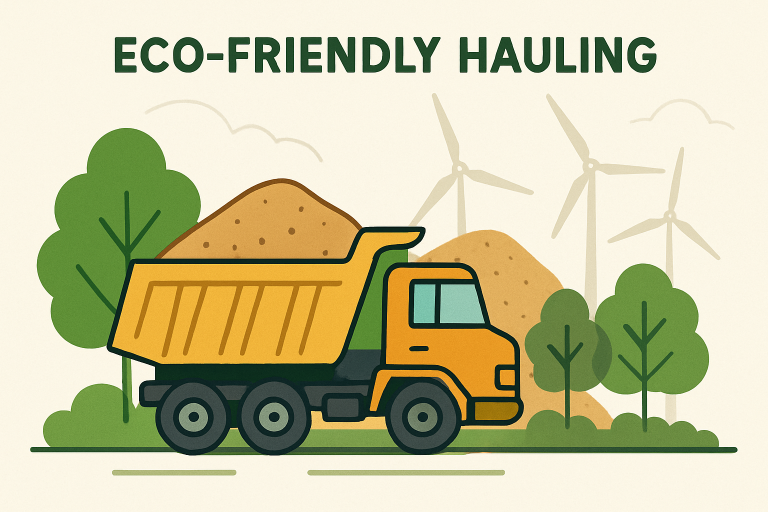
Hauling sand sustainably requires comprehensive solutions from cleaner truck fleets and hybrid barges to data-driven route optimization. Leading sand-hauling providers embrace GPS tracking and advanced logistics technology, significantly reducing fuel use and greenhouse gas emissions along delivery routes. Some companies are already piloting battery-powered vehicles for on-site loading and unloading, further reducing pollution at critical hubs.
Conserving water is another priority: water-recycling systems integrated into sand-washing operations help slash total consumption and reduce the discharge of sediment-laden wastewater into ecosystems. These technologies are essential, especially in regions where water scarcity and pollution are growing threats.
Case Studies in Sustainable Sand Hauling
- Recycling Concrete Mud in France: French concrete producers have developed a method to recover sand and gravel from concrete washout, separating useful components from waste and returning valuable aggregates to the building pipeline. Studies show the process can replace up to 90% of virgin sand in select products, reducing the burden on natural resources.
- Utilizing Mine Tailings in China: Chinese innovators are transforming mining waste into high-grade sand suitable for concrete and mortar. It not only addresses the environmental hazard posed by tailings piles but also provides reliable material for ongoing infrastructure booms, exemplifying a circular economy approach.
Future Trends in Sustainable Sand Hauling
- Alternative Materials: The adoption of carbon-negative binders, crushed glass, and engineered sand is set to expand as contractors and suppliers seek to satisfy both regulatory requirements and sustainability goals.
- Smarter Transportation: Expect continued growth in electric vehicle use and improved route software to further drive down logistics emissions.
- Regulatory Momentum: Governments are tightening regulations and investing in R&D partnerships to accelerate the construction industry’s shift toward more environmentally friendly sand-hauling and sourcing practices.
Conclusion
Sand hauling is at the heart of modern construction, and the industry’s shift toward sustainability is not just a trend but an imperative. Embracing recycled materials, advanced logistics, and innovative alternatives, alongside robust regulatory oversight, is essential for protecting natural environments while building the infrastructure communities need to thrive. By seeking out partners and providers committed to sustainable practices, the sector can collectively ensure a greener future for generations to come.