
The Critical Role of High-Performance Seals in Aerospace and Industrial Applications
Table of Contents
- 1 Environmental Challenges: Why Standard Seals Fail in Extreme Conditions
- 2 Material Selection for High-Performance Sealing
- 2.1 Key Material Types Best Suited for High-Temperature O-Ring Applications
- 2.2 Material Type Temperature Range (Typical) Chemical Resistance Pros Cons FFKM -51°F to 620°F (-46°C to 327°C) up to 650°F (343°C) for high-temp compounds Nearly universal, excellent against aggressive acids, bases, solvents, steam Highest temp resistance, broadest chemical compatibility, low compression set, extreme purity grades available Very high cost, limited flexibility at room temp for some grades FKM (Viton®) -15°F to 400°F (-26°C to 204°C) Excellent against oils, fuels, many solvents, good acid/base resistance Good balance of temp and chemical resistance, widely available, moderate cost Limited resistance to ketones, hot water/steam, some amines Silicone (VMQ) -120°F to 450°F (-84°C to 232°C) up to 500°F (260°C) for high-temp compounds Excellent ozone/UV/weathering, good hot air, some oils Wide temperature range (low and high), good flexibility, physiologically inert Poor abrasion/tear resistance, high gas permeability, limited chemical resistance (fuels, oils, acids) PTFE -300°F to 482°F (-184°C to 250°C) up to 500°F (260°C) for high-temp compounds Nearly universal, inert to almost all chemicals Extremely wide temp range, universal chemical inertness, very low friction Rigid (non-elastomeric), poor compression set (requires spring energizers), cold flow Perfluoroelastomers (FFKM) for Ultimate Performance
- 2.3 Fluorocarbons (FKM) and Silicones (VMQ)
- 2.4 Polytetrafluoroethylene (PTFE) and Other Polymers
- 3 Key Considerations for Effective Industrial Sealing Solutions
- 4 Frequently Asked Questions about High-Performance Seals
- 5 Conclusion: Ensuring Reliability Through Advanced Sealing
Environmental Challenges: Why Standard Seals Fail in Extreme Conditions
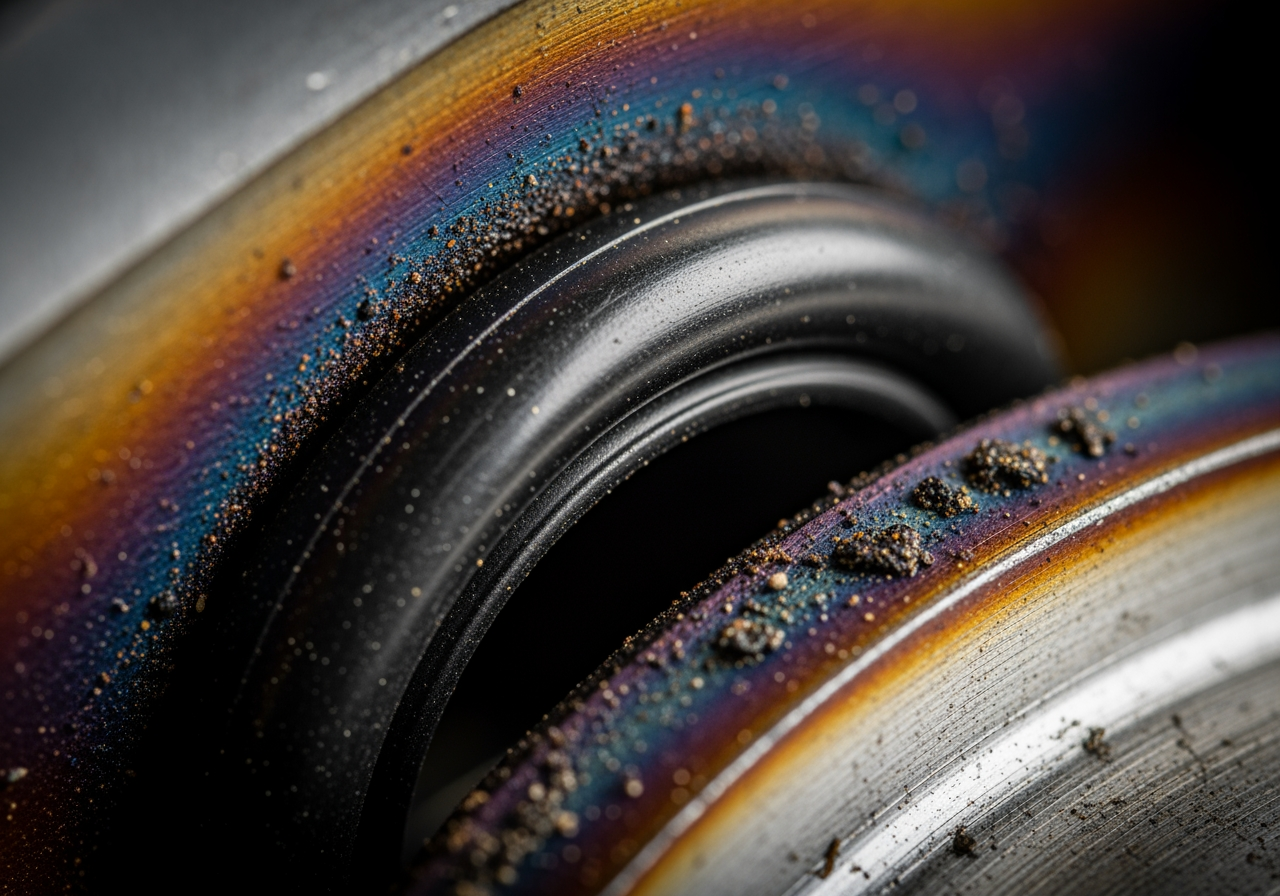 In aerospace and industrial applications, machinery works under intense conditions. Components are exposed to extreme heat, pressure, and harsh chemicals daily. Here, a small component, the O-ring, plays a critical role. These tiny seals are essential for keeping complex systems running safely and efficiently. Without them, leaks can happen. This can lead to costly downtime or dangerous failures.
This extensive guide explores the unique challenges O-rings face in high-temperature environments. It will explain how heat affects these materials. We will examine advanced materials designed to withstand such conditions. Readers will learn how to select the correct O-ring for critical applications. The guide will also cover the risks of choosing the wrong material. Understanding these specialized seals is vital for ensuring long-term system reliability.
The seemingly simple O-ring seal faces a gauntlet of environmental challenges in high-performance applications. When operating temperatures soar, standard O-rings, typically made from conventional elastomers, quickly reach their limits. The primary challenges associated with using O-rings in high-temperature applications include:
- Material Degradation: Heat is one of the most destructive forces in compound deterioration for elastomers. Prolonged exposure to liftd temperatures can cause the O-ring material to break down chemically and physically.
- Loss of Mechanical Properties: High temperatures can significantly reduce an O-ring’s elasticity, hardness, and tensile strength, all of which are crucial for maintaining a tight seal.
- Compression Set: Elastomers can lose their ability to return to their original shape after compression, resulting in permanent deformation known as compression set. This is a leading cause of seal failure in hot environments.
- Thermal Expansion and Contraction: Materials expand when heated and contract when cooled. Uneven or excessive thermal expansion of the O-ring relative to its housing can alter contact pressure, leading to leaks or extrusion.
- Chemical Attack: The aggressiveness of chemical media often increases with temperature. An O-ring that is chemically compatible at room temperature might quickly degrade when the temperature rises, leading to swelling, shrinking, hardening, or softening.
- Pressure Extremes: High temperatures often coincide with high pressures. The combination can exacerbate extrusion and lead to rapid gas decompression (RGD) in certain applications, causing blistering and internal damage to the O-ring.
- Thermal Cycling: Repeated heating and cooling cycles can accelerate material fatigue and lead to premature failure due to continuous stress on the material.

The Impact of High Temperatures on Elastomers
A significant increase in temperature profoundly affects the material properties and performance of O-rings. Elastomers, by their nature, are rubber-like polymers known for their elasticity. However, their performance is highly temperature-dependent.
At higher temperatures, several detrimental effects can occur:
- Hardening and Embrittlement: Many elastomers, when exposed to temperatures above their maximum rating, undergo chemical changes that harden them and reduce flexibility. This embrittlement prevents the O-ring from conforming to the sealing surface, leading to leaks.
- Compression Set: As noted, this is a critical failure mode. When an O-ring is compressed in a gland and then subjected to high heat, the polymer chains can rearrange and “set” in the compressed state. When the heat is removed or the pressure fluctuates, the O-ring no longer exerts sufficient sealing force, leading to leaks. Softening of elastomers at higher temperatures can also make them more prone to permanent deformation.
- Loss of Elasticity: The ability of an O-ring to rebound and maintain sealing contact is directly related to its elasticity. High temperatures can degrade the polymer structure, leading to a permanent loss of this crucial property.
- Thermal Expansion: All materials expand when heated. If the O-ring material expands significantly more than the housing material, it can lead to excessive compression, causing extrusion or damaging the O-ring. Conversely, if it expands less or if the system cools rapidly, a gap can form, leading to leaks. Unequal thermal expansion can significantly affect contact pressure and seal integrity.
- Accelerated Chemical Reactions: The rate of chemical reactions generally doubles for every 10°C increase in temperature. This means that an O-ring exposed to a chemical that it can resist at room temperature might rapidly degrade when the temperature is raised.
Exceeding temperature limits can lead to accelerated wear, loss of elasticity, and ultimately, seal failure. A high-temperature O-ring consists of material that can function effectively at liftd temperatures, typically defined as 150°C (302°F) or more. This necessitates careful material selection to ensure optimal performance and longevity. For a deeper dive into the fundamental principles of these crucial components, readers can refer to resources on Understanding O-Rings.
Chemical and Pressure Extremes
Beyond temperature, O-rings in high-performance applications must also contend with aggressive chemical environments and extreme pressures.
- Chemical Resistance: Many industrial and aerospace processes involve exposure to harsh chemicals, including aggressive solvents, corrosive gases, acids, bases, and fuels. The chemical compatibility of an O-ring material is paramount. High temperatures can accelerate chemical degradation, making a material that is resistant at ambient temperatures susceptible to attack at liftd temperatures. This can result in swelling (fluid absorption), shrinking (plasticizer extraction), or complete dissolution of the O-ring.
- Explosive Decompression (ED): In high-pressure gas applications, if the external pressure rapidly drops, gas absorbed into the O-ring material can expand explosively, causing blisters, cracks, and internal ruptures. This phenomenon is particularly prevalent in the oil and gas industry. Materials with good gas impermeability and specific formulations are required to resist ED, especially at high temperatures.
- Dynamic vs. Static Loads: The type of sealing application (static or dynamic) also influences material choice. Dynamic seals, which involve movement between sealing surfaces, generate friction and heat, further complicating material selection in already hot environments. Materials for dynamic high-temperature applications require excellent abrasion resistance and low friction properties in addition to thermal stability.
Understanding these combined environmental stressors is crucial for selecting an O-ring that can reliably perform under the most demanding conditions. For a comprehensive overview of general O-ring characteristics and selection, visit O-Rings.
Material Selection for High-Performance Sealing
Selecting the appropriate O-ring material for high-temperature applications is a critical engineering decision. It requires a deep understanding of material science, application-specific demands, and the performance characteristics of various elastomers and polymers. The goal is to choose a material that maintains its sealing integrity, mechanical properties, and chemical resistance throughout its operational lifespan.
Key Material Types Best Suited for High-Temperature O-Ring Applications
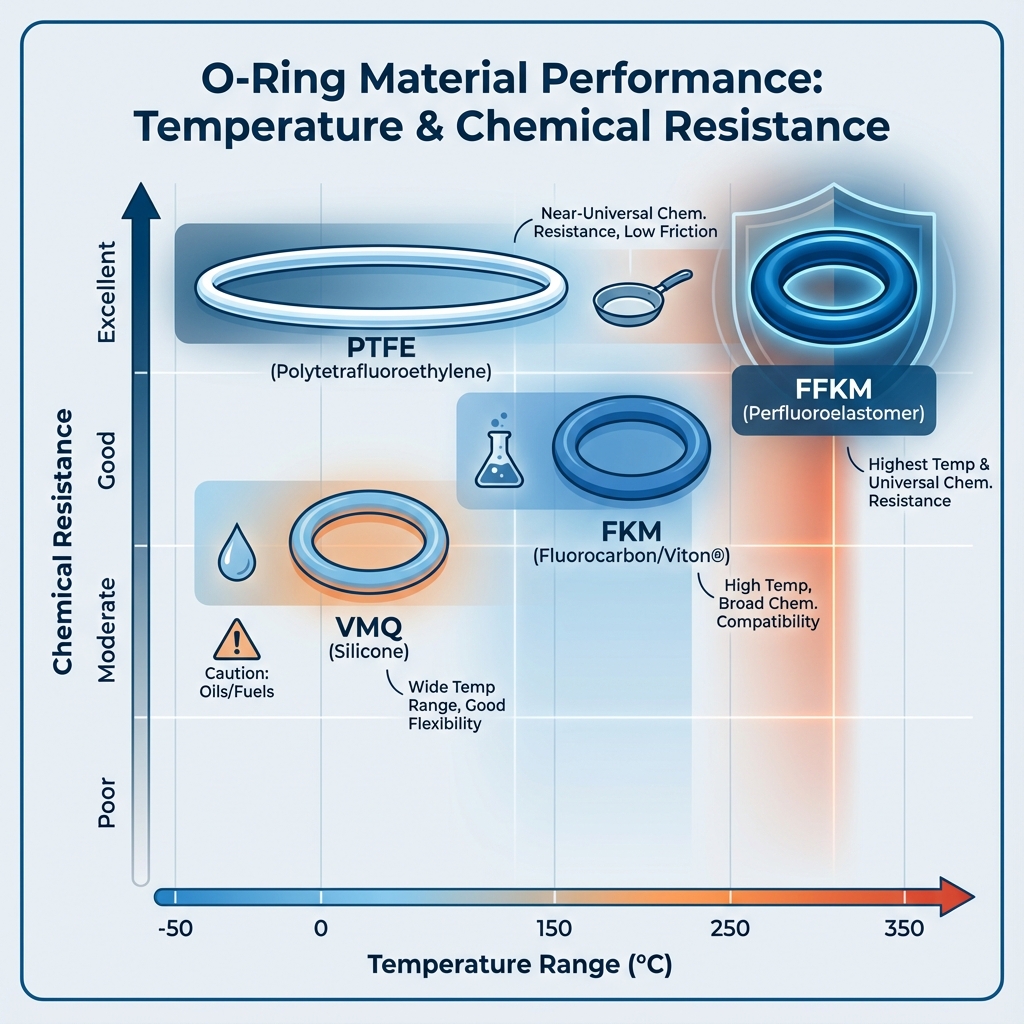
Several advanced materials are specifically engineered to excel in high-temperature environments. These include Perfluoroelastomers (FFKM), Fluorocarbons (FKM/Viton®), Silicones (VMQ), and Polytetrafluoroethylene (PTFE). Each offers a unique balance of temperature resistance, chemical compatibility, and mechanical properties.
Here’s a comparison of these key materials:
Material Type Temperature Range (Typical) Chemical Resistance Pros Cons FFKM -51°F to 620°F (-46°C to 327°C) up to 650°F (343°C) for high-temp compounds Nearly universal, excellent against aggressive acids, bases, solvents, steam Highest temp resistance, broadest chemical compatibility, low compression set, extreme purity grades available Very high cost, limited flexibility at room temp for some grades FKM (Viton®) -15°F to 400°F (-26°C to 204°C) Excellent against oils, fuels, many solvents, good acid/base resistance Good balance of temp and chemical resistance, widely available, moderate cost Limited resistance to ketones, hot water/steam, some amines Silicone (VMQ) -120°F to 450°F (-84°C to 232°C) up to 500°F (260°C) for high-temp compounds Excellent ozone/UV/weathering, good hot air, some oils Wide temperature range (low and high), good flexibility, physiologically inert Poor abrasion/tear resistance, high gas permeability, limited chemical resistance (fuels, oils, acids) PTFE -300°F to 482°F (-184°C to 250°C) up to 500°F (260°C) for high-temp compounds Nearly universal, inert to almost all chemicals Extremely wide temp range, universal chemical inertness, very low friction Rigid (non-elastomeric), poor compression set (requires spring energizers), cold flow Perfluoroelastomers (FFKM) for Ultimate Performance
Perfluoroelastomers (FFKM) represent the pinnacle of elastomer technology for extreme environments. They offer the best high-temperature performance of all elastomeric sealing materials, with standard ranges up to 550°F (287°C) and high-temp compounds reaching up to 650°F (343°C). Some proprietary FFKM compounds, like Markez® FFKM, offer temperature resistance up to 625°F (329°C), with specific compounds like Z1028 reaching 610°F (320°C). Other advanced FFKM materials, such as Perlast® perfluoroelastomers, can withstand operating temperatures up to 350°C (662°F).
FFKM compounds also provide the most resistance to chemicals and high temperature among elastomers, making them almost universally chemically compatible, similar to PTFE. This makes them indispensable in industries such as:
- Semiconductor Manufacturing: Where seals are exposed to extreme heat, aggressive plasma, and corrosive chemicals.
- Chemical Processing: For valves, pumps, and reactors handling highly reactive and corrosive media.
- Oil and Gas: In downhole tools and wellhead equipment, where high temperatures, pressures, and aggressive hydrocarbons are present.
- Aerospace: For critical seals in jet engines and other high-temperature systems.
The primary drawback of FFKM is its high cost, which is significantly higher than that of other elastomers. However, their extended service life and reduced downtime often justify the initial investment, resulting in lower total cost of ownership in critical applications. For more detailed information on specific compounds and their applications, exploring Engineered Compounds can provide valuable insights.
Fluorocarbons (FKM) and Silicones (VMQ)
Fluorocarbons (FKM), often known by the trade name Viton®, are highly versatile elastomers offering excellent temperature and chemical resistance. FKM O-rings are suitable for temperatures ranging from -26°C to 204°C (-15°F to 400°F). Fluorocarbon (FKM, VITON®) compounds can withstand temperatures up to 400°F (204°C). They exhibit strong resistance to many common oils, fuels, lubricants, and solvents, as well as good resistance to acids and bases. This makes them a popular choice in:
- Automotive: For fuel systems, engine seals, and transmission components.
- Aerospace: In hydraulic systems and fuel lines.
- General Industrial: For seals exposed to petroleum-based fluids and moderate temperatures.
While FKM offers a good balance, it has limitations with certain chemicals, such as ketones, hot water, and some types of amines, as well as with steam.
Silicone (VMQ) compounds are renowned for their wide temperature range and excellent flexibility. Silicone offers good flexibility and resistance and can withstand a wide range of temperatures, from -84 to 232°C (-120°F -450°F). Silicone (VMQ) compounds can withstand temperatures up to 400°F (204°C), with high-temp compounds reaching 500°F (260°C). They are particularly resistant to ozone, UV radiation, and weathering, making them ideal for outdoor applications. Key applications include:
- Medical Devices: Due to their biocompatibility and ability to withstand sterilization cycles.
- Food and Beverage: For seals in processing equipment due to their inertness.
- Static High-Temperature Seals: Where flexibility and resistance to extreme temperatures are paramount.
However, silicone has poor abrasion and tear resistance, making it generally unsuitable for dynamic sealing applications. It also exhibits high gas permeability and limited resistance to concentrated solvents, oils, and fuels.
Polytetrafluoroethylene (PTFE) and Other Polymers
Polytetrafluoroethylene (PTFE), commonly known as Teflon®, is a high-molecular-weight polymer celebrated for its nearly universal chemical inertness and extremely wide temperature range. O-rings made from PTFE can withstand temperatures up to 250°C (482°F), with high-temp compounds reaching 500°F (260°C). PTFE is chemically inert with nearly universal chemical compatibility, making it useful for applications where other materials fail.
Unlike elastomers, PTFE is a rigid thermoplastic, not an elastomer. This means it lacks the inherent elasticity required for traditional O-ring sealing. Therefore, PTFE O-rings are often used in conjunction with spring energizers (spring-energized seals) to provide the necessary sealing force, or as backup rings to prevent extrusion of softer elastomers. Its low-friction properties are also advantageous in certain dynamic applications.
Other advanced high-temperature elastomers include:
- Tetrafluoroethylene-Propylene (TFE, AFLAS®): These compounds can withstand temperatures up to 450°F (232°C) and offer excellent resistance to steam, strong bases, and petroleum products.
- Fluorosilicone (FMQ, FVMQ): Combining properties of both fluorocarbons and silicones, these compounds can withstand temperatures up to 400°F (204°C) and offer good fuel and oil resistance, alongside a wide operational temperature range.
The choice between these advanced materials depends on the specific combination of temperature, chemical exposure, pressure, and mechanical demands of the application. For a detailed comparison of various O-ring materials, an O-Rings Chart can be an invaluable tool.
Key Considerations for Effective Industrial Sealing Solutions
Selecting the appropriate high-temperature O-ring material for a specific application goes beyond the maximum temperature rating. A holistic approach that considers the entire operating environment and system design is essential for long-lasting success.
Understanding Critical Performance Metrics
Several factors should be considered when selecting the appropriate high-temperature O-ring material:
- Operating Temperature Range: This is the most obvious factor. Determine both the continuous operating temperature and any potential peak or transient temperatures. Maximum temperature recommendations are typically based on long-term functional service, aiming for reliable performance for 1,000 hours if continuously subjected to that temperature. Some high-temperature elastomers can perform reliably above 240°C, with certain materials pushing well beyond 300°C.
- Chemical Compatibility: Identify all fluids and gases the O-ring will contact, including process media, cleaning agents, and lubricants. The high-temperature limit for many compounds varies depending on the medium they are sealing.
- System Pressure: High pressure can cause O-rings to extrude into gaps, especially at lifter temperatures where materials may soften.
- Static vs. Dynamic Application: Dynamic seals (e.g., reciprocating or rotary motion) require materials with good abrasion resistance and low friction, while static seals prioritize compression set resistance and chemical inertness.
- Compression Set Resistance: This is paramount for high-temperature seals. A material with poor compression set resistance will quickly lose its sealing force. High temperatures can alter material properties, promote compression sets, impact chemical compatibility, and induce uneven thermal expansion in O-rings.
- Thermal Expansion Coefficient: The material’s thermal expansion should be compatible with the housing material to maintain a consistent sealing force across temperature fluctuations.
- Material Hardness (Durometer): Softer materials conform better to irregular surfaces but are more prone to extrusion. Harder materials offer better extrusion resistance but require more precise machining of the gland.
- Required Lifespan: Consider the desired service life of the seal. More robust materials may have a higher upfront cost but offer significantly longer lifespans, reducing maintenance and downtime.
- Industry Standards and Certifications: Many industries have specific requirements (e.g., FDA for food/pharma, USP Class VI for medical, AMS for aerospace, NORSOK M710 for oil & gas).
- Cost-Effectiveness: Balance performance requirements with budget constraints. Sometimes, a slightly less performant but more cost-effective material might be suitable if it meets all critical application parameters.
Understanding these metrics and how they interrelate is key to successful seal design. For those seeking expert guidance and high-quality components, partnering with specialists in Precision industrial sealing can provide custom solutions.
Tailoring Industrial Sealing Solutions for Specific Industries
The reliance on high-temperature O-rings spans a wide array of industries, each with its unique demands and regulatory landscape.
- Aerospace and Defense: Jet engines, hydraulic systems, and fuel lines operate under extreme temperatures and pressures. Seals must withstand high heat, aggressive fuels, and rapid depressurization. Materials such as FFKM and FKM are critical here and often require specific AMS (Aerospace Material Specification) certifications. For more on this, refer to Aerospace and Defense and O-Rings in Aerospace.
- Oil and Gas: Downhole drilling equipment, pipelines, and refineries expose O-rings to high temperatures, sour gas (H2S), aggressive hydrocarbons, and explosive decompression. FFKM and Aflas® are commonly specified for their robust resistance.
- Chemical Processing: Pumps, valves, and reactors handle a vast range of corrosive chemicals at liftd temperatures. Universal chemical resistance, often found in FFKM and PTFE, is essential to prevent leaks and ensure safety.
- Semiconductor Manufacturing: Processes such as etching and deposition involve extreme heat, aggressive plasmas, and ultra-high-purity requirements. FFKM materials with low outgassing and plasma resistance are crucial to prevent contamination.
- Food and Beverage / Pharmaceutical: Equipment requires seals that can withstand steam sterilization (SIP) and clean-in-place (CIP) processes, which involve hot water, steam, and cleaning chemicals. Materials such as silicone and specific FFKM grades are used, often requiring FDA, USP Class VI, or 3-A certifications.
- Automotive: Engine seals, exhaust systems, and turbochargers require materials like FKM and high-temperature Silicone to withstand hot oils, fuels, and exhaust gases.
The unique combination of temperature, chemical exposure, and operational demands in each industry dictates the precise material and design of the O-ring seal.
Frequently Asked Questions about High-Performance Seals
What are the consequences of using the wrong O-ring material in a high-temperature environment?
Using the wrong O-ring material in a high-temperature environment can lead to severe consequences, ranging from operational inefficiencies to catastrophic failures. When an O-ring is subjected to temperatures above its maximum rating, it can cause the O-ring material to break down, leading to leaks, product contamination, and complete seal failure. Specifically:
- Seal Failure and Leaks: The O-ring may harden, embrittle, crack, or lose its elasticity (compression set). This means it will no longer compress effectively, return to its original shape, or maintain the necessary sealing force, leading to leaks.
- Equipment Downtime and Costly Repairs: Leaking seals require equipment shutdown for repair or replacement, resulting in costly downtime, lost production, and increased operational costs.
- Product Contamination: In sensitive industries like food and beverage or pharmaceuticals, a failing O-ring can shed microscopic particles or allow process media to escape, leading to product contamination.
- Safety Hazards: In applications involving hazardous chemicals or high pressures, a seal failure can result in dangerous leaks, explosions, or exposure to toxic substances, posing significant risks to personnel and the environment.
- Reduced Efficiency: Even minor leaks can reduce system efficiency, leading to higher energy consumption or degraded product quality.
Using an unsuitable O-ring material can be a false economy, as the initial cost savings are quickly dwarfed by the expenses incurred from failure.
How do you determine the correct O-ring material for an application?
Determining the correct O-ring material involves a systematic analysis of the application’s specific conditions:
- Identify the Operating Temperature Range: Define the minimum, maximum, and average operating temperatures, along with any thermal cycling patterns.
- Characterize the Chemical Environment: List all fluids and gases the O-ring will contact, including concentrations, and determine their aggressiveness at the operating temperature.
- Assess Pressure Conditions: Note the system pressure, whether it’s static or dynamic, and if rapid pressure changes (risk of explosive decompression) are a concern.
- Consider Mechanical Demands: Determine if the seal is static or dynamic. For dynamic seals, consider factors like friction, abrasion, and expected movement.
- Evaluate Gland Design and Hardware: The size and finish of the O-ring groove, as well as hardware tolerances, influence material choice.
- Review Industry Standards and Certifications: Check for any regulatory requirements (e.g., FDA, USP Class VI, AMS) that mandate specific materials or manufacturing processes.
- Consult Material Data and Experts: Refer to material data sheets and compatibility charts, and consult with material engineers or suppliers for expert advice and recommendations on the best material for your unique situation. They can help you steer through the complexities of material selection.
What is a compression set, and why is it critical for high-temperature seals?
A compression set refers to the permanent deformation of an elastomeric material after it has been subjected to a compressive force for a period of time, then released. Essentially, it’s the O-ring’s inability to fully return to its original thickness after being compressed. It is expressed as a percentage of the original deflection. A high compression set value indicates that the material has lost a significant portion of its elasticity and rebound capability.
A compression set is critical for high-temperature seals because:
- Loss of Sealing Force: An O-ring seals by continuously exerting a restorative force against the mating surfaces. If the material takes a permanent set, this restorative force diminishes or is lost entirely.
- Accelerated by Heat: High temperatures accelerate the molecular rearrangement within the elastomer, making it more prone to permanent deformation. At liftd temperatures, the polymer chains become more mobile and can “set” in their compressed state.
- Leads to Leaks: Once the O-ring loses its ability to rebound and fill the gland volume, a leak path can form, especially during thermal cycling or pressure fluctuations.
- Indicator of Material Degradation: High compression set often indicates that the material is degrading due to heat, chemical attack, or a combination of both.
Therefore, selecting an O-ring material with excellent compression-set resistance at the application’s operating temperature is paramount to ensuring a reliable, long-lasting seal in high-temperature environments. Advanced elastomers like FFKM are specifically engineered to exhibit very low compression set even under extreme thermal conditions.
Conclusion: Ensuring Reliability Through Advanced Sealing
The world of high-temperature O-rings is complex, demanding a nuanced understanding of material science, environmental stressors, and application-specific requirements. From the relentless heat of jet engines to the corrosive chemicals in semiconductor manufacturing, these small but mighty seals are the unsung heroes of modern industrial and aerospace systems.
The challenges are significant: material degradation, compression set, thermal expansion, and chemical attack all conspire to undermine seal integrity. However, advancements in elastomer technology have enabled a suite of high-performance materials, such as FFKM, FKM, Silicone, and PTFE, each offering unique capabilities to meet these extreme demands.
Choosing the right material is a critical engineering decision that impacts system reliability, safety, and operational costs. It requires careful consideration of temperature, chemical compatibility, pressure, and mechanical forces, alongside industry-specific standards. Ignoring these factors can lead to expensive downtime, product contamination, and dangerous failures.
As technology continues to push the boundaries of extreme environments, the role of advanced sealing solutions will only grow in importance. By understanding the properties of specialized O-ring materials and adhering to rigorous selection criteria, engineers can ensure the long-term success and reliability of their critical applications. For those looking to explore a wide range of high-performance O-rings and sealing solutions, including Engineered Compounds designed for the most demanding applications, expert resources are readily available.