
Selecting Coordinating Interior Trims and Window Casings
Choosing the right interior trim and casings for windows is important for functional purposes as well as for maintaining a consistent and visually appealing space. Trims and casings play a role in framing your spaces, establishing the mood for your interior style and adding to the value of your home. Regardless of whether you are refreshing the space or it is a brand-new space, knowing how to pair matching window casings and interior trim can make all the difference in achieving flow and grace throughout the living spaces.
Trims and casings serve a purpose aside from being aesthetically pleasing; they hide the gaps, prevent drafts, and keep dust and moisture from coming between the wall and the frame. Making an informed choice can contribute to your interior design and reflect the character of your home’s architecture. Pella’s guide has a plethora of inspiration for trims and casings in different styles. Choosing quality materials will pay dividends every year in maintenance provided by the beauty and insulation quality of your investment, and embodied comfort for years to come.
Table of Contents
Understanding Trims and Casings
At its basis, trims and casings are used to cover the seam where window and/or door frames meet the wall. While they help cover gaps and flaws, they still have a highly visual effect by adding structure and polish to the edges of walls and openings in the envelope. The size, shape, and style can be intentionally designed to fade away or purposefully stand out, depending on the individual or purpose.
Functionally, trims and casings can help prevent drafts in addition to creating a dust free envelope. They also provide added insulation, potentially providing energy savings in temperate climates.
Trim and Casing Styles You Should Know
Picking the right trim style begins with an understanding of your house’s architectural influences. Here are some popular styles:
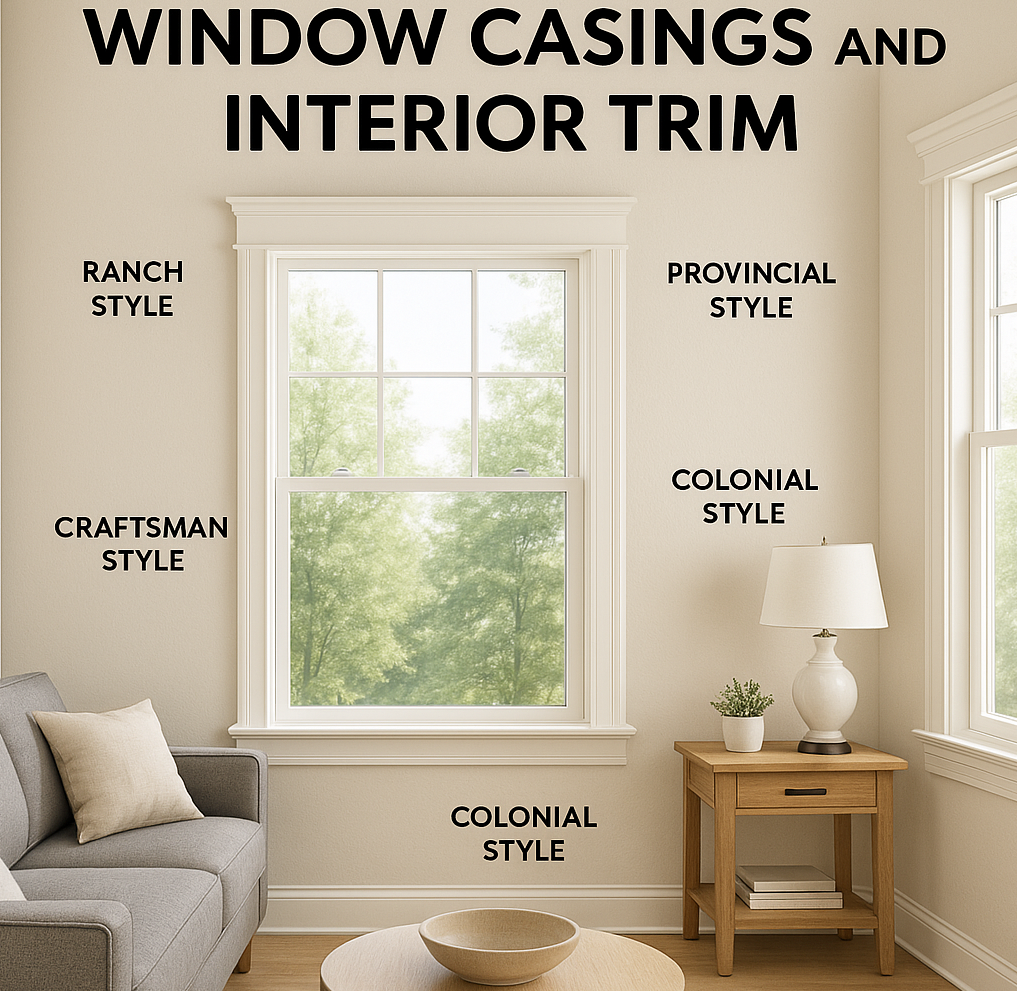
- Ranch Style Trim: Minimal and clean lines make this trim style ideal for a modern or transitional home. Ranch trim is often flat, wide, and understated – a relaxed and versatile look.
- Craftsman Style Trim: Also recognized by its thick, straight edges with a bold appearance. Craftsman trim works well with historic Craftsman homes and modern homes striving for Craftsman character.
- Provincial Style Trim: The rounded, softer profiles of provincial trim offer a more traditional and timeless feel which is less angular and can warm up traditional and moderately modern spaces.
- Colonial Style Trim: Rich, multi-layered designs offer a historic feel and are more formal in appearance. Colonial trim can fit in period homes or spaces looking to express a traditional identity.
The architectural details in the trim should ideally relate to other elements, such as baseboards, crown molding, and door casings, for a consistent look throughout the home. Great examples and product inspirations can be found in resources such as the company’s Pella guide regarding interior window trim options.
Material and Style Considerations for Trim
Your material choices for the trim and casing compound the durability and style of the installation. Following is a rundown of the most common and best options available:
- Wood: The most classic of options. Wood is warm and available in nearly endless stain or paint finishes. Wood trim is easy to work with, which allows for a unique touch of natural beauty in any room.
- Composite: A combination of wood fibers mixed with plastic, composite trim will stand up to moisture and general abuse. If trim will be used in a place that may observe some moisture or splashes of water (such as a bathroom or kitchen), choose composite.
- Vinyl: The best of a low-maintenance yet highly durable trim option. Added bonus? It is not as customizable as wood, but it is often a little more budget-friendly for modern or more sterile uses.
Every material will come in different finishes. Trims may come glossy, dull or anywhere in between. Stain options are usually not as varied, but still add to your options to capture the kind of feel you want whether modern, rustic, or traditional.
Design Continuity
Having similar or coordinating trim and casing styles from room to room will allow your home to feel intentional instead of thrown together. Whether using the same materials or finishes, visual parametric cohesion creates architectural small design details that travel through hallways, bedrooms and public living areas. The visual flow and repeatability are especially important in an open concept abode.
If you do consider multiple styles, make subtle nuanced shifts: e.g., deeper profiles or contributions to some proportion in a more formal room than in the rest of the spaces to keep the common touch point and assess your introduction to these customs.
Call a Professional
Many homeowners utilize their own tools, but remember, there will be times when it’s best to call a professional. Custom homes, restoration portfolios or a room that has less than standard specifications often need a professional touch to achieve what you want. The added benefit is that an experienced professional will be able to recommend your custom dimensions and materials that will augment serviceability and beauty to your home. If you want someone local, you can always refer to architectural forums, such as Architectural Digest, for advice, examples, and even connections to recommended professionals.
Conclusion
Having an integrated, attractive interior is more than paint choice or floor choice. It lies in the details, such as your trim and window casings! Once you are familiar with your options, materials types, finish options, and desire for a continual and cohesive visual to the trim and window casings you are sure to curate spaces that will feel warm, polished, and special to you. The investment will pay off in happy years of beautiful details you will love for the time you live there.