
Reasons Well Water Can Become Cloudy or Discolored After Heavy Rainfall
When noticed post-storm rain, cloudy or tinted Well Water can seem alarming to a homeowner. Many homeowners feel that it is not only an aesthetic difference; however, it could be a sign of issues related to the quality of their well water and therefore should be addressed immediately. The first step in being knowledgeable about whether yellow or cloudy water is safe for consumption or use is to understand why is my well water yellow or cloudy post-rain.
Contaminants can invade groundwater when there is heavy precipitation or dissolve existing sediment from soil and put it back into the well, and also due to changes in the water chemical composition. This guide will discuss all factors that will most likely create an occasion where your well water may be cloudy or yellow post-storms; what precautions to take; and at what point you should seek help from a qualified person(s) to find out whether your water is still safe or not after a storm event.
Table of Contents
Surface Water Infiltration
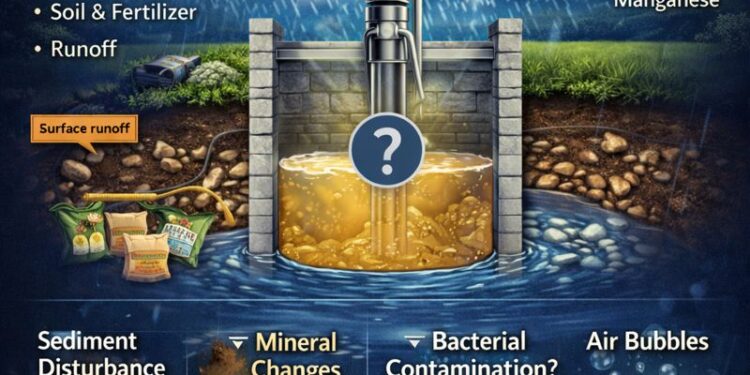
The primary reason for the turbidity of well water during wet seasons is surface water runoff. The ground may become saturated with rainwater, leading to runoff accumulation around a wellhead. If the well casing has cracks or does not seal properly, surface contaminants may enter the well. Examples of contaminants that may enter a well through surface water runoff include soil and soil-related products, such as fertilizers and herbicides, as well as livestock waste or manure from neighboring farms. Surface contaminants may not only create discoloration, such as brown or yellow tints, but can also present a risk to human health from chemical and microbial contamination. It is important to determine that your well casing is intact and that you have landscaped appropriately to direct surface runoff away from your well.
Sediment Disturbance
Cloudy or muddy water is also typically caused by the disturbance of well sediments (as a result of heavy rain). The rushing infiltration of rainfall into the aquifer disturbs fine particles (silt, sand, clay) that typically settle at the bottom of the well during normal operation. When these particles are disturbed by the rushing water, they are mixed with the well’s production causing cloudy water with some grit. After a few hours of letting the well rest (settle) and flushing the system, adding a sediment filter or settling tank at the distribution point would be beneficial.
Mineral Leaching
The composition of aquifers can change dramatically because of rainwater. During intense rain storms, the increased volume of water moving through the soil and rock creates enough force to disturb mineral deposits, which can cause the minerals to be rocked, and in some cases pulled through the soil and rock into your water supply for different reasons. When iron and/or manganese enter your water supply, it is common for the water to be discolored from iron (rust color), while manganese does a darker stain. Mineral build-up over a period of time will also affect your plumbing fixtures and appliances. Regularly conducting water tests and installing water softeners or specialty filtration devices can reduce these negative effects of stormwater on your private well. Refer to the EPA guidance to learn how to protect your private wells, primarily during storm events when changes will be important to monitor for potential contamination risks.

Bacterial Contamination
After a significant amount of rainfall, the most significant threat created may be the probability that bacterial contamination will occur. Flooding can fail to operate properly the septic tanks causing septage and sewage effluent to enter shallow wells, particularly if the well is an older design or not in compliance with today’s building codes. Contaminants such as E. coli and coliform fecal bacteria may make the water unsafe, and warning signs may consist of any of the following: a rotten-egg smell, soured taste, and/or gastrointestinal illness in some cases. Whenever you experience abnormal tastes or odors after a heavy rain, it is critical to check your well for any indication of bacterial growth, and disinfect it if you receive a positive result.
Air Bubbles in Water
Occasionally “cloudy” or “milky” looking drinking water isn’t the result of dirt, chemicals or any other type of contamination but rather from small air bubbles trapped within our drinking water. After a heavy rain event (or other types of rainfall) there can be fluctuations in atmospheric pressure, and with these fluctuations come increased turbulence within the source of our drinking water. As a result of this turbulence, small amounts of air may become trapped within the water source. If you allow these air bubbles to settle out, your drinking water will become clear. However, air bubbles are not harmful and will self-correct without any assistance.
Conclusion
The safety of your family depends on understanding the reasons behind the brown, yellow, or cloudy appearance of well water after severe storms and floods. The possible causes vary from air bubbles to surface water infiltration, sediment disturbance, mineral leaching, and bacterial contamination. If you perform routine checks of your well, routinely test for contaminants in your water supply and respond immediately whenever you observe changes in your water supply, you can ensure that you continue to have a dependable source of clean water, even in the event of rain falling in large volumes.