
Table of Contents
- 1 The Role of Roofing Insurance Claim Experts in Storm Restoration
- 2 Mastering Documentation and the Three-Image Photo Set
- 3 Risk Management and Specialized Coverage for Contractors
- 4 Navigating Denials and the Value of Independent Inspections
- 5 Frequently Asked Questions about Roofing Claims
- 6 Conclusion
The Role of Roofing Insurance Claim Experts in Storm Restoration

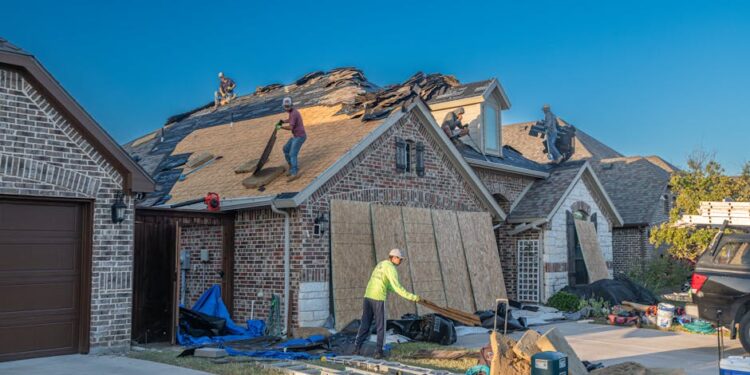
When a storm hits, the aftermath can be overwhelming for homeowners. Damaged roofs, fallen debris, and the daunting prospect of an insurance claim can add immense stress. This is where the expertise of roofing insurance claim experts becomes invaluable. We serve not just as repair specialists but as crucial advocates, guiding homeowners through the complex insurance claim process. Our role extends to professional documentation, evidence preservation, and even interpreting intricate policy language to ensure our clients receive fair compensation.
Navigating the nuances between Replacement Cost Value (RCV) and Actual Cash Value (ACV) policies, understanding deductibles, and managing supplement claims are all areas where our knowledge can significantly impact the outcome. We aim to be the homeowner’s representative, ensuring their peace of mind through what can be a challenging time.
Why the Burden of Proof Falls on the Contractor
One of the most critical insights we’ve gained from years of working with insurance claims is that the burden of proof for any loss rests squarely on the insured, and by extension, their chosen contractor. It’s a common misconception that an insurance adjuster’s primary duty is to find all damages. In reality, their role is to assess their company’s liability. As we often tell our clients, relying passively on insurance adjusters to find every hidden damage is like asking the defense to represent you in court.
This means that as roofing contractors, we must adopt a proactive approach. Our inspection isn’t just about identifying visible damage; it’s about meticulously gathering evidence to prove the loss. This involves a forensic evaluation of the roof’s condition, detailed documentation, and a clear, compelling presentation of facts. We drive the inspection process, identifying damage, explaining its cause, and ensuring the adjuster has all necessary information to make an informed decision. Without this proactive stance, claims can be underpaid or even denied, leaving homeowners with unexpected out-of-pocket expenses.
How Roofing Insurance Claim Experts Differentiate Damage from Wear
A major hurdle in many roof insurance claims is distinguishing between covered storm damage and non-covered wear and tear. Insurance policies are designed to cover sudden, accidental damage, not deterioration due to age or lack of maintenance. This distinction requires a keen eye and specialized knowledge, which is precisely what we bring to the table.
We look for specific indicators of storm damage:
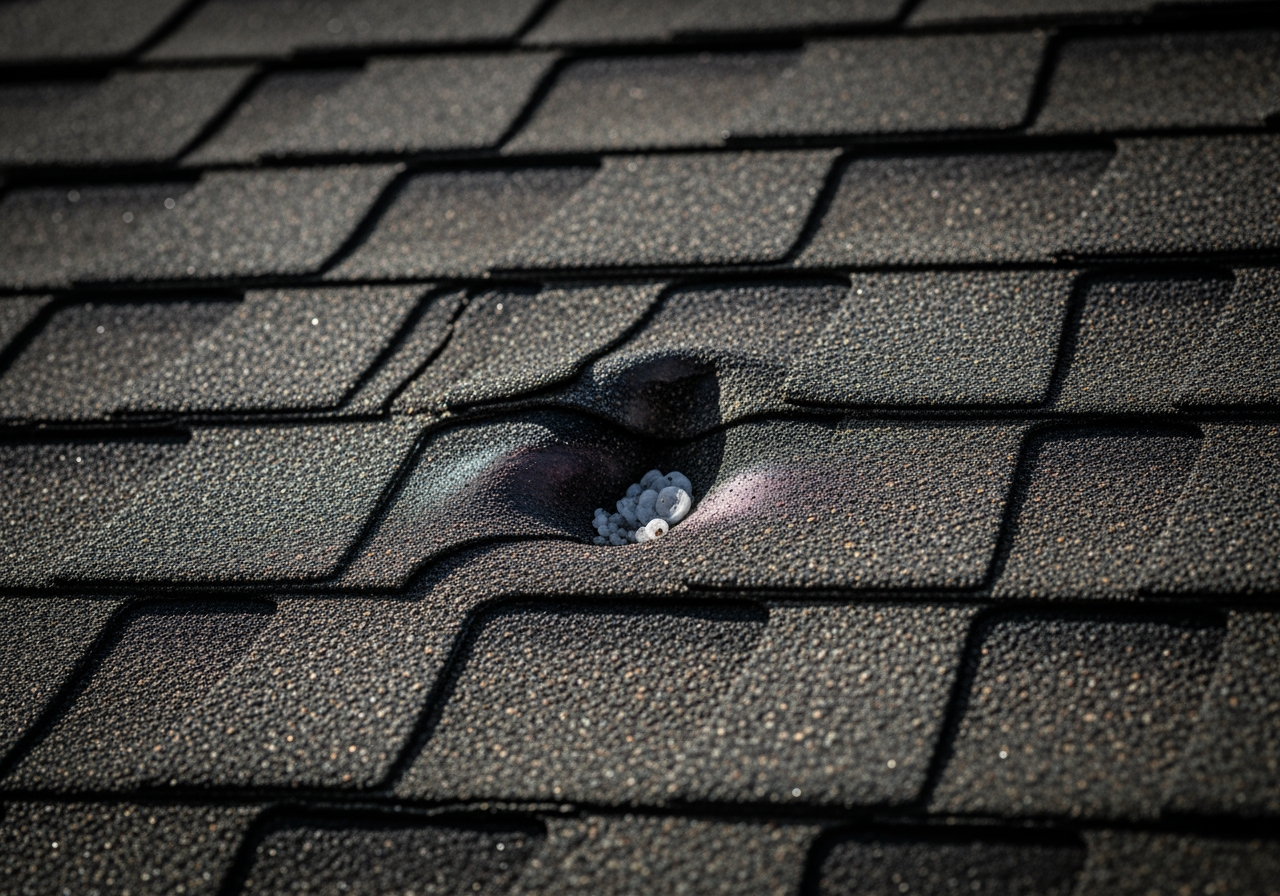
- Hail Bruises: These appear as dark, circular indentations on shingles where granules have been dislodged, often exposing the asphalt mat beneath. We also check for dents on gutters, vents, and other soft metals.
- Wind Uplift: High winds can lift and curl shingles, breaking their seals and sometimes tearing them away entirely. We inspect for creased or missing shingles, especially along roof edges and ridges.
- Impact Marks: Beyond hail, falling debris like tree branches can cause obvious impact marks, punctures, or tears.
- Random Damage Patterns: Storm damage, particularly hail, typically presents as random and inconsistent across the roof surface, unlike uniform wear and tear.
Conversely, we understand the signs of non-covered issues:
- Thermal Cracking & Blistering: These are often uniform patterns of cracks or bubbles caused by temperature fluctuations and aging, not sudden impact.
- Maintenance Neglect: Issues such as clogged gutters leading to water damage or unrepaired small leaks that worsen over time are typically excluded.
- Age-Related Deterioration: Granule loss due to age, widespread brittleness, or widespread moss/algae growth are signs of an old roof, not storm damage.
Our expertise enables us to provide a clear, evidence-based assessment that distinguishes new, insurable damage from pre-existing conditions, thereby significantly strengthening the homeowner’s claim.
Mastering Documentation and the Three-Image Photo Set
Thorough documentation is the bedrock of a successful insurance claim. Without clear, comprehensive evidence, even legitimate damage can be disputed or dismissed. We understand that effective photography is not just about taking pictures; it’s about telling a story that clearly illustrates the damage, its cause, and its extent.
Our standard practice involves a “three-image photo set” for documenting specific damage points, especially for hail and storm damage:
- Context Shot: This wide-angle photo shows the damaged area in relation to the overall roof or structure. It provides a sense of location and scale, helping the adjuster understand where the damage is situated on the property.
- Close-up Shot: This image focuses tightly on the specific damage, clearly showing its characteristics (e.g., a hail bruise, a torn shingle). This is where details such as granule loss, indentation depth, and tear patterns become evident.
- Perspective Shot: This is perhaps the most crucial for hail damage. Taken at an angle, often with side lighting (e.g., sunlight), it emphasizes the depth and texture of the damage. For hail, this shot can reveal the indentation of a bruise that might look flat from directly above. Think of how you might observe dents on a car roof by getting low and angling the light to reveal them; the same principle applies here.
We employ high-resolution cameras and digital logging systems, ensuring photos are time-stamped and geo-tagged for metadata verification. All documentation, including notes and photos, is submitted to the insurance company immediately after the inspection, ideally the same day, to prevent any questions about the damage timeline.
Common Mistakes to Avoid During Insurance Inspections
Even experienced contractors can fall prey to common pitfalls that undermine insurance claims. We’ve learned to actively mitigate these:
- Passive Observation: A significant mistake is allowing the adjuster to lead the entire inspection without active participation. We believe roofers should drive the inspection process, proactively pointing out damages and explaining our findings.
- Lack of Confirmation: Failing to secure positive verbal and, ideally, written confirmation from the adjuster regarding the scope of repairs and approvals can lead to disputes later.
- Poor Photo Quality: Blurry, poorly lit, or incorrectly framed photos are ineffective. Poor photo techniques can easily undermine claims, as they fail to clearly demonstrate the damage.
- Missing the Attic: Overlooking the attic interior inspection for signs of water intrusion (stains, mold, damp insulation) can miss crucial evidence of hidden damage, especially from wind-driven rain or ice dams.
- Ignoring Code Requirements: Failing to factor in local building code updates or requirements during the assessment can lead to underfunded claims, as insurance may cover only like-for-like replacement unless code upgrades are specified.
- Relying Solely on Adjuster Photos: While adjusters take photos, we’ve found they don’t always capture the full extent or specific angles needed to prove damage. We take our own comprehensive set of notes and photos.
- Delayed Evidence Submission: Waiting days or weeks to submit documentation can weaken the claim. Immediate submission reinforces the urgency and validity of the findings.
Securing Positive Confirmation from Adjusters
Building strong relationships with insurance adjusters is key to faster payments and approvals. A critical step in this process is securing positive confirmation during and immediately after the inspection.
After we’ve thoroughly inspected the roof and discussed our findings with the on-site adjuster, we aim to reach verbal agreement on the scope of damage and necessary repairs. This initial agreement is invaluable. Following the inspection, we often send a concise recap email or document summarizing the agreed-upon scope, itemized repair list, and any other pertinent details. This creates a written record, transforming a verbal understanding into a documented confirmation.
This proactive communication ensures that both parties are aligned. It minimizes misunderstandings, reduces the likelihood of disputes, and significantly streamlines the approval process. When an adjuster provides positive confirmation, whether verbally on-site or in a written recap, it sets a clear path forward for the claim. This practice is a cornerstone of our approach to efficient and successful claim resolution.
Risk Management and Specialized Coverage for Contractors
The roofing industry is dynamic, with evolving materials, techniques, and, unfortunately, risks. For roofing contractors, securing the right insurance coverage isn’t just a legal necessity; it’s a strategic imperative for long-term business sustainability. While General Liability (GL) insurance is fundamental, specialized roofing programs offer tailored protections that address the unique hazards of our trade.
Consider the distinctions between standard General Liability and specialized roofing programs:
- General Liability (GL): Covers basic third-party bodily injury and property damage. It’s essential but often has exclusions or limitations for high-risk roofing activities.
- Specialized Roofing Programs: These programs, like the NFP Roofing Program mentioned in our research, are designed specifically for roofers. They often include higher liability limits (e.g., up to $10,000,000) and unique extensions for risks such as faulty workmanship, accidental asbestos discovery, and higher percentages of torch-applied installations. They also typically offer better terms for hot-work exposures, which are often heavily restricted or excluded under standard GL policies.
Historically, the roofing insurance market has seen periods of instability. For instance, in Canada during the late 1990s and early 2000s, fires from torch-applied systems and the influx of unqualified contractors after major ice storms led to a national insurance moratorium. This crisis highlighted the need for specialized programs and robust loss control practices to stabilize the market. Today, entities like Lloyd’s of London play a significant role in underwriting these specialized coverages, with varying appetites among their syndicates for specific roofing risks.
Best Practices for Minimizing Liability Claims
Minimizing insurance claims through proactive risk management is far more effective than reactive incident response. We implement several best practices:
- Weather Monitoring: Before, during, and after a project, we continuously monitor weather forecasts. Sudden precipitation on an exposed roof can lead to catastrophic water damage claims. We have protocols for protecting exposed roofs overnight or during unexpected weather shifts.
- Site Protection: This includes securing the perimeter, protecting landscaping, and ensuring all tools and materials are safely stored or secured, especially overnight. Falling tools or debris can cause significant property damage or injury.
- Employee Training & Quality Control: Regular, comprehensive training on safety protocols, proper installation techniques, and quality control checks are paramount. Inadequate application or shortcuts can lead to long-term issues and costly claims.
- Hot Work Safety: This is a critical area. For torch-applied systems and tar kettles, strict fire prevention measures are enforced:
- Fire Watches: A dedicated fire watch is maintained during and for a minimum of two hours after any hot work is completed.
- Prohibiting Smoking: Strict no-smoking policies are enforced on job sites.
- Continuous Monitoring: Hot bitumen kettles are continuously monitored, and asphalt mops are never left unattended, as they can spontaneously combust.
- Combustible Material Management: All combustible materials are kept clear of hot work areas.
- Subcontractor Verification: We meticulously verify our subcontractors’ insurance coverage. Gaps in their policies can directly impact our primary contractor’s policy and rates if an incident occurs on a shared job site.
By adhering to these best practices, we not only reduce our insurance premiums but, more importantly, protect our employees, clients, and our reputation.
Essential Insurance Products for Modern Roofers
Beyond basic General Liability, modern roofing contractors require a suite of specialized insurance products to comprehensively protect their operations:
- Commercial General Liability (CGL): As discussed, this is foundational, covering third-party bodily injury and property damage. For roofers, high limits (e.g., $5M to $10M) are often necessary due to the inherent risks.
- Errors and Omissions (E&O) Insurance: Also known as Professional Liability, this covers claims arising from professional negligence, errors, or omissions in advice or services. This is increasingly important as roofing contractors take on more consultative roles in claims.
- Faulty Workmanship Extension: Many standard policies exclude damage caused by faulty workmanship. Specialized roofing programs often include extensions that cover the cost of repairing or replacing defective work, which is crucial for client satisfaction and for avoiding costly disputes.
- Installation Floater: This protects materials and equipment awaiting installation or in the process of being installed at a job site. This covers theft, fire, or other damage to valuable inventory.
- Accidental Asbestos Discovery Coverage: Given the age of many structures, the risk of encountering asbestos during roof removal is real. This specialized coverage helps manage the significant costs and liabilities associated with its unexpected discovery and remediation.
- Workers’ Compensation: Mandatory for employees, covering medical expenses and lost wages for work-related injuries.
- Commercial Auto Insurance: Covers vehicles used for business purposes, including trailers and specialized equipment.
By strategically combining these coverages, we ensure that our business is resilient against the unique and evolving risks of the roofing industry, allowing us to focus on delivering quality craftsmanship and exceptional client service.
Even with meticulous documentation and best practices, insurance claims can be denied or undervalued. This is where a contractor’s ability to navigate denials, request re-inspections, and negotiate effectively becomes paramount. We understand that a denial is not always the final word; it often signals a need for more robust evidence or a different approach.
Our research shows that claims are frequently approved on re-inspection, largely due to initial under-documentation. This underscores the importance of persistent advocacy and the strategic use of additional evidence.
Working with Roofing Insurance Claim Experts on Appeals
When a claim is denied or significantly underpaid, we guide homeowners through the appeals process, which can involve several steps:
- Requesting a Re-inspection: Often, simply requesting a second look with more detailed documentation, or a different adjuster, can lead to a different outcome. We ensure we are present during these re-inspections to highlight the previously overlooked or disputed damages.
- Submitting Additional Documentation: This includes our comprehensive photo sets, detailed inspection reports, and any other evidence that supports the claim. We may also recommend obtaining an independent engineering report for complex or highly disputed damage.
- Understanding Policy Limits and Clauses: We help homeowners understand their policy’s specific language, including any appraisal clauses that allow for an independent third-party assessment of the damage value.
- Negotiation: Our industry experience enables us to negotiate with adjusters in a fact-based, industry-standard manner.
- Public Adjusters: In cases of persistent denial or significant undervaluation, we may advise homeowners to consider hiring a public adjuster, an independent professional who works solely for the insured to negotiate a settlement.
- Mediation/Appraisal: Some policies include provisions for mediation or appraisal processes to resolve disputes without litigation.
Our goal is always to achieve a fair final settlement for our clients, leveraging every available avenue to challenge unjust denials.
The Impact of Third-Party Roof Inspections
A powerful tool in challenging claim denials and ensuring fair settlements is the third-party, or independent, roof inspection. While insurance companies send their own adjusters, their primary goal is to assess the company’s liability. An independent inspector, on the other hand, works solely for the homeowner and provides an unbiased, objective assessment of the damage.
We often recommend and work with certified independent inspectors, particularly those with specialized certifications such as NRCIA (National Roof Certification and Inspection Association). These “Forensic ROOF® inspections” are highly detailed, technical evaluations that carry significant weight in insurance and even legal cases.
Key benefits of third-party inspections include:
- Unbiased Assessment: They provide an objective view, free from the inherent bias of an insurer’s in-house adjuster. This gives homeowners leverage in negotiations.
- Technical Evaluations: Independent inspectors are trained to differentiate complex damage types, such as hail impacts from manufacturing defects or blistering, with scientific precision.
- Legal Credibility: Reports from certified independent inspectors are often preferred in insurance claims and legal disputes due to their rigorous standards and objective findings.
- Baseline Condition Reports: Periodic independent inspections can establish a baseline condition of the roof, making it easier to prove new damage from a specific event.
- Hidden Structural Issues: These inspections often uncover problems such as underlayment punctures, structural damage, or attic water intrusion that might be missed in a standard adjuster’s quick assessment.
By providing this robust, independent evidence, we significantly strengthen the homeowner’s position, making it much harder for insurance companies to deny or undervalue a legitimate claim.
Frequently Asked Questions about Roofing Claims
We often encounter similar questions from homeowners navigating the insurance claim process. Here, we address some of the most common ones:
What is the difference between RCV and ACV policies?
RCV (Replacement Cost Value) policies pay the cost to replace the damaged roof with a new roof of similar quality, without deducting depreciation. This means you typically receive two payments: an initial payment based on the Actual Cash Value, and a second payment for the recoverable depreciation once the repairs are completed and invoices are submitted.
ACV (Actual Cash Value) policies pay for the cost to replace the damaged roof minus depreciation. Depreciation is the decrease in value due to age, wear, and tear. For example, if a 15-year-old roof with a 20-year lifespan is damaged, an ACV policy would pay only a fraction of the replacement cost, leaving the homeowner responsible for a larger out-of-pocket expense. Understanding your policy type is crucial before filing a claim.
How long does the typical roofing insurance claim take to process?
The timeline can vary significantly depending on the insurance company, the complexity of the damage, and the state’s regulations. Generally:
- Initial Report to Adjuster Inspection: 1-2 weeks.
- Adjuster Inspection to Approval/Denial: 1 week to 10 days post-inspection.
- Reimbursement Check: If approved, the initial ACV check typically arrives within 30-60 days. The recoverable depreciation check (for RCV policies) is issued after repairs are completed and verified.
However, if a claim is denied, requires re-inspection, or involves negotiations, the process can extend for several months. Proactive documentation and communication can significantly expedite this timeline.
Can a homeowner choose their own contractor for insurance-funded repairs?
Yes, homeowners absolutely have the right to choose their own roofing contractor for insurance-funded repairs. While insurance companies might have “preferred contractor” networks, you are not obligated to use them. We always advise homeowners to select a reputable, licensed, and insured contractor with proven experience in handling insurance claims. A knowledgeable contractor can advocate on your behalf, ensure all damages are accounted for, and perform quality repairs that meet or exceed industry standards. Choosing the right contractor is a critical decision that impacts the quality of your repair and the smoothness of your claim process.
Conclusion
Navigating the complexities of roof insurance claims requires more than just fixing a roof; it demands expertise in documentation, policy interpretation, and unwavering advocacy for the homeowner. As roofing contractors, we embrace our role as essential partners in this process. By understanding the burden of proof, mastering detailed photo techniques, proactively mitigating risks, and leveraging independent inspections, we empower our clients to achieve successful claim outcomes.
Our commitment extends beyond repairs; we strive to build stronger relationships with insurance companies through transparent communication and professional practices, leading to faster payments and approvals. Our goal is to ensure that every homeowner we serve receives the full benefits of their policy, leading to a professionally restored roof and, most importantly, lasting peace of mind. This dedication to excellence and homeowner advocacy is what drives our long-term business growth and upholds the highest industry standards.