
Modern Dental Implant Solutions for Everyday Life
Dental implants have dramatically revolutionized tooth replacement, offering innovative, reliable, and long-lasting solutions to the common challenges faced by those with missing teeth. Thanks to continuous improvements in materials and surgical techniques, today’s dental implants are more accessible and comfortable than ever, helping individuals regain the confidence of a full, healthy smile. At the forefront of these advancements are clinics like ORA 4X, which utilize state-of-the-art technology to deliver exemplary dental implant care tailored to everyday lifestyles.
By closely mimicking the structure and function of natural teeth, modern implants stand out as a superior option to traditional dentures or bridges. Not only do they securely anchor to the jawbone, preventing slippage and bone deterioration, but they also seamlessly blend with your natural smile, making them an appealing option for anyone seeking a sustainable, aesthetically pleasing solution for tooth loss.
Advancements in dental implantology don’t just promise better appearance and function—they’re also streamlining procedures for faster recovery, greater precision, and longer-lasting results. From digital planning tools to materials that foster bone and tissue regeneration, the ever-evolving field of dental implants provides hope for a vastly improved quality of life.
In this comprehensive guide, we explore the major innovations shaping the world of dental implants, from computer-guided surgeries to smart implant technologies, and reveal how these breakthroughs are creating more opportunities for individuals to reclaim their oral health and confidence.
For further reading on the evolution of dental health solutions, Johns Hopkins Medicine provides detailed insights into how dental implants compare to other restorative options and what you can expect from the process.
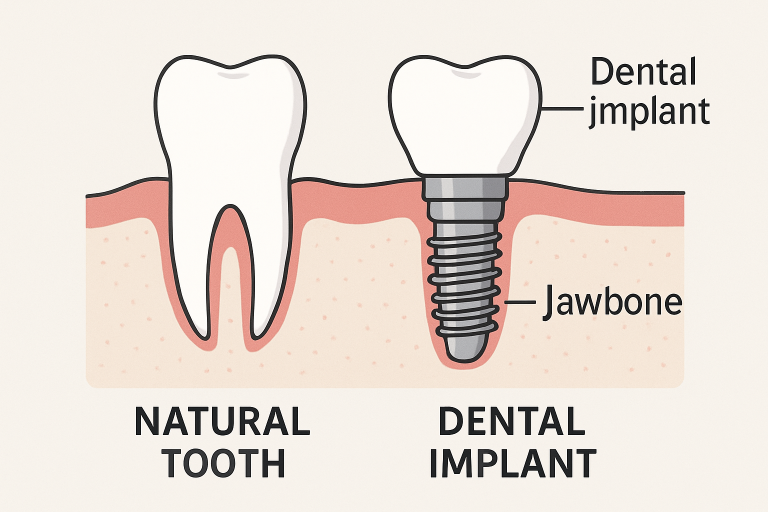
Table of Contents
Understanding Dental Implants
Dental implants act as artificial roots—usually crafted from biocompatible metals such as titanium or advanced ceramics like zirconia—that are surgically anchored into the jawbone. Their primary role is to provide a stable base for a crown, bridge, or even a full arch of teeth. Unlike removable dentures, these implants are securely fixed in the mouth, allowing unrestricted eating, speaking, and smiling with confidence. The integration of implants with natural bone, a process called osseointegration, is key to their longevity and effectiveness.
Advancements in Implant Technology
The field of dental implantology has seen remarkable advancements in recent years. Digital imaging and implant planning software now enable dental professionals to visualize a patient’s unique anatomy in ultra-fine detail, resulting in greater accuracy and personalized outcomes. This has drastically reduced both surgery time and patient discomfort. With 3D imaging, dentists can avoid nerves and blood vessels, making the procedure safer and the recovery period shorter.
The All-on-4 Technique
The All-on-4 technique is among the most transformative approaches to full-arch restoration. By strategically placing four implants in regions of the jaw with the highest bone density, this procedure often eliminates the need for bone grafts. Patients usually benefit from the same-day placement of temporary teeth, allowing them to enjoy restored function and appearance almost immediately after surgery. This technique is ideal for those looking for a less invasive, more efficient solution for severe tooth loss.
Smart Implants and Real-Time Monitoring
One of the cutting-edge breakthroughs in dental implants is the integration of sensor technology. Smart implants equipped with micro-sensors can continually monitor bite force, implant stability, and temperature, transmitting real-time data to dental professionals. Early detection of potential issues, such as infections or overload, is now possible, paving the way for truly proactive dental care—the future points toward even greater integration of artificial intelligence for predictive maintenance and remote monitoring.
Computer-Guided Surgery for Precision
Computer-guided implant surgery merges digital tools and 3D modeling to produce custom guides for implant placement. By simulating the entire surgery in advance, dentists can determine the optimal angle, depth, and position for each implant. This minimizes human error and risk, decreases surgery time, and increases patient safety. Patients benefit from less invasive treatment and predictable, satisfying outcomes.
3D Printing in Dental Implants
3D printing is perhaps the most impactful technology in recent dental implant history. It enables the creation of surgical guides, customized implant abutments, and even replacement teeth that match the patient’s anatomy exactly. This bespoke approach reduces the risk of complications, speeds up the placement process, and improves healing, as every component fits perfectly from the outset.
Tissue-Regenerating Surfaces
Modern research is pushing dental implant surfaces beyond the inert, introducing coatings and textures that actively promote the growth of bone and soft tissue around implants. These tissue-regenerating surfaces improve the speed and strength of osseointegration, especially vital for patients with weaker jawbones. Such advancements mean that more people, even those previously unsuitable for implants, can benefit from this life-changing treatment.
Conclusion
The evolution of dental implants signifies a remarkable leap in both the science and art of tooth replacement. By incorporating digital planning, smart monitoring, 3D printing, and regenerative materials, modern dentistry is making lasting, natural-looking smiles accessible to more people than ever. Such innovations continue to redefine expectations, proving that dental implants are not simply about aesthetics—they’re about restoring comfort, confidence, and quality of life.