

How to Protect Your Rights After a Workplace Accident

In the aftermath of a workplace accident, confusion and uncertainty are common. However, knowing the immediate steps to take can mean the difference between a smooth recovery, both physically and financially, and ongoing complications. If you or a loved one was injured on the job, it’s essential to act swiftly to protect your rights. Early actions, such as consulting a Philadelphia workplace accident lawyer, can safeguard your access to benefits and reduce your risk of losing crucial legal entitlements.
Your decisions in the days and weeks following the incident can directly affect your eligibility for workers’ compensation and influence how smoothly your recovery progresses. This guide outlines a systematic approach to reporting, documentation, medical care, and communication all aimed at ensuring you remain protected.
Table of Contents
Reporting the Incident
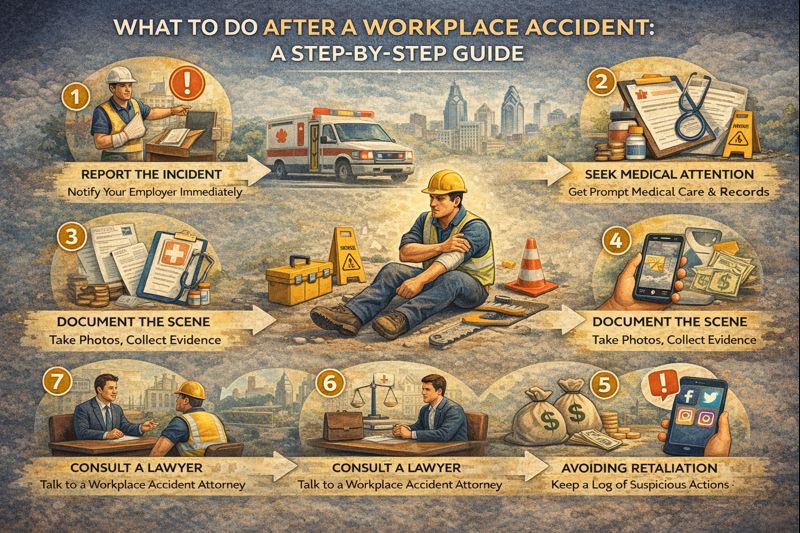
As soon as an accident occurs, notify your supervisor or employer immediately. Many states require that workplace injuries be reported within a certain timeframe sometimes within days. Even minor injuries should be reported, as seemingly small symptoms may develop into more serious problems over time. Include all the crucial details in your report: when the incident occurred, the conditions present, and any contributing factors. This record not only satisfies regulatory requirements but also serves as foundational evidence should legal questions arise.
Seeking Medical Attention
Seeking prompt medical care serves two primary purposes: it ensures your injuries are properly diagnosed and treated, and it creates an official record that connects the injury to your workplace. Inform all healthcare providers that your injury or ailment occurred at work, and retain copies of every medical record and bill. These documents can be pivotal in substantiating your workers’ compensation claim or any future legal action.
Documenting the Scene
If circumstances allow, gather as much evidence as possible at the scene. Use your phone to photograph the environment, the equipment involved, and any hazardous conditions. If your coworkers or others witnessed the accident, request their names and contact information. Collecting these details early can provide a clear, indisputable account of what occurred, which is essential in disputes or appeals.
After your initial steps, it’s also helpful to look up your rights and accident trends. Information from the CDC’s National Institute for Occupational Safety and Health offers further resources on how to handle job-related injuries.
Understanding Workers’ Compensation
Workers’ compensation laws are designed to provide wage replacement, medical coverage, and, in some cases, disability and rehabilitation benefits to employees who are injured on the job. Eligibility rules and benefits vary from state to state, but a key requirement is typically that the injury occurred within the course of employment and was properly reported. Non-compliance with deadlines or procedures can result in denied claims or lost benefits. Understanding both your state’s regulations and your employer’s policies is vital; contact your company’s human resources department or a trusted legal resource for guidance.
Avoiding Retaliation
It’s unlawful for employers to retaliate against workers who report injuries or file claims. Retaliation can be direct, such as termination or demotion, or subtler, like assigning less favorable or more hazardous tasks. If you suspect you’re being retaliated against, keep a detailed log of any adverse actions and communications related to your claim. Don’t hesitate to report concerns to your state’s labor board or seek legal guidance.
Consulting Legal Experts
Not every workplace injury claim requires legal representation, but certain situations, such as disputed claims, denied benefits, or retaliatory action, do. An experienced attorney can evaluate whether you have a case for additional compensation (such as a third-party liability claim), negotiate with insurers on your behalf, and ensure all legal requirements are met. Legal advice is particularly valuable if your injury involves long-term disability, high medical costs, or questions about the full extent of available benefits.
Maintaining Clear Communication
Be organized and factual in all your correspondence with employers, healthcare providers, and insurance representatives. Save written records of every interaction, keeping a timeline and summaries of conversations. Communicating professionally and clearly can help minimize misunderstandings and demonstrate your earnest effort to follow proper protocols critical if your actions come under scrutiny during a claim or legal dispute.
Being Mindful of Social Media
Insurers and employers sometimes monitor social media profiles for evidence that could undermine your claim. Avoid posting updates or photos that contradict your reported injuries or restrictions. Ideally, limit your discussion of the accident, injuries, or ongoing case online entirely to avoid any misinterpretations that could be used against you.
Conclusion
The days and weeks following a workplace accident can shape the course of your recovery and financial security. By reporting promptly, seeking medical care, retaining evidence, and seeking appropriate legal counsel, you can build a compelling case for your right to compensation. Remaining vigilant and informed at every step helps you claim the benefits and protections to which you’re entitled under the law.