

How Smart Turf Equipment Is Changing Grounds Management
Table of Contents
Introduction
Grounds management has reached an exciting turning point, driven by significant advances in smart turf equipment. From community parks to golf courses and sports complexes, facility managers are rapidly embracing innovations such as autonomous mowers and computer-aided irrigation systems to transform turf maintenance. These solutions are reshaping industry standards by enabling increased operational efficiency, reduced long-term costs, and consistently high-quality landscapes. With demand growing for more sustainable and efficient landscaping practices, many professionals are looking for solutions like turf equipment for sale that integrate seamlessly with new and existing groundskeeping protocols.
Recent developments in digital monitoring, artificial intelligence, and automation are enabling precise management of turf health while minimizing manual intervention. The result is not only a healthier, greener environment but also significant savings in water, energy, and labor. With these benefits in mind, the adoption of smart turf technology has become an essential strategy for any organization seeking to maintain appealing, durable landscapes.
As the sector evolves, manufacturers and technology providers continue to introduce new solutions that empower grounds teams. This includes integrating weather data, predictive analytics, and powerful mobile software to schedule, track, and optimize every aspect of turf maintenance. These advances are enabling sports clubs, municipalities, and other organizations to meet new demands for productivity and sustainability.
Autonomous Mowing Systems
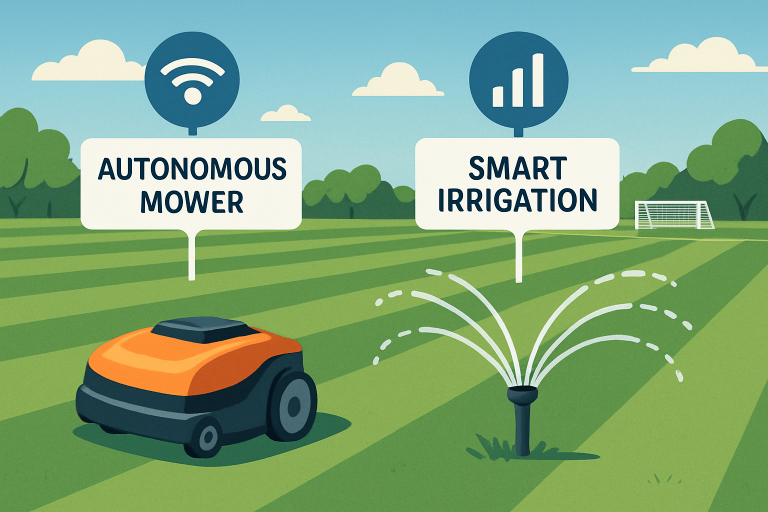
The deployment of autonomous mowing systems is one of the most impactful developments in grounds care. These robotic mowers are designed to follow pre-set routes, adapting to the unique topography and layout of every site. By operating independently, they deliver a uniform cut and free up grounds staff to handle more complex maintenance activities, such as aeration or pest control.
Leading the way, partnerships have launched platforms that integrate autonomous mowing directly into digital turf management software, allowing supervisors to schedule, monitor, and adjust mowing activity from any connected device. These systems also use geofencing and obstacle-detection technologies to ensure safe, accurate operation. According to Golf Digest, autonomous mowing is quickly moving from the experimental stage to the mainstream as costs decrease and reliability improves.
Data-Driven Irrigation
Another significant benefit of innovative turf equipment lies in irrigation. Advanced systems now include soil moisture sensors, weather stations, and artificial intelligence-driven software that can calibrate watering schedules based on real-time conditions. This data-centric approach allows for precise application of water only where—and when—it is actually needed, significantly reducing waste.
Recent research validates the effectiveness of these tools in achieving dramatic reductions in water usage without compromising turf health. Automated alerts for soil dryness or rainfall thresholds enable teams to respond quickly to changing conditions, helping facilities meet local water regulations and sustainability metrics.
Benefits of Smart Turf Equipment
- Labor Efficiency: Autonomous and connected equipment reduces the need for manual mowing or adjustments, enabling staff to shift their focus to tasks that require human judgment and expertise.
- Resource Conservation: Smarter timing of irrigation and fertilizer applications ensures minimal waste, making landscape maintenance more sustainable and eco-friendly.
- Improved Consistency: Machines equipped with GPS and AI algorithms can deliver predictable, high-quality results, regardless of season or weather fluctuations.
- Enhanced Decision-Making: Access to real-time data enables supervisors to make informed choices that proactively address emerging issues before they turn into costly problems.
Challenges and Considerations
- Initial Investment: Upfront costs for smart equipment and integration with site infrastructure can be high, although many operators see a payoff through reduced labor and ongoing savings.
- Technical Training: Staff members may need dedicated training in software management, troubleshooting, and routine maintenance of advanced machinery.
- System Integration: Optimizing the workflow between new and legacy systems can pose technical and logistical challenges, requiring careful planning and phased rollouts.
- Reliability in Diverse Conditions: Sites with unique terrain or weather patterns may require extensive testing and calibration to ensure consistent performance.
Conclusion
The rise of smart turf equipment signals a new era in grounds management, where digital innovation and automation are unlocking unprecedented levels of efficiency, sustainability, and turf quality. As technology continues to mature, forward-looking organizations need to assess how to leverage these solutions for maximum benefit. By understanding both the transformative potential and the challenges of implementation, grounds managers can make informed investments that deliver superior landscapes and long-term value for their facilities.