
Ensuring Safe Operation of Lifts in Industrial Settings
Industrial lifts are cornerstone pieces of equipment in various sectors, including manufacturing, warehousing, and construction. With the ability to safely raise and transport both workers and materials, lifts contribute crucially to improved productivity and streamlined workflows. However, the operation of these machines demands strict adherence to well-defined safety procedures. Proactive implementation of safety standards, reinforced training, and the use of protective gear are crucial in preventing hazards and ensuring the well-being of workers. For those seeking high-quality lifting solutions tailored for their facilities, options such as man lifts offer specialized features designed with safety in mind.
Negligence or lack of awareness about the risks associated with lift operation can result in serious injuries or fatalities, property damage, and operational disruptions. The ongoing evolution of industry safety guidelines underscores the urgent need for comprehensive safety planning and continuous improvement.
Table of Contents
Comprehensive Training for Operators
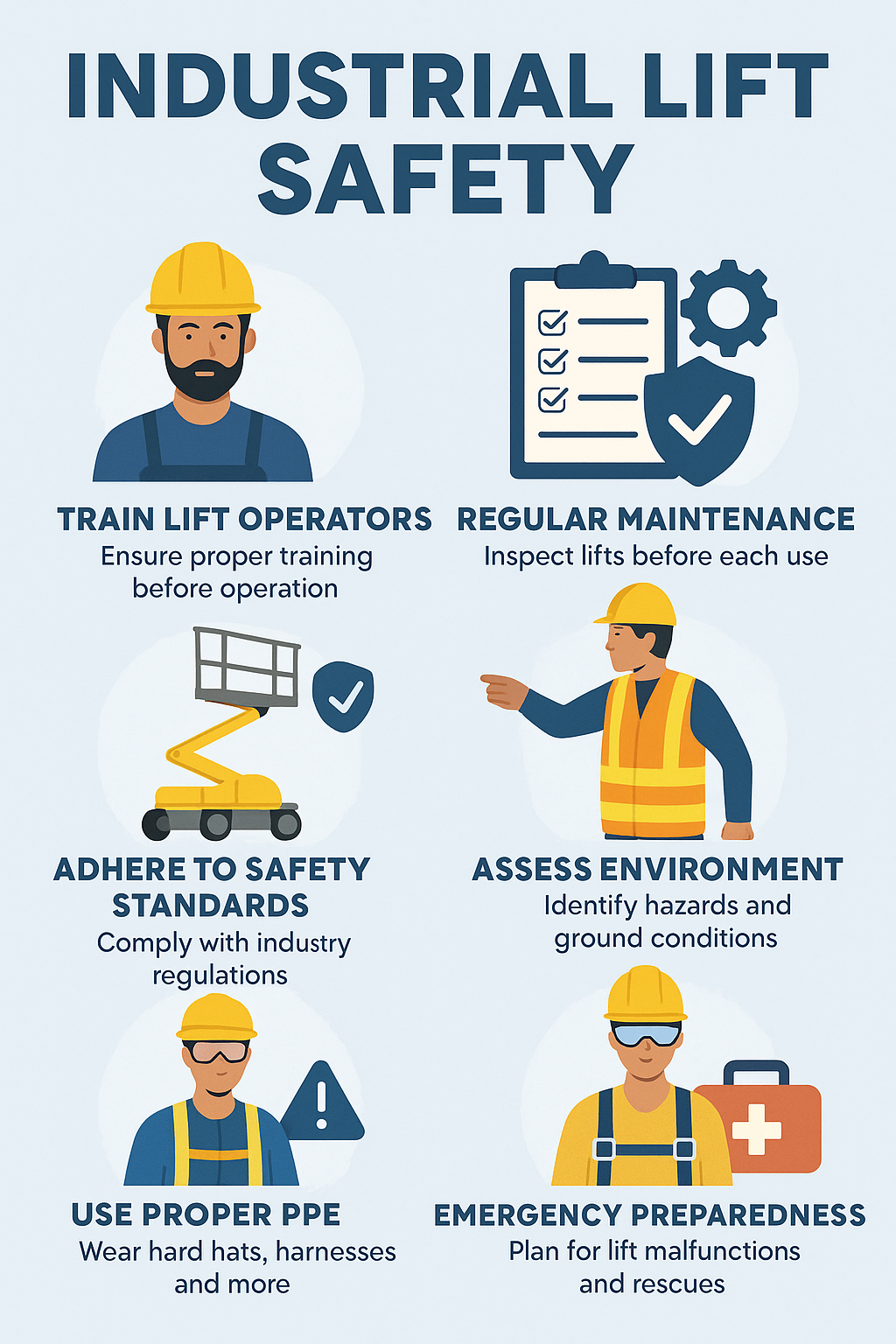
Empowering workers with knowledge is the cornerstone of accident prevention. Comprehensive operator training covers far more than just how to maneuver a lift; it includes understanding the specific model being used, its unique controls, load capacity, and how to handle emergencies. Organizations that prioritize this training, in accordance with the latest findings from the Centers for Disease Control and Prevention (CDC), see a marked reduction in workplace injuries. The CDC highlights explicitly that fall hazards are a leading cause of lift-related incidents, emphasizing the importance of well-structured educational programs.
Beyond formal instruction, hands-on operational practice and regular safety refreshers are crucial. Operators should treat these machines with respect and understand the implications of even minor procedural oversights.
Regular Maintenance and Inspections
Scheduled maintenance is more than a compliance necessity—it’s a critical aspect of safe lift operation. Visual checks before each use help spot leaks, faulty hydraulics, or compromised rails. Scheduled technical inspections should cover all mechanical systems, electronics, safety relays, and fail-safe devices. Notably, the CDC has reiterated the importance of these checks, as they significantly reduce the likelihood of equipment-related failures. Transparent maintenance logs and diligence ensure minor issues are identified before they grow into significant hazards.
Adherence to Updated Safety Standards
Industry innovation inevitably brings new regulations. In recent years, the American National Standards Institute (ANSI) has elevated the requirements for aerial lifts and related machinery, introducing mandates for features such as slope-level sensors, wind-speed sensors, and enhanced platform railings. These not only standardize safety domestically but also support a global baseline for industrial lift use. Staying current with these changes allows organizations to remain legally compliant, operationally efficient, and—most importantly—safe. Business leaders are encouraged to reference summaries and in-depth coverage provided by trusted industry news outlets.
Environmental Hazard Mitigation
Operating lifts near uneven terrain, inclement weather, or dense surroundings calls for extra caution. Even the most advanced lifts can become dangerous when ground conditions are unstable, the weather is poor, or space is restricted. Recent campaigns by safety organizations, including the International Powered Access Federation (IPAF), highlight that failing to inspect ground conditions properly is a leading factor in machine overturns. Training operators to survey worksites, interpret weather reports, and monitor nearby activity is a frontline defense against environmental hazards.
Utilization of Personal Protective Equipment (PPE)
No safety plan is complete without strict enforcement of personal protective equipment. Standard requirements on industrial sites include hard hats, safety glasses, steel-toed boots, gloves, and, when working at height, harness systems connected to approved anchors. Equipment should be inspected before each use—damaged or expired PPE can be even more dangerous than none at all. Raising worker awareness about proper PPE (selection, fit, and maintenance) significantly contributes to on-site safety, as supported by research from publications such as Safety+Health Magazine.
Emergency Preparedness
Emergencies such as lift malfunctions, power outages, and medical incidents require immediate and practiced responses. Robust emergency preparedness plans ensure that all staff understand their roles, evacuation paths, and communication protocols. Regularly scheduled drills should simulate various contingencies so that, in the event of a real emergency, operators and bystanders can act swiftly and effectively. Posting emergency instructions at lift sites further reinforces preparedness and compliance.
Conclusion
Maintaining the safe operation of industrial lifts is a shared responsibility that encompasses training, technology, and daily discipline. By prioritizing rigorous operator training, consistent equipment maintenance, compliance with evolving safety standards, awareness of environmental hazards, use of proper PPE, and robust emergency planning, organizations foster safer work environments and set higher standards for operational excellence. Continued education and vigilance are key to reducing risks and building a safety-driven workplace culture.