

Fostering an environment where young children are encouraged to ask questions and build relationships is a robust foundation for lifelong learning. When curiosity is nurtured and social engagement is facilitated, children develop habits and skills that serve them in school and far beyond. Whether at home or in the classroom, caregivers and educators can play a crucial role in stimulating inquisitiveness and social competence. To discover structured early learning programs designed for young children, visit https://tinythinkers.com/programs/busy-bee-2-pre-k/.
Early childhood is a critical development phase where curiosity and social growth can be fostered. By encouraging exploration and positive interactions, adults play a vital role in closing achievement gaps and enhancing emotional and intellectual readiness. Strategies include modeling curiosity, supporting independent inquiries, and providing opportunities for communication and conflict resolution among children, ultimately transforming their learning and development.
Table of Contents
- 1 Importance of Curiosity in Early Childhood
- 2 Role of Social Interactions in Development
- 3 Strategies to Foster Curiosity
- 4 Creating Opportunities for Social Engagement
- 5 Integrating Technology to Enhance Learning
- 6 Balancing Safety and Exploration
- 7 Measuring Progress and Adapting Approaches
- 8 Conclusion
Importance of Curiosity in Early Childhood
Curiosity is the spark that drives children to investigate their environment, experiment, and learn. According to Edutopia, children who exhibit intense curiosity at a young age show improved learning outcomes throughout their academic journey. This natural desire to ask questions, experiment, and wonder not only lays the groundwork for scientific thinking but also fuels academic achievement across subjects.
Inquisitive children often demonstrate a willingness to engage in deeper thinking and problem-solving. Their desire to understand the world helps cultivate adaptability and resilience—skills that are critically important in our rapidly changing society. Importantly, even among children from diverse backgrounds, curiosity has been found to reduce achievement gaps commonly observed in early education.
Role of Social Interactions in Development
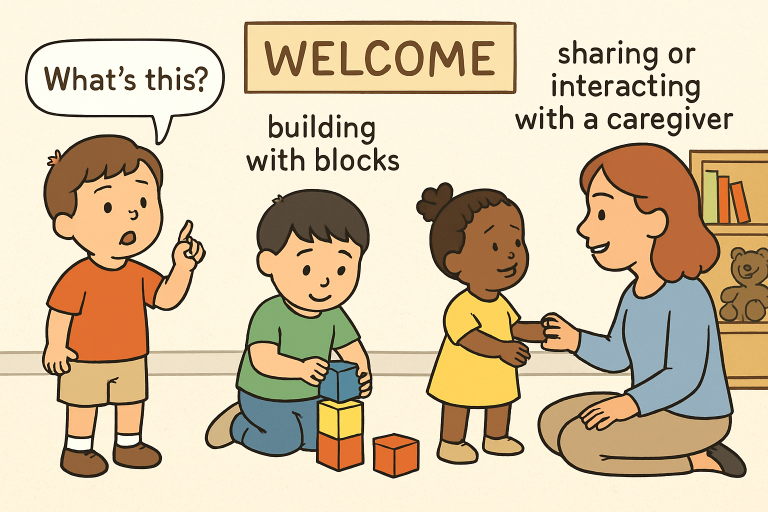
Social development in early childhood is built through meaningful interactions with peers and adults. Play, conversation, and collaborative activities are not merely recreational; they are essential for honing communication, empathy, and cooperation. As children learn to interpret nonverbal cues and practice perspective-taking, they acquire emotional intelligence and strengthen their ability to connect with others.
Early social experiences can lead to improved self-regulation and the ability to resolve conflicts constructively. These foundational skills are directly linked to success in group settings and play a significant role in later academic and life achievements.
Strategies to Foster Curiosity
Encouraging Questions and Discovery
Fostering curiosity involves intentionally creating a climate where inquiry is welcomed. Adults can encourage children to ask “why,” “how,” and “what if” questions, helping them think critically and independently. Try to respond with enthusiasm and guide them toward resources or experiences that will deepen their understanding, rather than simply providing answers.
Diverse and Stimulating Materials
Offer materials that challenge children’s minds—a collection of natural objects, open-ended art supplies, or science experiment kits. Diverse experiences, such as visiting museums, parks, or community events, can expand their horizons and spark new interests.
Modeling Curiosity
Demonstrate your own inquisitiveness by expressing wonder or researching answers together. When children see adults approach new information with excitement, it normalizes learning as a lifelong pursuit.
Creating Opportunities for Social Engagement
Teamwork and Cooperative Play
Facilitate group activities that naturally require children to negotiate, collaborate, and problem-solve together. Cooperative board games, building projects, or group storytelling sessions develop a sense of community and collective achievement.
Safe Spaces for Interaction
Design inviting environments where children can interact freely at their own pace. This might include cozy reading corners, collaborative art areas, or outdoor play spaces that foster natural conversation and teamwork.
Direct Instruction in Social Skills
Sometimes, children need guidance to navigate social challenges. Explicit lessons in conflict resolution, sharing, and active listening can set clear expectations and build a toolkit of strategies for future success.
Integrating Technology to Enhance Learning
Thoughtful use of technology—such as educational apps, collaborative games, or digital storytelling platforms—can supplement curiosity and social engagement. Tools designed for interactive learning, when balanced with hands-on experiences, can reinforce foundational skills. Coding games for young learners, for instance, foster critical thinking while enhancing teamwork as kids work together to troubleshoot.
Balancing Safety and Exploration
Providing a secure yet flexible environment is essential. While it can be tempting to protect children from all risks, calculated, age-appropriate exploration builds judgment and resilience. Maintain boundaries that ensure safety, but allow children the freedom to experiment, learn from mistakes, and develop independence.
Overprotective approaches can unintentionally limit growth by fostering fear of failure. Instead, encourage problem-solving and celebrate perseverance as children try new things and adapt to minor setbacks.
Measuring Progress and Adapting Approaches
Regular observation, informal assessment, and reflective conversations help caregivers track a child’s development. Take note of emerging interests, social behaviors, and communication skills. Adapt strategies to align with each child’s evolving needs—whether introducing new challenges, adjusting group dynamics, or providing additional support to scaffold learning.
Staying attuned to each child ensures a responsive approach that grows with them, ensuring curiosity and social skills become deeply rooted.
Conclusion
Encouraging curiosity and social growth in early childhood is a vital component of nurturing confident, capable, and connected lifelong learners. Through intentional environments, diverse experiences, and supportive guidance, every child can flourish—academically, emotionally, and socially—preparing them for the challenges and joys of the world ahead.