
Does Roof Replacement Require Correct Starter Strip Installation?
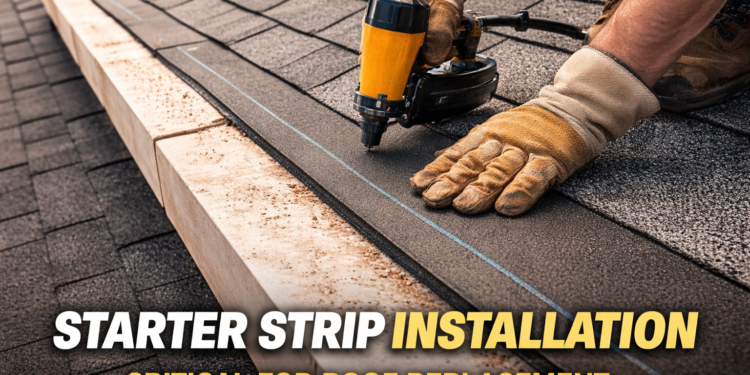
Details at the edge of a roof often decide how well the entire system performs over time. While shingles get most of the attention, smaller components quietly determine whether a roof resists wind, sheds water, and lasts as expected. During any roof replacement, starter strip installation is not optional—it is a foundational step that directly affects durability, appearance, and warranty protection.
Table of Contents
- 1 Yes Starter Strips Are Required for Manufacturer Warranties
- 2 What Happens When Roof Edges Lack Proper Starter Coverage
- 3 Why Starter Strips Matter More than Most Homeowners Realize
- 4 What a Proper Starter Strip Does for Wind Protection
- 5 How Incorrect Starter Installation Leads to Early Shingle Failure
- 6 How Pros Align Starter Strips for Clean Straight Roof Lines
- 7 Common Starter Strip Mistakes Found During Roof Tear Offs
- 8 A Small Strip That Plays a Big Role in Roof Longevity
Yes Starter Strips Are Required for Manufacturer Warranties
Many shingle manufacturers clearly state that starter strips must be installed according to their specifications for warranty coverage to apply. These requirements are not buried in fine print; they exist because starter strips create the initial seal that supports the rest of the shingle field. Without them, manufacturers can deny claims even if the shingles themselves are new.
Homeowners searching for roofing near me are often surprised to learn that skipping a starter strip can void coverage on an otherwise proper roof replacement. Warranty inspectors typically look first at roof edges, since improper starter installation is one of the easiest ways to identify non-compliant work.
What Happens When Roof Edges Lack Proper Starter Coverage
Roof edges face the strongest wind forces and the highest risk of water intrusion. When starter strips are missing or installed incorrectly, the first course of shingles lacks adhesive support. This creates a weak point where wind can lift shingles and drive rain underneath.
Over time, this exposure leads to edge curling, nail exposure, and premature shingle loss. Roof repair companies often see repeat calls for Huntsville roof repair tied back to edge failures that could have been prevented with proper starter coverage during installation.
Why Starter Strips Matter More than Most Homeowners Realize
Starter strips are designed to work invisibly. Once installed, they disappear under the first row of shingles, which makes them easy to overlook. However, they provide the adhesive bond that seals the roof perimeter before wind ever reaches the field shingles.
Without this seal, shingles rely only on nails at the most vulnerable point of the roof. Roof replacement projects that skip or rush starter installation often look fine at first, but performance problems surface much sooner than expected.
What a Proper Starter Strip Does for Wind Protection
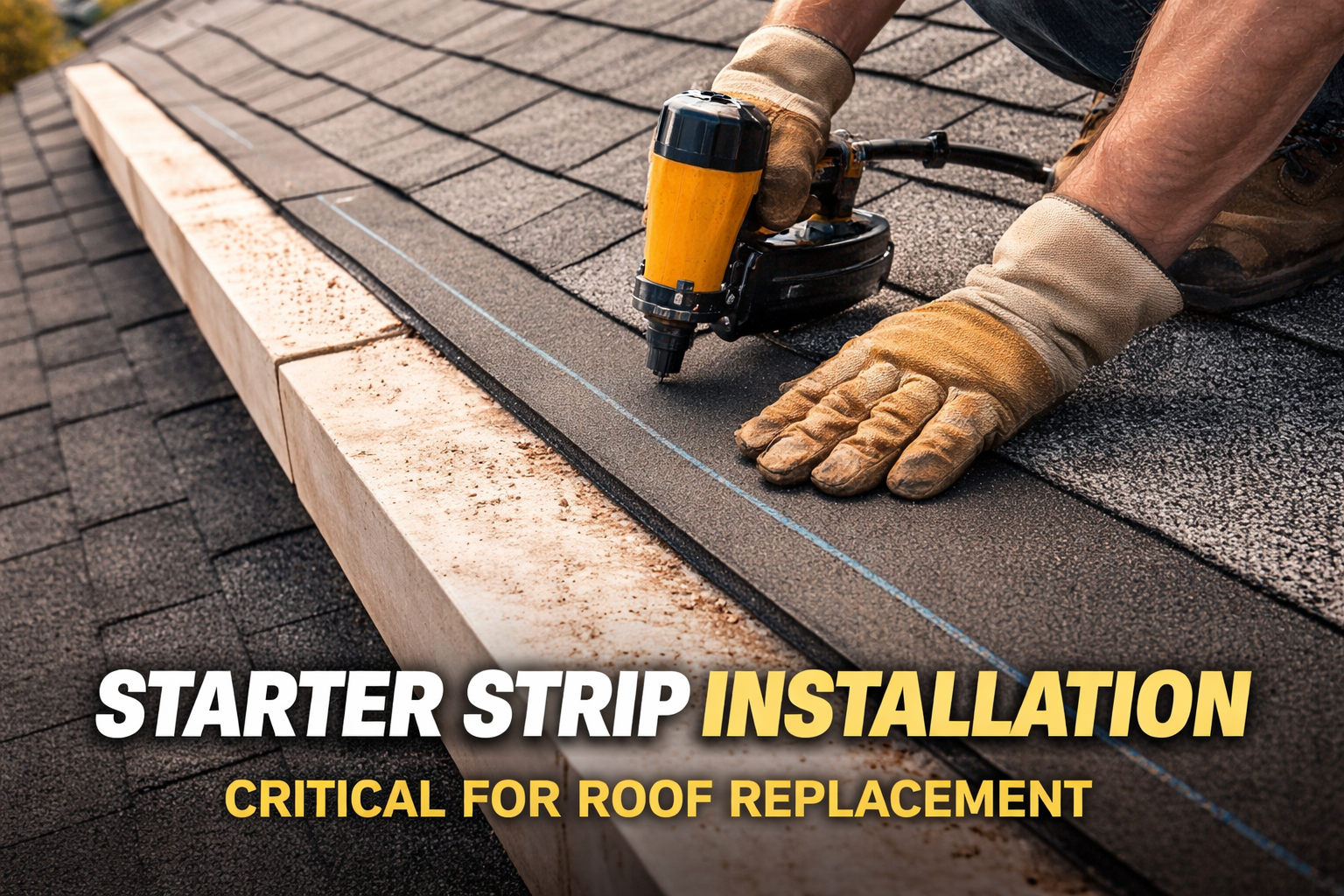
Wind does not attack a roof evenly; it targets edges first. Starter strips provide a continuous adhesive line that locks the first row of shingles in place. This bond prevents uplift that can cascade into larger failures during storms.
Proper starter placement also helps distribute wind pressure across the roof rather than concentrating it at the eaves. Roofing professionals understand that wind ratings advertised by manufacturers assume starter strips are installed correctly from the start.
How Incorrect Starter Installation Leads to Early Shingle Failure
Installing starter strips upside down, misaligned, or cut improperly defeats their purpose. Adhesive may end up facing the wrong direction or fail to bond with the first shingle course. In some cases, roofers attempt to create makeshift starters from field shingles, which often lack the correct adhesive placement.
These shortcuts increase the risk of early failure. Roof repair near me searches frequently come from homeowners dealing with lifted shingles only a few years after a roof replacement, often traced back to improper starter installation.
How Pros Align Starter Strips for Clean Straight Roof Lines
Beyond function, starter strips influence the roof’s appearance. Professionals snap chalk lines to ensure starter strips follow a perfectly straight edge. This alignment sets the tone for the entire shingle layout above it.
A straight starter course helps prevent staggered or crooked shingle rows that become visible from the ground. Experienced roof repair companies know that visual precision at the starter level saves time correcting alignment issues later in the project.
Common Starter Strip Mistakes Found During Roof Tear Offs
Roof tear offs often reveal past installation errors. Common mistakes include gaps between starter sections, inadequate overhang at the eaves, or starters nailed too high above the adhesive line. Each error compromises the roof’s ability to seal properly.
Contractors performing roof replacement frequently find that older roofs failed not because of poor shingles, but because starter strips were skipped or installed incorrectly. These discoveries highlight how small details affect long-term performance.
A Small Strip That Plays a Big Role in Roof Longevity
Starter strips may be narrow, but their impact is wide. They anchor the roof’s first line of defense against wind and water while supporting warranty compliance and overall lifespan. When installed correctly, they quietly protect the structure year after year.
Neglecting this step increases the likelihood of repairs, insurance claims, and shortened roof life. Any roof repair company focused on quality understands that longevity begins at the edge.
Fleming Roofing supports roof replacement projects by following manufacturer guidelines, paying close attention to starter strip installation, and addressing edge details with care. Their approach helps homeowners avoid early failures and unnecessary roof repair. By focusing on details others overlook, they deliver roofs built to perform reliably over time.