

Modern industries are facing unprecedented changes as rapid technological advancements place increasing demands on electrical infrastructure. The need for robust, scalable, and intelligent power networks has become essential to maintaining efficient, secure operations. As manufacturing plants, data centers, and processing facilities grow more sophisticated, they depend on systems that can handle new pressures without faltering. Core to this evolution are critical components like industrial transformers, which serve as the backbone of distribution and safety for high-demand applications across diverse sectors.
Businesses are adapting to rising expectations for continuous uptime, rapid scalability, and environmentally responsible operations. These trends, combined with globalization and stricter compliance requirements, mean that tomorrow’s energy systems must deliver higher performance and greater flexibility. Successfully preparing for these shifts demands both long-term investments and smart, immediate upgrades to current infrastructure.
Strategically advancing electrical infrastructure has become more than a matter of convenience. It is now a competitive necessity. By implementing innovative solutions and fostering a proactive approach to modernization, industries are laying the groundwork for sustainable growth, enhanced resilience, and operational excellence in an interconnected world.
Table of Contents
Rising Energy Demands
As electrification accelerates, power grids must evolve beyond their traditional design. The sharp increase in energy usage, fueled by the rise of data processing, electrified transport, and advanced automation, means conventional solutions often fall short. For example, Hitachi’s $70 million expansion in Westmoreland County aims to double production capacity, while Mitsubishi’s upcoming facility in Beaver County expects to add hundreds of skilled jobs and ensure long-term employment stability.
Upgrades are not only about greater capacity but also about smarter, more agile systems that can accommodate surges in usage while minimizing downtime.
Smart Grid Implementation
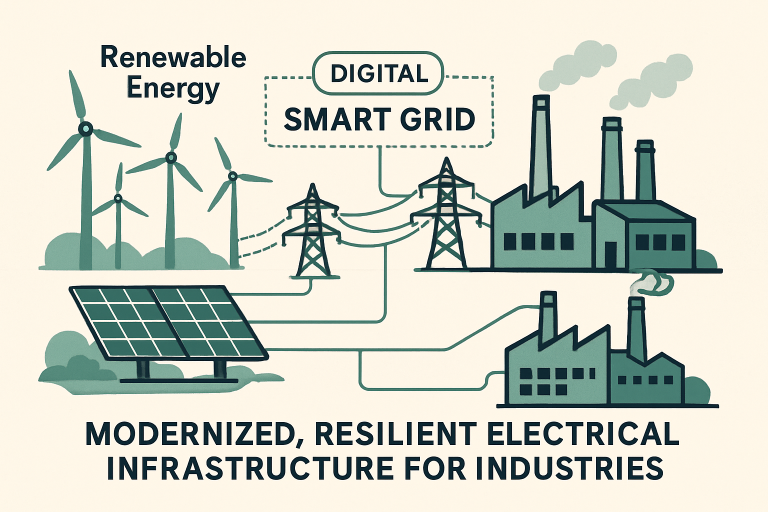
Transitioning to smart grids has become a priority for many utilities and industrial operators. Unlike legacy networks, smart grids use two-way digital communication, distributed sensors, and automation to improve control and oversight. This shift enables real-time monitoring, optimized load management, predictive maintenance, and more efficient troubleshooting when issues occur.
The flexibility offered by smart grids is a direct response to the complexity of modern energy sources and consumption patterns. By enabling the seamless integration of distributed resources and allowing dynamic adjustments, these systems pave the way for greater reliability and transparency in critical infrastructure.
Integration of Renewable Energy
Renewables are an increasingly vital part of the industrial energy mix, with solar arrays, wind farms, and battery storage rapidly scaling up across many regions. However, managing the inherent variability of these sources introduces operational challenges. Advanced electrical controls, smart inverters, and distributed energy resource management systems are proving crucial for balancing supply and demand.
Innovative strategies such as virtual power plants have come to the forefront. By aggregating distributed assets, these systems help maintain grid stability and unlock new revenue opportunities for participants. According to recent studies, virtual power plant capacity reached 30 GW in 2024, with significant growth projected in the near future as grid modernization continues.
Adoption of Microgrids
Microgrids are localized networks that can operate independently from the main grid during emergencies or disruptions. Their adoption has improved reliability for communities and facilities that require constant, high-quality power. Hot Springs, North Carolina, serves as a leading example: after a major hurricane in 2024 damaged the local substation, a microgrid allowed the town to drastically reduce outage times, demonstrating real-world resilience.
Industries and public infrastructure alike are turning to microgrids to boost energy security, lower emissions, and manage costs. The integration of renewables and advanced storage within microgrids further enhances their adaptability and environmental advantages.
Enhancing Grid Resilience
Outdated infrastructure and rising cyber threats threaten uninterrupted operations. As a result, government and industry initiatives now prioritize grid hardening, digital monitoring, and decentralized backup power solutions. The Accelerating Resilient Infrastructure Initiative, for instance, brings together a broad network of partners to deliver community-based energy solutions and creative financing options for public and private sectors.
These projects offer a lifeline for areas vulnerable to extreme weather and increasingly sophisticated cyberattacks, helping prevent disruptions and economic losses. Grid resilience is no longer a luxury, but an operational mandate for every forward-thinking entity.
Policy and Regulatory Influences
Government policy is playing a powerful role in shaping the next generation of infrastructure. Programs like the Infrastructure Investment and Jobs Act are driving multi-billion-dollar investments, creating new jobs, and encouraging the decentralization of energy resources. These regulatory drivers are designed to accelerate grid modernization, promote clean energy, and increase national competitiveness by providing incentives and streamlined processes for innovative projects.
By aligning private incentives with public needs, such policies foster long-term investment in technology and workforce development, ensuring the benefits of modernization are widely shared.
Future Outlook
The electrical infrastructure sector is expected to continue its transformative journey. Upcoming trends include broader adoption of edge computing for faster, localized decision-making and new peer-to-peer energy-trading models enabled by blockchain platforms. Further innovations, such as electric roads and automated distribution controls, promise to not only improve efficiency and reliability but also reshape how industries and consumers access power in the years to come.
Final Thoughts
In summary, modernizing electrical infrastructure is vital to meeting the evolving needs of modern industries. Leveraging emerging technology, adaptable policy structures, and forward-looking investment will pave the way for an energy future that is both resilient and responsive.